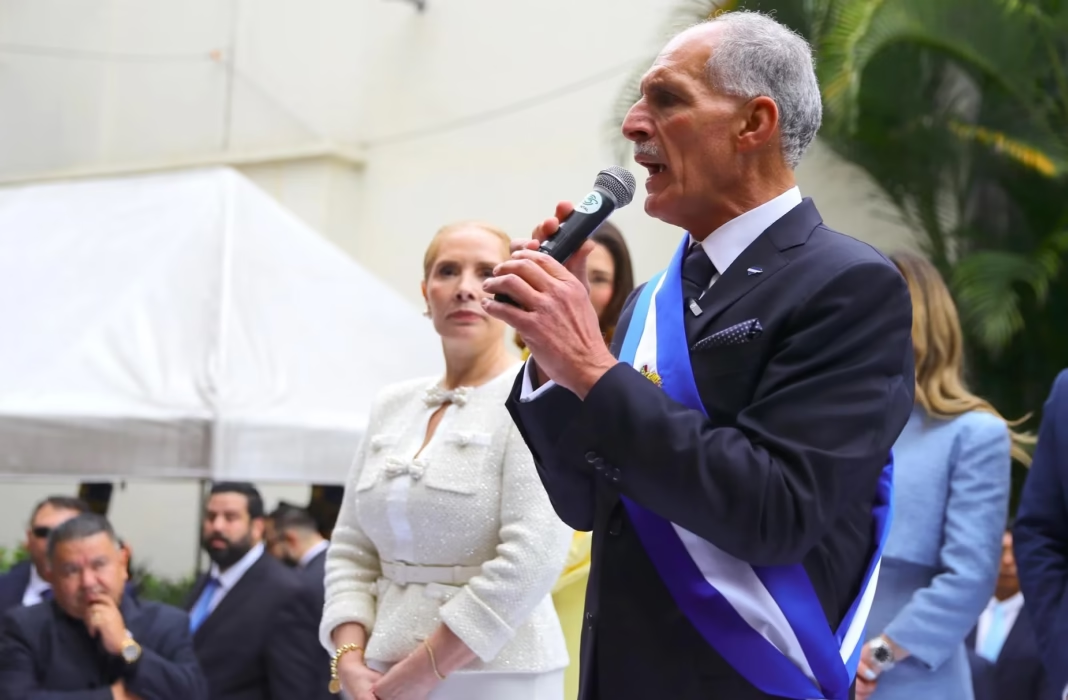
Tegucigalpa, Honduras – Nasry ‘Tito’ Asfura, a conservative politician and businessman, was sworn in on Tuesday as the new President of Honduras for the 2026-2030 term, succeeding current President Xiomara Castro (2022-2025).
“I take the legal oath to uphold the Constitution and the laws as stated in the sacred commandments. Honduras, we are here to serve you,” Asfura said upon taking office in a ceremony at the Honduran Parliament. His left hand rested on a Bible held by one of his daughters.
RELATED NEWS : Takaichi elected Japan’s ruling party leader, likely next PM
Asfura, the leader of the conservative National Party of Honduras, was elected president in the general elections held Nov. 30, 2025.
The new president was backed by the United States president Donald Trump three days before the elections, but he was not recognized as the winner by the outgoing head of state, Xiomara Castro, who alleged “tampering” in the elections.
“I want to wish ‘Tito’ Asfura luck. We hope that Honduras continues with this growth project for the country; all Hondurans want that, that it be the best for Honduras,” Castro nonetheless stated on Monday at an official event in the Honduran capital.
Asfura did not invite presidents and heads of state from other countries to the inauguration ceremony for reasons of “austerity,” and chose to take office at the Parliament headquarters, contrary to the traditional investitures held at the National Stadium José de la Paz Herrera in the Honduran capital.
With nearly 11 million inhabitants, over 60% of whom are poor, Honduras experienced two electoral processes in 2025: primary and general elections. Both were marred by controversy and instability, costing the impoverished nation 4 billion lempiras.
Both elections faced accusations of fraud, technical failures, and alleged “interference” by the Armed Forces, particularly the Head of the Joint Chiefs of Staff, General Roosevelt Hernández.
Despite over 3.5 million citizens peacefully voting, slow counting and technical issues fueled widespread suspicion and led to demands for a recount.
Tensions were exacerbated by internal divisions within the National Electoral Council (CNE) and foreign interference, notably a controversial public endorsement and pardon announcement by the US President just days before the vote.
The CNE ultimately proclaimed Asfura as president-elect on Dec. 24, a decision made amid deep institutional strain and lacking the endorsement of one of its counselors. The counting for other results continued until the legal deadline.
SOURCE : EFE. | Follow Us: Facebook | Instagram | Twitter | Youtube |