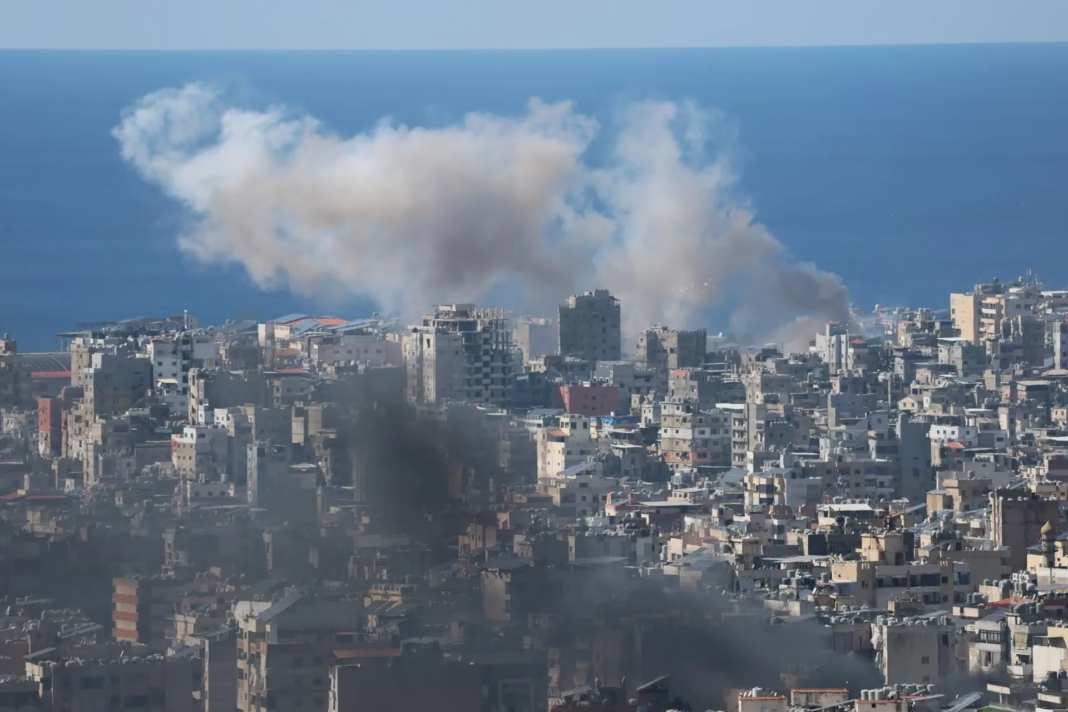
Beirut, Lebanon — Lebanon completed one week on Monday under a devastating Israeli bombing campaign, the second in just 15 months, triggered by a Hezbollah attack launched in support of Iran and exposing deep tensions between the Lebanese government and the powerful Shia militant group.
In its first seven days, the air offensive has left more than 400 people dead, about 1,100 injured, and nearly half a million displaced, according to Lebanese authorities, while causing further destruction in a country that was still awaiting international funds for reconstruction after the previous war.
RELATED NEWS : Erdoğan reiterates warnings to Iran after NATO intercepts another missile in Turkey
Here are some keys to understanding the renewed outbreak of violence and the context in which it is unfolding:
1. Iran’s war front The 2023–2024 conflict in Lebanon began after Hezbollah launched a largely symbolic attack on northern Israel in support of Gaza the day after the start of the war in the Palestinian enclave. It then took nearly a year of escalating clashes before turning into open warfare.
This time, hostilities erupted after Hezbollah launched another largely symbolic attack in support of its ally Tehran, two days after Israel and the US began their war against Iran. Israel’s response against Lebanon came almost immediately.
Beyond their shared hostility toward Israel, Hezbollah, a Shia movement, and the Palestinian Islamist group Hamas, which is Sunni, are both part of an informal alliance led by Iran that also includes Iraqi militias and Yemen’s Houthi rebels.
2. The stalled disarmament After the last conflict, Hezbollah halted its armed activity along the border with Israel in accordance with the ceasefire agreement.
Under pressure from the US, the Lebanese government tasked the army with implementing a plan to disarm the group across the country.
The initiative progressed unevenly and was completed only in the southernmost region, from which Hezbollah withdrew voluntarily. However, authorities have been reluctant to disarm the group by force in other areas due to fears of triggering internal violence.
Last week, as Israeli airstrikes resumed following Hezbollah’s attack, Lebanon’s Council of Ministers banned all armed activity by the group and pledged to enforce its disarmament.
3. The new conflict As in 2024, the current Israeli bombing campaign is focused mainly on Hezbollah’s areas of influence: southern and eastern Lebanon, as well as the southern suburbs of Beirut.
Israel had continued to carry out strikes against alleged Hezbollah targets throughout the 15 months following the ceasefire, another reason cited by the group for launching its latest attack a week ago.
For its part, Hezbollah had not fired a single projectile since the ceasefire until the recent escalation. It has now resumed limited daily attacks with short-range weapons.
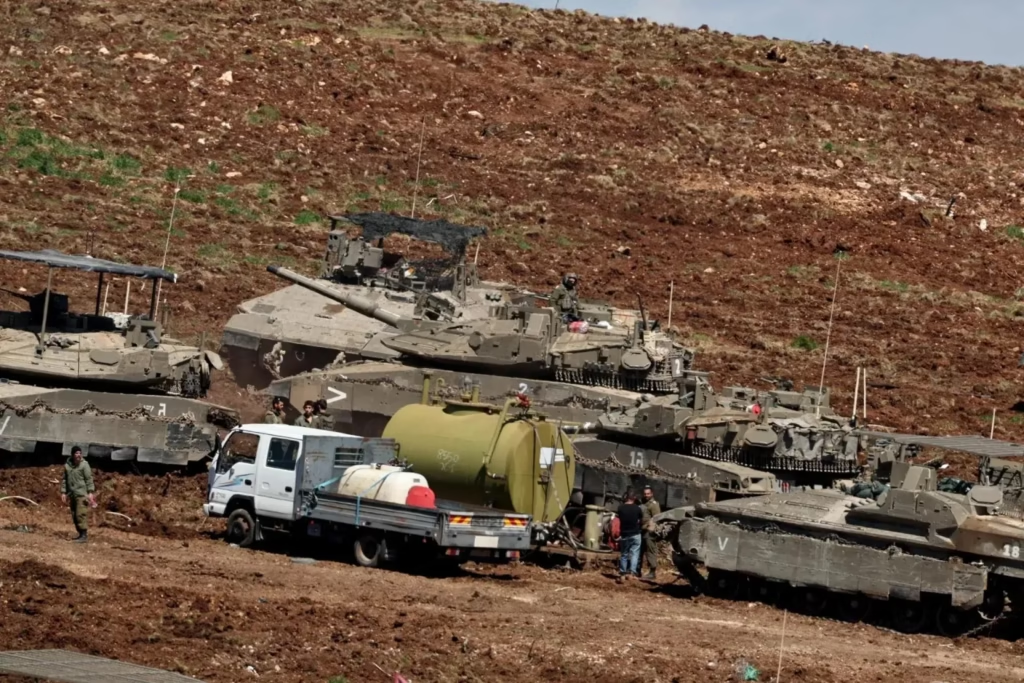
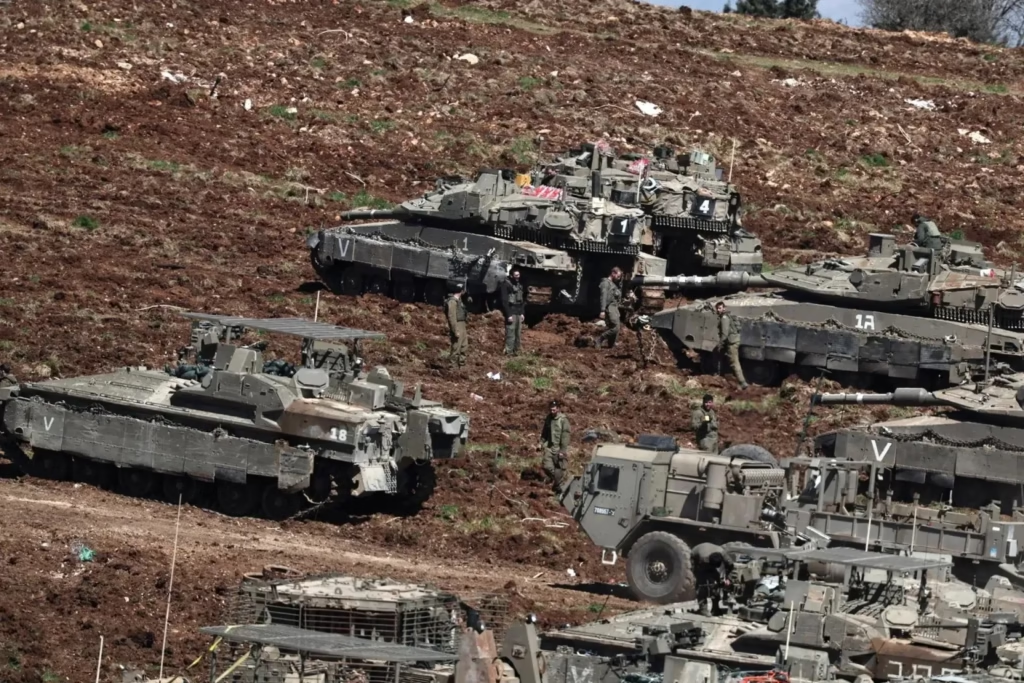
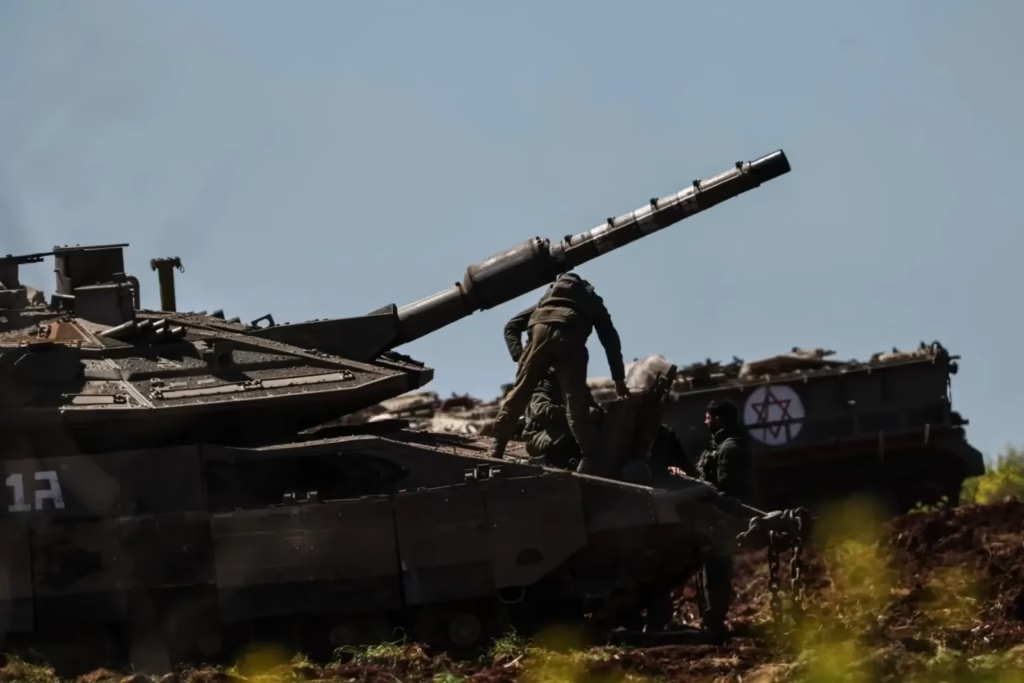
The group has reported at least one direct confrontation between the two sides in southern Lebanon. Israel says its forces have established positions at several points near the border, from which the Lebanese army has withdrawn.
4. Lebanon caught between powers Lebanon, caught between the strategic interests of Iran and those of the US, had long feared a new escalation.
Authorities were aware that Israel was growing increasingly impatient with the slow pace of Hezbollah’s disarmament and that the group remains closely tied to the broader regional confrontation involving Iran.
For the past week, Lebanon’s government and presidency have engaged in intense diplomatic efforts to halt the conflict, seeking particularly the support of France and advocating negotiations in exchange for an immediate ceasefire.
“Hezbollah is a party with representatives in parliament, a wide popular base and control over dozens of municipalities. If it were to fully transform into a political party and cease its military activities, we would have no problem with it,” Prime Minister Nawaf Salam suggested in an interview published Monday by the local newspaper L’Orient-Le Jour.
SOURCE : EFE. | Follow Us: Facebook | Instagram | Twitter | Youtube |