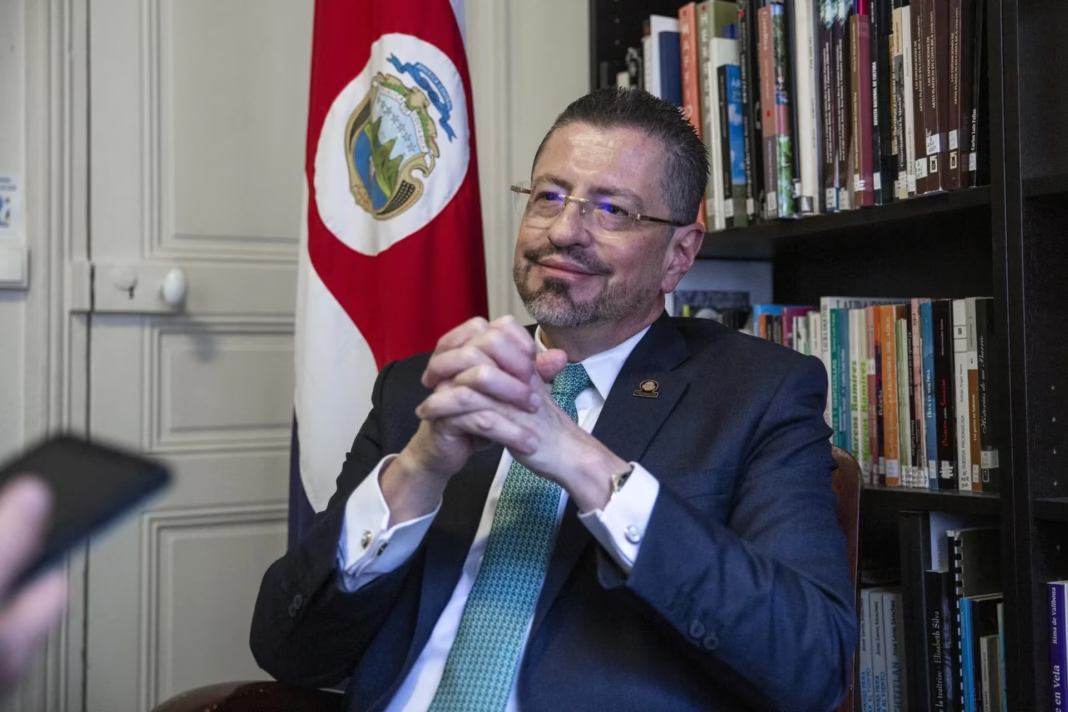
Havana, Cuba — Costa Rica announced on Wednesday the closure of its embassy in Cuba, citing “deep concern” over the deterioration of human rights on the island. Havana rejected the “unilateral decision,” claiming it was made under pressure from the United States.
At a press conference, Costa Rican Foreign Minister Arnoldo André Tinoco stated that, in addition to closing the embassy, they requested that the Cuban Foreign Ministry withdraw its diplomatic personnel from the embassy in San José, except for consular officials.
RELATED NEWS : Cuba plunged into nationwide blackout amid deepening crisis and growing exhaustion
President Rodrigo Chaves also stated that Costa Rica “does not recognize the legitimacy of the communist regime in Cuba, given the mistreatment, repression, and undignified conditions endured by the inhabitants of that beautiful island.”
”We will not have a consulate there. We will serve them from Panama. Enough is enough. Since 1959, the regime has parasitized other countries to provide for its people. We must recognize that the communist model has failed in Cuba, as it has everywhere else it has been implemented,” Chaves added.
In response, the Cuban Ministry of Foreign Affairs (Minrex) criticized the decision, emphasizing that it was “unilateral” and taken “without offering any justification.”
Minrex added that Costa Rica is limiting its relations with Cuba “under pressure from the United States” and criticized the Central American country for requesting that Cuba withdraw diplomatic personnel from its embassy in San José “without any justification whatsoever and invoking a supposed and unfounded reciprocity.”
According to Minrex, Costa Rica exhibits a history of subservience to US policy against Cuba and, with this latest step, joins Washington’s renewed attempts to isolate Cuba from the rest of the continent.
”Just as it did 60 years ago, it will fail in this endeavor. Nothing can distance the people of Cuba and Costa Rica, who are united by indissoluble ties of a shared history nurtured by great Cuban independence heroes such as Martí and Maceo,” concluded the Foreign Ministry.
The Costa Rican embassy in Havana has been without diplomatic personnel since Feb 5. According to the Costa Rican government, the formal closure is a “firm sign of concern and an invitation for significant changes” in Cuba.
Wednesday’s is the second diplomatic break between Latin American countries and Cuba in just two weeks, following Ecuador’s Mar. 4 request for all Cuban diplomatic, consular, and administrative personnel to withdraw from Quito.
President Daniel Noboa’s administration also ordered the return of the Ecuadorian ambassador to Havana, José María Borja.
The Cuban government rejected the expulsion of its diplomats from Ecuador, attributing it to intense pressure from Washington.
SOURCE : EFE. | Follow Us: Facebook | Instagram | Twitter | Youtube |