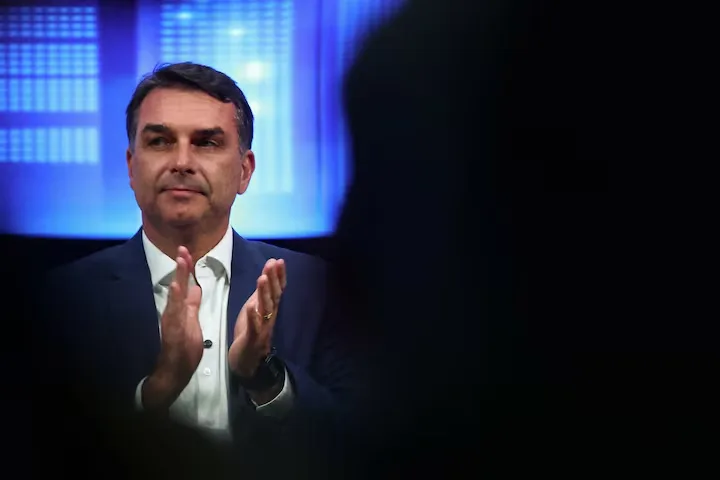
SÃO PAULO, Brazil — Brazilian Senator Flávio Bolsonaro said on Friday that, if elected president, he would seek to curb the country’s rising public debt through a 200 billion reais ($39.49 billion) fiscal adjustment without cutting social spending commitments.
The right-wing lawmaker, the eldest son of former President Jair Bolsonaro, rejected media reports suggesting his campaign was considering measures to freeze minimum wage increases or reduce social benefits.
Speaking in an interview with TV Globo’s Jornal Nacional, Brazil’s most-watched television news programme, Bolsonaro pledged to deliver the fiscal adjustment through changes to government administration, improved management of state-owned companies and the monetisation of federal real estate assets.
“There has been a lot of fake news circulating, and this is an important moment to set the record straight,” Bolsonaro said, dismissing reports that his campaign was considering reductions in mandatory social expenditure.
He also rejected proposals attributed to his campaign that would halt real minimum wage increases or eliminate automatic adjustments to social benefits.
Instead, Bolsonaro said the planned savings would come from eliminating government ministries, addressing mismanagement at state-controlled companies and generating revenue from federal property assets.
Brazil’s gross public debt has risen by more than 10 percentage points during President Luiz Inácio Lula da Silva’s term, reaching 82.9% of gross domestic product (GDP), according to the figures cited in the report.
Long-term interest rates have declined since Bolsonaro’s first-round victory, reflecting developments in financial markets following the election.
The senator also said he would not seek to reverse a constitutional amendment approved on Wednesday that would shorten Brazil’s standard working week from six days to five.
Bolsonaro’s fiscal proposal centres on reducing public debt while maintaining social spending, a politically sensitive issue as voters weigh economic management, public services and government expenditure.
SOURCE : REUTERS | Follow Us: Facebook | Instagram | Twitter | Youtube