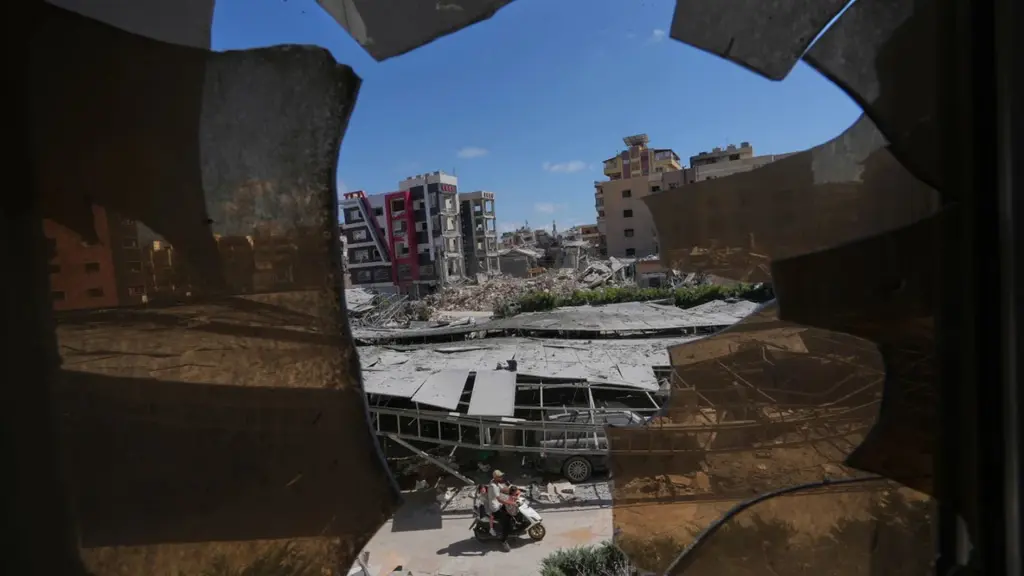
Jerusalem, Israel — Israel’s military said on Friday that its forces carried out overnight strikes across southern Lebanon as fierce clashes with Hezbollah continued, raising concerns over the future of the recently announced agreement between Iran and the United States aimed at ending the regional conflict.
Diplomatic talks scheduled for Friday in Switzerland between Iran and the United States, which U.S. Vice President JD Vance was expected to attend, were postponed as fighting intensified. Regional mediators are working to reschedule the negotiations, which are considered critical to securing a permanent end to the conflict. Officials said developments in Lebanon have become a key focus of international efforts.
READ MORE : Trump Threatens Iran Over Strait of Hormuz Deadline, Raising Fears of Civilian Infrastructure Strikes
The violence has taken a growing human toll. Lebanon’s state-run National News Agency reported that at least 18 people were killed in Israeli airstrikes, while the Israeli military confirmed that operations were continuing. Israel also reported the deaths of four soldiers, including a lieutenant colonel, during combat in southern Lebanon. Five additional soldiers were wounded in an explosive drone attack. Israeli forces also launched strikes in Lebanon’s eastern Bekaa Valley on Friday.
The renewed fighting threatens to undermine the newly signed U.S.-Iran agreement, which calls for an immediate halt to military operations across the region, including in Lebanon, and emphasizes respect for Lebanon’s territorial integrity and sovereignty. The deal was designed to reduce regional tensions, reopen the Strait of Hormuz to international shipping, and restart negotiations over Iran’s nuclear program.
The reopening of the strategic waterway has already eased pressure on global energy markets. U.S. officials said more than 12.5 million barrels of oil passed through the Strait of Hormuz on Wednesday night following the agreement, after weeks of disruption that had driven oil prices higher and increased concerns over global economic stability.
U.S. President Donald Trump said he approved the agreement to prevent what he described as an “economic catastrophe” caused by soaring energy prices, market uncertainty, and rising inflation linked to the conflict.
However, differences remain between Washington and Jerusalem over Lebanon. Neither Israel nor Hezbollah is a direct party to the U.S.-Iran agreement. Tehran has insisted that Israel withdraw from areas of southern Lebanon currently under its control, though the interim deal does not explicitly require such a move.
Israeli Prime Minister Benjamin Netanyahu, who faces elections later this year, has rejected calls for a withdrawal. He stated on Thursday that Israeli forces would remain in a security zone in southern Lebanon for as long as Israel’s security requirements demand.
Trump has publicly expressed frustration with Netanyahu’s approach. Speaking shortly before the agreement was finalized, the U.S. president emphasized Washington’s support for Israel while urging restraint regarding operations in Lebanon.
As hostilities continue, the postponement of the Switzerland talks highlights the fragile nature of diplomatic efforts to secure a lasting settlement to the broader regional conflict.
SOURCE : AP NEWS | Follow Us: Facebook | Instagram | Twitter | Youtube