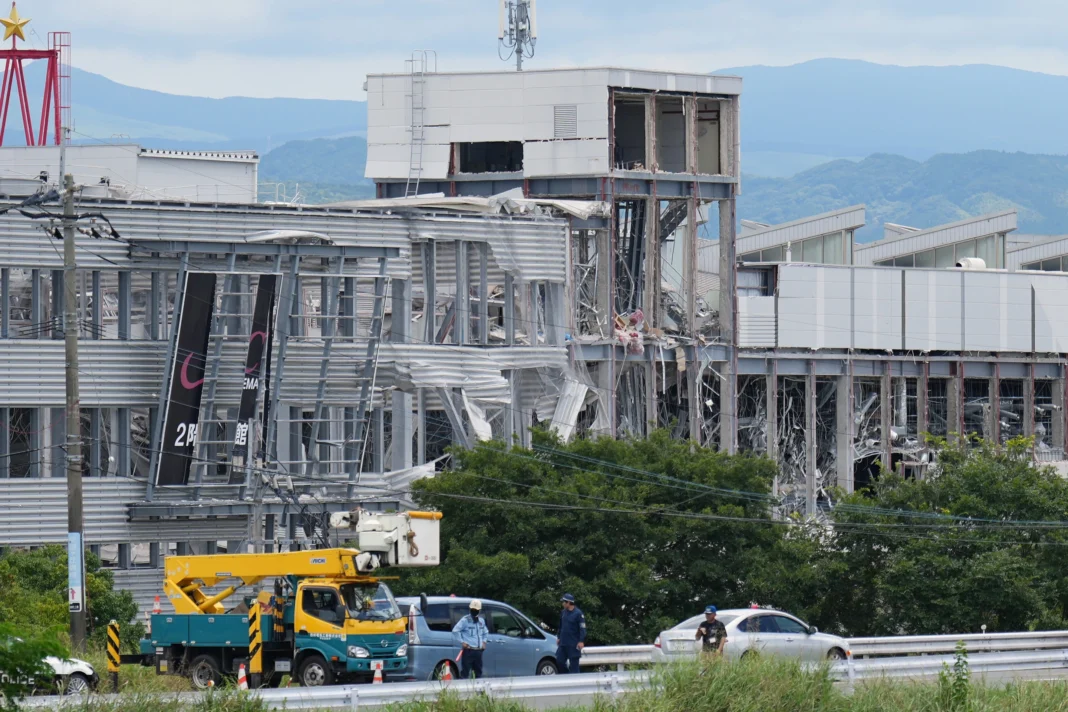
Kumamoto, Japan — Rescue teams backed by Japan’s Self-Defense Forces continued a desperate search for survivors on Wednesday after a powerful 7.1-magnitude earthquake struck Kumamoto Prefecture on the southern island of Kyushu, killing at least 13 people and leaving several others missing beneath collapsed buildings and industrial debris.
READ MORE : Death toll from Chongqing landslide in southwestern China climbs to 41
Emergency workers and soldiers searched through the wreckage of homes, damaged commercial buildings, and industrial facilities in a race against time to locate those trapped. One of the most critical rescue operations was underway at the Aeon Mall in Kashima, where a suspected gas explosion triggered by the quake caused the second floor to collapse, potentially trapping multiple people. Rescue efforts also continued at Nippon Paper Industries’ Yatsushiro factory, where a collapsed chimney buried workers under rubble. Officials said seven people were still believed to be trapped, while two survivors and two bodies had already been recovered.
Prime Minister Sanae Takaichi said the government was mobilizing every available resource for rescue and relief operations.
“There are people who are still waiting to be rescued, and it’s a race against time. We will go all out to find and rescue as many people as we can,” she said.
The earthquake severely disrupted essential services across the region. Government officials said approximately 36,900 households remained without electricity, around 9,500 homes were without gas, and communication networks were partially down in several affected areas. More than 9,000 residents evacuated to over 500 emergency shelters, where authorities rushed to install additional power supplies and air-conditioning units as the region faced a severe heat wave with temperatures expected to exceed 32°C (90°F).
Transportation infrastructure also suffered major disruptions. Kyushu Shinkansen bullet train services remained suspended while engineers inspected tracks and stations for structural damage. Aso Kumamoto Airport partially resumed operations after one runway was reopened, though flight cancellations and delays continued.
The quake also caused fresh damage to Kumamoto Castle, one of Japan’s most famous historic landmarks, where stone walls were damaged despite years of ongoing restoration following the devastating 2016 Kumamoto earthquake, which claimed at least 50 lives.
Residents described terrifying scenes as the powerful tremor struck. “The shaking reminded me of the Kumamoto quake 10 years ago, and I was frightened,” said Hiroki Shimoda, an official in Mifune town, who witnessed roof tiles crashing from nearby homes.
Authorities warned that aftershocks remain possible and urged residents to remain alert as damage assessments, rescue operations, and humanitarian relief efforts continue across the earthquake-hit region.
SOURCE : AP NEWS | Follow Us: Facebook | Instagram | Twitter | Youtube