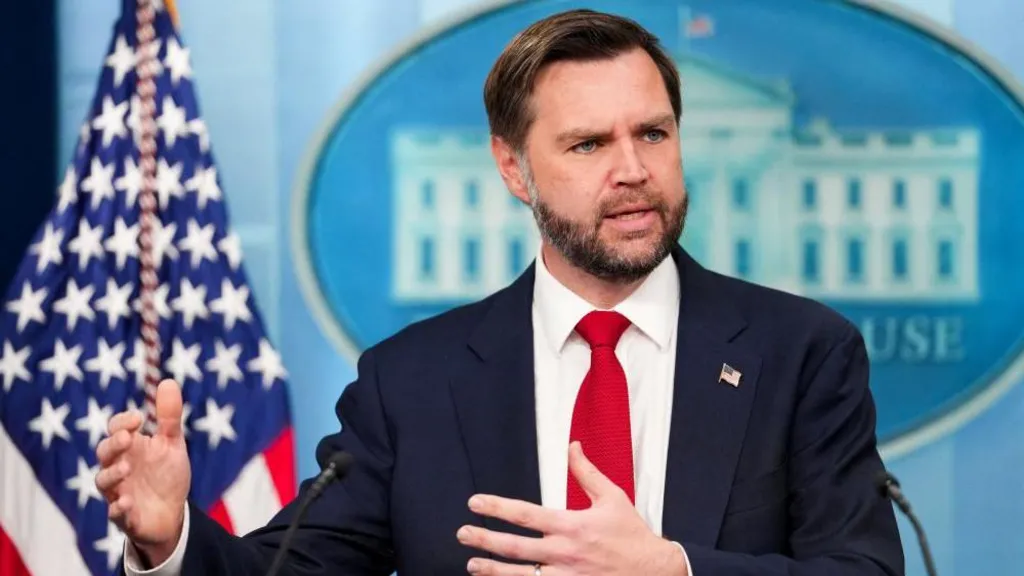
Washington DC, USA — U.S. Vice President JD Vance on Thursday put off his trip to Switzerland where he had been set to lead the talks. The White House blamed logistical issues.
Two regional officials, speaking to The Associated Press on condition of anonymity to discuss the closed-door talks, said mediators were focused on calming the fighting in Lebanon. One said Iran pulled out of the Switzerland meeting specifically over the fighting and Netanyahu’s comments, describing them as violating the interim deal between Iran and the U.S.
Two other regional officials, similarly speaking on condition of anonymity for the same reason, described Pakistan as being “stunned” by Iran’s decision not to go to the talks Friday.
Those discussions in Switzerland were to shift the conversation toward sanctions relief, maritime security, nuclear-related measures, verification, sequencing and regional assurances, one of the officials said. Those are key to ensuring a final deal between Iran and the U.S. be reached.
READ MORE : Israeli strikes hit southern Lebanon as US-Iran talks delayed
Following the signing of the interim deal, the U.S. said it had lifted its blockade, allowing oil tankers to begin freely moving through the Strait of Hormuz after months of being unable to use the critical channel. Still, the tentative agreement has drawn sharp criticism from some in the U.S. — including a few congressional Republicans — who worry Washington ceded too much to Iran with relief from sanctions and a potential $300 billion fund to help with rebuilding.
In Iran, Supreme Leader Ayatollah Mojtaba Khamenei seemed to endorse direct negotiations, saying in a statement on state media that “it is obvious that the face-to-face negotiations that will be held in the future will not mean accepting the enemy’s opinion.”
It was Khamenei’s first reaction to the agreement, and it was interpreted as a shift in Iran’s approach. Hard-liners, especially Khamenei’s father, the previous supreme leader, have long opposed direct talks, especially after the U.S. pulled out of the 2015 nuclear deal between Iran and world powers.
The supreme leader has not been seen in public since he was wounded in a strike at the start of the war.
US defends deal with Iran
Vance, who was initially personally skeptical of the U.S. going to war with Iran, has increasingly become the administration’s face of the conflict and has been outspoken in defending the deal.
On Thursday, he took the relatively unusual step of appearing at the White House to defend the initial deal to extend the ceasefire 60 days and allow for more negotiating — arguing that while it offers concessions, Iran first has to comply with U.S. demands.
Vance also offered a blunt warning to Israel, saying Trump was “the only head of state in the entire world who is sympathetic to the nation of Israel at this moment in time.”
SOURCE : AP NEWS | Follow Us: Facebook | Instagram | Twitter | Youtube