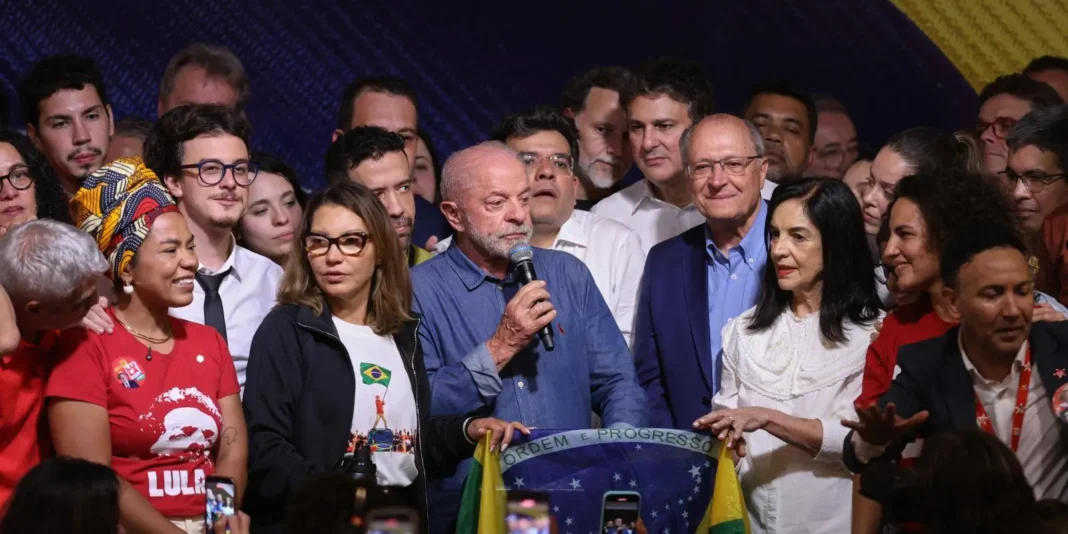
BRASÍLIA, Brazil — Luiz Inácio Lula da Silva, widely known as Lula, has been re-elected president of Brazil for a fourth term, securing 51.79 per cent of the vote against 48.21 per cent for conservative challenger Flávio Bolsonaro.
Lula’s victory came as a surprise after Bolsonaro led in the first round of voting on 4 October. The final result followed an unusual decision on Sunday allowing polling stations to remain open beyond their scheduled closing time.
READ MORE : Lula, Bolsonaro target undecided voters in Brazil’s presidential race final debate
“This, my fourth term, will be the best of any president in the history of this country,” Lula said following his victory.
Flávio Bolsonaro rejected the outcome, declaring: “It is impossible to recognize the election results, given the circumstances under which things unfolded.” He has also called for the election to be annulled, alleging fraud.
International Leaders Congratulate Lula
As attention turned to whether US President Donald Trump’s administration would formally recognise Lula’s victory, several world leaders moved quickly to congratulate the Workers’ Party leader.
French President Emmanuel Macron, Indian Prime Minister Narendra Modi and Canadian Prime Minister Mark Carney were among those who publicly congratulated Lula. Leaders across Latin America also responded to the result, highlighting the election’s regional and international significance.
Lula’s victory represents a setback for conservative political forces seeking to strengthen their influence across the Western Hemisphere. It also raises questions about the durability of the network of leaders politically aligned with Trump and the future direction of US relations with Latin America’s largest democracy.
The election has broader implications for regional diplomacy, as Brazil remains a major economic and political power whose foreign policy influences debates on trade, climate change, regional integration and relations with major global powers.
Election Dispute Raises Questions About Public Trust
Flávio Bolsonaro’s allegations of electoral fraud have revived concerns about political polarisation and confidence in Brazil’s democratic institutions. His father, former president Jair Bolsonaro, similarly questioned the 2022 election result after losing to Lula.
The latest dispute centres partly on a decision to extend voting hours. The request was initially submitted by both political camps to Brazil’s electoral authorities to accommodate voters facing difficulties reaching polling stations because of heavy rainfall and reported public transport limitations.
The subsequent involvement of the Supreme Court has prompted further debate over the process and added to existing scrutiny of the judiciary’s political independence.
Brazil’s electronic voting system is designed to deliver transparent and verifiable results. However, the controversy highlights a broader challenge: ensuring that election outcomes retain public legitimacy even when political divisions run deep.
For committed Bolsonaro supporters, accepting the result may prove difficult, particularly given years of political rhetoric questioning the impartiality of electoral and judicial institutions.
Implications for US–Brazil Relations
The response from Washington could influence how the dispute develops internationally. The Trump administration had strong political reasons to favour a conservative victory in Brazil, which would have reinforced the position of right-leaning governments across the Americas.
US Secretary of State Marco Rubio and other conservative figures have criticised left-wing political movements in Latin America, including Lula’s Workers’ Party, over their positions on Cuba and Nicaragua.
The prospect of a broader bloc of conservative, anti-communist governments aligned with Washington has long featured in US political debates. Lula’s re-election complicates that vision and could shape the tone of relations between Brasília and Washington.
The election also demonstrates that ideological alignment with the United States does not necessarily determine electoral outcomes across Latin America, where domestic economic conditions, political identities and public confidence in institutions remain decisive factors.
Economic Challenges Await Lula
Despite his victory, Lula faces significant challenges at home. Conservative majorities in both houses of Congress could make it difficult for his administration to secure the economic and fiscal reforms needed to strengthen public finances and address concerns over sovereign debt.
The narrow margin between the candidates also underscores the depth of Brazil’s political divisions. With the electorate almost evenly split, rebuilding confidence in public institutions may prove as important as implementing economic reforms.
Ultimately, the election’s consequences will extend beyond the presidential office. Brazil’s ability to manage the dispute peacefully, preserve institutional credibility and rebuild social trust will be crucial to its democratic stability and its standing on the international stage.
SOURCE : AGENCIES | Follow Us: Facebook | Instagram | Twitter | Youtube