Home Blog Page 27

Australia and Papua New Guinea to sign defense pact as China’s influence grows

0

Melbourne, Australia — Australia and Papua New Guinea’s defense forces will be integrated under a new security pact that will be signed this week, Australian Prime Minister Anthony Albanese said on Monday, as his government attempts to curb China’s security influence in the region.

Albanese said he and his Papua New Guinean counterpart, James Marape, will sign the pact on Wednesday, a day after celebrating the South Pacific island nation’s 50th anniversary of independence from Australia.

RELATED NEWS : Trial begins for Australian man accused of role in alleged drug smuggling to Bali

U.S. Deputy Secretary of State Christopher Landau will also be in the Papua New Guinea capital, Port Moresby, for the celebrations.

“It is a very significant upgrade in our defense relationship,” Albanese told Australian Broadcasting Corp. in Perth in Western Australia state before flying to Australia’s nearest neighbor.

“It provides for mutual defense, which means that we will provide support for each other, provide for an integration of our interoperability of our assets and our respective defense forces,” Albanese added.

With an estimated population of almost 12 million people, Papua New Guinea is the most populous nation in the South Pacific after Australia. Australia has 27 million people.

The deal will allow the nations’ citizens to serve in either militaries. Australia would offer Australian citizenship as an incentive for Papua New Guineans to enlist in the Australian military.

Australia currently only accept recruits from its Five Eyes intelligence-sharing partners, including the United States, Britain, Canada and New Zealand.

Three Pacific island nations have changed their allegiances from Taiwan to Beijing since 2019 as China’s influence in the region has grown. The U.S. and its allies are particularly concerned by China’s growing sway in security through police training in Fiji, Kiribati, Samoa, Solomon Islands and Vanuatu.

Australia and Papua New Guinea signed a security agreement in 2023 that broadened the two nations’ defense cooperation and strengthened Australia’s place as the preferred security partner in a region.

The signing was delayed by six months after a separate security deal struck between the United States and Marape’s government sparked protests in Papua New Guinea in May 2023 over concerns that the U.S. pact undermined national sovereignty.

Oliver Nobetau, project director of the Australia–Papua New Guinea Network at the Sydney-based Lowy Institute international policy think tank, said any wording around “exclusivity” of the partnership in the new Australia-Papua New Guinea pact would be significant.

Several Pacific island nations avoid taking sides in the growing strategic competition between U.S. allies and China.

“If there’s any wording around Australia being the security partner of choice for a country like Papua New Guinea, that would be a big win” for Australia, Nobetau said.

“We know that Pacific countries, PNG in particular, have been quite adamant about protecting their sovereignty, which means removing the sort of language that excludes third-party partnerships,” he added.

Albanese had hoped to sign a security and economic treaty with Vanuatu last week. But concerns within that island nation’s government about how the deal could impact its ability to secure infrastructure funding from China has extended negotiations.

Australian Defense Minister Richard Marles said the new bilateral treaty would replace an agreement struck in 1977 with a newly independent Papua New Guinea.

“This is a transformational agreement between ourselves and PNG,” Marles said.

Australia would continue to discuss with Fiji and Tonga advancing bilateral defense cooperation, Marles said.


SOURCE : AP NEWS |  Follow Us: Facebook | Instagram | Twitter | Youtube |

Rubio in Israel After Qatar Attack as Israeli Strikes Escalate in Northern Gaza

0

Jerusalem, Israel U.S. Secretary of State Marco Rubio arrived in Israel on Sunday as its military stepped up attacks in northern Gaza, flattening multiple high-rise buildings and killing at least 13 Palestinians.

Rubio said ahead of the visit that he would press Israeli leaders on their vision for Gaza’s future after last week’s Israeli strike in Doha killed senior Hamas leaders, derailing mediation efforts and sparking outrage in Qatar.

His two-day trip is both a diplomatic mission and a political signal: an expression of U.S. support for Israel at a moment of growing isolation. Next week, the United Nations is expected to hold a contentious debate on recognition of a Palestinian state, a proposal firmly opposed by Prime Minister Benjamin Netanyahu.

Balancing allies after Doha strike

Rubio’s visit went forward despite U.S. President Donald Trump’s public anger at Netanyahu for failing to inform Washington before the Doha operation, which killed at least six people and halted progress toward a ceasefire deal. On Friday, Trump and Rubio met Qatar’s prime minister to contain the fallout, underscoring Washington’s balancing act between two of its closest Middle East partners.

On Sunday, Rubio joined Netanyahu, U.S. Ambassador Mike Huckabee, and their spouses in a tour of the Western Wall tunnels. Netanyahu hailed the symbolism: “I think his visit here is a testament to the durability, the strength of the Israeli-American alliance. It’s as strong and as durable as the stones of the Western Wall we just touched.”

Meanwhile, Qatar’s prime minister, Sheikh Mohammed bin Abdulrahman Al Thani, condemned the Israeli strike as “an attack on the principle of mediation itself.” Arab and Muslim foreign ministers met in Doha to consider a unified response, while Qatar reaffirmed its commitment to working with Egypt and the U.S. on ceasefire efforts.

Mounting toll in Gaza

As diplomacy faltered, the fighting on the ground escalated. Local hospitals reported at least 13 deaths in Gaza on Sunday, including six members of one family killed when an airstrike hit a tent in Deir al-Balah. Associated Press footage showed thousands of Palestinians fleeing Gaza City along the coastal road as smoke rose from new strikes.

Israel destroyed three high-rise buildings after ordering evacuations, including one on the campus of the Islamic University. Residents scrambled to save belongings, tossing mattresses and carrying suitcases before the buildings were leveled. The Israeli military claimed the structures were being used by Hamas for surveillance, though it offered no evidence.

“This is part of the genocidal measures the occupation is carrying out in Gaza City,” said resident Abed Ismail. “They want to turn the whole city into rubble, and force another Nakba.” Israel has rejected accusations of genocide.

Humanitarian crisis deepens

Gaza’s Health Ministry said two Palestinians died from malnutrition-related causes in the past 24 hours, bringing the total to 277 adult deaths since late June, when the ministry began counting. Since the start of the war in October 2023, another 145 children have died of malnutrition-related causes.

The Israeli defense body overseeing humanitarian aid in Gaza said more than 1,200 trucks carrying aid, mostly food, entered the territory over the past week. But aid workers stressed that the deliveries are far from sufficient for Gaza’s enormous needs, with much of the aid looted before reaching those in desperate need.

International teams also completed repairs on one of Gaza’s three main water lines from Israel, increasing daily supply to 14,000 cubic meters (3.7 million gallons). Yet water remains scarce, with families often chasing trucks that arrive every few days, filling bottles and canisters to haul home.

War’s origins and scale

The conflict erupted on October 7, 2023, when Hamas-led militants stormed into southern Israel, killing about 1,200 people—mostly civilians—and abducting 251. Israel says 48 hostages remain in Gaza, with 20 believed to be alive.

In response, Israel launched a massive offensive that has killed at least 64,871 Palestinians, according to Gaza’s Health Ministry, which does not distinguish between combatants and civilians.


SOURCE : AP NEWS |  Follow Us: Facebook | Instagram | Twitter | Youtube 

Dr. Austin Mardon Elected Foreign Fellow of Indian National Science Academy

0

Edmonton, Canada In a landmark recognition that bridges continents and honors a lifetime of intellectual perseverance, Dr. Austin Mardon, CM, FRSC, has been elected as a Foreign Fellow of the Indian National Science Academy (INSA), one of the highest distinctions awarded to a non-Indian scientist. The announcement was confirmed in New Delhi on September 9.

Established in 1935, INSA represents India’s most eminent scientists, and election as a Foreign Fellow is reserved for globally renowned leaders who have made exceptional contributions to science. The rigorous process requires a two-thirds majority vote by the Academy’s sitting Fellows.

RELATED NEWS : Canada’s Unemployment Hits 7.1% in August, Highest Since 2016 Amid Trade Pressures

For Dr. Mardon, a scholar from Edmonton, the recognition resonates deeply with his family’s academic legacy. “To be recognized by a nation with such a profound and ancient history of intellectual and scientific discovery is humbling beyond words,” he said. “My grandfather studied and taught at Cambridge, and my father was a founding faculty member at the University of Lethbridge. This honour from the Indian National Science Academy feels like a validation of that lifelong pursuit of knowledge.”

Professor Ashutosh Sharma, President of INSA, praised Dr. Mardon’s scientific impact in a formal letter of election. “The Academy is aware of your pioneering contributions to the world of science, and we feel privileged in offering this honour to you,” Sharma stated.

Beyond personal achievement, the recognition also carries a powerful message across Canada—especially for Canadians living with disabilities. Dr. Mardon’s election highlights that intellectual excellence and the pursuit of knowledge transcend physical barriers, inspiring new generations of scholars.

Dr. Mardon, a Member of the Order of Canada, currently serves as an Adjunct Professor in the Faculty of Medicine at the University of Alberta and in the Department of Neuroscience at the University of Lethbridge. He will be formally invested as a Foreign Fellow at a ceremony in New Delhi on December 1, 2025.

Five Honoured with Minister of Veterans Affairs Commendation in Edmonton

Yesterday, five distinguished Canadians were recognized with the Minister of Veterans Affairs Commendation for their exceptional service to the veteran community. Among the recipients was Dr. Austin Mardon, CM, FRSC, alongside four other honourees.

The commendation, one of the highest awards given by Veterans Affairs Canada, celebrates individuals who have gone above and beyond in supporting and improving the lives of Canadian veterans.

“Each of these outstanding volunteers has demonstrated unwavering commitment, compassion, and service to those who have served our country,” said Jill McKnight, Minister of Veterans Affairs, who presented the awards during the Edmonton ceremony.

The recipients’ contributions range from advancing veteran-focused initiatives to providing direct support and advocacy, reflecting the breadth of dedication within Canada’s civilian community to honor the sacrifices of its veterans.

The Minister of Veterans Affairs Commendation not only recognizes service but also inspires Canadians to continue building a culture of respect and remembrance for the nation’s heroes.


SOURCE : DT |  Follow Us: Facebook | Instagram | Twitter | Youtube |
India Beats Pakistan by 7 Wickets in Asia Cup, Players Skip Handshake

0

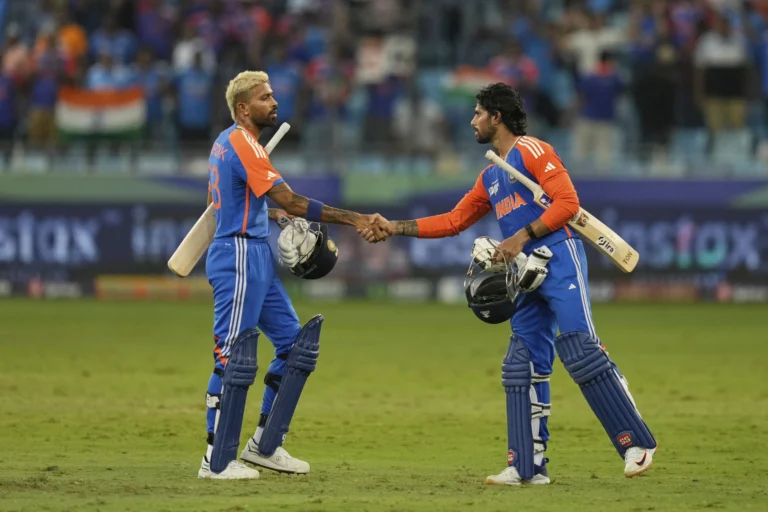
Dubai, UAE — India showcased complete dominance over Pakistan as Kuldeep Yadav’s spin wizardry and Axar Patel’s disciplined bowling left the Pakistani batting lineup in disarray, securing a convincing seven-wicket victory in a one-sided Asia Cup clash on Sunday.

The match, held in Dubai, drew a near full-capacity crowd, with Indian supporters making up nearly 85 percent of the audience despite calls from certain quarters to boycott the game in protest of the Pahalgam terror attack in April. From start to finish, India’s performance was clinical, dismantling Pakistan’s batting one ball at a time.

RELATED NEWS : No need to temper aggression, Suryakumar say before India-Pakistan clash

Kuldeep Yadav’s clever variations and spin control troubled Pakistan’s batters throughout their innings, while Axar Patel’s relentless accuracy ensured no respite for the opposition. Pakistan struggled to build partnerships, often losing wickets in quick succession, and failed to post a competitive total against the disciplined Indian attack.

India’s chase was equally commanding. Skipper Suryakumar Yadav led the charge, finishing the match with a decisive six, as his team chased down the target with relative ease. The victory was marked not only by India’s superior performance but also by a notable absence of post-match courtesies. Neither at the toss nor after the match did Indian players shake hands with their Pakistani counterparts, a gesture that drew attention as the teams lined up following the conclusion of the game.

The outcome reinforced India’s superiority in the contest, combining strategic bowling, sharp fielding, and composed batting. Fans in the stadium witnessed a performance that left little doubt about the result, with India controlling the match from the very first ball.

This win adds another memorable chapter to the storied India-Pakistan rivalry in cricket, underscoring India’s current dominance in the Asia Cup while also highlighting the tension that continues to surround matches between the two nations.


SOURCE : DT & AGENCIES |  Follow Us: Facebook | Instagram | Twitter | Youtube |
Algerian President Abdelmadjid Tebboune Appoints Srifi Ghrieb as New PM

0

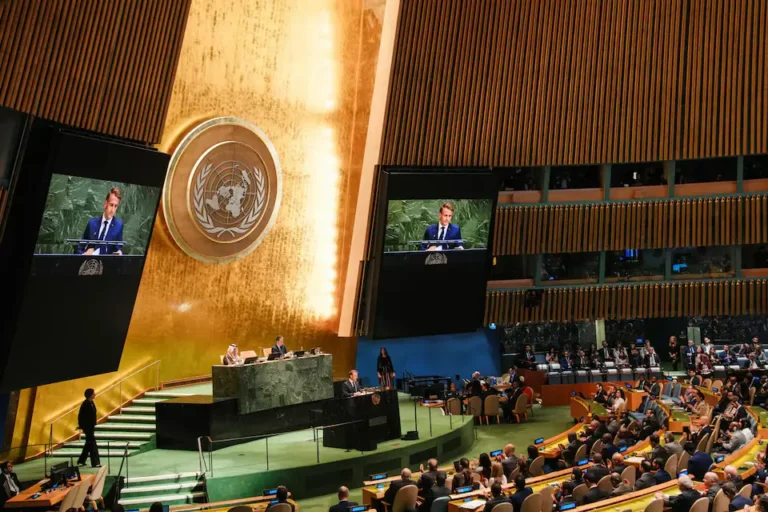
Algiers, Algeria — Algerian President Abdelmadjid Tebboune has officially appointed Sifi Ghrieb as the country’s new prime minister, assigning him the responsibility of forming a new government. The announcement was made on Sunday through a statement from the Algerian presidency, which did not provide further information about the composition of the incoming cabinet or the timeline for its formal establishment.

The appointment comes shortly after the dismissal of former Prime Minister Nadir Larbaoui on Thursday. Larbaoui, who had been appointed to the post in November 2023, was removed from office without any official explanation. His sudden departure marked another reshuffle in Algeria’s political landscape as President Tebboune seeks to reinforce his administration and address mounting challenges across the country.

RELATED NEWS : Africa seeks to lead on climate after US pullback

Before his official appointment, Sifi Ghrieb, who previously served as Algeria’s industry minister, had been acting as prime minister since last month following Larbaoui’s exit. Ghrieb brings extensive experience in government administration and is expected to oversee the formation of a new cabinet capable of tackling pressing economic issues, including industrial development, unemployment, and the diversification of Algeria’s economy beyond energy exports.

Analysts suggest that Ghrieb’s appointment signals President Tebboune’s intent to stabilize the government ahead of upcoming domestic and regional challenges, while also ensuring continuity in key policy areas. As prime minister, Ghrieb will play a central role in implementing the president’s strategic priorities and navigating Algeria through a period of political transition and economic reform.

The new prime minister’s initial steps, including cabinet appointments and policy announcements, are anticipated to draw close attention from both domestic stakeholders and international observers, given Algeria’s significant role in North Africa and its strategic importance in regional politics.


Prime Minister Sifi Ghrieb announced his new cabinet shortly after taking the oath of office, according to the Algeria Press Service

The cabinet appointments are as follows: Ahmed Attaf as Minister of State, Minister of Foreign Affairs, National Community Abroad and African Affairs; Saïd Chanegriha as Minister Delegate to the Minister of National Defense and Chief of Staff of the People’s National Army; Mohamed Arkab as Minister of State, Minister of Hydrocarbons and Mines; and Brahim Merad as Minister of State in charge of Inspection of State Services and Local Authorities.

Other key ministers include Saïd Sayoud as Minister of Interior, Local Authorities and Transport; Lotfi Boudjemaa as Minister of Justice; Abdelkrim Bouzerd as Minister of Finance; Kamel Baddari as Minister of Higher Education and Scientific Research; Mohamed Seghir Saadaoui as Minister of National Education; and Mohamed Esseddik Ait Messaoudene as Minister of Health.

Abdelmalek Tacherift was named Minister of Mujahideen and Rightsholders; Yahia Bachir as Minister of Industry; Ouacim Kouidri as Minister of Pharmaceutical Industry; Yacine El-Mahdi Oualid as Minister of Agriculture, Rural Development and Fisheries; Mourad Adjal as Minister of Energy and Renewable Energy; and Kamel Rezig as Minister of Foreign Trade and Export Promotion.

Amel Abdellatif will serve as Minister of Domestic Trade and National Market Regulation; Mohamed Tarek Belaribi as Minister of Housing, Urban Planning, Cities and National Planning; Youcef Belmehdi as Minister of Religious Affairs and Wakfs; Malika Bendouda as Minister of Culture and Arts; Mustapha Hidaoui as Minister of Youth in charge of the High Youth Council; Sid Ali Zerrouki as Minister of Post and Telecommunications; Noureddine Ouadah as Minister of Knowledge Economy, Start-ups and Micro-enterprises; Zoheir Bouamama as Minister of Communication; Nacima Arhab as Minister of Vocational Training and Education; Abdelkader Djellaoui as Minister of Public Works and Basic Infrastructure; and Taha Derbal as Minister of Hydraulics.

Abdelhak Saihi was appointed Minister of Labor, Employment and Social Security; Houria Meddahi as Minister of Tourism and Handicrafts; Soraya Mouloudji as Minister of National Solidarity, Family and Women’s Affairs; Kaoutar Krikou as Minister of Environment and Quality of Life; Walid Sadi as Minister of Sports; Nadjiba Djilali as Minister of Relations with Parliament; and Mohamed Abdenour Rabehi as Minister, Wali of the Governorate (Wilaya) of Algiers.

The cabinet also includes Sofiane Chaib as Secretary of State to the Minister of Foreign Affairs in charge of the National Community Abroad; Bakhta Selma Mansouri as Secretary of State to the Minister of Foreign Affairs in charge of African Affairs; Karima Bakir as Secretary of State to the Minister of Hydrocarbons and Mines in charge of Mines; and Yahia Boukhari as Secretary General of the Government.

This new cabinet marks the beginning of Prime Minister Ghrieb’s administration, tasked with addressing Algeria’s political, economic, and social priorities in the coming months.


SOURCE : APS |  Follow Us: Facebook | Instagram | Twitter | Youtube |
London Anti-Immigration March Draws 100,000, Starmer Urges Respect for Law and Diversity

0

London, England — British Prime Minister Keir Starmer spoke out on Sunday following a massive anti-immigration march in London, reaffirming that people have a right to peaceful protest while condemning attacks on police officers. More than 100,000 demonstrators took part in the march organized by far-right activist Tommy Robinson on Saturday. Authorities reported that 26 officers were injured and at least 25 people were arrested, with additional arrests expected as investigations continue.

Starmer took to X to underline the distinction between lawful demonstrations and violent acts. “People have a right to peaceful protest. It is core to our country’s values,” he said. “But we will not stand for assaults on police officers doing their job or for people feeling intimidated on our streets because of their background or the colour of their skin.

RELATED NEWS : Canada’s Unemployment Hits 7.1% in August, Highest Since 2016 Amid Trade Pressures

The rally highlighted immigration as a key political issue in Britain, surpassing even concerns over the struggling economy. The UK has seen a record number of asylum claims this year, with more than 28,000 migrants arriving in small boats across the English Channel so far. Many participants waved red and white English flags as well as the Union Jack, symbolizing the entire country.

Starmer emphasized that Britain is built on tolerance, diversity, and respect. “Our flag represents our diverse country, and we will never surrender it to those that use it as a symbol of violence, fear, and division,” he said.

The size of the turnout reportedly exceeded police expectations, with parts of the march spilling beyond the approved route. Officers faced significant challenges, encountering physical attacks including kicks, punches, and projectiles thrown by participants. Despite the scale and tension, Starmer stressed that the right to peaceful protest must be preserved as a cornerstone of British democracy.

The event has sparked renewed debate about the balance between free expression and public safety in the UK, as authorities review security measures and consider how to handle large-scale demonstrations in the future.


SOURCE : REUTERS |  Follow Us: Facebook | Instagram | Twitter | Youtube |
Ukrainian troops destroy Russian Orion drone valued in millions, Magyar shares footage

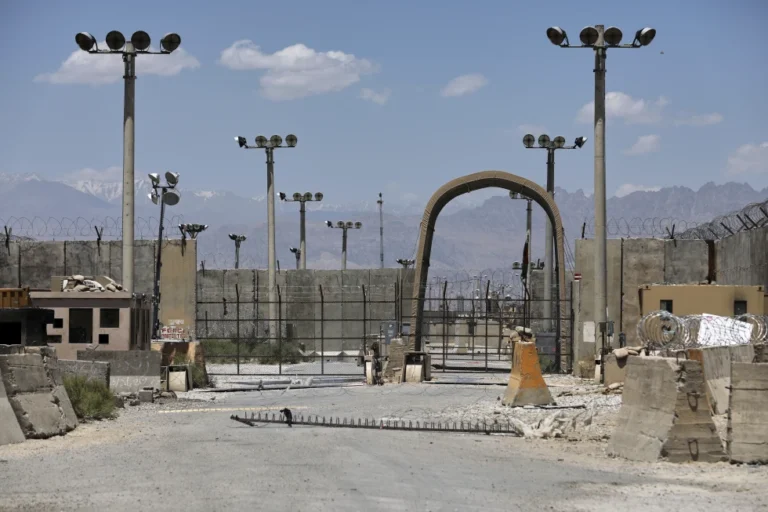
Kyiv, Ukraine – Ukrainian forces have shot down a Russian Orion combat reconnaissance drone worth several million dollars, marking the first confirmed destruction of this type of UAV, the commander of Ukraine’s Drone Systems Forces Robert “Magyar” Brovdi announced on Sept. 13 via Telegram.

“An Orion combat reconnaissance drone has just been shot down. The 414th Reconnaissance Battalion ‘Magyar’s Birds,’ Team Topit. Wingspan – 16.3 meters, flight endurance – 24 hours,” Magyar said. He noted that since Russia launched its full-scale invasion, his “Birds” unit has downed more than 1,500 enemy drones, including Orlan, Zala, Supercam, Shahed, Geran, and Lancet models. “The largest drones destroyed until now were the Merlin and Forpost. Orion was saved for dessert,” he added.

RELATED NEWS : Ukraine attacks vital Russian oil facility while Moscow carries out missile test

The Orion, classified as a medium-altitude, long-endurance (MALE) drone, is one of Russia’s most advanced UAVs. Equipped for visual, radar, and electronic reconnaissance, it is capable of long-duration patrols over targeted areas. Beyond intelligence-gathering, Orion drones are also armed, capable of carrying air-to-surface missiles and aerial bombs, including guided glide bombs such as the KAB series.

Magyar warned that the Orion poses a significant battlefield threat, given its dual role in both surveillance and precision strike operations. Its loss marks a notable setback for Russia’s aerial reconnaissance and strike capabilities in the ongoing war.

He shared a video on his Telegram channel robert_magyar on September 13, 2025.

Diplomat Times has not independently verified the authenticity of the video. The footage’s credibility remains unconfirmed.


SOURCE : NV NATION |  Follow Us: Facebook | Instagram | Twitter | Youtube |
Ukraine attacks vital Russian oil facility while Moscow carries out missile test

Kyiv, Ukraine – Russia and Ukraine have intensified their aerial battles, striking at each other’s vital energy and transportation infrastructure, as Moscow pushes ahead with its ground offensive in eastern Ukraine in the fourth year of the war. The escalation comes as Russia also confirmed the testing of a hypersonic missile, underscoring the growing sophistication of the conflict.

Russia’s Ministry of Defence said on Sunday that its air defences intercepted 361 drones, four guided aerial bombs, and rockets from a US-supplied HIMARS system overnight. On the other side, the General Staff of the Ukrainian Armed Forces reported the downing of a ballistic missile and 164 drones of varying types.

RELATED NEWS : Russia launches over 500 drones and missiles at Ukraine as Zelenskyy seeks more support

One of the main targets of Ukraine’s overnight strikes was the Kirishi oil refinery in Russia’s Leningrad region, one of the largest refineries in the world’s second-largest oil-exporting nation. Ukraine said the attack was a “successful strike,” reporting explosions and fire at the site. However, the extent of the damage remains unverified. Regional governor Alexander Drozdenko stated that three drones were destroyed in the Kirishi area, and a fire caused by falling debris was quickly extinguished without casualties.

The Kirishi refinery, operated by Surgutneftegas, processes about 17.7 million metric tons of crude annually (roughly 355,000 barrels per day), placing it among Russia’s top three refineries by capacity. Ukrainian drones have targeted the site before, with a smaller strike in March causing minor damage. Kyiv has intensified attacks on Russian oil facilities in recent months, arguing that these refineries directly fuel Moscow’s war effort.

Russian Northern Fleet frigate Admiral Golovko launches a Zircon hypersonic missile at a target during the Zapad joint strategic exercise with Belarus, in the Barents Sea, in this still image from video released September 14, 2025 [Russian Defence Ministry/Handout via Reuters]

The escalation is unfolding as US President Donald Trump declared he is prepared to sanction Russia further, but only if NATO allies agree to completely cut off purchases of Russian oil and impose parallel sanctions. The debate highlights growing international pressure on Moscow, even as it seeks to maintain oil revenues amid increasing disruption.

In a separate incident in Russia’s Leningrad region on Sunday, two freight trains derailed in different locations. Governor Drozdenko reported that one train driver was killed, and railway traffic was severely disrupted. While the cause of the derailments has not been confirmed, the incidents add to the atmosphere of instability across Russian infrastructure.

Drone warfare has become a defining feature of the conflict. More than three years into the full-scale invasion, Ukraine has relied on drones to push deep into Russian territory, while Russia continues to deploy swarms of drones into Ukraine. The threat has even spilled over into NATO territory, with Polish fighter jets recently deployed to shoot down Russian drones that crossed into Polish airspace.

According to Russia’s Defence Ministry, at least 80 Ukrainian drones were shot down overnight across Russian regions, Crimea, and the Sea of Azov. Despite these interceptions, Ukraine’s growing ability to target critical oil facilities has begun to impact Russia’s domestic fuel market.

In recent weeks, gasoline shortages have hit several regions across Russia, with long queues forming at fuel stations. The Kremlin has introduced rationing measures and, in an attempt to stabilize supplies, imposed a ban on gasoline exports until September 30, with partial restrictions set to remain until the end of October.

As both sides continue to escalate strikes on energy infrastructure, the battle over oil refineries and fuel supplies has become an increasingly critical front in the war, with direct implications for Russia’s economy, Ukraine’s resistance strategy, and global energy markets.


SOURCE : AGENCIES |  Follow Us: Facebook | Instagram | Twitter | Youtube |
Mexico road tragedy, Kopomá–Chocholá highway accident leaves 15 dead

0

Mexico City, Mexico – A tragic accident on the Mérida-Campeche federal highway claimed at least 15 lives on Saturday, authorities in Yucatán confirmed.

According to the state’s security secretariat, a cargo truck overturned at kilometer 127, crashing into a car and a truck carrying construction workers. The impact left 15 people dead at the scene, including the truck driver, while two others sustained injuries. Emergency crews from the State Secretariat of Public Security (SSP) rushed to the site with fire and ambulance units to assist victims, control risks, and provide immediate medical care.

RELATED NEWS : At Least 10 Dead, 60 Injured as Passenger Bus Hit by Freight Train in Mexico

The fatal crash marks Mexico’s third deadly road tragedy in less than a week. On Monday, 10 people were killed and 41 injured after a freight train collided with a double-decker bus in central Mexico. Just days earlier, at least 15 people died in a multi-vehicle collision involving a truck, a private car, and a taxi in the country’s southeast.

Authorities have urged motorists to exercise extreme caution on federal highways, strictly observe speed limits, and comply with road safety regulations to prevent further accidents.

Just days earlier, a double-decker passenger bus collided with a freight train in central Mexico, killing at least 10 people and injuring more than 60 others — one of the nation’s deadliest road accidents in recent months.


SOURCE : REUTERS |  Follow Us: Facebook | Instagram | Twitter | Youtube |
North Korea cautions Seoul against joining US military exercises

0

Seoul, South Korea — Kim Yo Jong, the influential sister of North Korean leader Kim Jong Un, has sharply criticized the upcoming joint military exercises involving the United States, South Korea, and Japan, warning that such actions could lead to “negative consequences” for the participating nations.

The exercises, named Iron Mace and Freedom Edge, are set to commence today. Iron Mace is a tabletop drill scheduled from September 15 to 19 at the U.S. Forces Korea headquarters in Camp Humphreys, Pyeongtaek. The drill aims to integrate U.S. nuclear capabilities with South Korea’s conventional forces to counter North Korean threats.

RELATED NEWS : Over 300 South Korean workers return home after in detention following a U.S. immigration raid

Simultaneously, the Freedom Edge exercise, a trilateral drill involving the U.S., South Korea, and Japan, will occur in international waters southeast of South Korea’s Jeju Island. This five-day exercise focuses on enhancing aerial, naval, and cyber defense capabilities in response to North Korea’s missile and nuclear threats.

Kim Yo Jong, serving as a vice department director in North Korea’s ruling party, denounced the drills as a “reckless show of strength” and a “dangerous idea,” warning that such military activities could have “negative consequences” for the participating countries.

North Korea has consistently condemned joint military exercises between the U.S. and South Korea, viewing them as rehearsals for invasion. Seoul and Washington maintain that these drills are defensive in nature.

The Iron Mace exercise is the third of its kind since its inception under the Nuclear Consultative Group, established following an April 2023 summit between former South Korean President Yoon Suk Yeol and former U.S. President Joe Biden. This marks the first such exercise under South Korean President Lee Jae Myung and U.S. President Donald Trump, both of whom have expressed a desire to resume dialogue with North Korea.

In response to the upcoming drills, North Korean official Pak Jong Chon emphasized that continued displays of power by what Pyongyang calls “hostile forces” would provoke stronger retaliatory actions.

As the exercises unfold, regional tensions remain high, with North Korea viewing these drills as provocative and a potential threat to its security. The international community is closely watching, as the outcomes could influence future diplomatic engagements and security dynamics in the region.


SOURCE : AGENCIES |  Follow Us: Facebook | Instagram | Twitter | Youtube |