Home Blog Page 35

Xi Meets ‘Old Friend’ Putin, Kim Jong Un as China Prepares Military Parade Amid Tensions With West

0

Beijing, China – China’s President Xi Jinping convened his Russian and North Korean counterparts in Beijing for the first time on Tuesday, a show of solidarity with countries shunned by the West over their role in Europe’s worst war in 80 years.

Xi hosted Vladimir Putin for talks at the Great Hall of the People and then at his personal residence, calling him his “old friend”.

A few hours later, Kim Jong Un’s armoured train was spotted by a Reuters witness arriving in the Chinese capital. North Korean state media confirmed Kim’s arrival, showing his daughter Kim Ju Ae accompanying him.

RELATED NEWS : Global Spotlight on Beijing as SCO Leaders Gather and China Flaunts Military Might

Ju Ae, whom South Korean intelligence consider her father’s most likely successor, is making her international debut after years of being seen next to Kim at major domestic events.

Xi, Putin and Kim are set to take centre stage at a massive military parade on Wednesday, where the Chinese president will flaunt his vision for a new global order as US President Donald Trump’s “America First” policies strain Western alliances.

Beyond the pomp, analysts are watching whether the trio may signal closer defence relations following a pact signed by Russia and North Korea in June 2024, and a similar alliance between Beijing and Pyongyang, an outcome that may alter the military calculus in the Asia-Pacific region.

It would also be a blow for Trump, who has talked up his close relations with all three leaders and touted his peacemaking credentials as Russia’s three-and-a-half-year war with Ukraine has raged on.

In a thinly veiled swipe at this rival across the Pacific Ocean on Monday, Xi told a summit of more than 20 leaders of non-Western countries: “We must continue to take a clear stand against hegemonism and power politics.”

Xi also held talks on Monday with Prime Minister Narendra Modi of India, whose country has been targeted by Trump over its purchases of Russian oil seen as helping finance Putin’s war effort.

Trump’s Treasury Secretary Scott Bessent called the summit “performative” and accused China and India, the biggest buyers of Russian crude, of being “bad actors” by fuelling Russia’s war.

As Putin and Xi met, Russia’s Gazprom and China National Petroleum Corporation signed a deal to increase gas supplies and penned an agreement on a new pipeline that could supply China for 30 years.

ALARM BELLS

At a time when Trump has set his sights on a Nobel Peace Prize, any new concentration of military power in the East that includes Russia will ring alarm bells for the West.

“Trilateral military exercises between Russia, China and North Korea seem nearly inevitable,” wrote Youngjun Kim, an analyst at the US-based National Bureau of Asian Research, in March, citing how the conflict in Ukraine had pushed Moscow and Pyongyang closer.

“Until a few years ago, China and Russia were important partners in imposing international sanctions on North Korea for its nuclear and missile tests… (they) are now potential military partners of the Democratic People’s Republic of Korea during a crisis on the Korean peninsula,” he added, using the diplomatically isolated country’s official name.

The North Korean leader has supplied more than 15,000 troops to support Putin’s war in Ukraine.

In 2024, he also hosted the Russian leader in Pyongyang – the first summit of its kind in 24 years – in a move widely interpreted as a snub to Xi and an attempt to ease his pariah status by reducing North Korea’s dependence on China.

About 600 North Korean soldiers have been killed fighting for Russia in the Kursk region, according to South Korea’s intelligence agency, which believes Pyongyang is planning another deployment.

Putin also told the Shanghai Cooperation Organisation summit in Tianjin that a “fair balance in the security sphere” must be restored, shorthand for Russia’s criticism of the eastward expansion of NATO.

For Kim, the parade will mark the largest multilateral diplomatic event he has ever attended, offering the reclusive young leader an opportunity to gain implicit support for his banned nuclear weapons, and expand his diplomatic circle.

Before crossing to China early on Tuesday, Kim visited a missile laboratory.

The visit was geared towards “showing off (North Korea’s) status as a nuclear power” just before “standing alongside Xi and Putin, which is intended to suggest support for North Korea as a nuclear state,” said Hong Min, North Korea analyst at the Korea Institute for National Unification.

At the Beijing railway station, Kim and his daughter were greeted by senior Chinese officials including top-ranked Communist Party official Cai Qi and foreign minister Wang Yi, according to North Korean state media.

Painstaking planning has also gone into China’s “Victory Day” parade, marking 80 years since Japan’s defeat at the end of World War Two, with downtown Beijing paralysed by security measures and traffic controls for weeks.


SOURCE : REUTERS |  Follow Us: Facebook | Instagram | Twitter | Youtube |

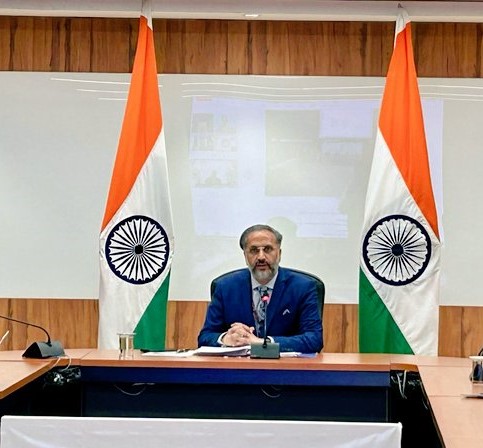
Dr. Deepak Mittal as India’s next Ambassador to the United Arab Emirates (UAE)

0

New Delhi, India – A 1998-batch officer of the Indian Foreign Service, Dr. Mittal brings more than two decades of diplomatic experience. He has served twice in the Prime Minister’s Office, making him a trusted figure in India’s top diplomatic and strategic circles. In 2021, he was instrumental in establishing India’s first official diplomatic contact with the Taliban and has played a crucial role in defending Indian interests on global platforms.

From 2020 to 2022, Dr. Mittal served as India’s Ambassador to Qatar, where he managed complex bilateral engagements, particularly during the COVID-19 pandemic and amid shifting regional dynamics in the Gulf. His leadership during this period was pivotal in advancing India’s ties with Doha while safeguarding the interests of Indian nationals.

Dr. Mittal will succeed Sunjay Sudhir, the current Ambassador to the UAE, who is set to retire in September. His appointment comes at a time when India–UAE relations are at an all-time high, with growing cooperation in energy, trade, technology, and security.

The UAE is among India’s closest strategic partners in West Asia, serving as a key energy supplier and home to more than 3.5 million Indian nationals, one of the largest expatriate communities in the region. Diplomatic relations between India and the UAE, established in 1972, have deepened significantly over the past decade.

The partnership gained new momentum following Prime Minister Narendra Modi’s landmark 2015 visit to the Emirates, the first by an Indian Prime Minister in over three decades. Since then, Modi has visited the UAE seven times in nine years, underscoring the importance of bilateral ties. In February 2024, he inaugurated the BAPS Hindu Mandir in Abu Dhabi, an event widely regarded as a symbol of cultural and interfaith harmony. Earlier, in December 2023, Modi also visited Dubai to attend COP-28.

With Dr. Mittal’s appointment, New Delhi is expected to further strengthen cooperation with Abu Dhabi in priority areas such as renewable energy, investment, maritime security, defence, and regional stability.


SOURCE : MEA |  Follow Us: Facebook | Instagram | Twitter | Youtube |

Venezuela Ready to Face Any U.S. Military Action, Says Defense Minister

0

Caracas, Venezuela — Venezuelan Defense Minister Vladimir Padrino Lopez on Sunday declared that the country is prepared to defend itself against “any attack” from the United States, warning Washington against military intervention as tensions rise over naval deployments in the Caribbean.

“We will fight if you dare to set foot in Venezuela,” Padrino Lopez said in a statement broadcast by state-run media. He accused the United States of attempting to provoke internal unrest and undermine Venezuela’s political leadership through “shows of force” and economic pressure.

RELATED NEWS : At least 34 Colombian soldiers kidnapped after clashes with FARC dissidents

The remarks come after the U.S. military deployed warships to the Caribbean earlier this month, an operation Washington has described as part of its strategy to combat international drug cartels. Caracas, however, views the maneuvers as a direct threat. “The announcement of these naval deployments in Caribbean waters is nothing more than a show of force, a way of marking territory, so that other powers will not take control of the Caribbean Sea,” Padrino Lopez said.

Venezuelan Military Mobilization

In response, Venezuelan authorities have stepped up defense measures across the country. The Armed Forces have intensified patrols along maritime borders and in national airspace, while President Nicolas Maduro has called for strengthening the Bolivarian National Militia — a civilian reserve force aligned with the government.

Padrino Lopez confirmed that 15,000 troops have been deployed to Venezuela’s western region, which borders Colombia. He also pointed to ongoing domestic operations aimed at dismantling organized crime networks, claiming that security forces have destroyed more than 30 criminal outposts and illegal boat-building facilities linked to drug trafficking in recent weeks.

Regional Reactions and Criticism of U.S. Maneuvers

The U.S. deployment has drawn criticism from several Latin American leaders, including Mexican President Claudia Sheinbaum and Colombian President Gustavo Petro, who warned that heightened military activity in the Caribbean risks destabilizing the region further. Both leaders have urged dialogue and restraint, emphasizing regional cooperation over confrontation.

Analysts note that U.S. military moves in the Caribbean have historically been a point of friction with Venezuela. Washington has long accused Caracas of failing to curb drug trafficking through its territory, while the Maduro government contends that the United States uses such allegations as a pretext to exert pressure and justify sanctions.

Strained U.S.–Venezuela Relations

Relations between Caracas and Washington have been fraught for years, marked by sanctions, accusations of electoral fraud, and disputes over oil exports. The U.S. does not officially recognize Nicolas Maduro as Venezuela’s legitimate president, instead backing opposition figure Juan Guaidó during Venezuela’s political crisis in 2019. Although international recognition of Guaidó has since diminished, the rift between Washington and Caracas remains deep.

Recent attempts at limited engagement — including discussions over sanctions relief tied to democratic reforms — have faltered, leaving relations in a state of hostility. Padrino Lopez’s latest remarks underscore Caracas’s determination to portray U.S. actions as imperial interference.

A Region on Edge

The renewed tensions come at a fragile moment for Venezuela, which is grappling with a prolonged economic crisis, hyperinflation, and mass emigration. Observers warn that heightened militarization in the Caribbean could complicate humanitarian conditions and regional stability.

“The scale of these deployments and the rhetoric surrounding them reflect an increasingly adversarial dynamic,” said a regional security analyst. “While neither side appears eager for open conflict, the risk of miscalculation remains.”

For now, Venezuela has vowed to stand firm. “We are defending our sovereignty, our independence, and our people,” Padrino Lopez said. “No foreign power will intimidate us.”

SOURCE : AP/ XINHUNA|  Follow Us: Facebook | Instagram | Twitter | Youtube |
Death Toll Surpasses 800 as Earthquake Devastates Eastern Afghanistan, 300 injured

0

Kabul, Afghanistan — At least 812 people have been confirmed dead and 2,817 others injured after a powerful 6.0-magnitude earthquake struck eastern Afghanistan late Sunday night, government officials said on Monday.

According to Zabihullah Mujahid, spokesman for the Afghan interim government, the worst-hit areas were the districts of Nurgal, Suki, Watapur, and Chapa Dara in Kunar province, where at least 800 people were killed and 2,500 injured. In neighboring Nangarhar province, 12 people were reported dead and 255 injured, while Laghman province recorded 58 injuries and Nuristan province reported four.

RELATED NEWS : At least 622 killed, 1,555 injured in East Afghanistan earthquake

Officials warned that the toll is expected to rise as entire villages have been reduced to rubble. The rugged terrain, combined with poor infrastructure, has hampered rescue efforts, but emergency response teams have been deployed to deliver aid and evacuate survivors.

The earthquake struck at 11:47 p.m. local time, with its epicenter located 27 kilometers northeast of Jalalabad, Nangarhar’s capital, at a shallow depth of eight kilometers. Its impact was felt across eastern provinces, flattening homes and sending residents fleeing into the night.

Local residents gather around a military helicopter that landed to evacuate injured victims of an earthquake that killed many people and destroyed villages in eastern Afghanistan, in Mazar Dara, Kunar province, Afghanistan, Monday, Sept. 1, 2025. Photo : AP

“The scale of devastation is unimaginable,” a Taliban official said, describing widespread destruction across rural villages.

The United Nations’ humanitarian agency confirmed the figures, noting that Afghanistan is already grappling with a humanitarian crisis marked by prolonged drought, aid cuts, and widespread food insecurity.

Survivors recounted harrowing scenes. Faridullah Fazli, a resident of Asadabad in Kunar province, said the tremors jolted him awake: “There was a very strong earthquake, accompanied by sounds that were very scary. We didn’t sleep until morning. After the earthquake, there were small tremors, and there still are.”

He added that he spent the night helping transport the dead and wounded to clinics and hospitals. “It was a very scary situation — just an atmosphere of fear and terror,” he said.

In the village of Mazar Dara, a local resident reported that 95% of homes had collapsed, with nearly every household reporting injuries. “There are five to ten wounded in every family,” he said.

Relief efforts are ongoing, but authorities and aid agencies say the true extent of the tragedy will only become clear in the coming days.

India rushes aid to quake-hit Afghanistan

Indian Foreign Minister S. Jaishankar spoke with his Afghan counterpart Mawlawi Amir Khan Muttaqi, expressing condolences over the earthquake tragedy.

He said India has delivered 1,000 family tents in Kabul, while 15 tonnes of food aid is being sent from Kabul to Kunar. More relief supplies will follow from India starting tomorrow, he added, affirming that India stands with Afghanistan in this difficult time.

A relief truck in Kabul carrying 1,000 family tents delivered by India, as part of its immediate aid effort. An additional 15 tonnes of food supplies are being moved from Kabul to Kunar for earthquake-affected families. Photo : DrSJaishankar

SOURCE : AGENCIES |  Follow Us: Facebook | Instagram | Twitter | Youtube |

Clashes Break Out Between Syrian Forces and Kurdish-Led SDF in Aleppo Province

0

Damascus, Syria — Armed clashes erupted on Sunday between Syrian authorities-affiliated forces and the Kurdish-led Syrian Democratic Forces (SDF) in Tal Maaz village, east of Aleppo province, state news agency SANA reported.

According to SANA, a Syrian military unit ambushed a group of SDF fighters attempting to infiltrate military positions in the village. Other SDF fighters based in Um Tina and Deir Hafer opened fire on these positions in an effort to rescue their ambushed comrades.

The initial clashes involved light weapons, but continued shelling by the SDF prompted military forces to respond with heavy weapons and call in reinforcements. It was not immediately clear whether the clashes resulted in any casualties.

The flare-up occurred despite recent coordination efforts between Damascus and Kurdish authorities aimed at presenting a unified stance on national and security issues.

On March 10, the Syrian interim government and the SDF reached a deal to merge all civil and military institutions in Kurdish-controlled areas under state administration. On July 25, Syria’s foreign affairs authority said it had agreed with the SDF to hold consultations in Paris to complete implementation of the agreement.

However, on Aug. 9, the Syrian interim authority announced it would not attend the planned Paris consultations, accusing the SDF of holding a “separatist” conference a day earlier that undermined ongoing integration efforts.


SOURCE : AGENCIES |  Follow Us: Facebook | Instagram | Twitter | Youtube |
At least 622 killed, 1,555 injured in East Afghanistan earthquake

0

Kabul, Afghanistan — The death toll from a powerful earthquake that struck eastern Afghanistan late Saturday has climbed to 622, with 1,555 others injured, the Ministry of Interior Affairs reported on Monday. Authorities warned that casualties could rise as rescue efforts continue in remote areas.

The 6.0-magnitude earthquake struck at 11:47 p.m. local time on August 31, with its epicenter located about 27 kilometers deep in Kunar province, according to the U.S. Geological Survey. The tremor shook buildings across the mountainous region, toppling homes and infrastructure.

RELATED NEWS : Himachal Pradesh Monsoon Tragedy: 310 Lives Lost, Hundreds of Roads Blocked

Kunar province bore the brunt of the disaster, with 610 fatalities and 1,300 injuries recorded, along with widespread destruction of residential areas. Neighboring Nangarhar province reported 12 deaths, 255 injuries, and dozens of homes damaged, Interior Ministry spokesman Abdul Mateen Qani said. Many of the affected homes were made from mud and wood, structures particularly vulnerable to seismic activity.

Authorities and humanitarian teams have mobilized rapidly to provide relief. Security, medical, transport, food and support units have been deployed to affected areas. Rescue teams from the Ministries of Defense, Interior, and Public Health are conducting search-and-rescue operations and airlifting critically injured patients to Nangarhar Regional Hospital, according to local media outlet TOLOnews.

Despite these efforts, officials warned that many villages in Kunar remain isolated due to landslides and damaged roads, complicating the delivery of aid. Humanitarian organizations are working to bring food, clean water, and medical supplies to survivors while assessing the scale of destruction in hard-to-reach areas.

Afghanistan, which faces ongoing economic hardship and limited infrastructure, is particularly vulnerable to natural disasters. Experts say the region’s mountainous terrain, combined with poorly constructed homes, contributes to high casualties during earthquakes.

International organizations, including the United Nations, WHO, and Red Crescent, have expressed concern and are coordinating with local authorities to provide emergency relief. Neighboring countries and donors are also reportedly mobilizing resources to assist affected communities.

The disaster comes amid ongoing challenges for Afghanistan’s population, including food insecurity, political instability, and the long-term impacts of prior natural disasters. Officials have urged residents in affected provinces to remain cautious as aftershocks continue.

Rescue teams continue to comb through the rubble, while authorities stress the importance of immediate humanitarian assistance to prevent further loss of life and alleviate suffering among the thousands displaced by the quake.


SOURCE : XINHUA |  Follow Us: Facebook | Instagram | Twitter | Youtube |
Global Spotlight on Beijing as SCO Leaders Gather and China Flaunts Military Might

0

Tianjin, China — China is staging a week of high-powered diplomacy and military display, hosting more than two dozen world leaders for the Shanghai Cooperation Organization (SCO) summit in Tianjin and a massive military parade in Beijing commemorating the 80th anniversary of the end of World War II. Together, the events offer a rare window into Beijing’s strategic ambitions, shifting alliances and growing efforts to expand its influence beyond Asia.


SCO Summit: Expanding Eurasian Cooperation

Founded in 2001 by China, Russia and four Central Asian nations, the SCO was initially conceived as a security forum to address cross-border terrorism and regional stability. Over time, it has evolved into a broad-based political and economic bloc, now counting 10 full members: China, Russia, Kazakhstan, Kyrgyzstan, Tajikistan, Uzbekistan, India, Pakistan, Iran and Belarus.

This year’s summit in Tianjin brings together leaders and representatives from nearly three dozen countries, underscoring the grouping’s expanding reach.

  • Russian President Vladimir Putin, Iranian President Masoud Pezeshkian, and Indian Prime Minister Narendra Modi lead the lineup of high-profile attendees.
  • Turkish President Recep Tayyip Erdogan and Egyptian Prime Minister Mostafa Madbouly are present as dialogue partners, highlighting SCO’s appeal beyond its core Eurasian base.
  • Delegations from Laos, Malaysia and Vietnam further reflect Beijing’s push to tighten its Southeast Asian partnerships.
  • Notably absent is Indonesia’s President Prabowo Subianto, who canceled his trip due to protests at home.

The Tianjin summit is expected to focus on regional security, trade connectivity, energy cooperation and counterterrorism, with Russia and Iran pushing for stronger coordination amid Western sanctions and conflicts.


Beijing Parade: Military Might on Display

Following the summit, the attention shifts to Beijing, where Xi Jinping will preside over a grand military parade down Chang’an Avenue on Wednesday. The spectacle is designed to demonstrate China’s growing defense capabilities, featuring:

  • More than 100 aircraft, including advanced fighter jets and bombers.
  • Dozens of missile systems and heavy artillery.
  • Thousands of PLA soldiers marching in lockstep through Tiananmen Square.

But just as significant as the weaponry will be the diplomatic optics.

While many SCO leaders are expected to stay for the parade, others — including India, Egypt and Turkey — will quietly leave beforehand. Their absence reflects political sensitivities; many U.S. partners avoid appearing alongside China at overt military showcases.

Filling the gap is an unexpected guest: North Korean leader Kim Jong Un. Although he skipped the SCO summit, Kim will stand shoulder-to-shoulder with Xi Jinping and Vladimir Putin at the parade — a striking tableau of authoritarian solidarity.

For Kim, this marks his first face-to-face meeting with Xi in over six years and his first multilateral appearance with global leaders since taking power in 2011.


Geopolitical Significance

The SCO summit and Beijing parade together project a carefully crafted image of China as both a regional convener and a military power.

For Beijing, the SCO reinforces its role as a leader in Eurasian cooperation, building alternatives to Western-dominated forums.
For Moscow, the parade provides a stage to demonstrate that Russia is not isolated despite the ongoing war in Ukraine.
For Pyongyang, Kim’s attendance signals North Korea’s willingness to align more openly with Beijing and Moscow at a time of heightened confrontation with the West.

The symbolism of Xi, Putin and Kim possibly seated together in Tiananmen Square is hard to miss. It comes as the United States and its allies intensify efforts to counter China’s influence and support Ukraine against Russia’s invasion.

Beijing has maintained formal neutrality on Ukraine but has refused to condemn Moscow’s actions. Western officials accuse China of supplying dual-use technology and critical components that help sustain Russia’s defense industry. Meanwhile, North Korea has reportedly sent soldiers and ammunition to aid Russian forces, cementing what analysts call an “axis of convenience” among the three powers.


Looking Ahead

The outcomes of the SCO summit will shape regional cooperation in energy, trade and security, while the Beijing parade is likely to deepen perceptions of a China-Russia-North Korea alignment in defiance of Western pressure.

As Beijing welcomes allies and partners while carefully managing absences, the week underscores China’s central role in reshaping the geopolitical balance across Eurasia — blending soft-power diplomacy with a hard-power show of force.


SOURCE : XINHUA |  Follow Us: Facebook | Instagram | Twitter | Youtube |
Malaysia Celebrates 68th Independence Anniversary with Grand Parade in Putrajaya

0

Kuala Lumpur, Malaysia – Malaysia marked the 68th anniversary of its independence on Sunday with a grand National Day parade in Putrajaya, the nation’s administrative capital, as tens of thousands of citizens and visitors gathered to celebrate the country’s journey since 1957.

The celebration, locally known as Hari Merdeka, saw more than 14,000 participants forming 81 contingents representing various sectors of Malaysian society — including civil servants, the armed forces, students, private organizations, and community groups. The event highlighted Malaysia’s diversity and the unity that underpins its national identity.

RELATED NEWS : Thai court dismisses prime minister over compromising phone call with Cambodian leader

King Sultan Ibrahim Sultan Iskandar presided over the ceremony, while Prime Minister Anwar Ibrahim, cabinet ministers, governors, and senior officials joined the audience, reflecting the event’s national importance.

The Royal Malaysian Air Force staged a spectacular fly-past with fighter jets, transport aircraft, and helicopters performing aerial maneuvers over Putrajaya Boulevard. On the ground, military parades, cultural troupes, school contingents, and decorated floats showcased the country’s progress in areas such as education, innovation, agriculture, digital technology, and environmental sustainability.

Patriotic songs, traditional dances, and theatrical performances added color to the celebrations, while spectators waved the Jalur Gemilang (national flag) with pride.

Prime Minister Anwar Ibrahim, in his National Day message, emphasized unity and inclusivity as the foundation of Malaysia’s strength. He called on citizens to uphold the spirit of Merdeka by working together across races, religions, and regions to ensure peace, stability, and economic progress.

Internationally, leaders from ASEAN, India, China, and other partner nations extended greetings to Malaysia on its National Day, commending the country’s contributions to regional peace, prosperity, and multilateral cooperation.

Ancient Roots of Malaysia

Malaysia’s history traces back to the Malay Peninsula, once a vibrant hub of trade dominated by powerful kingdoms such as Srivijaya and Malacca.

In 1511, the Portuguese captured Malacca, marking the start of colonial control. The British later expanded their influence, eventually colonizing the region.

After World War II, the British introduced the Malayan Union, but Malay leaders strongly opposed it, seeing it as a threat to sovereignty and the role of Malay rulers.

Federation of Malaya

In 1948, the Malayan Union was replaced by the Federation of Malaya Agreement, which preserved the powers of the Malay rulers and granted special rights to Malays.

Independence in 1957

On August 31, 1957, Tunku Abdul Rahman, Malaysia’s first prime minister, declared independence at Stadium Merdeka in Kuala Lumpur with the historic cry of “Merdeka!” shouted seven times.

August 31, 1957, marks the historic day when Malaysia, then Malaya, gained independence from British colonial rule. Sixty-eight years later, the country continues to reflect on its achievements while looking forward to its aspirations of becoming a high-income, innovation-driven economy and a hub of multicultural harmony.

Formation of Malaysia

In 1963, Malaysia was officially formed, comprising the Federation of Malaya, Singapore, Sabah, and Sarawak. Two years later, in 1965, Singapore separated from the federation.

Celebrating Hari Merdeka

Today, Malaysians commemorate Independence Day, known as Hari Merdeka, with colorful parades, cultural performances, and patriotic displays. The celebrations honor the nation’s history, heritage, and the unity that defines its people.

Politics and Diplomacy

As Malaysia celebrates its 68th Independence Day in 2025, its politics and diplomacy remain deeply shaped by history and cultural diversity. Over the decades, Malaysia has emerged as a credible middle power, practicing a balanced foreign policy rooted in active neutrality, non-alignment, and equidistant diplomacy. This approach has enabled the nation to foster strong ties with multiple countries while steering clear of major power rivalries.

In the contemporary era, Malaysia has carefully navigated complex geopolitical currents, especially in balancing relations with the United States and China. Guided by pragmatism, it has pursued an inclusive foreign policy, engaging with global powers while strengthening its role in regional organizations such as ASEAN.

Malaysia’s diplomacy emphasizes economic cooperation, regional security, and stability, while safeguarding sovereignty and national interests. At home, the country’s multicultural and multilingual character continues to shape its political outlook, reflecting a long-standing commitment to unity, diversity, and resilience as defining pillars of nationhood.


SOURCE : BERNAMA |  Follow Us: Facebook | Instagram | Twitter | Youtube |

PM Modi, Myanmar’s Senior General Hold Key Talks on Connectivity, Security at SCO Summit

0

Tianjin, China – Indian Prime Minister Narendra Modi and Myanmar’s Senior General Min Aung Hlaing held important bilateral talks on the sidelines of the Shanghai Cooperation Organisation (SCO) Summit 2025 in Tianjin, China. The meeting reaffirmed the strategic significance of Myanmar as a vital partner in India’s Act East and Neighbourhood First policies.

Prime Minister Modi emphasized that India sees *immense scope to enhance cooperation with Myanmar in diverse fields, including trade and investment, cross-border connectivity projects, energy collaboration, rare earth mineral exploration, and security partnerships. He underlined that a stronger relationship with Myanmar is crucial not only for regional development but also for ensuring peace and stability across South and Southeast Asia.

RELATED NEWS : Modi and Xi Reaffirm Partnership, Stress Peace on Borders at SCO Summit in Tianjin

India and Myanmar share 1,600 km of land and maritime borders, and their historical ties are built upon shared cultural, religious, and civilizational links. Buddhism forms a strong cultural bridge, while people-to-people exchanges, educational linkages, and cross-border community interactions have added depth to the relationship.

Economically, Myanmar is India’s gateway to Southeast Asia, playing a pivotal role in projects such as the India-Myanmar-Thailand Trilateral Highway and the Kaladan Multi-Modal Transit Transport Project, both of which aim to boost connectivity and economic integration. Bilateral trade currently exceeds \$2 billion annually, with significant potential for growth in sectors such as agriculture, energy, infrastructure, and digital technology.

On the security front, both sides reaffirmed cooperation to address cross-border challenges, including terrorism, insurgency, organized crime, and trafficking. India has been working closely with Myanmar’s security forces to ensure peace along the North-East border, which is crucial for regional stability.

The two leaders also discussed the importance of regional and multilateral platforms, including the SCO, BIMSTEC, and ASEAN-led mechanisms, in advancing peace, security, and sustainable development. Prime Minister Modi highlighted that Myanmar’s active participation in these forums strengthens the broader vision of a connected, prosperous, and stable Indo-Pacific region.

The meeting in Tianjin is being seen as a reaffirmation of India’s long-standing commitment to Myanmar, despite political and economic challenges. It reflects New Delhi’s belief that a strong and cooperative partnership with Myanmar is vital for advancing regional prosperity, connectivity, and security.


SOURCE : PMO |  Follow Us: Facebook | Instagram | Twitter | Youtube |
Yamuna Crosses Danger Mark in Delhi as Punjab, Himachal Reel Under Floods

0

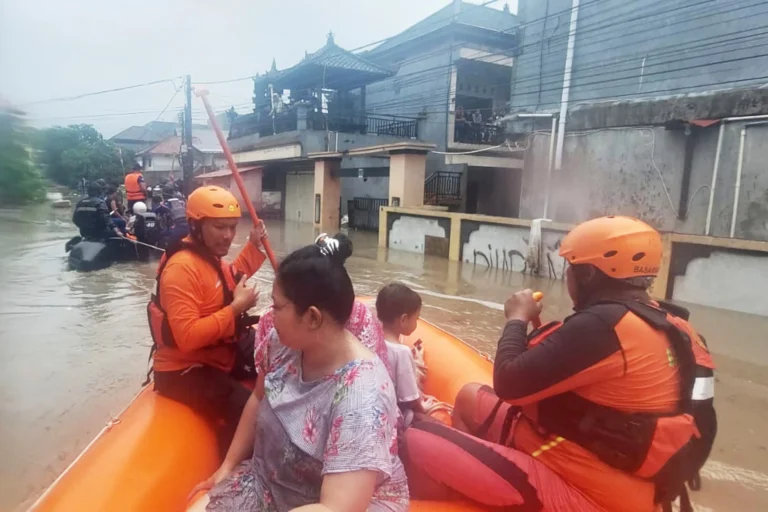
New Delhi, India – The water level of the Yamuna River in the national capital crossed the danger mark on Sunday morning following days of continuous heavy rainfall, officials said.

At 8 pm, the Yamuna’s water level stood at 205.52 metres. The warning mark for Delhi is 204.5 metres, the danger mark is 205.3 metres, and evacuation begins once the river touches 206 metres. The Old Railway Bridge serves as a key observation point for monitoring the river’s flow and potential flood risks.

RELATED NEWS : Himachal Pradesh Monsoon Tragedy: 310 Lives Lost, Hundreds of Roads Blocked

“The river is rising mostly due to high volumes of water being released from the Wazirabad and Hathnikund barrages every hour. According to the forecast, the water level is likely to fall by Sunday evening,” an official from the central flood room said.

Data from the flood control department shows that the Hathnikund barrage is releasing around 53,950 cusecs of water every hour, while Wazirabad is discharging 51,210 cusecs. Water released from these upstream barrages typically takes 48 to 50 hours to reach Delhi, meaning even smaller discharges contribute to rising levels within the city.

The India Meteorological Department (IMD) has forecast a generally cloudy sky with moderate rain in Delhi until Tuesday, along with thunderstorms and rain through the coming week.

Authorities have set up a flood relief camp in Mayur Vihar to prepare for the possible evacuation of residents if the river swells further.

Meanwhile, heavy rains have also triggered floods in Punjab and Himachal Pradesh, disrupting normal life and causing damage to crops, property, and infrastructure. Several low-lying areas in Punjab are inundated, while landslides and flash floods have been reported in parts of Himachal, prompting evacuation efforts and deployment of relief teams.

Officials in both states have issued alerts and are closely monitoring river levels as more rainfall is expected in the coming days.


SOURCE : PTI |  Follow Us: Facebook | Instagram | Twitter | Youtube |