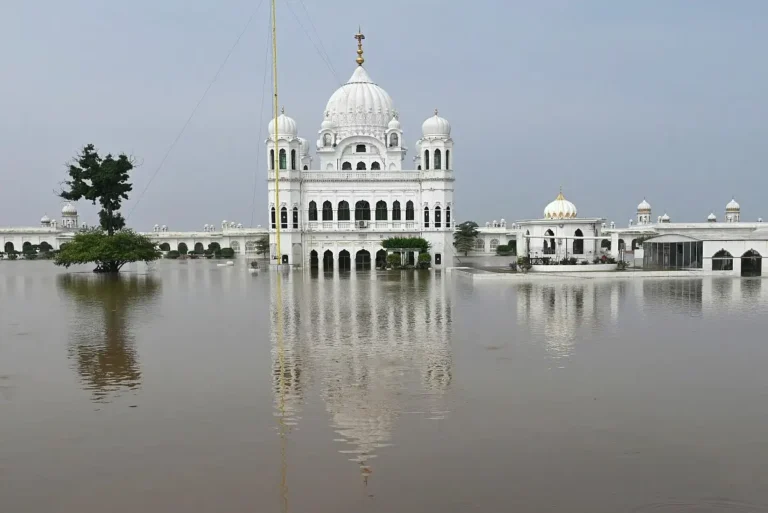
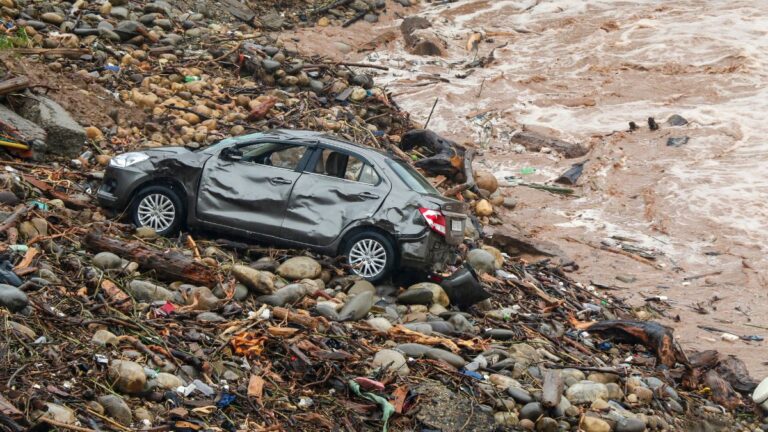
Narowal, Pakistan — Rescuers in boats rushed to save stranded families across Punjab province on Thursday after three major rivers — Ravi, Sutlej, and Chenab — overflowed due to heavy rains and water release from dams in neighboring India.
The floods have displaced nearly 250,000 people and affected more than 1.2 million, wiping out crops, submerging businesses, and leaving many unable to flee their homes. At least 15 people were killed in Gujranwala district and nearby villages a day earlier, police confirmed.
RELATED NEWS : Landslide Near Vaishno Devi Kills 32, Injures 20 Amid Heavy Rains
Officials said 1,432 villages have been inundated, while nearly 700 relief camps and 265 medical centers have been set up. Senior Punjab minister Marriyum Aurangzeb said essential supplies are being delivered, but conditions remain dire.
An aerial view of the flooded area on the outskirts of Lahore, the capital of Punjab province on August 28, 2025. Photo : AFP
Since late June, more than 800 people have lost their lives in flood-related incidents across Pakistan. Prime Minister Shehbaz Sharif, visiting affected areas, warned that Pakistan ranks among the world’s most climate-vulnerable nations. “This trend will continue in the coming years. It now depends on us how we confront this challenge,” he said, announcing new water storage projects to better control future flooding.
Since late June, more than 800 people have died in floods across Pakistan. The disaster recalls the catastrophic 2022 floods, which killed nearly 1,700 and highlighted the country’s vulnerability to climate-driven extremes. Photo : AFP
Meanwhile, in Indian-controlled Kashmir’s Jammu region, the heaviest August rains in decades have unleashed flash floods and landslides, disrupting Hindu pilgrimage routes and submerging homes. At least 115 people have been killed and thousands evacuated as roads and bridges suffered extensive damage.
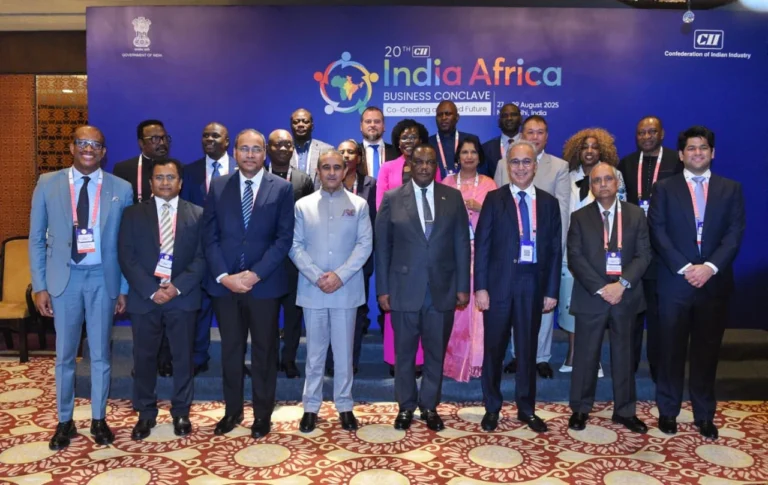
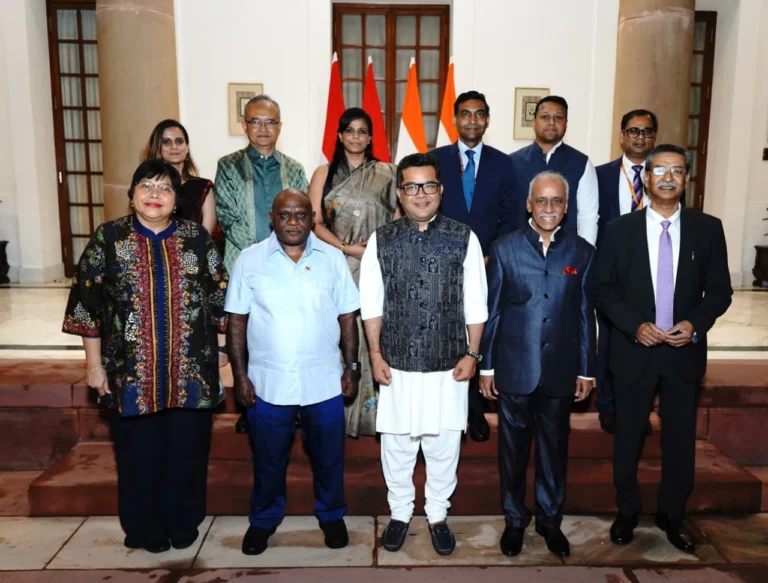
New Delhi, India — A renewed call for stronger South-South cooperation echoed from New Delhi on Wednesday, as H.E. Gen. (Retd) Dr. C.G.D.N. Chiwenga, Vice President of Zimbabwe, told a gathering of global leaders that India and Africa together can write the “next great chapter” of equitable global growth.
Speaking at the opening of the CII India-Africa Business Conclave 2025, themed “Synergies towards Co-Creating a Shared Future,” Dr. Chiwenga emphasised that Africa is not merely a continent rich in resources, but a hub of youthful talent, innovation, and expanding markets.
“Africa is home to one of the fastest-growing populations and the youngest minds. By 2050, with over 2.5 billion people, it will drive consumer demand, industrialisation, and infrastructure development on an unprecedented scale,” he said.
Zimbabwe’s Investment Push
Dr. Chiwenga highlighted Zimbabwe’s roadmap to attain upper middle-income status by 2030, calling on Indian investors to explore opportunities in:
Lithium mining for electric mobility and renewable energy storage
Agriculture and food processing
Pharmaceuticals and healthcare manufacturing
ICT, digital services, and infrastructure
He underscored Zimbabwe’s special economic zones, youthful workforce, and reforms as catalysts for transforming the nation into a competitive investment hub.
India’s Commitment to Africa
Reiterating India’s long-standing development partnership with Africa, Kirti Vardhan Singh, Minister of State for External Affairs, said India remains committed to Africa’s digital transformation, energy transition, and capacity building.
“Today, we have not only created vibrant development cooperation together, but also committed to shaping a brighter future for generations to come. Our shared emphasis on trust and transparency makes India and Africa natural partners,” Singh said.
Industry Leaders Weigh In
CII President Rajiv Memani stressed that India-Africa ties extend beyond trade, positioning both regions as voices of the Global South in building a fairer economic order.
Sudarshan Venu, MD, TVS Motor Company, spoke of mobility opportunities, including two- and three-wheeler markets that cater to Africa’s rising urbanisation.
Saurav Chatterjee, CEO, CARE Ratings Africa, called for the creation of a pan-African credit rating agency to boost SME financing and investor confidence.
Energy and Green Growth
From the African side, Mohamed Ouhmed, Secretary General of Morocco’s Ministry of Energy Transition, called for joint efforts in renewable energy development, regional power integration, and localized technology adaptation to accelerate Africa’s green growth.
Global Significance
This year’s India-Africa Conclave has drawn 1,600 delegates from 64 countries, including 17 non-African nations — reflecting the rising global interest in Indo-African collaboration. Experts note that the partnership is increasingly seen as a model for sustainable South-South cooperation, particularly in areas of climate action, food security, and digital transformation.
MINNEAPOLIS, USA — Tragedy struck Minneapolis on Wednesday morning when a gunman opened fire on children attending Mass at Annunciation Catholic School, killing two and wounding 17 others in what police described as an “absolutely incomprehensible” act of violence.
According to Minneapolis Police Chief Brian O’Hara, the assailant — armed with a rifle, shotgun, and pistol — fired dozens of rounds through the church windows just before 8:30 a.m., targeting children seated in the pews. Police believe the shooter died by suicide shortly after the attack.
The victims included two children, aged 8 and 10, while at least 14 other children were among the injured. Dozens of youngsters were inside the church at the time of the shooting.
Fifth-grader Weston Halsne recounted the terrifying moments, saying he ducked for cover as a friend shielded him with his own body. “I was super-scared for him, but I think now he’s okay,” the 10-year-old said, adding that he was praying for the other hospitalized children and adults.
His grandfather, Michael Simpson, expressed anguish over the violence. “The attack happened during Mass on just the third day of school. I don’t know where God is in all of this,” he said.
Authorities are investigating the motive behind the shooting, as the community grapples with shock and grief over the devastating loss of young lives.
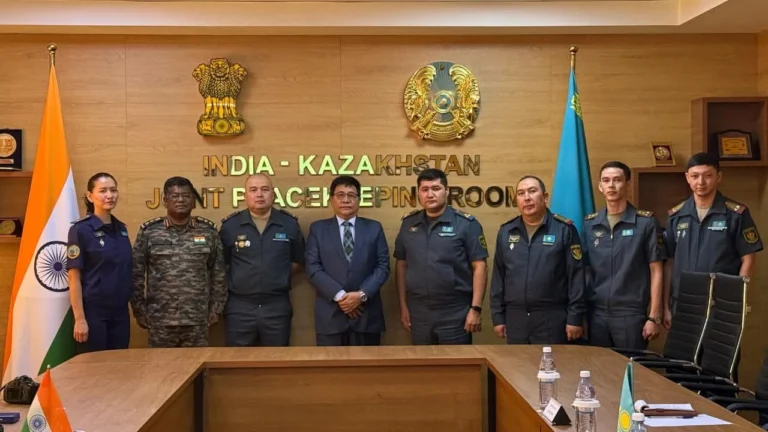
Ambassador YK Sailas Thangal’s visit to Almaty highlights joint efforts in training, technology exchange, and security collaboration.
Almaty, Kazakhstan – Ambassador of India to Kazakhstan, YK Sailas Thangal, paid an official visit to the Kazakhstan United Nations Peacekeeping Operations Centre and the Army Institute of Radio Electronics & Engineering in Almaty today. The visit underlined the growing momentum in defence and security cooperation between the two countries.
During the engagements, the Ambassador interacted with senior officials and underlined India’s readiness to deepen collaboration in the areas of peacekeeping, counter-terrorism, cyber security, advanced training, and military technology exchange. Both sides acknowledged that these efforts would pave the way for enhanced capacity building, knowledge sharing, and interoperability in future peacekeeping and defence operations.
Historical Perspective on India–Kazakhstan Relations
India and Kazakhstan established diplomatic relations in February 1992, shortly after Kazakhstan’s independence. Since then, the partnership has steadily evolved into a multi-dimensional relationship, encompassing political dialogue, economic cooperation, energy security, culture, education, and defence.
Strategic Cooperation: Kazakhstan is India’s closest partner in Central Asia and the first country from the region to sign a Strategic Partnership Agreement with India in 2009, later elevated to an Enhanced Strategic Partnership in 2015 during Prime Minister Narendra Modi’s visit to Astana.
Energy Partnership: Kazakhstan is an important supplier of uranium for India’s nuclear energy program, reflecting deep trust and strategic alignment in the energy sector.
Trade & Economy: Bilateral trade has expanded in areas such as pharmaceuticals, IT, textiles, machinery, and hydrocarbons. India is also among the largest trading partners of Kazakhstan in South Asia.
Cultural & Educational Links: People-to-people ties have flourished, with growing interest in Indian culture, yoga, Bollywood, and higher education opportunities among Kazakh youth. The Indian Council for Cultural Relations (ICCR) plays a key role in strengthening these exchanges.
Defence and Military Cooperation
Defence relations form a crucial pillar of the bilateral partnership. Both nations have:
Participated in joint military exercises such as the “Prabal Dostyk” series, aimed at strengthening counter-terrorism operations and interoperability.
Engaged in UN peacekeeping training collaborations, where Kazakhstan has shown keen interest in India’s long-standing global peacekeeping expertise.
Maintained regular exchanges of military delegations, academic cooperation, and professional training programs between armed forces institutions.
Today’s visit by Ambassador Thangal serves as another milestone in this expanding defence partnership. By engaging directly with Kazakhstan’s Peacekeeping Operations Centre and the Army Institute of Radio Electronics & Engineering, India reaffirmed its commitment to advancing joint efforts in training, research, technology, and operational preparedness.
The Ministry of External Affairs, Government of India, together with ICCR in Kazakhstan, continues to play a proactive role in broadening the scope of bilateral cooperation, making the India–Kazakhstan relationship a model of trust, mutual respect, and shared aspirations in Central Asia.
Gaborone, Botswana – President Duma Boko on Monday declared a public health emergency, citing the collapse of Botswana’s national medical supply chain that has left hospitals and clinics critically short of medicines and essential stock.
In a televised address, Boko said the military would immediately take charge of an emergency distribution effort, with trucks set to leave Gaborone for remote areas by Monday evening.
“The medical supply chain as run by central medical stores has failed,” Boko stated. “This failure has led to a severe disruption to health supplies countrywide.”
The president confirmed that the finance ministry had approved 250 million pula ($17.35 million) in emergency funds to procure vital medicines and supplies.
The crisis is also linked to a shrinking national budget caused by the ongoing downturn in the global diamond market. Botswana, with a population of 2.5 million, is one of the world’s largest diamond producers. Its vast diamond reserves, discovered just after independence from Britain in 1966, account for around 80 percent of the country’s foreign earnings.
The health ministry revealed earlier this month that it owed 1 billion pula to private health facilities and suppliers, further deepening the crisis.
Among the medicines running out are those for hypertension, cancer, diabetes, tuberculosis, asthma, eye conditions, sexual and reproductive health, and mental health treatment. Shortages of surgical dressings and sutures were also reported.
Boko also alleged that inflated procurement prices and mismanagement in the distribution system had led to “loss, waste, and damage” of supplies.
Botswana’s health sector has been further strained by a reduction in U.S. government funding under President Donald Trump’s administration, which had previously supported medical programs in the country. A government spokesperson did not immediately respond to questions about whether the U.S. cuts directly contributed to the crisis.
Jakarta, Indonesia – India and Indonesia on Tuesday reaffirmed their commitment to strengthening cooperation across multiple sectors under their Comprehensive Strategic Partnership, with particular emphasis on human rights, justice, and people-centric governance.
Indian Union Minister of State for External Affairs, Pabitra Margherita, met Indonesia’s Minister of Human Rights, H.E. Natalius Pigai, in Jakarta to review bilateral relations and identify new areas of collaboration. The discussions also touched upon enhancing mechanisms for bilateral consular cooperation and promoting democratic values as a foundation for governance.
Both sides underlined the importance of safeguarding human rights, fostering justice, and ensuring that bilateral cooperation delivers tangible benefits to the people of both countries. The meeting reflected the shared democratic traditions of India and Indonesia, two of Asia’s largest democracies, and their common vision for inclusive development and regional stability.
Officials noted that the talks are part of ongoing efforts to translate the Comprehensive Strategic Partnership into concrete outcomes, building on existing collaboration in trade, defense, cultural exchanges, and people-to-people ties.
“India and Indonesia remain steadfast partners with shared democratic values and a mutual commitment to advancing peace, prosperity, and human rights in the region,” a statement said.
“India has one of the strongest and most independent National Human Rights Commissions in the world. I wish to learn from its experience to strengthen our own National Commission as we draft the Human Rights Law, which is already part of the National Legislation Program. We have prepared a draft and an Inventory of Issues (DIM), nearly 80% complete. Hopefully, this year or the next, it will be passed by the Indonesian House of Representatives,” said H.E. Natalius Pigai on X.
Jammu & Kashmir, India – At least 32 people were killed and 20 others injured after heavy rains triggered a massive landslide near the Vaishno Devi shrine in Katra in Jammu & Kashmir’s Reasi district on Tuesday, officials and sources confirmed on Wednesday.
The tragedy struck around 3 p.m. on Tuesday when the mountainside gave way, sending huge stones, boulders and debris crashing down on pilgrims midway along the 12-km trek from Katra to the hilltop shrine. Rescue teams said the impact was so severe that several devotees were buried instantly under the rubble.
The yatra (pilgrimage) to the shrine was immediately suspended. Initially, the Himkoti trek route had been closed due to rains on Tuesday morning, but the old route remained open until 1:30 p.m., when authorities suspended it indefinitely following the disaster.
Prime Minister Narendra Modi expressed his condolences on social media, saying: “The loss of lives due to a landslide on the route to the Shri Mata Vaishno Devi Temple is saddening. My thoughts are with the bereaved families. May the injured recover at the earliest. The administration is assisting all those affected. My prayers for everyone’s safety and well-being.”
The loss of lives due to a landslide on the route to the Shri Mata Vaishno Devi Temple is saddening. My thoughts are with the bereaved families. May the injured recover at the earliest. The administration is assisting all those affected. My prayers for everyone's safety and…
Rescue and relief operations are being carried out by the National Disaster Response Force (NDRF), State Disaster Response Force (SDRF), local police and army personnel. Helicopters have been pressed into service to evacuate the injured to hospitals in Jammu and Udhampur. Officials warned that more people may still be trapped under the debris.
Meanwhile, incessant heavy rainfall across Jammu & Kashmir and several other northern states, including Punjab and Himachal Pradesh, has triggered flash floods, landslides, and large-scale damage to infrastructure. Thousands have been evacuated from low-lying areas, and red alerts remain in force across the region.
A section of the Tawi river bridge gave way after incessant rainfall in Jammu. Photo : PTI
The Vaishno Devi shrine, one of India’s holiest pilgrimage sites, attracts millions of devotees every year. Authorities are closely monitoring the weather before deciding when the pilgrimage can resume safely.
Heavy rains and flash floods have caused widespread destruction across northern India, with Jammu & Kashmir and Punjab among the worst-affected regions.
According to PTI, a flash flood washed away 10 residential houses and a bridge in the remote Margi area of Kishtwar district in Jammu & Kashmir. While no casualties were reported immediately, officials said more than 12 paramilitary personnel were feared trapped in floodwaters in Lakhanpur village of Kathua district, where rescue efforts are underway.
So far, over 3,500 residents have been evacuated to safer locations in Jammu. In the Kashmir Valley, the Jhelum River crossed the flood-alert mark of 21 feet at Sangam in Anantnag district and was only two feet below the alert level of 18 feet at Ram Munshi Bagh in Srinagar on Wednesday morning.
Amid the rising water levels, India issued fresh alerts to Pakistan over the “high probability” of flooding in the Tawi River, following the release of excess water from major dams due to incessant rains. The alerts, routed through the Ministry of External Affairs, were described by officials as being issued on “humanitarian grounds.” The Tawi originates in the Himalayas, flows through Jammu, and merges with the Chenab in Pakistan.
Very sorry to hear about the loss of lives of pilgrims on the Mata Vaishno Devi yatra route. My deepest condolences to the families who lost their loved ones. May the departed souls rest in peace.” Jammu & Kashmir Chief Minister on X,
Very sorry to hear about the deaths of the pilgrims on the Mata Vaishno Devi track. I send my condolences to the families of the deceased. May the souls of the deceased rest in peace.
Officials confirmed that severe damage to public infrastructure has been reported across the Union Territory, including several bridges, residential homes, and commercial establishments swept away by swollen rivers and flash floods.
In neighbouring Punjab, torrential rains have triggered flash floods in several districts, with major rivers including the Sutlej, Beas and Ravi, as well as seasonal rivulets, flowing above danger levels. Massive rescue and relief operations are underway, with the Army, NDRF and state disaster teams evacuating people from low-lying areas.
Pathankot, Gurdaspur, Fazilka, Kapurthala, Tarn Taran, Ferozepur and Hoshiarpur districts are reported to be among the worst hit.
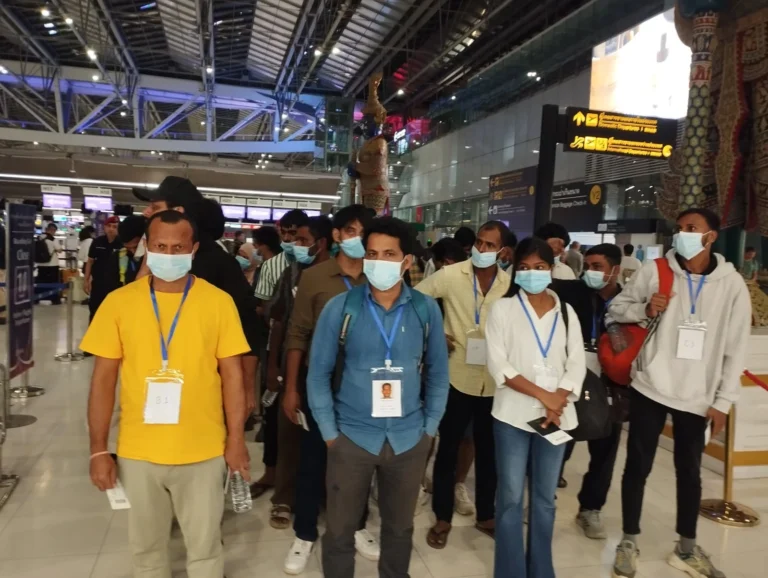
Bangkok, Thailand – In a significant rescue operation, the Embassy of India in Bangkok on Tuesday announced the successful repatriation of 37 Indian nationals who had been released from scam centers operating in Myanmar, close to the Thailand–Myanmar border. The repatriation took place through Mae Sot, Thailand, on August 26, 2025.
Officials said the rescued individuals had fallen victim to international human trafficking networks that lure unsuspecting job seekers with offers of lucrative employment in Southeast Asia. Once recruited, they were taken across borders and forced to work in online scam centers under harsh and exploitative conditions.
This marks the latest in a series of repatriation efforts carried out by the Government of India in collaboration with Thai and Myanmar authorities to secure the safe return of its citizens trapped in such rackets. Over the past year, dozens of Indians have been rescued from similar scam hubs across the region.
The Embassy of India in Bangkok reiterated its advisory urging Indian citizens to thoroughly verify the authenticity of overseas job offers before making travel plans. It further reminded travelers that while Thailand allows visa-free entry for short visits, such entry is not valid for employment purposes, and those seeking work must obtain the appropriate visa and work permit.
A statement from the embassy stressed: “The Government of India remains committed to protecting its citizens abroad and will continue to pursue all possible avenues to ensure the safety and welfare of Indians caught in exploitative conditions overseas.”
The incident highlights a growing concern across Southeast Asia, where transnational criminal syndicates have been operating scam centers in border regions, particularly in Myanmar, Cambodia, and Laos, targeting vulnerable job seekers from South Asia and beyond.
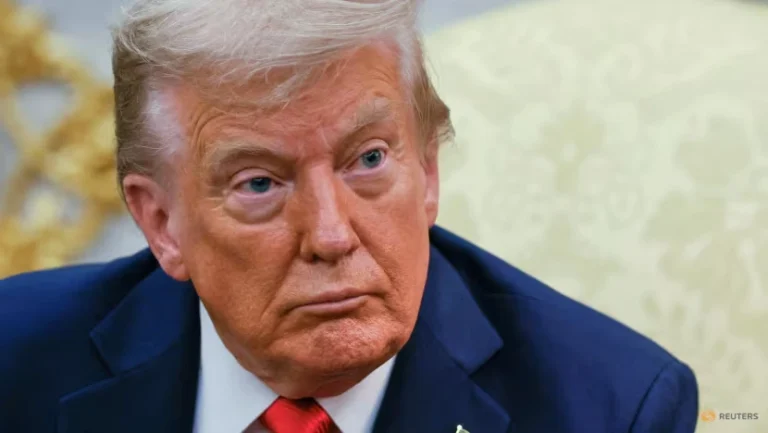
Washington, USA – U.S. special envoy Steve Witkoff said on Tuesday that President Donald Trumpwould chair a meeting on Gaza at the White House on Wednesday and added that Washington expected Israel’s war in the Palestinian territory to be settled by the end of the year. The U.S. State Department separately said Secretary of State Marco Rubio will meet Israeli Foreign Minister Gideon Saar in Washington on Wednesday. It released the information in a regular next-day public schedule that said their meeting at the State Department would be held at 1515 ET (1915 GMT).
WHY IT’S IMPORTANT
Trump had promised a swift end to the war in Gaza during the 2024 U.S. election campaign and after taking office in January, but almost seven months into his term, that stated goal remains elusive. Trump’s term began with a ceasefire which lasted two months and ended when Israeli strikes killed around 400 Palestinians on March 18. In recent weeks, images of starving Palestinians in Gaza, including children, have shocked the world and fueled criticism of Israel over the worsening conditions.
KEY QUOTES
When asked on Fox News’ “Special Report with Bret Baier” show if there is a post-war plan for Gaza, Witkoff said: “Yes, we’ve got a large meeting in the White House tomorrow, chaired by the president, and it’s a very comprehensive plan we’re putting together on the next day.”
He did not elaborate further and did not list the meeting’s participants. When asked should Israel be doing anything differently to end the war and secure the release of the hostages, Witkoff said: “We think that we’re going to settle this one way or another, certainly before the end of this year.” Witkoff said Israel was open to continuing discussions with Palestinian militant group Hamas. He said Hamas had signaled it was open to a settlement.
CONTEXT
U.S. ally Israel’s devastating assault on Gaza since October 2023 has killed over 62,000 Palestinians, according to Gaza health authorities. It has also caused a hunger crisis, internally displaced Gaza’s entire population and prompted accusations of genocide and war crimes at international courts that Israel denies. The latest bloodshed in the decades-old Israeli-Palestinian conflict was triggered in October 2023 when Hamas attacked Israel, killing 1,200 and taking about 250 hostages, Israeli tallies show.
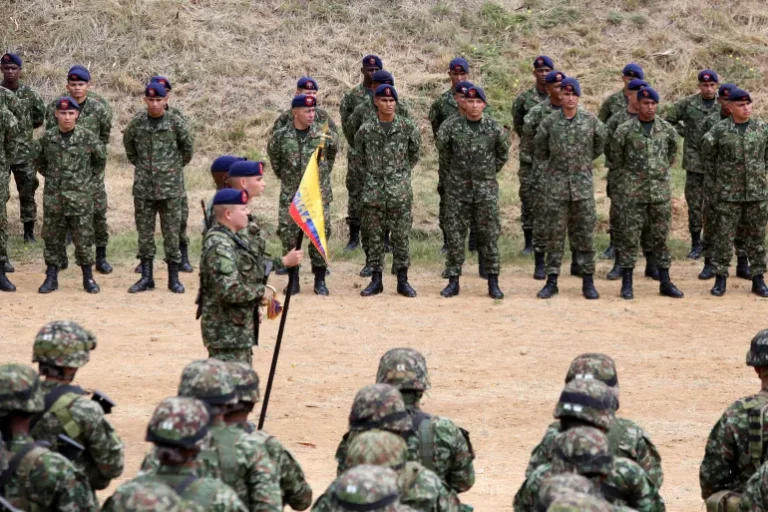
Bogotá, Colombia – Colombia’s Defense Minister Pedro Sánchez confirmed on Tuesday that 34 Army soldiers were kidnapped during a military operation in rural El Retorno, Guaviare, southern region of Colombia, where a senior commander of FARC dissidents was killed.
The minister denounced the abduction as “an illegal and criminal act,” and said some civilians were allegedly involved, claiming they sought to establish a humanitarian corridor.
“That is a kidnapping; it goes against the will of the soldiers. We have called on the Ombudsman’s Office and the United Nations to demand their immediate release,” Sánchez told reporters after meeting with Attorney General Gregorio Eljach and other officials to review security ahead of the 2026 legislative and presidential elections.
Soldiers taken after guerrilla leader killed
The commander-in-chief of the Armed Forces, Admiral Francisco Cubides, explained that the kidnapping took place after other clashes in the same area in which ten other guerrillas were killed.
“Continuing the military operations (…) that began last Sunday, Aug.24, yesterday troops from the Armed Forces engaged in combat with members of the self-styled Martín Villa Mobile Block, belonging to the FARC dissidents,” the admiral said in X.
The kidnapping took place in the same rural area where the Army on Sunday killed Willinton Vanegas Leyva, also known as ‘Dumar’ or ‘Chito,’ one of the top leaders of the Estado Mayor Central (EMC), the largest faction of FARC (Revolutionary Armed Forces of Colombia) dissidents.
FARC dissidents are groups formerly part of the Revolutionary Armed Forces of Colombia (FARC), who refused to lay down their arms after the Colombian peace process came into effect in 2016, or resumed their insurgency afterwards.
Dumar was considered the main commander of the EMC’s Martín Villa structure and a close ally of Iván Mordisco (Néstor Vera Fernández), the guerrilla leader most wanted by Colombian authorities.
According to Sánchez, Dumar’s role was to “consolidate strategic drug-trafficking corridors in Meta and Guaviare to strengthen the dissidents and expand their criminal apparatus.”
Government demands release, calls UN
Minister Sánchez stressed that the kidnapping disrupted an active military offensive against Mordisco’s group, which authorities have identified as the main threat in the region.
“This operation was being carried out in response to alerts from the Ombudsman’s Office to protect civilians from Mordisco’s criminal actions,” he said.
The Army reported that in the same operation that killed Dumar, another guerrilla was also killed, while six fighters were captured, including two women.
Rising security tensions in Colombia
The abduction of dozens of soldiers comes amid mounting security concerns in Colombia as the country prepares for elections in 2026.
The government has faced increasing attacks from FARC dissidents who rejected the 2016 peace deal, as well as from other armed groups expanding their presence in strategic regions.
Sánchez reiterated that the state “will not accept conditions or negotiations imposed by armed groups,” insisting that the priority remains the safe return of the kidnapped soldiers.