Home Blog Page 41

Indians urge boycott of American products over Trump’s 50% tariff decision

0

New Delhi, India — American consumer giants from McDonald’s and Coca-Cola to Amazon and Apple are facing a surge of boycott calls in India as business leaders and supporters of Prime Minister Narendra Modi protest against steep new US tariffs on Indian goods. The wave of anti-American sentiment, amplified online and on the streets, follows former US president Donald Trump’s announcement of a 50% duty on Indian exports — a move that has unsettled trade relations between New Delhi and Washington.

India has long been a critical growth market for US-based companies. Meta’s WhatsApp counts India as its largest user base, Domino’s operates more outlets here than anywhere else in the world, and Pepsi and Coca-Cola products dominate beverage shelves nationwide. Apple’s store openings still attract long lines, and Starbucks discounts draw crowds.

RELATED NEWS : Trump to increase tariffs on India because it continues to buy Russian oil

But the tariff dispute has shifted part of the public conversation toward “buying Indian.” The Swadeshi Jagran Manch, an economic wing of Modi’s Bharatiya Janata Party (BJP), staged rallies in several cities on Sunday urging consumers to shun American brands. The group has been circulating lists on WhatsApp recommending Indian alternatives for soaps, toothpaste, and soft drinks, and pushing graphics labeled “Boycott foreign food chains” with logos of McDonald’s and other US restaurants.

“People are now looking at Indian products. It will take some time to fructify,” said Ashwani Mahajan, the group’s co-convenor, calling the campaign “a call for nationalism, patriotism.”

The business community has joined in. Manish Chowdhary, co-founder of personal care brand Wow Skin Science, posted a video on LinkedIn urging support for local farmers and startups, and pushing to make “Made in India” a global phenomenon. “We have lined up for products from thousands of miles away. We have proudly spent on brands that we don’t own, while our own makers fight for attention in their own country,” Chowdhary said.

Rahm Shastry, CEO of car driver-on-call service DriveU, echoed that sentiment, writing that India should develop its own social media platforms like China’s WeChat, Weibo, and Youku to rival Twitter, Google, YouTube, WhatsApp, and Facebook.

Prime Minister Modi, without naming specific companies, made a “special appeal” for self-reliance during a Sunday address in Bengaluru. “Indian technology companies make products for the world but now is the time for us to give more priority to India’s needs,” he said.

Still, US brands continue to expand in India despite the rhetoric. Tesla opened its second showroom in New Delhi on Monday, with Indian commerce ministry officials and representatives from the US embassy in attendance.

For some consumers, the political row has little bearing on daily choices. “Tariffs are a matter of diplomacy,” said Rajat Gupta, 37, as he enjoyed a 49-rupee ($0.55) coffee at a McDonald’s in Lucknow. “My McPuff, coffee, and fries are still good value for money.”

Globally, the tariff fallout is already being felt in other sectors. Toyota, which imports vehicles to the US, cut its full-year operating profit forecast by 16% on Thursday, projecting a nearly $10 billion hit from American duties on foreign-made cars.

Whether India’s boycott calls will translate into real changes in consumer spending remains uncertain. Indian retail chains like Café Coffee Day and Barista compete with Starbucks at home, but scaling globally has proved more challenging. By contrast, Indian IT giants like Tata Consultancy Services and Infosys remain deeply embedded in the global economy, serving clients across continents.

For now, the boycott push serves both as a symbolic protest against Trump’s tariffs and as a rallying cry for economic nationalism. Whether it becomes a lasting shift in consumer behavior — or simply a political flashpoint — will depend on how the trade dispute evolves in the coming months.


SOURCE : DT VIA REUTERS |  Follow Us: Facebook | Instagram | Twitter | Youtube |

European leaders rally behind Ukraine ahead of Trump-Putin meeting

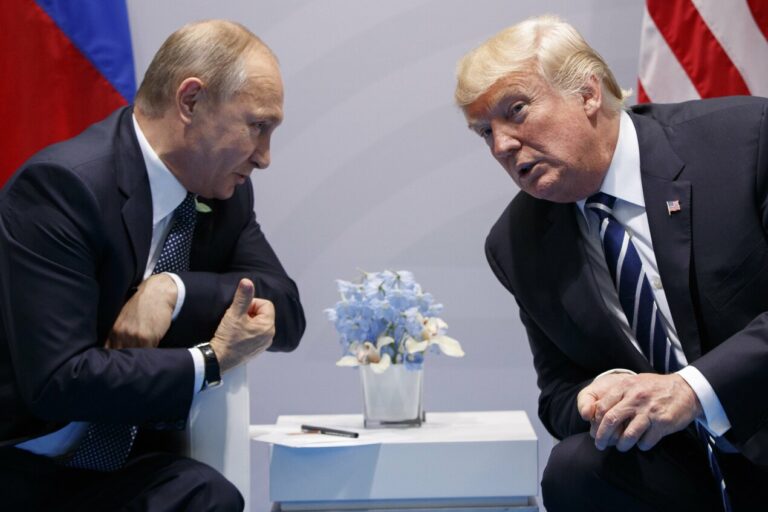
Kyiv, Ukraine — European nations have rallied behind Ukraine, saying peace in the war-torn nation can’t be resolved without Kyiv, ahead of a planned meeting between U.S. President Donald Trump and Russia’s Vladimir Putin.

Trump had said Friday’s meeting in Alaska with his Russian counterpart was to discuss ending the more than three-year war.

RELATED NEWS : Trump Clinches Breakthrough Armenia–Azerbaijan Peace Agreement

Zelenskyy responded by thanking European allies and wrote on X on Sunday: “The end of the war must be fair, and I am grateful to everyone who stands with Ukraine and our people.”

Trump-Putin meeting spikes worries

Saturday’s statement by top European leaders came after the White House confirmed the U.S president was willing to grant Putin the one-on-one meeting Russia has long pushed for, and suggestions from Trump that a peace deal could include “some swapping of territories.” That raised fears that Kyiv may be pressured into giving up land or accepting other curbs on its sovereignty.

A White House official, who spoke on condition of anonymity as they aren’t allowed to speak publicly, told The Associated Press that Trump remained open to a trilateral summit with both the Russian and Ukrainian leaders, but for now, he will have a bilateral meeting requested by Putin.

Meanwhile, U.S. Vice President JD Vance met Saturday with top European and Ukrainian officials at the British Foreign Secretary’s weekend residence to discuss how to end the war.

Trump had earlier said he would meet with Putin even if the Russian leader would not meet with Zelenskyy.

The Trump-Putin meeting may prove pivotal in a war that began when Russia invaded its western neighbor and has led to tens of thousands of deaths, although there’s no guarantee it will stop the fighting since Moscow and Kyiv remain far apart on their conditions for peace.

The statement

Saturday’s statement, signed by the president of the European Union and leaders of France, Germany, Italy, Poland, Finland and the UK, stressed the need for a “just and lasting peace” for Kyiv, including “robust and credible” security guarantees.

“Ukraine has the freedom of choice over its own destiny. Meaningful negotiations can only take place in the context of a ceasefire or reduction of hostilities,” the statement said.

“The path to peace in Ukraine cannot be decided without Ukraine. We remain committed to the principle that international borders must not be changed by force,” the Europeans added.

A fruitless push toward a truce

A monthlong U.S.-led push to achieve a truce in Ukraine has so far proved fruitless, with Kyiv agreeing in principle while the Kremlin has held out for terms more to its liking.

Trump had also moved up an ultimatum to impose additional sanctions on Russia and introduce secondary tariffs targeting countries that buy Russian oil if the Kremlin did not move toward a settlement. The deadline was Friday. The White House did not answer questions Saturday about possible sanctions.

The Kremlin earlier this week reiterated demands that Ukraine give up territory, abandon its bid to join NATO, and accept limits on its military, in exchange for a withdrawal of Russian troops from the rest of the country. Particularly galling for Kyiv is Moscow’s insistence that it cede pockets of eastern and southern Ukraine the Kremlin claims to have annexed, despite lacking full military control.

Mark Galeotti, an expert in Russian politics who heads the Mayak Intelligence consultancy in the United Kingdom, says Moscow’s tactic of encircling towns in eastern Ukraine has brought a string of territorial gains for Russia, and Putin “seems to feel he is still winning.”

“Putin does not appear to feel under pressure,” Galeotti argued in an analysis published Sunday by the UK’s Sunday Times newspaper.

He said that for Putin, “further delaying any more serious U.S. action and the optics of a meeting with the U.S. president will already be wins.”

Zelenskyy rules out giving up territory

Zelenskyy said Saturday that Ukraine “will not give Russia any awards for what it has done” and that “Ukrainians will not give their land to the occupier.”

Ukrainian officials previously told the AP privately that Kyiv would be amenable to a peace deal that would de facto recognize Ukraine’s inability to regain lost territories militarily. But Zelenskyy on Saturday insisted that formally ceding land was out of the question.

Galeotti argued that any deal that involves Ukraine abandoning territory would be “agonising” and politically dangerous for Zelenskyy.

Andriy Yermak, a top aide to Zelenskyy, noted on Sunday that Kyiv will strive to boost its position ahead of the planned Trump-Putin meeting.

“Ahead lies an important week of diplomacy,” he said.


SOURCE : AGENCIES VIA AP NEWS |  Follow Us: Facebook | Instagram | Twitter | Youtube |

Thailand again accuses Cambodia of planting land mines as 3 soldiers are hurt by blast along border

0

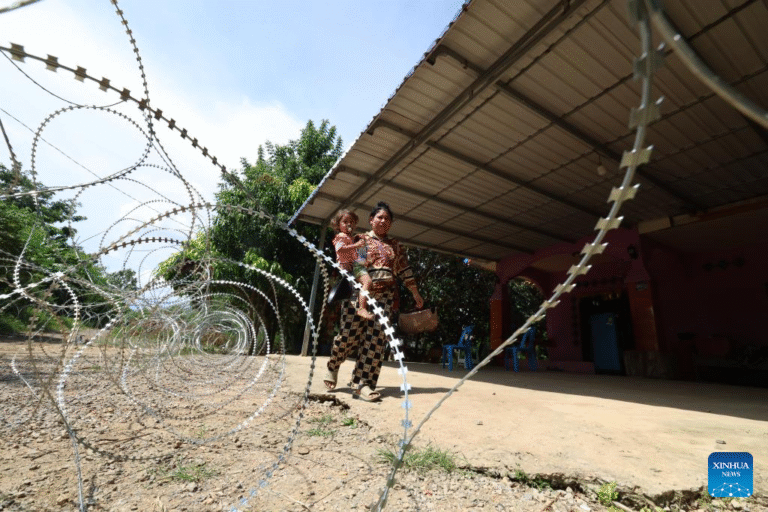
Bangkok, Thailand — Three Thai soldiers were injured on Saturday when one stepped on a land mine while patrolling near the Cambodian border, the Thai army announced, accusing Cambodia of violating an international ban on such weapons.

The blast in Sisaket province came just two days after Thailand and Cambodia reaffirmed a ceasefire agreement aimed at ending last month’s deadly border clashes.

RELATED NEWS : Ceasefire Between Thailand and Cambodia Announced: Can It Bring Lasting Peace?

Army spokesperson Maj. Gen. Winthai Suvaree said the incident “clearly demonstrates” the continued use of hidden mines in border areas, calling it “a significant obstacle” to peace efforts and a violation of the Ottawa Convention, which bans anti-personnel mines.

Thailand’s foreign ministry claimed the explosion was the third such incident in less than a month and “confirmed” its suspicion that new mines were being laid in breach of international law.

Malaysia Home Minister Saifuddin Nasution Ismail (centre) with Cambodian Defence Minister General Tea Seiha (left) and Thailand’s Acting Defence Minister General Nattaphon Narkphanit (right) in Kuala Lumpur on Aug 7, 2025. Photo: CNA/Fadza Ishak

Cambodia’s Mine Action and Victim Assistance Authority rejected the accusation, saying it had “not, and will not, plant new land mines” and highlighting its internationally recognized record in clearing over one million mines from past conflicts.

The blast severely injured a Thai sergeant major, who lost his left foot, while two privates sustained minor wounds. Previous mine incidents have heightened tensions and sparked five days of clashes from July 24–28, the worst fighting between the neighbors in over a decade.

Artillery barrages and air strikes have killed at least 43 people and displaced more than 300,000 on both sides of the border.

A tenuous ceasefire has held since Thursday, when Thailand and Cambodia agreed to let ASEAN observers monitor contested border zones to prevent a resurgence of fighting.


SOURCE : AGENCIES VIA CNA |  Follow Us: Facebook | Instagram | Twitter | Youtube |
Trump Clinches Breakthrough Armenia–Azerbaijan Peace Agreement

0

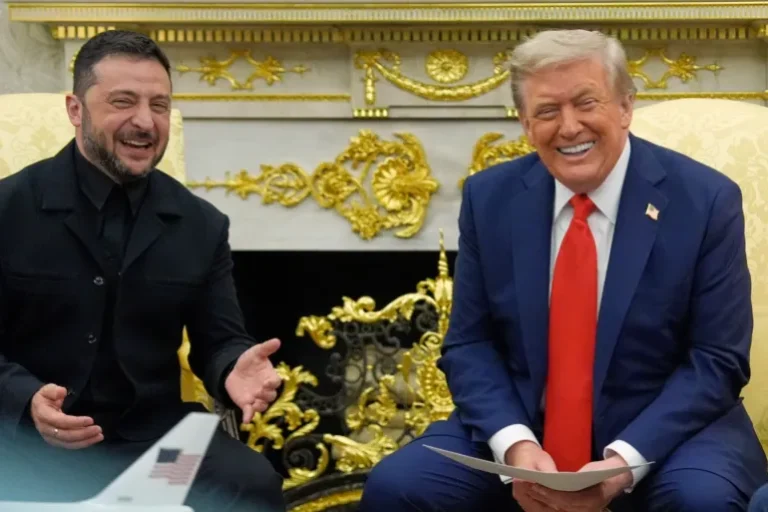
Washington, USA — In a dramatic diplomatic breakthrough, U.S. President Donald Trump has brokered a landmark peace agreement between Azerbaijan and Armenia, ending decades of hostilities over the disputed Nagorno-Karabakh region.

On Friday, Azerbaijan’s President Ilham Aliyev and Armenia’s Prime Minister Nikol Pashinyan met at the White House to sign the historic accord, with Trump standing as a witness. Calling the deal “historic” and “long overdue,” Trump declared that both nations had committed to ending armed conflict “forever,” replacing it with “business, cooperation, and friendship.”

“Thirty-five years they fought, and now they are friends,” Trump said, hailing the agreement as a personal diplomatic triumph.

A Corridor for Peace
Central to the deal is the long-disputed transit link between Azerbaijan and its Nakhchivan exclave, passing through Armenian territory. Years of negotiations had stalled over control of the route—at times bringing the countries to the brink of renewed war.

Under the new agreement, a major rail and road corridor will be built, officially named the “Trump Route for International Peace and Prosperity.” The corridor is expected to boost trade, reconnect communities, and provide a tangible symbol of reconciliation.

Aliyev praised the breakthrough, crediting Trump for achieving in six months what decades of talks had failed to deliver:

“We lost many years to wars and bloodshed, but today we start a new chapter. President Trump has done a miracle.”

Pashinyan called the accord a “significant milestone” that would allow both nations to focus on development and cooperation.

Beyond Peace — New Partnerships
The White House also announced that Trump had signed separate agreements with both countries, expanding cooperation in energy, technology, and artificial intelligence.

Analysts say the deal marks a major geopolitical shift in the South Caucasus. For decades, Russia had been the primary mediator, with President Vladimir Putin brokering the last truce. This time, however, both Armenia and Azerbaijan chose a U.S.-led peace framework—pushing aside Moscow’s proposals and reducing Russia’s influence in a region it has dominated for over a century.

Trump is expected to meet Putin in Alaska next week for further talks on regional security.

Ending a Long and Bloody Dispute
The Armenia–Azerbaijan conflict began in the late 1980s over Nagorno-Karabakh, an enclave internationally recognized as part of Azerbaijan but populated largely by ethnic Armenians.

RELATED NEWS : Azerbaijan and Turkmenistan at the Heart of the Middle Corridor

Following the collapse of the Soviet Union, the two nations fought a six-year war ending in 1994, leaving Armenia in control of much of the region. Azerbaijan regained significant territory in a 2020 war and in October 2023 launched a final military operation, forcing separatist forces to disarm and dissolving the enclave’s self-proclaimed government.

Friday’s agreement aims to end this cycle of violence permanently, with all three leaders expressing hope that it will usher in a new era of peace, economic growth, and regional integration in the Caucasus.


SOURCE : AGENCIES VIA AZ & DT |  Follow Us: Facebook | Instagram | Twitter | Youtube |
Bus accident in Kenya claims 25 lives of mourners returning from a funeral

0

Nairobi, Kenya — A bus carrying mourners home from a funeral in southwestern Kenya overturned and plunged into a ditch on Friday evening, killing at least 25 people and injuring several others, authorities confirmed.

The accident occurred along the Kisumu-Kakamega Highway as the vehicle, travelling from Kakamega to Kisumu, approached a roundabout at high speed. According to Peter Maina, the regional traffic enforcement officer for Nyanza province, the driver lost control and veered into a roadside ditch. A 10-year-old girl was among the victims.

RELATED NEWS : 17 Killed in Horrific Head-On Collision Between Minibus and Truck in Zimbabwe

Initially, 29 people were reported injured, but four later died in hospital, said Fredrick Ouma Oluga, Kenya’s principal secretary for medical services. Officials said the passengers had attended a burial in Nyahera and were heading to Nyakach, about 62 km (38.5 miles) away. All are believed to be from the same extended family.

The bus, a secondary school vehicle, had no students on board and was being used for funeral transport.

The tragedy has sparked fresh calls for stronger road safety measures in a region notorious for deadly crashes. Kenya’s Ministry of Health launched an urgent blood drive for survivors and extended condolences to the bereaved.

President William Ruto urged swift action against “any acts of negligence” and called for strict enforcement of traffic rules nationwide. The National Transport and Safety Authority said it will assist in investigating the cause of the accident.

Deadly road crashes are common in Kenya, where poor road conditions, speeding, and reckless driving often contribute to fatalities.

In a separate incident on Thursday, nine people were killed in Naivasha, Nakuru County, when a bus carrying 32 workers crashed at a railway crossing, underscoring the country’s persistent road safety crisis.


SOURCE : AGENCIES VIA AP NEWS |  Follow Us: Facebook | Instagram | Twitter | Youtube |

Do you know Locke, California America’s Only Town Built by Chinese for Chinese

0

California, USA — Fifty miles south of Sacramento, where the Sacramento River winds through canals, marshes, and farmland fed by Sierra Nevada rains, lies the California Delta — a tranquil region shaped by immigrant labor. Amid its vineyards and family-owned farms stands Locke, a town unique in American history: the only settlement built by Chinese people for Chinese people.

Locke’s narrow Main Street, lined with weathered wooden buildings and overhanging balconies, recalls its heyday in the 1920s, when more than 600 Chinese residents lived and worked here. The town bustled with grocery stores, restaurants, a Chinese-owned movie theater, hotels, herbal medicine shops, gambling parlors, and boarding houses.

Chinese workers first arrived in the Delta in the 1860s, many from the Sze Yap and Chungshan districts of Guangdong Province. Between 3,000 and 4,000 laborers were contracted to build hundreds of miles of levees under the 1861 Swamp and Overflow Act, reclaiming 88,000 acres of marshland for farming. Many stayed, working as farmhands and tenant farmers.

Beginning in 1872, California passed laws barring Chinese from owning land or obtaining business licenses. The 1882 Chinese Exclusion Act further halted immigration and naturalization until its repeal in 1943. In 1913, California enacted the Alien Land Law, prohibiting “aliens ineligible for citizenship” from owning agricultural land or holding leases longer than three years.

Despite these restrictions, Chinese laborers built a thriving Chinatown in Walnut Grove, a mile south of Locke. By 1880, its 814 residents included over 100 Chinese from Guangdong and a small Japanese community. But on October 7, 1915, a fire destroyed the Chinatown, displacing hundreds.

Some Sze Yap Chinese and Japanese families rebuilt in Walnut Grove through lease agreements with local landlords. Others, like prominent businessman Lee Bing — also known as “Charlie” — moved on. One of the few Chinese immigrants fluent in English, Bing had arrived in the US penniless, built a gambling house in 1908, and expanded into hardware, dry goods, barbering, billiards, and herbal medicine. The fire wiped out all seven of his businesses.

That same year, Bing led a group of Chungshan merchants who leased land from George Locke to build a new town — originally called Lockeport. Under the Alien Land Law, they could not purchase the land, but they erected homes, shops, and community institutions. By the mid-1920s, Locke thrived on the asparagus boom and railroad expansion, but was also known for its vice industry, including gambling halls, speakeasies, opium dens, and brothels.

After World War II, the Delta’s Chinese population dwindled as younger generations pursued education and careers outside agriculture. When the state shut down gambling in the 1950s, Locke’s economy faltered, and its population declined sharply.

Today, with around 60 residents, Locke endures as a living monument to Chinese American resilience — a place born out of discrimination and hardship, yet rich in history and cultural legacy.


SOURCE : BBC & Locke Foundation |  Follow Us: Facebook | Instagram | Twitter | Youtube |
OpenAI launches GPT-5, its most advanced AI Model yet

New York, USA – United States tech company OpenAI unveiled its most advanced artificial intelligence model, GPT-5, during a livestreamed presentation on Thursday. The new model will be progressively and freely rolled out to all ChatGPT users, with a focus on business and developer applications.

“This goes beyond ‘vibe coding,’” said one of the developers, referring to users who build digital services from scratch using language models.

RELATED NEWS : Google to invest $1 billion in Thai data center, cloud infrastructure

GPT-5 can generate programs from simple instructions and complete complex engineering workflows.

According to OpenAI, GPT-5 is the most reliable and factual model the company has ever produced.

One of its major improvements is a lower rate of so-called “hallucinations,” incorrect or fabricated answers, and the ability to recognize when it cannot complete a task, reducing speculative or inaccurate results.

Altman also emphasized its use in healthcare, one of the most popular ChatGPT categories, and featured a cancer patient who used the AI to better understand her condition and make informed treatment decisions.

OpenAI revealed that ChatGPT has reached 700 million users, including 5 million paid subscribers. The company highlighted the growing number of enterprises across multiple sectors adopting its technologies, while promoting ChatGPT Enterprise, its premium business service.

Microsoft, OpenAI’s key partner, confirmed that GPT-5 was trained on its Azure platform and will be integrated into a wide range of products for consumers and developers alike.

Additionally, OpenAI introduced three GPT-5 versions via its API, tailored to meet different development needs. The launch positions OpenAI at the forefront of the global race toward artificial superintelligence, a goal increasingly seen as within reach.


SOURCE : AGENCIES VIA EFE. |  Follow Us: Facebook | Instagram | Twitter | Youtube |
Flash Floods Devastate Himalayan Village in Uttarakhand, India — 4 Dead, Dozens Missing Including Soldiers

0

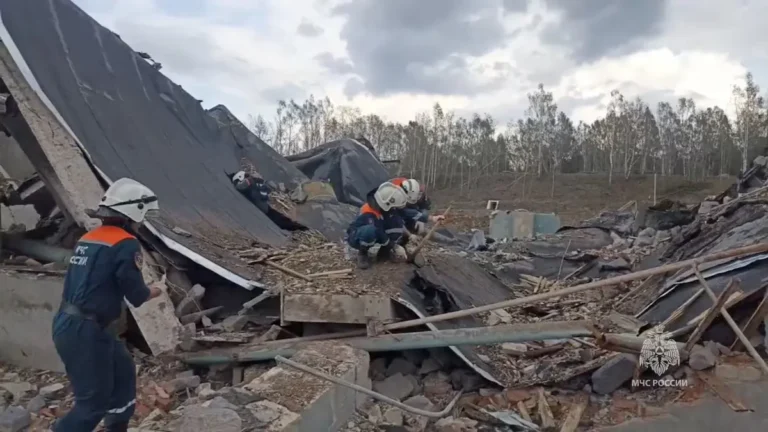
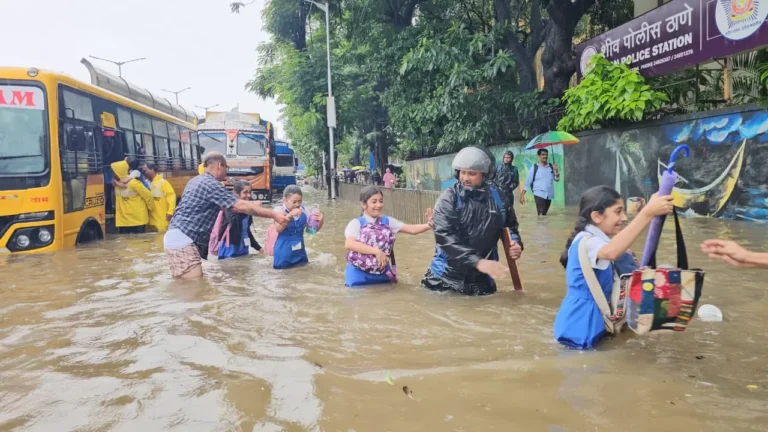
Lucknow, India — Rescuers are racing against time in the remote Himalayan village of Dharali, Uttarakhand, where powerful flash floods triggered by a cloudburst killed at least four people and left dozens missing, including 11 Indian Army personnel.

The disaster struck Tuesday afternoon, when torrential rains unleashed a wall of water down the steep mountain slopes, sweeping away homes, roads, and a bustling local market. By Wednesday, rescue teams—comprising the Indian Army and the National Disaster Response Force—were combing through debris and sludge to locate survivors.

RELATED NEWS : Flash Floods Sweep Through Manila, Forcing Thousands to Flee

“The search for others is still underway,” said Dilip Singh, a senior disaster management official. “So far, we have rescued 60 people and moved them to safety, but poor weather, damaged roads, and the rugged terrain are slowing down our efforts.”

The floods also struck an army base in nearby Harsil, about 7 kilometers (4.3 miles) from Dharali, where 11 soldiers are reported missing. “Conditions are extremely challenging, but our teams are staying put,” said Lt. Col. Manish Srivastava, a defense spokesperson.

The catastrophe is the latest in a series of weather-related disasters that have battered the fragile Himalayan region in recent years. Uttarakhand is particularly vulnerable to sudden, intense cloudbursts during the monsoon season, which often trigger deadly landslides and flash floods.

Geologist S.P. Sati warned that Dharali lies in a highly unstable zone. “This village sits on a ticking time bomb,” he said, citing a history of similar cloudburst events in 1864, 2013, and 2014. In the 2013 Uttarakhand floods, over 6,000 people died and 4,500 villages were impacted.

Experts link the increasing frequency of such events to climate change and unregulated development in the ecologically sensitive region.

“The whole of Dharali village was wiped out,” said local lawmaker Lokendra Bisht, who owns a homestay in the area. “People ran for their lives, but the floodwaters came so fast, there was nothing anyone could do.”

With monsoon rains continuing across the region, authorities fear more such disasters may follow in the coming weeks.


SOURCE : AGENCIES VIA AP NEWS |  Follow Us: Facebook | Instagram | Twitter | Youtube |
Trump to increase tariffs on India because it continues to buy Russian oil

Washington, USA – United States President Donald Trump announced Monday that he will increase tariffs on Indian exports because the country continues to buy Russian oil.

“India is not only buying massive amounts of Russian Oil, they are then, for much of the Oil purchased, selling it on the Open Market for big profits,” Trump wrote on his social media platform, Truth Social.

“They don’t care how many people in Ukraine are being killed by the Russian War Machine. Because of this, I will be substantially raising the Tariff paid by India to the USA,” he added.

India, the world’s third-largest crude oil importer, adopted a neutral and pragmatic stance in the Ukraine war, and went from importing less than 2% of its oil from Russia to more than a third, making Moscow its main supplier, thanks to discounts offered by the Kremlin.

As part of his trade war, Trump imposed a 25% tariff on key Indian products. Although officially linked to alleged trade imbalances between the two countries, the president has also connected that levy to India’s energy trade with Russia.

Despite mounting US pressure, the Indian government has defended the import of Russian oil as a decision in the “national interest” and an action that has contributed to global energy stability.

Trump, increasingly frustrated by the refusal of his Russian counterpart, Vladimir Putin, to stop the fighting in Ukraine, issued a new ten-day ultimatum to the Kremlin on Tuesday to declare a truce.


SOURCE : EFE. |  Follow Us: Facebook | Instagram | Twitter | Youtube |
Ceasefire Between Thailand and Cambodia Announced: Can It Bring Lasting Peace?

Putrajaya, Malaysia – In a breakthrough to end the region’s most intense border violence in over a decade, Thailand and Cambodia have agreed to an “immediate and unconditional” ceasefire, effective midnight Monday, following five days of deadly clashes that left at least 36 people dead and displaced more than 270,000 residents along the shared border.

The ceasefire was brokered during emergency peace talks held in Malaysia’s administrative capital, Putrajaya, hosted by Malaysian Prime Minister Anwar Ibrahim. Acting Thai Prime Minister Phumtham Wechayachai and Cambodian Prime Minister Hun Manet both agreed to halt hostilities, raising cautious hopes for a return to peace.

“This is a vital first step towards de-escalation and the restoration of peace and security,” Anwar said, adding that a meeting between Thai and Cambodian military commanders is scheduled for Tuesday.

Roots of the Conflict

The latest fighting, which erupted on July 24, stems from long-standing disputes over colonial-era border demarcations, particularly around historical sites like the Prasat Ta Moan Thom temple. A February incident—when Thai police allegedly blocked Cambodian tourists from singing their national anthem at the site—fueled resentment. Tensions escalated further in May, when a Cambodian soldier was killed.

Since then, more than 138,000 Thai nationals have been evacuated from border provinces, while over 20,000 Cambodians have been displaced, according to officials on both sides.

Statements from Rival Leaders

In a joint press conference following the talks, Cambodian Prime Minister Hun Manet expressed optimism:

“We have a very good meeting and very good results … we hope to stop immediately the fighting that has caused many lives lost, injuries and displacement.”

Thailand’s acting PM Phumtham Wechayachai, who had earlier expressed doubts over Cambodia’s intentions, stated:

“Thailand has agreed to a ceasefire that will be carried out successfully in good faith by both sides.”

The three nations released a joint statement confirming that their defense ministries have been instructed to develop a ceasefire monitoring mechanism, including verification and reporting protocols. They also agreed to convene the General Border Committee on August 4 in Cambodia.

Ongoing Clashes Despite Agreement

Even as leaders met in Malaysia, sporadic fighting reportedly continued. Al Jazeera’s Tony Cheng, reporting from Thailand’s Surin province, noted:

“There are so many people who have been affected by this, and they just want to go home so badly.”

US and China’s Role in the Deal

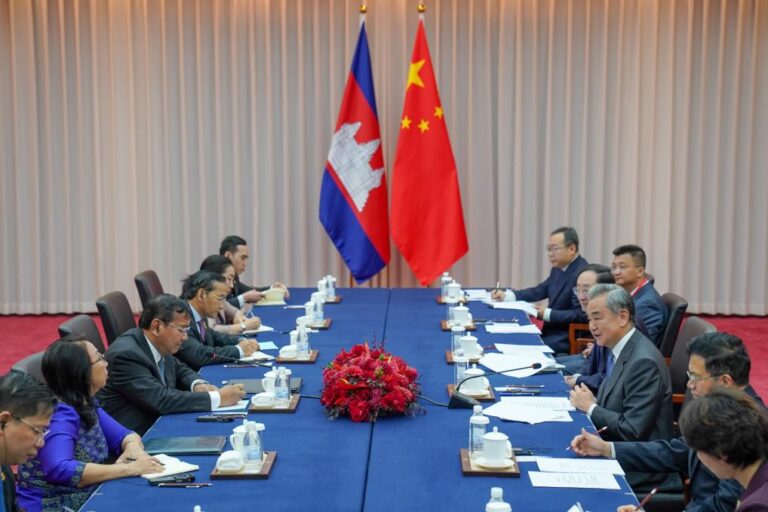
The ceasefire negotiations also saw high-level international involvement. Cambodia’s PM Hun Manet confirmed the talks were “co-organised by the United States” with Chinese participation. Both powers have significant economic and political stakes in the region.

US Secretary of State Marco Rubio welcomed the truce, saying:

“The United States applauds the ceasefire declaration between Cambodia and Thailand.”

Former US President Donald Trump, in phone calls over the weekend with both leaders, reportedly pressured them by threatening to suspend trade deals unless the conflict was resolved.

“We’re not going to make a trade deal unless you settle the war,” Trump warned, citing potential 36% tariffs on both nations starting August 1.

Both Thai and Cambodian leaders acknowledged the roles played by Malaysia, the US, and China in facilitating the ceasefire.

What’s Next?

While the ceasefire offers a much-needed pause in hostilities, analysts caution that long-term peace will depend on resolving the underlying territorial disputes and implementing effective ceasefire monitoring mechanisms.

All eyes now turn to the upcoming military commanders’ meeting and the August 4 border committee session, which could shape the future of Thai-Cambodian relations.


SOURCE : AGENCIES VIA AL JAZEERA |  Follow Us: Facebook | Instagram | Twitter | Youtube |