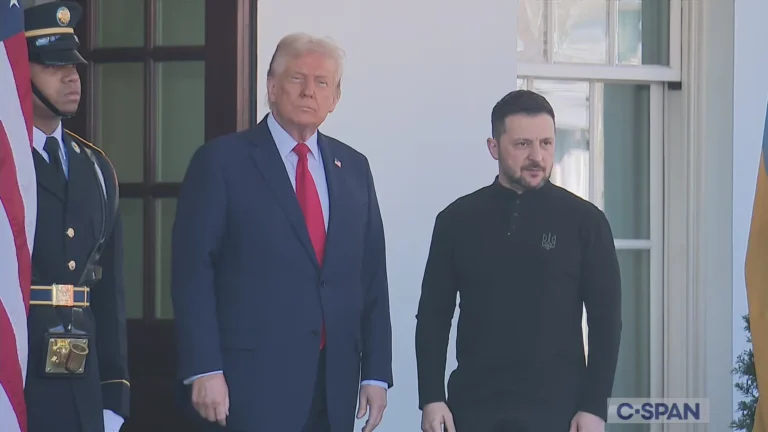
Washington, D.C. — United States President Donald Trump has welcomed Ukrainian President Volodymyr Zelenskyy to the White House for crucial discussions on the ongoing Russia-Ukraine war and a strategic minerals agreement.
The leaders are set to discuss efforts to end the prolonged conflict and are expected to finalize a deal concerning Ukraine’s rare earth minerals. Experts believe the minerals agreement is a strategic move by Kyiv to strengthen ties with Washington, particularly as Trump seeks to revive US-Russia negotiations aimed at resolving the war.
The meeting comes at a time of heightened global economic tensions. President Trump’s tariff threats continue to unsettle major economies, with Canada, Mexico, and China preparing for new levies set to take effect next week.
The high-profile White House visit underscores Ukraine’s efforts to secure critical US backing as geopolitical shifts reshape alliances and economic policies worldwide. Analysts suggest that the rare earth minerals deal could be a pivotal factor in determining Washington’s level of support for Ukraine amid broader diplomatic maneuvering.
As the discussions unfold, all eyes will be on the outcomes of the White House meeting, particularly on how they may impact the Russia-Ukraine war and global economic stability.
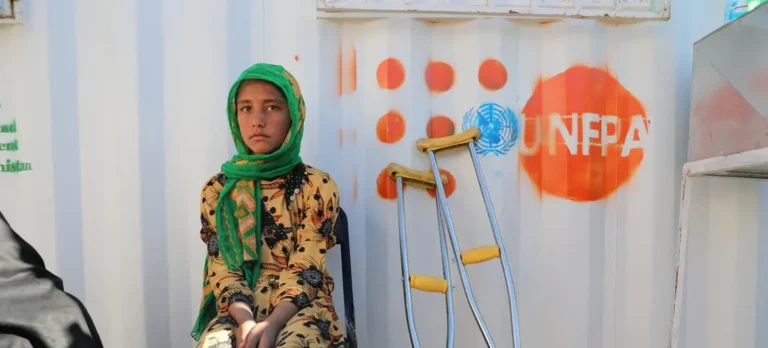
New York/Washington/Africa/Afghanistan — The United Nations Population Fund (UNFPA) has confirmed that the United States has cut nearly all of its funding grants, a move that will severely impact lifesaving humanitarian support for women and girls globally.
At 7 p.m. on February 26, UNFPA was informed that 48 of its grants with USAID and the US State Department had been terminated, the UN agency announced in a statement.
“This decision will have devastating impacts on women and girls and the health and aid workers who serve them in the world’s worst humanitarian crises,” UNFPA warned.
Essential Healthcare at Risk
The USAID grants were designated to provide critical maternal healthcare, protection from violence, rape treatment, and other lifesaving care in humanitarian settings.
UNFPA’s programs aim to prevent maternal deaths, ensure safe childbirth, and address gender-based violence in crisis regions, including Gaza, Sudan, and Ukraine.
The organization partners with 150 countries to offer a wide range of sexual and reproductive health services, with a core mission of eliminating unmet family planning needs, preventable maternal deaths, and gender-based violence by 2030.
“These termination notices include grants for which we had previously received humanitarian waivers, as they were considered lifesaving interventions for the world’s most vulnerable women and girls,” UNFPA stated.
The cuts will impact humanitarian programs in countries such as Afghanistan, Chad, the Democratic Republic of the Congo (DRC), Haiti, Mali, Sudan, Syria and its neighboring regions, as well as Ukraine.
Global Backlash and Humanitarian Concerns
The funding cuts come amid broader reductions in US support for humanitarian organizations since late January, leaving millions in jeopardy. UN agencies such as UNAIDS and UNFPA, which provide critical services and supplies, have been particularly affected.
UNFPA has been defunded several times by previous US administrations under accusations of supporting coercive abortion or forced sterilization—claims refuted by independent investigations, past US administrations, and UN leadership.
“The mandate of UNFPA is in fact the opposite of this allegation – to secure rights and choices for all,” the agency reaffirmed.
Since UNFPA relies entirely on voluntary donations from governments, intergovernmental organizations, foundations, the private sector, and individuals, the abrupt withdrawal of US funding poses an existential threat to its mission.
Demonstrators protest against cuts to American foreign aid spending, including USAID and the PEPFAR program to combat HIV/AIDS, at the Cannon House Office Building on Capitol Hill, Wednesday, Feb. 26, 2025, in Washington. Photo: AP/Mark Schiefelbein
‘We Will See Lives Lost’
Health experts have also raised concerns over the future of longstanding HIV programs in Africa, particularly those funded under the US President’s Emergency Plan for AIDS Relief (PEPFAR). Initiated by President George W. Bush in 2003, PEPFAR is credited with saving over 26 million lives worldwide.
In South Africa, which operates the world’s largest HIV treatment program with support from USAID, health groups have warned of a crisis. The country provides treatment to 5.5 million people, and US funding cuts will have dire consequences.
“We will see lives lost,” said Professor Linda-Gail Bekker, director of the Desmond Tutu HIV Center. The center has been instrumental in groundbreaking HIV research, including studies that led to the development of an injectable drug to prevent HIV infections—funding for which has now been lost.
“We are going to see this epidemic walk back because of this,” Bekker added.
Health organizations have condemned the US government’s decision, accusing it of abandoning the world’s most vulnerable populations in South Africa and beyond.
As the global community reacts to the US funding cuts, the future of essential humanitarian programs remains uncertain, with dire implications for the millions who depend on them.
Seoul, South Korea — North Korea has sent more than 1,000 additional soldiers from the country to Russia so far in 2025 to be deployed in the war in Ukraine, South Korean military sources said Thursday.
“The North Korean troops were sent to Russia sometime in January and February,” military sources told the local news agency Yonhap, adding that they had detected signs that North Korea was preparing for more shipments.
These thousand soldiers are in addition to the nearly 11,000 North Korean troops that have already been deployed in the conflict.
The current location of these troops is unknown, the sources said, although South Korean officials have said Pyongyang troops have been deployed in occupied Kursk province, the front line. Seoul’s intelligence services said Thursday that they had detected the presence of more North Korean soldiers in that area since the first week of February.
South Korea’s national intelligence agency, which has been monitoring the activity of North Korean soldiers in Ukraine, had recently noted that the country’s troops had been absent from combat in the Kursk region since mid-January, probably due to numerous casualties.
South Korean intelligence estimates about 300 North Korean soldiers have died in Ukraine and that about 2,700 have been wounded.
A North Korean prisoner of war recently interviewed by a South Korean media outlet reportedly said he was unaware that he was going into combat in Ukraine when he was deployed and that he was led to believe that he was fighting South Korean soldiers in the region.
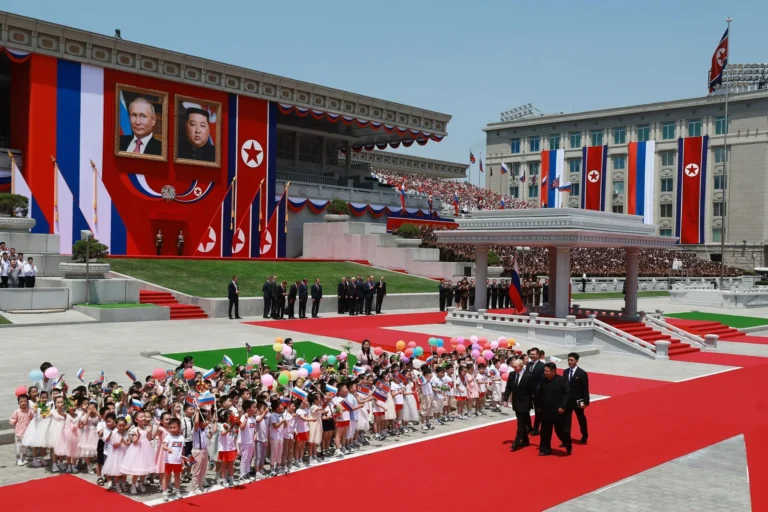
The deployment of North Korean troops to Russia comes within the framework of the comprehensive strategic partnership agreement reached by North Korean and Russian leaders Kim Jong-un and Vladimir Putin in June 2024, which includes a mutual defense clause.
Under the pact, North Korea has provided Russia with tens of thousands of containers loaded with artillery, missiles and other conventional weapons that have been used in the war in Ukraine, and the deployment of soldiers since October.
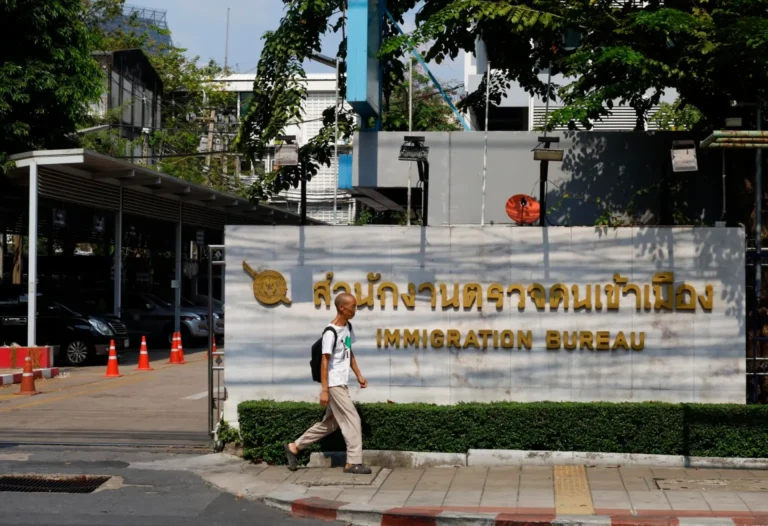
Bangkok/Beijing — Thailand deported 40 Uyghurs to China on Thursday, disregarding urgent appeals from the United Nations and human rights organizations to halt the controversial move. The deportation, carried out under an agreement with Beijing, has sparked a fresh wave of international criticism.
The Uyghurs, members of a persecuted ethnic Muslim minority, had been detained in Thailand for a decade. Their forced return raises concerns over their fate upon arrival in China, where Uyghurs have faced allegations of mass detentions, forced labor, and other human rights violations.
Thai Authorities Defend Deportation
Thai Police Chief Kittirat Panpetch defended the action, stating it was a routine procedure for individuals considered illegal immigrants. “I believe it is a normal procedure to repatriate those considered illegal immigrants… and the Uyghurs are no different. They must be returned. How many more years should they remain detained? 11, 12, 13? They are human beings. They should be able to return,” he said at a press conference.
Confirmation of the deportation followed hours of speculation about a secretive operation. Earlier in the day, authorities had refused to disclose details, citing national security concerns.
UN Strongly Condemns Deportation
The deportation has been met with strong condemnation from the United Nations and human rights bodies. Volker Türk, the UN High Commissioner for Human Rights, described the action as “deeply troubling” and a violation of fundamental international protections.
“This violates the principle of non-refoulement for which there is a complete prohibition in cases where there is a real risk of torture, ill-treatment, or other irreparable harm upon their return,” Türk said.
The principle of non-refoulement is enshrined in Article 3 of the Convention against Torture, which prohibits the return of individuals to a country where they face risks of persecution, torture, or ill-treatment. It is also referenced in Article 7 of the International Covenant on Civil and Political Rights and Article 14 of the Universal Declaration of Human Rights.
Additionally, Thailand’s own Prevention and Suppression of Torture and Enforced Disappearance Act, as well as the ASEAN Human Rights Declaration, explicitly recognize the right to seek asylum and prohibit forced returns in such cases.
Detained Since 2014
The deported Uyghurs were among a larger group detained in March 2014 after fleeing China with hopes of reaching Türkiye. They were placed in immigration detention centers under dire conditions for over a decade.
The UN Human Rights Office (OHCHR) reported that five members of the group have died in custody, while eight others remain detained in Thailand.
Calls to Halt Further Deportations
The UN High Commissioner has called on Thailand to immediately stop any further deportations and ensure the protection of the remaining Uyghurs in detention.
“The Thai authorities must ensure there are no further deportations and the remaining members of the group, including potential refugees and asylum-seekers, being held in Thailand are fully protected in accordance with their obligations under international law,” Türk urged.
UNHCR Criticizes Forced Returns
The UN Refugee Agency (UNHCR) has also condemned Thailand’s actions, stating that it had repeatedly requested access to the detained Uyghurs and assurances that they would not be forcibly returned—requests that were denied.
Ruvendrini Menikdiwela, Assistant High Commissioner for Protection, called the deportation a “clear violation” of the non-refoulement principle and a breach of Thailand’s international obligations.
“UNHCR calls on the Royal Thai Government to put an end to the forced return of individuals from Thailand,” she said.
Demand for Transparency from China
High Commissioner Türk further urged the Chinese authorities to disclose the whereabouts and well-being of the deported Uyghurs.
“It is now important for the Chinese authorities to disclose their whereabouts and to ensure that they are treated in accordance with international human rights standards,” he stated.
The deportation of the Uyghurs has added to mounting global concerns over Beijing’s treatment of the ethnic minority group. Human rights organizations continue to demand accountability from both Thailand and China over the fate of the deported individuals, warning of potential grave consequences for those forcibly returned.
KYIV, Ukraine — A dozen leaders from Europe and Canada arrived in Ukraine’s capital by train Monday morning to mark the third anniversary of Russia’s full-scale invasion, demonstrating international solidarity with Kyiv as the war continues into its fourth year.
The delegation was welcomed at the station by Ukrainian Foreign Minister Andrii Sybiha and President Volodymyr Zelensky’s chief of staff, Andrii Yermak. Among the prominent figures visiting were European Commission President Ursula von der Leyen and Canadian Prime Minister Justin Trudeau, alongside other European leaders.
In a statement on X, von der Leyen reaffirmed Europe’s unwavering support for Ukraine, writing, “We are in Kyiv because Ukraine is in Europe. In this fight for survival, it is not only the destiny of Ukraine that is at stake. It’s Europe’s destiny.”
Canada’s Prime Minister Justin Trudeau arrives at a train station on the third anniversary of the Russian invasion of Ukraine, Kyiv, Ukraine, Monday, 24 February, 2025. Photo : AP/Efrem Lukatsky
Diplomatic Talks and Solidarity Amid Shifting U.S. Policy
The visiting leaders, including European Council President Antonio Costa and the prime ministers of Northern European nations and Spain, are set to participate in commemorative events and high-level discussions on strengthening aid to Ukraine. The meetings come at a critical moment, as uncertainty looms over future U.S. support following a policy shift under President Donald Trump.
While European nations have stepped up military and financial assistance to Kyiv, concerns remain over sustaining long-term support without Washington’s full backing. Ukraine continues to push for additional defense aid, including air defense systems and ammunition, as it faces intensified Russian offensives in the east.
Symbolic Visit as War Drags On
The high-profile visit underscores Ukraine’s importance on the global stage and highlights its European allies’ commitment to countering Russian aggression. Despite ongoing missile strikes and front-line battles, Kyiv remains a symbol of resilience, with leaders using the anniversary to reinforce the need for continued resistance.
As Ukraine marks three years since the invasion, the war shows no signs of ending. The presence of international leaders in Kyiv sends a powerful message: Ukraine is not standing alone in its fight for sovereignty and survival.
Rome, Italy — Pope Francis remained in critical condition on Sunday as blood tests revealed early kidney failure, though he remains alert and responsive, the Vatican confirmed. Despite his frail state, the 88-year-old pontiff attended Mass privately as he continues his battle with pneumonia and a complex lung infection.
In a late update, Vatican officials reported that Pope Francis had not experienced any further respiratory crises since Saturday night. However, he is still receiving high-flow supplemental oxygen to support his breathing.
Medical tests indicated “initial, mild kidney failure,” but doctors reassured that the condition is currently under control. Specialists continue to monitor his health closely as he undergoes treatment for multiple ailments.
“The complexity of the clinical picture, and the necessary wait for drug therapies to provide some feedback, dictate that the prognosis remains guarded,” the Pope’s medical team stated.
Deacons take part in a mass for their jubilee in St. Peter’s Basilica at The Vatican, Sunday, Feb. 23, 2025, that was supposed to be presided over by Pope Francis who was admitted over a week ago at Rome’s Agostino Gemelli Polyclinic and is in critical condition. Photo: AP/Alessandra Tarantino
Global Prayers and Reflections on the Pope’s Fate
Prayers for Pope Francis have poured in from around the world, from his native Argentina to the seat of Sunni Islam in Cairo to schoolchildren in Rome. In New York, Cardinal Timothy Dolan acknowledged what church leaders in Rome have yet to say publicly: that the Catholic faithful are united “at the bedside of a dying father.”
“As our Holy Father Pope Francis is in very, very fragile health, and probably close to death,” Dolan said in his homily from the pulpit of St. Patrick’s Cathedral, though he later told reporters he hoped and prayed that Francis would “bounce back.”
Doctors have described the Pope’s condition as touch-and-go, citing his age, fragility, and pre-existing lung disease. His deteriorating health has renewed speculation about what might happen if he becomes unconscious or otherwise incapacitated, and whether he might consider resigning.
Candles are seen near pictures of Pope Francis outside the Agostino Gemelli Polyclinic in Rome, Sunday, Feb. 23, 2025, where the Pontiff is hospitalized since Feb. 14. Photo: AP/Gregorio Borgia
A Sunday Without Francis at the Vatican
Pope Francis was originally scheduled to celebrate Mass on Sunday morning in St. Peter’s Basilica and ordain deacons as part of the Vatican’s yearlong Holy Year commemoration. In his absence, Archbishop Rino Fisichella, the event’s organizer, stepped in to lead the Mass.
“Even though he is in a hospital bed, we feel Pope Francis close to us. We feel him present among us,” Fisichella told the hundreds of white-robed deacons before offering a special prayer for the ailing pontiff.
A prewritten message, originally intended to be read by Francis himself but left undelivered, stated that he was “confidently continuing my hospitalization at the Gemelli Hospital, carrying on with the necessary treatment; and rest is also part of the therapy!” As always, he asked for prayers, while also noting the upcoming anniversary of Russia’s invasion of Ukraine, calling it “a painful and shameful occasion for the whole of humanity.”
Deacons take part in a mass for their jubilee in St. Peter’s Basilica at The Vatican, Sunday, Feb. 23, 2025that was supposed to be presided over by Pope Francis who was admitted over a week ago at Rome’s Agostino Gemelli Polyclinic and is in critical condition. Photo: AP/Alessandra Tarantino
Waves of Support from Around the World
In Pope Francis’ homeland of Argentina, Catholics gathered at Buenos Aires Cathedral to pray for his recovery, while the city’s iconic obelisk was illuminated with the words: “Francis, the city prays for you.”
From Cairo, the Grand Imam of Al-Azhar, Sheikh Ahmed al-Tayeb, who has built a close interfaith relationship with Francis, expressed his well wishes.
“I pray to Allah to grant my dear brother, Pope Francis, a swift recovery and to bless him with good health and well-being so that he may continue his journey in serving humanity,” he wrote in a Facebook post.
The American Jewish Committee also sent prayers, stating, “We stand together with our Catholic brothers and sisters during this challenging time.”
Meanwhile, in Italy, bishops led rosary prayers and celebrated special Masses dedicated to Francis’ recovery. Schoolchildren from across Rome have sent an outpouring of get-well cards to the Gemelli hospital, while the Vatican continues to call for prayers and hope.
As the world watches, Pope Francis’ condition remains uncertain, with doctors carefully assessing his fragile health. For now, the faithful wait—and pray.
DUBAI, United Arab Emirates — Cricket great Virat Kohli became the fastest batter and third man to reach 14,000 runs in one-day international cricket on Sunday, before going on to hit a record-extending 51st century in the ODI format.
Kohli started the day on 13,985 runs and was batting in his 287th innings in India’s Group A game against Pakistan at the Champions Trophy.
He powered the chase to finish on 100 not out — hitting the winning boundary — as India beat Pakistan by six wickets with 45 balls remaining.
“We lost Rohit (Sharma) early and my job was to control the middle overs against spin without taking too many risks,” Kohli said. “It allowed me to play my usual ODI game.”
India’s Sachin Tendulkar was the previous quickest batter to reach 14,000 ODI runs, taking 350 innings. Tendulkar still tops the overall ODI runs scored with 18,426 in 452 innings. Another retired batting great, Sri Lankan Kumar Sangakkara, finished his career with 14,234 runs in 380 innings.
Arch rivals India and Pakistan played at the Dubai International Cricket Stadium despite Pakistan hosting the tournament because India is playing its league games – and potential knockout matches – in the United Arab Emirates.
India’s Virat Kohli plays a shot during the ICC Champions Trophy cricket match between India and Pakistan at Dubai International Cricket Stadium, United Arab Emirates, Sunday, Feb. 23, 2025. (AP Photo/Altaf Qadri)
India’s Virat Kohli plays a shot during the ICC Champions Trophy cricket match between India and Pakistan at Dubai International Cricket Stadium, United Arab Emirates, Sunday, Feb. 23, 2025. (AP Photo/Altaf Qadri)
India’s Virat Kohli plays a shot during the ICC Champions Trophy cricket match between India and Pakistan at Dubai International Cricket Stadium, United Arab Emirates, Sunday, Feb. 23, 2025. (AP Photo/Altaf Qadri)
India’s Virat Kohli hits winning runs during the ICC Champions Trophy cricket match between India and Pakistan at Dubai International Cricket Stadium, United Arab Emirates, Sunday, Feb. 23, 2025. (AP Photo/Altaf Qadri)
Pakistan’s Babar Azam, second left, and Imam-ul Haq, right, greets India’s Virat Kohli, left, and Axar Patel, second right, after India won the ICC Champions Trophy cricket match against Pakistan at Dubai International Cricket Stadium, United Arab Emirates, Sunday, Feb. 23, 2025. (AP Photo/Altaf Qadri)
Colombo, Sri Lanka (AP) – A passenger train struck a herd of elephants near a wildlife sanctuary in Sri Lanka, killing six of the animals, including four calves, officials said Thursday.
The tragic collision occurred near Minneriya, a well-known wildlife hotspot about 200 kilometers (124 miles) from Colombo. The Minneriya National Park is famous for its thriving elephant population and attracts thousands of tourists each year.
Details of the Incident
According to Hasini Sarathchandra, a spokesperson for the Department of Wildlife Conservation, the accident resulted in the derailment of the train’s engine and several compartments. However, no passengers were injured, a railway official confirmed, though he declined to be named as he was not authorized to speak to the media.
The wildlife department has launched an investigation into the incident.
Growing Threats to Sri Lanka’s Elephant Population
Minneriya National Park is part of the “elephant corridor”, a vital route connecting Kaudulla and Wasgamuwa National Parks, allowing elephants to migrate between habitats. However, increasing habitat loss and human encroachment have pushed elephants closer to human settlements and transport routes in search of food and water, making them vulnerable to accidents.
Rising train collisions have become a growing concern in Sri Lanka. According to government statistics, nine elephants have been killed by trains so far in 2024, following 24 deaths in 2023. Besides train accidents, elephants also face threats from poaching, human-wildlife conflict, and habitat destruction.
Although elephants hold a sacred status in Sri Lanka’s culture, their population has declined drastically over the years. The first official elephant census in 2011 estimated 6,000 elephants remained in the country, a sharp drop from 14,000 in the 19th century.
With increasing human-elephant conflicts and ongoing habitat degradation, conservationists are calling for urgent measures to protect these majestic animals before their numbers dwindle further.
Toronto, Canada – Canada has officially designated seven Latin American criminal organizations—including five major Mexican drug cartels, Venezuela’s Tren de Aragua, and El Salvador’s MS-13—as terrorist entities. This decision follows a similar move by the United States, which recently classified these groups as Foreign Terrorist Organizations (FTOs).
Canada’s Announcement
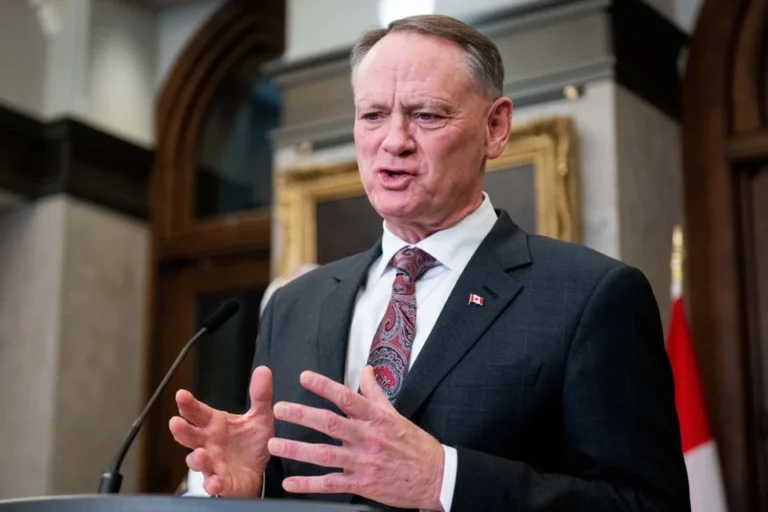
Public Safety Minister David McGuinty made the announcement in Ottawa, citing the growing threat these organizations pose to public safety, particularly through their role in drug trafficking and violence. Canada’s list includes:
Cártel de Sinaloa
Cártel de Jalisco Nueva Generación (CJNG)
Cártel del Golfo (CDG)
La Nueva Familia Michoacana (LNFM)
Cárteles Unidos (CU)
Tren de Aragua (TdA)
Mara Salvatrucha (MS-13)
Notably, Canada did not include the Cártel del Noreste (CDN), which was designated as a terrorist organization by the U.S.
Justification for the Designation
McGuinty emphasized that these transnational criminal organizations are deeply involved in the production and distribution of fentanyl, which has fueled Canada’s opioid crisis. By labeling them as terrorist groups, Canadian law enforcement will have greater legal authority to target their operations, including freezing assets and imposing tougher criminal penalties.
“These cartels are responsible for widespread violence, including assassinations, kidnappings, and attacks on government officials. They destabilize nations and threaten public safety across North America,” McGuinty stated.
U.S. Action and Regional Impact
The move comes just one day after the U.S. government, under President Donald Trump’s administration, added these same groups to its list of terrorist organizations. The U.S. designation allows for enhanced sanctions, asset freezes, and law enforcement cooperation against these criminal networks.
In response, Mexico’s President Claudia Sheinbaum announced two constitutional reforms aimed at preventing foreign intervention in Mexico’s internal security matters. This signals growing tensions between Mexico and its North American allies over how to handle drug cartels.
Global Reach of These Organizations
These cartels and criminal groups are not only a threat in Latin America but have extended their reach globally. For example:
Tren de Aragua (TdA), originating in Venezuela, has expanded into Colombia, Peru, Chile, and other South American nations, engaging in extortion, kidnappings, and assassinations.
MS-13, which started in Los Angeles, has become one of the most violent gangs in Central America, operating in El Salvador, Honduras, Guatemala, Mexico, and the U.S.
Cártel de Sinaloa and CJNG are among the world’s largest drug trafficking organizations, responsible for large-scale fentanyl production and distribution.
Consequences of the Designation
With this designation, all financial assets linked to these groups in Canada and the U.S. will be frozen. Canadian citizens and businesses are now prohibited from providing any form of support to these organizations. Additionally, law enforcement agencies will have expanded powers to investigate and prosecute individuals associated with these groups.
What’s Next?
Canada’s move aligns with growing international efforts to combat organized crime and drug-related violence. The question remains whether other nations, particularly Mexico, will take similar steps or push back against these designations. Meanwhile, law enforcement agencies across North America are expected to intensify their crackdown on these powerful criminal networks.
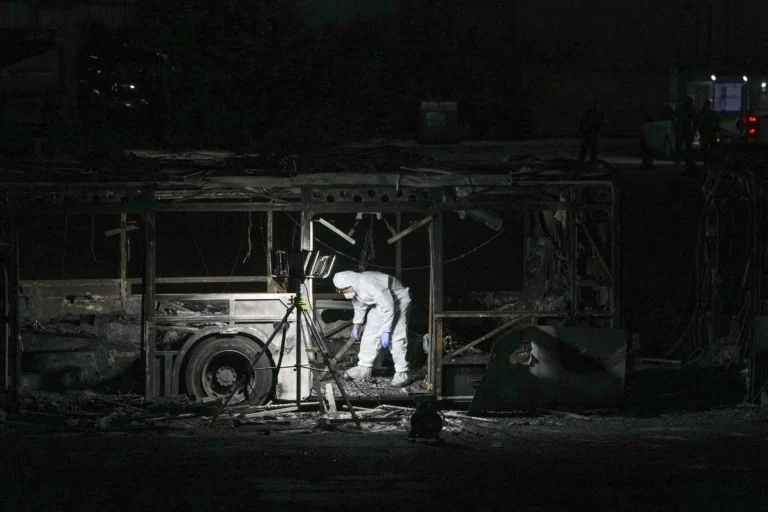
Bat Yam, Israel – A series of explosions on three parked buses rocked Bat Yam, a city near Tel Aviv, on Thursday in what authorities suspect was a militant attack. No injuries were reported, but the blasts raised concerns over security as Israel continues its ongoing conflict with Hamas.
Explosives Found on Multiple Buses
Israeli police discovered two additional explosive devices on other buses that failed to detonate. The bombs were identical, equipped with timers, and appeared to be professionally assembled, police spokesman Asi Aharoni told Channel 13 TV. Bomb squads quickly defused the unexploded devices.
The Shin Bet internal security agency has taken over the investigation, while Prime Minister Benjamin Netanyahu is being regularly briefed on the developments. Police spokesman Haim Sargrof noted that the explosives bore similarities to devices used in the West Bank, though he declined to provide further details.
Investigation Underway
Authorities are investigating whether a single suspect was responsible for planting the bombs or if it was a coordinated attack involving multiple perpetrators. The burned-out remains of the buses have been thoroughly examined by forensic teams searching for clues.
The head of the bus company, Ofir Karni, said that all buses in the fleet were temporarily halted for inspections before being allowed to resume normal service. Bat Yam Mayor Tzvika Brot called it a “miracle” that no one was harmed, as the buses had already completed their routes when the explosions occurred.
Potential Links to West Bank Militants
A group claiming to be affiliated with Hamas’ Qassam Brigades in the West Bank city of Tulkarem posted a message on Telegram, vowing to “take vengeance for our martyrs”, though they did not explicitly claim responsibility for the attack.
Israel’s military has intensified its security operations in the West Bank following Hamas’ October 7, 2023 attack, conducting frequent raids on suspected militants. In response to Thursday’s explosions, the Israeli military imposed restrictions on Palestinian movement and sealed off certain areas of the West Bank.
Calls for Vigilance
Despite heightened security concerns, Mayor Brot urged Bat Yam residents to continue their daily routines while remaining alert. Schools will remain open on Friday, and public transport services are expected to operate as usual.
This attack comes on a day of national mourning, as Hamas returned the bodies of four hostages as part of a ceasefire deal. The bus bombings serve as a stark reminder of the deadly attacks that occurred during the Palestinian uprising in the 2000s, though such incidents have become far less common in recent years.