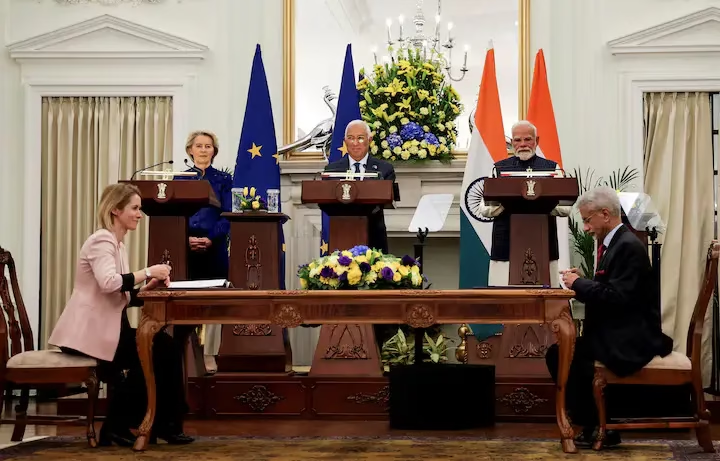
New Delhi, India — India and the European Union have concluded negotiations on a landmark free trade agreement, delivering major benefits for businesses on both sides as they seek to diversify trade ties amid strained relations with the United States.
The agreement will liberalise trade in goods and services between India and the 27-nation European Union, together representing a market of nearly two billion people. It is expected to significantly lower costs for companies, expand market access, and boost long-term investment flows.
RELATED NEWS : Trade talks back in focus as India, US hold high-level meeting
For Indian businesses, the deal opens the EU market more widely than ever before. At the launch of the agreement, the EU will eliminate tariffs on 90% of Indian goods, with zero duties extended to 93% within seven years. Overall, 99.5% of bilateral trade will benefit from some form of tariff concession. The EU’s average tariff rate on Indian exports will fall sharply from 3.8% to 0.1%.
Key Indian export sectors stand to gain, including marine products, chemicals, plastics and rubber, leather and footwear, textiles and apparel, base metals, and gems and jewellery, where tariffs will be reduced to zero. Indian service providers will also gain access to 144 services sub-sectors in the EU, supporting growth in IT, professional services, and other high-value industries.
European businesses will see substantial gains in the Indian market. India will immediately scrap tariffs on about 30% of goods traded with the EU and will reduce or eliminate duties on over 90% of EU exports over time. European companies are expected to save up to €4 billion annually in customs duties. The agreement improves access for EU firms in financial and maritime services, simplifies customs procedures, and strengthens intellectual property protection.
India will also cut tariffs on most industrial imports from the EU, including machinery and electrical equipment, chemicals, and pharmaceuticals. In the automotive sector, import duties on EU-made vehicles will fall from 110% to 10% under a quota system, benefiting major European carmakers while allowing India to protect sensitive segments of its domestic industry.
Both sides have balanced market access with safeguards. India has kept agriculture and automobiles outside full tariff elimination, while the EU has retained protections in sensitive areas such as steel and carbon regulations. Cooperation mechanisms have been built in to help Indian firms adapt to EU climate rules, with technical and financial support to reduce emissions.
Beyond tariffs, the agreement sets binding rules on labour standards, environmental protection, women’s empowerment, digital trade, and climate cooperation, providing regulatory certainty for businesses. Strict rules of origin aim to prevent misuse of the agreement by third countries, while disputes will be resolved through independent panels with binding rulings.
Once approved by EU member states, the European Parliament, and India, the deal is expected to strengthen supply chains, boost exports, and unlock new growth opportunities for Indian and European businesses alike, making it one of the most consequential trade agreements for both economies.
SOURCE : REUTERS | Follow Us: Facebook | Instagram | Twitter | Youtube |