Home Blog Page 156

China announces the removal of defense minister missing for almost 2 months with little explanation

0

China announces the removal of defense minister missing for almost 2 months with little explanation

BY CHRISTOPHER BODEEN

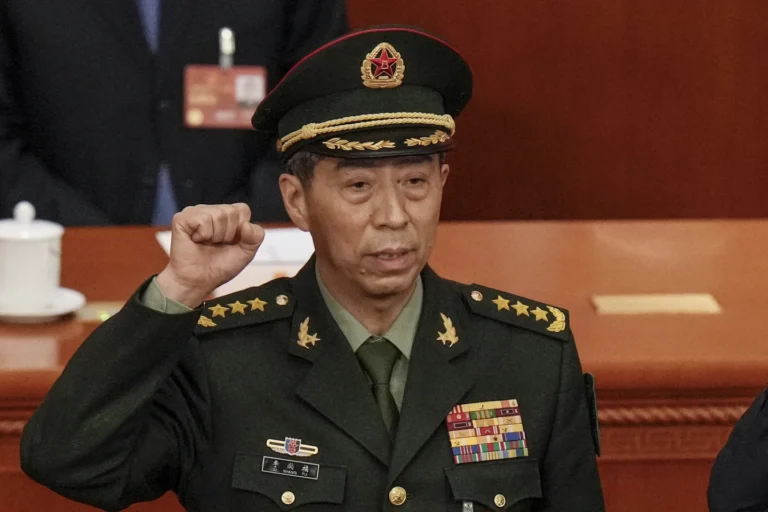
TAIPEI. Taiwan (AP) — China has replaced Defense Minister Gen. Li Shangfu, who has been out of public view for almost two months, state media reported Tuesday. No further information was given.

Li is the second senior Chinese official to disappear this year, following former Foreign Minister Qin Gang, who was removed from office in July with no explanation offered.

Li, who became defense minister during a Cabinet reshuffle in March, hasn’t been seen since giving a speech on Aug. 29. There is no indication that the disappearances of Qin and Li signal a change in China’s foreign or defense policies, although they have raised questions about the resilience of president and ruling Communist Party leader Xi Jinping’s circle of power.


READ MORE : China defends trade with Russia after the US says equipment used in Ukraine might have been exported

Xi has a reputation for valuing loyalty above all and has relentlessly attacked corruption in public and private, sometimes in what has been seen as a method of eliminating political rivals and shoring up his political position amid a deteriorating economy and rising tensions with U.S. over trade, technology and Taiwan.

Li is under U.S. sanctions related to his overseeing weapon purchases from Russia that bar him from entering the country. China has since cut off contacts with the U.S. military, mainly in protest over U.S. arm sales to Taiwan, but also strongly implying that Washington must lift the measures against Li, which Beijing refuses to publicly recognize.

The announcement from state broadcaster CCTV said that both Li and Qin had been removed from the State Council, China’s Cabinet and the center of government power. That virtually assures the end of their political careers, although it remains unclear whether they will face prosecution or other legal sanctions.

CCTV also announced Lan Fo’an’s new appointment as finance minister, and Yin He’jun as science and technology minister.

China’s political and legal systems remain highly opaque, fueling lively discussion of possible corruption, personal foibles or fallings-out with other powerful figures leading to the downfall of top officials.

Along with dealing with what appear to be internal political issues, the ruling party is struggling to revive an economy that has been severely impacted by the draconian “zero-Covid” measures, an aging population, high unemployment among college graduates and a movement of many of its wealthiest and best educated to more liberal societies abroad.

Having had his ideology, known as “Xi Jinping Thought,” enshrined in the party constitution and with the abolishment of presidential term limits, Xi has structured the system so that he may stay in power for the rest of his life. The 70-year-old also heads the party and state committees overseeing the People’s Liberation Army, the world’s largest standing military with more than 2 million personnel on active duty.

Follow Us: Facebook | Instagram | Twitter | Youtube |

Qatar becomes a key intermediary in Israel-Hamas war as fate of hostages hangs in the balance

0

Qatar becomes a key intermediary in Israel-Hamas war as fate of hostages hangs in the balance

BY JON GAMBRELL

JERUSALEM (AP) — The gas-rich nation of Qatar has become a key intermediary over the fate of more than 200 hostages held by Hamas militants after their unprecedented attack on Israel, once again putting the small Arabian Peninsula country in the spotlight.

The negotiations have also thrust Qatar into a delicate international balancing act as it maintains a relationship with those viewed as militant groups by the West while trying to preserve its close security ties with the United States.

Under arrangements stemming from past Hamas cease-fire understandings with Israel, the gas-rich emirate of Qatar has paid the salaries of civil servants in the Gaza Strip, provided direct cash transfers to poor families and offered other kinds of humanitarian aid to Palestinians in Gaza.


READ MORE : Israel battles Hamas for a second day after mass incursion and trades fire with Lebanon’s Hezbollah

Qatar has also hosted Hamas’ political office in its capital of Doha for over a decade. Among officials based there is Khaled Mashaal, an exiled Hamas member who survived a 1997 Israeli assassination attempt in Jordan that threatened to derail that country’s peace deal with Israel. Also there is Ismail Haniyeh, Hamas’ supreme leader.

The U.S. sanctioned Mashaal in 2003 for being “responsible for supervising assassination operations, bombings and the killing of Israeli settlers.” Washington sanctioned Haniyeh in 2018, saying he had “close links with Hamas’ military wing and has been a proponent of armed struggle, including against civilians.”

Mashaal, in an interview with Sky News this week, said hostages taken during Hamas’ attack on Oct. 7 could be released if Israel stops its airstrikes — something incredibly unlikely as Israel prepares for a ground offensive inside the Gaza Strip.

More than 200 people, including foreigners, were believed captured by Hamas during the incursion and taken into Gaza. Four of those have been released, a mother and daughter on Friday and two more on Monday.

“Let them stop this aggression and you will find the mediators like Qatar and Egypt and some Arab countries and others will find a way to have them released and we’ll send them to their homes,” Mashaal said of the hostages.

Hosting the Hamas leaders has brought scrutiny to Qatar, both in the past and since the attack over two weeks ago that killed more than 1,400 people in Israel.

However, the Biden administration has repeatedly praised Qatar for its efforts in working to free the hostages and U.S. Secretary of State Antony Blinken visited Doha during his recent shuttle diplomacy trip in the region.

“Qatar is a longtime partner of ours who is responding to our request, because I think they believe that innocent civilians ought to be freed,” State Department spokesperson Matthew Miller said Monday.

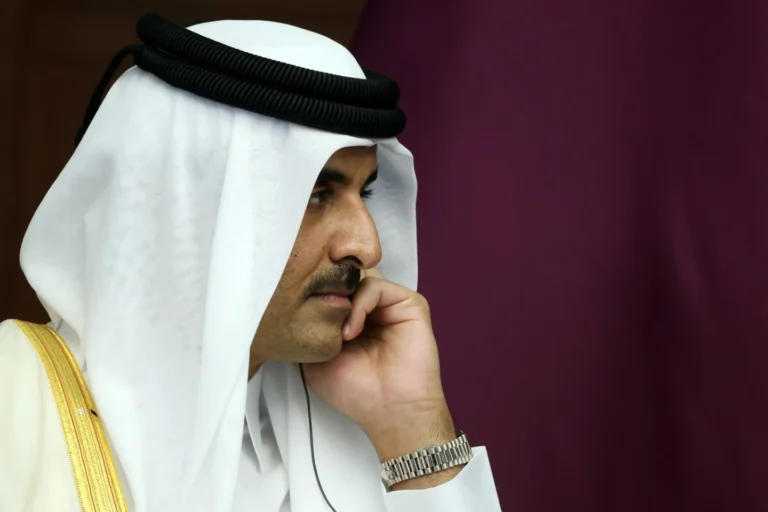
Meanwhile, Qatar’s ruling emir, Sheikh Tamim bin Hamad Al Thani, channeled the wider anger in the Arab world over Israel’s unrelenting airstrikes and siege of the Gaza Strip after the Oct. 7 attack. The Hamas-controlled Health Ministry says the strikes have killed over 5,000 Palestinians so far.

During Qatar’s hosting of the FIFA World Cup last year, Palestinian flags were prominently displayed and Israeli journalists sometimes harassed.

“It is untenable for Israel to be given an unconditional green light and free license to kill, nor it is tenable to continue ignoring the reality of occupation, siege and settlement,” Sheikh Tamim said on Tuesday in a speech to the country’s Shura Council, an advisory and legislative body.

He slammed Israel’s siege, saying that it “should not be allowed in our time” to use as weapons the cutting off of water and preventing medicine and food supplies to an entire population.

Qatar, a peninsula sticking out like a thumb into the Persian Gulf with a small population and military, has always looked warily at its larger neighbors Saudi Arabia and Iran. It faced a yearslong boycott by four Arab nations, including Saudi Arabia, over a political dispute, which Kuwait’s ruler at the time warned could have sparked a war.

It also bore withering criticism from the U.S. and others over its pan-Arab satellite news network Al Jazeera. It aired statements from the late al-Qaida mastermind Osama bin Laden and has been providing nonstop coverage of the toll of Israel’s punishing airstrikes in this war with Hamas, including images of the dead and dying that have fueled demonstrations across the Middle East and wider world.

But those concerns about larger powers have seen Qatar balance the risks through its diplomacy and hosting of the forward headquarters of the U.S. military’s Central Command at its sprawling Al-Udeid Air Base. The U.S. considers Qatar as a major non-NATO ally and Doha has widening defense trade and security cooperation with America, including priority delivery for certain military sales.

The Al-Udeid base served as a key node in America’s chaotic withdrawal from Afghanistan, while Qatar also hosted the Taliban officials with whom Washington earlier negotiated to end the longest U.S. war.

But Qatar’s negotiations have led to headaches in the past.

Most recently, Qatar agreed to have just under $6 billion in Iranian assets once frozen in South Korea transferred to Doha as part of a September prisoner swap between Tehran and the U.S. After the Hamas attack, Qatar and the U.S. agreed not to act on any request from Tehran to access those funds for humanitarian goods as initially planned — at least for now.

That enraged sanctions-choked Iran and left Qatar “walking the tightrope of international relations,” said David B. Roberts, who has long studied Qatar as an associate professor at King’s College London and recently published the book “Security Politics in the Gulf Monarchies.”

“The reality is it is quite straight forward that so many senior government people in Israel and America want Qatar to have this role and … Qatar ultimately will be seen in a broadly positive light in trying to free these hostages,” Roberts said.

“If you do want this unique spot,” he added, “then you’re not signing yourself up for an easy life.”

Follow Us: Facebook | Instagram | Twitter | Youtube |

Tanzania signs a controversial port management deal with Dubai-based company despite protests

0

Tanzania signs a controversial port management deal with Dubai-based company despite protests

BY EVELYNE MUSAMBI

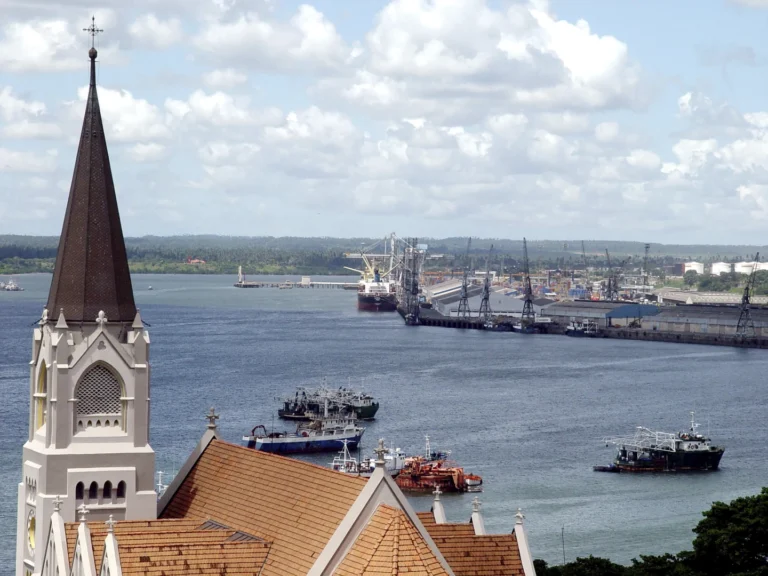
NAIROBI, Kenya (AP) — Tanzania’s government signed a controversial port management deal with Dubai-based DP World that had fueled protests in the African country in the past months and led to arrests of dozens of critics.

The deal was signed on Sunday in the presence of Tanzania’s President Samia Suluhu Hassan, who has recently been accused of cracking down on critics such as her predecessor, the late John Magufuli.

Tanzania Ports Authority Director General Plasduce Mbossa said that DP World, based in the United Arab Emirates, will only operate four berths of the Dar es Salaam Port, located in the country’s financial capital, and not the entire port. Its performance would be reviewed every five years for a total contractual period of 30 years.


READ MORE : At UNGA, Kenya’s president asks world not to leave Haiti behind

The opposition and civil society have protested the government decision to have a foreign logistics company manage Tanzania’s ports. The government has said the move would increase port efficiency and grow the country’s economy.

The ports agreement was approved by Tanzania’s parliament on June 10, triggering protests in which more than 22 people have been arrested so far, according to Human Rights Watch.

The international rights group in August urged Tanzania to respect freedom of expression and the right to protest.

Tanzania has made some reforms since the death in 2021 of autocratic President Magufuli, who cracked down on critics and introduced draconian laws.

Hassan, who is serving out Magufuli’s term, has been accused of continuing his anti-democratic policies. However, she was lauded in 2022 for lifting a prohibition on four newspapers that had been banned by the former leader.

Follow Us: Facebook | Instagram | Twitter | Youtube |
Hungary PM Orbán blasts the European Union on the anniversary of Hungary’s 1956 anti-Soviet uprising

0

Hungary PM Orbán blasts the European Union on the anniversary of Hungary’s 1956 anti-Soviet uprising

BY JUSTIN SPIKE

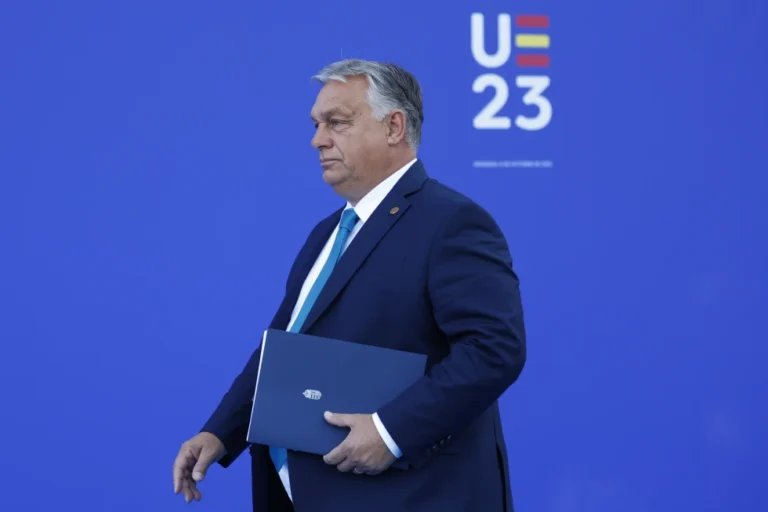
BUDAPEST, Hungary (AP) — Prime Minister Viktor Orbán compared Hungary’s membership in the European Union to more than four decades of Soviet occupation of his country during a speech on Monday commemorating the anniversary of Hungary’s 1956 anti-Soviet revolution.

Speaking to a select group of guests in the city of Veszprem, Orbán accused the EU of seeking to strip Hungary of its identity by imposing a model of liberal democracy that he said Hungarians reject. Brussels, the de facto capital of the EU, employs methods against Hungary that hearken back to the days of Soviet domination by Moscow, he said.

“Today, things pop up that remind us of the Soviet times. Yes, it happens that history repeats itself,” Orbán said at the event, from which all media were excluded except Hungary’s state broadcaster. “Fortunately, what once was tragedy is now a comedy at best. Fortunately, Brussels is not Moscow. Moscow was a tragedy. Brussels is just a bad contemporary parody.”


READ MORE : 40 years after bombing that killed Americans in Beirut, US troops again deploy east of Mediterranean

The Oct. 23 national holiday commemorates the beginning of a 1956 popular uprising against Soviet repression that began in Hungary’s capital, Budapest, and spread across the country.

After Hungary’s Stalinist leader was successfully ousted and Soviet troops were forced out of the capital, a directive from Moscow sent the Red Army back into Budapest and brutally suppressed the revolution, killing as many as 3,000 civilians and destroying much of the city.

Orbán, a proponent of an alternative form of populist governance that he calls “illiberal democracy,” has long used the holiday to rally his supporters. In recent years, he has used the occasion to draw parallels between the EU’s attempts to bring Hungary into compliance with its rules on corruption and democracy, and the repression the country faced under Soviet occupation in the 20th century.

“We had to dance to the tune that Moscow whistled,” Orbán said of Hungary’s days in the Eastern Bloc. “Brussels whistles too, but we dance as we want to, and if we don’t want to, then we don’t dance!”

The holiday, which looms large in Hungary’s historical memory as a freedom fight against Russian repression, comes as war rages in neighboring Ukraine, where Moscow has occupied large swaths of the country and illegally annexed four regions.

Orbán, widely considered one of Russian President Vladimir Putin’s only allies in the EU, has vigorously lobbied against the bloc imposing sanctions on Moscow, though the nationalist leader has ultimately voted for all sanctions packages.

Last week, Orbán met with Putin before an international forum in Beijing, a meeting that focused on Hungary’s access to Russian energy. European leaders, as well as other members of the NATO military alliance such as the United States, expressed concern that Orbán had met with Putin even as an international arrest warrant has been issued against him for alleged war crimes in Ukraine.

On Monday evening, several thousand demonstrators marched down a central avenue in Budapest in opposition to Orbán’s education policies — which they say undervalue teachers in public schools and are resulting in an educator shortage — as well as Hungary’s continued relationship with Russia despite Moscow’s invasion.

“Back then, the Soviet Union invaded Hungary, and today’s Russia is demonstrating similar efforts at conquest, and we’d like to express our solidarity with Ukraine,” said demonstrator Katalin Beke. “It really damages the interests of our allies that (Orbán) is so visibly friendly with (Putin). I find it extremely damaging.”

Pausing in front of the Russian Embassy, demonstrators chanted, “Russians go home!”, a phrase popularized during the 1956 anti-Soviet uprising. Another demonstrator, Istvan Muzsa, said he felt “shame” over Orbán’s meeting with Putin in Beijing.

“It’s the country’s shame and the shame of every decent person, regardless of party preference and which side someone votes for,” he said.

Follow Us: Facebook | Instagram | Twitter | Youtube |
40 years after bombing that killed Americans in Beirut, US troops again deploy east of Mediterranean

0

40 years after bombing that killed Americans in Beirut, US troops again deploy east of Mediterranean

BY BASSEM MROUE

BEIRUT (AP) — Forty years after one of the deadliest attacks against U.S. troops in the Middle East, some warn that Washington could be sliding toward a new conflict in the region.

On Oct. 23, 1983, a suicide bomber hit an American military barracks at Beirut International Airport, killing 241 U.S. service members, most of them Marines – still the deadliest attack on Marines since the World War II Battle of Iwo Jima. A near-simultaneous attack on French forces killed 58 paratroopers.

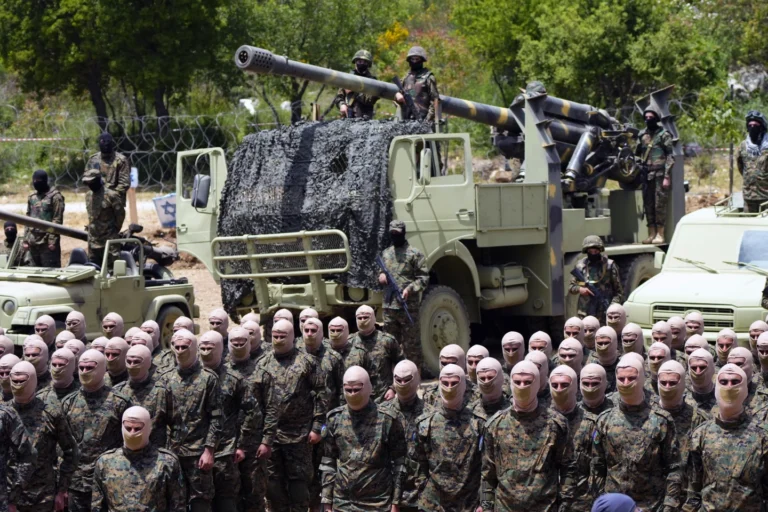
Washington blames the bombings on the Lebanese militant group Hezbollah, a claim the Iranian-backed Hezbollah denies. The U.S. and French forces were in Beirut as part of a multinational force deployed amid Israel’s 1982 invasion of Lebanon. The force oversaw the withdrawal of Palestinian fighters from Beirut and stayed afterward to help a Western-backed government at the time. The bombing prompted a U.S. withdrawal from Lebanon.


READ MORE : I am a Zionist’: How Joe Biden’s lifelong bond with Israel shapes war policy

The United States is now deploying forces again in the region in connection to a war between Israel and its enemies.

The aircraft carrier USS Gerald R. Ford has been positioned in the eastern Mediterranean along with other American warships – with a second carrier on the way – in what is widely seen as a message to Iran and Hezbollah not to open new fronts as Israel fights Hamas.

Longtime tensions between the U.S. and Iran have been hiked by the two-week-old war between Israel and Hamas, in which the Palestinian militant group’s Oct. 7 surprise attack on southern Israeli towns brought devastating Israeli bombardment of the Gaza Strip.

The war risks spiraling into a wider regional conflict. The biggest worry is over the Lebanon-Israel border, where Israel and Hezbollah exchange fire on a daily basis.

But there are other spots where the U.S. could be dragged directly into the fight. There are roughly 2,500 U.S. troops in Iraq and around 900 others in eastern Syria, on missions against the Islamic State group. In both countries, Iran has militias loyal to it that already have opened fire on the Americans since the Gaza war erupted.

A Hezbollah supporter who goes by the name of Haj Mohammed posted a video on Tiktok on Oct. 13 that drew a threatening parallel between the barracks bombing 40 years ago and present-day events.

“It seems that Uncle Joe did not tell the commanders of these warships and aircraft carriers about what happened on October 23, 1983,” the man said, referring to President Joe Biden. Sitting in front of a poster of Jerusalem’s Dome of the Rock, he wondered aloud whether U.S. troops will return home in coffins again.

Iran-backed groups have issued threats against the U.S. if it joins the war on the side of Israel.

Top Hezbollah official Hachem Safieddine said in a speech that there are tens of thousands of fighters around the region “whose fingers are on the trigger.”

Biden repeatedly has used one word to warn Israel’s enemies against trying to take advantage of the situation: “Don’t.”

Iran leads the so-called “axis of resistance” that includes Tehran-backed factions from Lebanon, Iraq, Yemen, Afghanistan and Pakistan as well as Syria. Hezbollah, Lebanon’s most powerful group, has tens of thousands of rockets and missiles as well as a drone arsenal that pose a serious threat if the group fully joins the war against Israel.

Still, many analysts say an all-out regional war that would risk dragging the U.S. and Iran into direct confrontation remains unlikely.

“Until this moment the two sides don’t want a confrontation” and are communicating that to each other, said Iranian political analyst and political science professor Emad Abshenass about Tehran and Washington.

But “the situation could turn on its head” if Israel’s army enters Gaza and seems likely defeat Hamas, Abshenass said.

In 1983, the barracks bombing was seen as a lesson in the danger for the U.S. from stepping in the middle of a conflict between Israel and one of its neighbors.

Sam Heller of The Century Foundation said that, as in 1983, “I don’t trust that the U.S. forces the Biden administration has sent to the region are enough to really intimidate and deter local actors.”

“Iran and its allies are exposed in their own way,” Heller said, but they have “very serious capabilities today that could be (used) against U.S. targets regionwide.”

Follow Us: Facebook | Instagram | Twitter | Youtube |
Japan, China renew pledge to promote diplomat ties on friendship’s 45th anniversary

0

Japan, China renew pledge to promote diplomat ties on friendship’s 45th anniversary

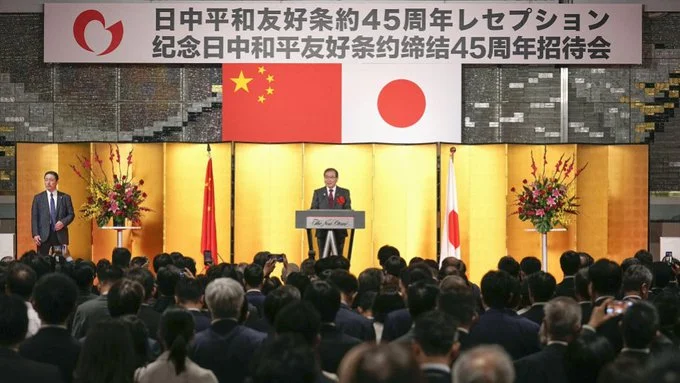
TOKYO (KYODO NEWS) – Japan and China renewed their pledges to further promote ties upon the 45th anniversary of a bilateral friendship treaty’s coming into force on Monday, as Tokyo continues to seek high-level dialogue with Beijing amid strains in the relationship.

“It is important to work together to build a constructive and stable Japan-China relationship from a big-picture perspective,” Japanese Prime Minister Fumio Kishida said in a message read out at a ceremony in Tokyo.

While admitting the Asian neighbors are facing “various issues of concern,” they both share “a great responsibility for the peace and prosperity of the region and the international community,” Kishida added.


READ MORE : Operation Ajay: Sixth chartered flight brings back 143 people from Israel

Chinese Premier Li Qiang said in his message for the event that Beijing will aim for Sino-Japanese relations that will “meet the needs of a new era” by “returning to the spirit” of the Japan-China Peace and Friendship Treaty signed in 1978.

The ceremony was hosted by a group promoting exchanges between the two Asian powers, including the Japan Business Federation, the country’s most powerful business lobby better known as Keidanren. China is also scheduled to hold an event in Beijing the same day.

Japan and China — the world’s third- and second-largest economies — have acknowledged the need to stabilize ties, but tensions remain over Beijing’s military and economic assertiveness in the region. The relationship has further soured in recent months over a dispute about the release of treated radioactive wastewater from Japan’s disaster-damaged Fukushima Daiichi nuclear power plant.

After establishing diplomatic ties in a joint communique in 1972, Japan and China affirmed in the 1978 pact that they would “settle all disputes by peaceful means” and “refrain from the use or threat of force.”

At the Monday event, Japanese Foreign Minister Yoko Kamikawa said the two countries should continue their “wide and multilayered dialogue including at levels from leaders to the general public,” and collaborate on solving global issues such as climate change and countermeasures against infectious diseases.

Chinese Ambassador to Japan Wu Jianghao vowed that Beijing will make efforts together with Tokyo to deepen bilateral exchanges and cooperation.

Toshihiro Nikai, a ruling Liberal Democratic Party heavyweight known for his pro-China stance, and Masakazu Tokura, Keidanren chairman, also delivered speeches.

During a ceremony in Tokyo in September last year for the 50th anniversary of the normalization of diplomatic relations between the two countries, celebratory messages from Kishida and Chinese President Xi Jinping were read out.

Kishida is expected to explore the possibility of a bilateral summit with Xi on the sidelines of the Asia-Pacific Economic Cooperation forum’s annual leaders gathering in November in San Francisco.

Follow Us: Facebook | Instagram | Twitter | Youtube |
Operation Ajay: Sixth chartered flight brings back 143 people from Israel

0

Operation Ajay: Sixth chartered flight brings back 143 people from Israel

More than 1,200 people returned from Israel in the previous five chartered flight

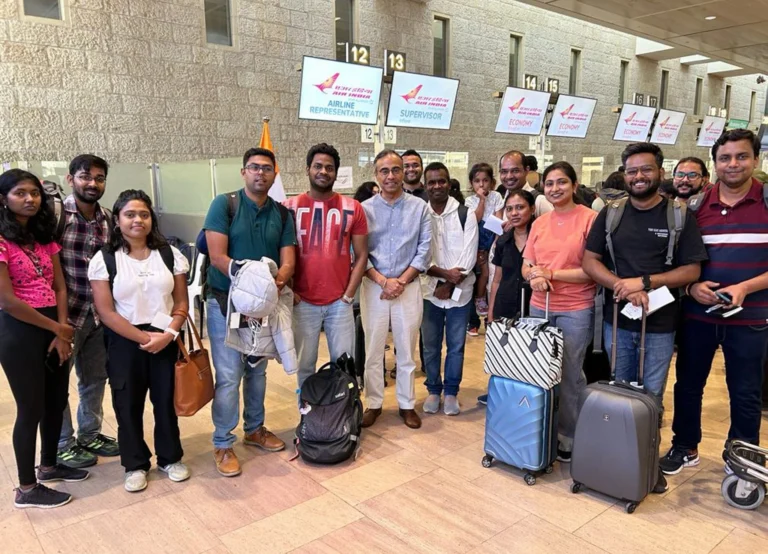
Tel Aviv (PTI) A special flight carrying 143 persons, including two Nepalese citizens and four infants, wanting to leave Israel amidst the Israel-Hamas conflict, left for India on Sunday as part of ‘Operation Ajay’.

It was the sixth flight as part of Operation Ajay launched on October 12 to facilitate the return of those Indian nationals who wish to return home following the brazen attacks on Israeli towns by Hamas militants from Gaza on October 7.

The flight is carrying 143 persons, including two Nepalese citizens and four infants, informed sources told PTI.


READ MORE : Israel battles Hamas for a second day after mass incursion and trades fire with Lebanon’s Hezbollah

Shashwat Singh, a post-doctoral researcher, who has been living in Israel since 2019, reached Delhi along with his wife.
“We woke up to sounds of air raids’ sirens. We stay in central Israel. I don’t know what shape this conflict will take… I am doing postdoc in agriculture there,” he told PTI.
The evacuation of Indians is a “praiseworthy step”, Singh said soon after the flight landed. “We hope peace will be restored and we will return to work… The Indian government got in touch with us via email. We are thankful to Prime Minister Modi and the Indian Embassy in Israel.” MEA spokesperson Arindam Bagchi on Thursday said around 18,000 Indians are currently residing in Israel while about a dozen people are in the West Bank and three to four are in Gaza.

So far, five chartered flights from Tel Aviv arrived in Delhi with nearly 1,200 passengers, including children.

Since the start of hostilities, nearly 4,400 Palestinians have been killed.

According to official Israeli sources, at least 1,400 Israelis and foreign nationals have been killed in Israel.

Follow Us: Facebook | Instagram | Twitter | Youtube |
At Cairo Peace Summit, even Arab leaders at peace with Israel expressed growing anger over the Gaza war

0

At Cairo Peace Summit, even Arab leaders at peace with Israel expressed growing anger over the Gaza war

BY SAMY MAGDY

CAIRO (AP) — Egypt and Jordan harshly criticized Israel over its actions in Gaza at a summit on Saturday, a sign that the two Western allies that made peace with Israel decades ago are losing patience with its two-week-old war against Hamas.

Egyptian President Abdel Fattah el-Sissi, who hosted the summit, again rejected any talk of driving Gaza’s 2.3 million Palestinians into the Sinai Peninsula and warned against the “liquidation of the Palestinian cause.” Jordan’s King Abdullah II called Israel’s siege and bombardment of Gaza “a war crime.”

The speeches reflected growing anger in the region, even among those with close ties to Israel who have often worked as mediators, as the war sparked by a massive Hamas attack enters a third week with casualties mounting and no end in sight.


READ MORE : Italy’s PM Meloni urges international community not to fall into Hamas “trap”

In his opening remarks, el-Sissi said Egypt vehemently rejected “the forced displacement of the Palestinians and their transfer to Egyptian lands in Sinai.”

“I want to state it clearly and unequivocally to the world that the liquidation of the Palestinian cause without a just solution is beyond the realm of possibility, and in any case, it will never happen at the expense of Egypt, absolutely not,” he said.

Jordan’s king delivered the same message, expressing his “unequivocal rejection” of any displacement of Palestinians. Jordan already hosts the largest number of displaced Palestinians from previous Mideast wars.

“This is a war crime according to international law, and a red line for all of us,” he told the summit.

Palestinian President Mahmoud Abbas, who leads the Palestinian Authority, a government exercising semi-autonomous control in the occupied West Bank, called for Israel to stop “its barbaric aggression” in Gaza. He also warned against attempts to push Palestinians out of the coastal territory.

“We will not leave, we will not leave, we will not leave, and we will remain in our land,” he told the summit.

Israel says it is determined to destroy Gaza’s Hamas rulers but has said little about its endgame.

On Friday, Israeli Defense Minister Yoav Gallant laid out a three-stage plan in which airstrikes and “maneuvering” — a presumed reference to a ground attack — would aim to root out Hamas before a period of lower intensity mop-up operations. Then, a new “security regime” would be created in Gaza along with “the removal of Israel’s responsibility for life in the Gaza Strip,” Gallant said.

He did not say who would run Gaza after Hamas.

Meanwhile, Israel has ordered more than half of the 2.3 million Palestinians in Gaza to evacuate from north to south within the territory it has completely sealed off, effectively pushing hundreds of thousands of Palestinians toward the Egyptian border.

Amos Gilad, a former Israeli defense official, said Israel’s ambiguity on the matter is endangering crucial ties with Egypt. “I think a peace treaty with Egypt is highly important, highly crucial for the national security of Israel and Egypt and the whole structure of peace in the world,” he said.

Gilad said Prime Minister Benjamin Netanyahu needs to speak directly with the leaders of Egypt and Jordan, and say publicly that Palestinians will not be entering their countries.

Two senior Egyptian officials said relations with Israel have reached a boiling point.

They said Egypt has conveyed its frustration over Israeli comments about displacement to the United States, which brokered Camp David Accords in the 1970s. Both officials spoke on condition of anonymity because they were not authorized to brief the media.

Egypt worries that a mass exodus would risk bringing militants into Sinai, from where they might launch attacks on Israel, endangering the peace treaty.

Arab countries also fear a repeat of the mass exodus of Palestinians from what is now Israel before and during the 1948 war surrounding its creation, when some 700,000 fled or were driven out, an event Palestinians refer to as the Nakba, or catastrophe. Those refugees and their descendants, who now number nearly 6 million, were never allowed to return.

At Saturday’s gathering, the anger extended beyond the fears of mass displacement.

Both leaders condemned Israel’s air campaign in Gaza, which has killed more than 4,300 Palestinians, including many civilians, according to health authorities in Gaza. Israel says it is only striking Hamas targets and is abiding by international law.

The war was sparked by a wide-ranging Hamas incursion into southern Israel on Oct. 7 in which over 1,400 people were killed, the vast majority of them civilians.

Abdullah, who is among the closest Western allies in the region, accused Israel of “collective punishment of a besieged and helpless people.”

“It is a flagrant violation of international humanitarian law. It is a war crime,” he said.

He went on to accuse the international community of ignoring Palestinian suffering, saying it had sent a “loud and clear message” to the Arab world that “Palestinian lives matter less than Israeli ones.”

___
Associated Press writer Julia Frankel in Jerusalem contributed.

Follow Us: Facebook | Instagram | Twitter | Youtube |
Italy’s PM Meloni urges international community not to fall into Hamas “trap”

0

Italy’s PM Meloni urges international community not to fall into Hamas “trap”

CAIRO (Reuters) – Italian Prime Minister Giorgia Meloni said on Saturday that the international community must avoid an escalation in the war between Israel and Hamas and set a roadmap towards the two states solution.

Meloni made the remarks while speaking in Egypt at the Cairo international summit for peace in the Middle East as Israel prepares a ground assault on Gaza following Hamas attack that killed 1,400 people.


READ MORE : I am a Zionist’: How Joe Biden’s lifelong bond with Israel shapes war policy

“Although our starting points are far apart, our interests overlap perfectly: that what is happening in Gaza does not become a much wider conflict, a religious war, a clash of civilisations,” Meloni said speaking in Italian.

“I have the impression that this was the real aim of the Hamas attack, not to defend the rights of the Palestinian people, but an attack that would create an unbridgeable gap between the Palestinians and the Israelis, meaning that the target is all of us, and we cannot fall into this trap, which would be very stupid.”

The Italian premier met Palestinian President Mahmoud Abbas in Cairo before travelling to Tel Aviv to meet Israel’s Prime Minister Benjamin Netanyahu.

Meloni and Abbas discussed the need to work hard for a de-escalation of the Israel-Hamas war and for a two-state solution, the Italian leader told journalists, referring to the idea of establishing two separate and independent states, one for Israelis and one for Palestinians.

“I hope that there is a responsibility on the part of whole international community, and it seems to me that there is, to speed up this process and provide a structural solution to the conflict,” Meloni said.

She stressed that a two-state solution must have a clear timeframe.

Reporting by Giselda Vagnoni; Editing by Tomasz Janowski and Alison Williams

Follow Us: Facebook | Instagram | Twitter | Youtube |
I am a Zionist’: How Joe Biden’s lifelong bond with Israel shapes war policy

0

I am a Zionist’: How Joe Biden’s lifelong bond with Israel shapes war policy

WASHINGTON (Reuters) – When Joe Biden met with Prime Minister Benjamin Netanyahu and his war cabinet during his visit to Israel, the U.S. president assured them: “I don’t believe you have to be a Jew to be a Zionist, and I am a Zionist.”

The politicians and generals gathered in the ballroom of the Tel Aviv hotel nodded in approval, according to a U.S. official knowledgeable of the closed-door remarks, even as Israel bombarded Gaza in retaliation for a devastating attack by Palestinian Hamas militants and with a ground invasion looming.


READ MORE : Hamas attack on Israel thrusts Biden into Mideast crisis and has him fending off GOP criticism

Biden, who is of Irish Catholic descent, has used similar words in the past to profess his affinity for Israel. But the moment, which has not been previously reported, illustrates how Biden’s decades as one of the leading “Friends of Israel” in American politics seem to be guiding him during a defining crisis of his presidency.

It also underscores the challenges he faces balancing unwavering support for Israel with persuading Netanyahu – with whom he has a long history – to avoid worsening the civilian death toll and humanitarian meltdown in Gaza as well as complicating further releases of American hostages.

“Biden’s connection to Israel is deeply engrained in his political DNA,” said Aaron David Miller, a former Middle East negotiator who served six secretaries of state in both Democratic and Republican administrations. “Whether he likes it or not, he’s in the midst of a crisis he’ll have to manage.”

Reuters interviewed a dozen current and former aides, lawmakers and analysts, some of whom said Biden’s current wartime embrace of Netanyahu could afford the U.S. leverage to try to moderate Israel’s response in Gaza.

In their private session with aides on Wednesday, the two leaders displayed none of the tensions that have sometimes characterized their meetings, according to a second U.S. official familiar with the talks.

But Biden did pose hard questions to Netanyahu about the coming offensive, including “have you thought through what comes the day after and the day after that?” the official said. U.S. and regional sources have expressed doubt that Israel, which vows to destroy Hamas, has yet crafted an endgame.

Biden’s alignment with the right-wing leader risks alienating some progressives in his Democratic Party as he seeks re-election in 2024, with a growing international outcry against Israel’s tactics also casting some blame on the U.S.

It also has prompted many Palestinians and others in the Arab world to regard Biden as too biased in favor of Israel to act as an even-handed peace broker.


FORGED OVER DECADES

Biden has partly credited his pro-Israel world view to his father, who insisted following World War Two and the Nazi Holocaust there was no doubt of the justness of establishing Israel as a Jewish homeland in 1948.

Biden’s awareness of the persecution of Jews over the centuries and a record high in the number of antisemitic incidents in the U.S. last year could also help explain why Hamas atrocities committed in the Oct. 7 attack on Israel were so disturbing for the 80-year-old president, according to a former U.S. official.

Entering national politics in 1973, Biden spent the next five decades forging his policy positions – iron-clad support for Israel’s security coupled with backing for steps toward Palestinian statehood – as he served as U.S. senator, Barack Obama’s vice president and finally president.

His career was marked by deep engagement with the Israeli-Arab conflict, including an oft-retold encounter with Prime Minister Golda Meir who told the young lawmaker in 1973 on the cusp of the Yom Kippur War that Israel’s secret weapon was “we have no place else to go.”

During his 36 years in the Senate, Biden was the chamber’s biggest recipient in history of donations from pro-Israeli groups, taking in $4.2 million, according to the Open Secrets database.

As vice president, Biden often mediated the testy relationship between Obama and Netanyahu.

Dennis Ross, a Middle East adviser during Obama’s first term, recalled Biden intervening to prevent retribution against Netanyahu for a diplomatic snub during a 2010 visit. Obama, Ross said, had wanted to come down hard over Israel’s announcement of a major expansion of housing for Jews in East Jerusalem, the mostly Arab half of the city captured in the 1967 war.

“Whenever things were getting out of hand with Israel, Biden was the bridge,” said Ross, now at the Washington Institute for Near East Policy. “His commitment to Israel was that strong … And it’s the instinct we’re seeing now.”

While Biden and Netanyahu profess to be longtime friends, their relationship was frayed in recent months with the White House echoing Israeli opponents of Netanyahu’s plan to curb the powers of the Supreme Court of Israel.


PROGRESSIVE DISSENT

The two now find themselves in an uneasy alliance that could be tested by an Israeli ground offensive.

Republican U.S. Senator Lindsey Graham, in an interview with Reuters, expressed confidence that the “arc of time” in Biden and Netanyahu’s relationship would enable them to work together.

But in a veiled swipe, Graham, who spent years as Biden’s Senate colleague, said it was “imperative” he set “red lines” to keep Iran, Hamas’s benefactor, out of the conflict.

Biden has warned Iran not to get involved but has not spelled out consequences.

Hamas gunmen killed 1,400 people and took around 200 hostages, including Americans, when they rampaged through Israeli towns. Israel has since put Gaza under siege. At least 4,385 Palestinians have been killed, Gaza officials said.

While Republicans have shown near-unanimity in endorsing whatever action Israel takes, Biden faces dissent from a faction of progressives pushing for Israeli restraint and a ceasefire.

“President Biden, not all America is with you on this one, and you need to wake up and understand,” Representative Rashida Tlaib, the only Palestinian American in Congress, told supporters. “We are literally watching people commit genocide.”

But experts say Biden could gain ground among independent voters who share his affinity for Israel.

A Reuters/Ipsos poll released on Monday showed stronger U.S. public sympathy for Israel than in the past, with support for Israel highest among Republicans at 54%, compared to 37% of Democrats. Younger Americans showed less support for Israel than older Americans.

Biden, facing low approval ratings, and some fellow Democrats are also expected to be wary of running afoul of the main U.S. pro-Israel lobby, AIPAC, a powerful force in U.S. elections.

But the crisis has also stirred criticism of Biden for not devoting enough attention to the plight of Palestinians, whose hopes for statehood have grown ever dimmer under Israeli occupation.

U.S. officials had said the time was not right to resume long-suspended Israeli-Palestinian negotiations, largely because of intransigence on both sides.

“The administration’s neglect of the issue is a key factor in where we are today,” Khaled Elgindy, a former Palestinian negotiations adviser, said.

Biden’s “blank check” for Israel’s assault on Gaza has “shattered, perhaps irreversibly, what little credibility the U.S. had left,” said Elgindy, now at the Middle East Institute in Washington.

Reporting by Matt Spetalnick, Jeff Mason, Steve Holland and Patricia Zengerle; Writing by Matt Spetalnick; Editing by Suzanne Goldenberg

Follow Us: Facebook | Instagram | Twitter | Youtube |