Home Blog Page 155

Hamas-Israel conflict: PM Modi, Egypt’s El-Sisi bat for early restoration of peace

0

Hamas-Israel conflict: PM Modi, Egypt’s El-Sisi bat for early restoration of peace

The two leaders discuss deteriorating security, humanitarian situation in West Asia

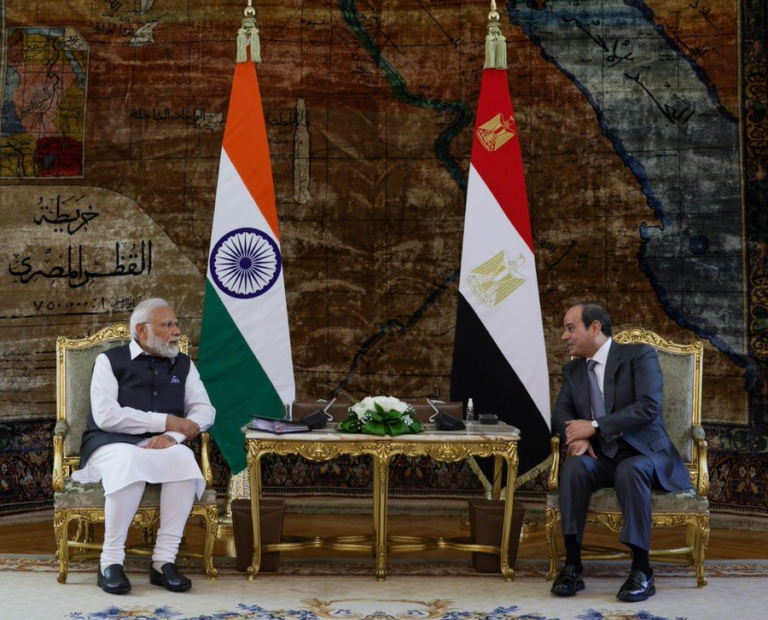
New Delhi (PTI) Prime Minister Narendra Modi and Egyptian President Abdel Fattah El-Sisi discussed the deteriorating security and humanitarian situation arising out of the Israel-Hamas conflict and agreed on the need for early restoration of peace and stability in the region.

In a phone conversation on Saturday, the two leaders shared their concern over terrorism, violence and loss of civilian lives and emphasized on facilitating humanitarian assistance to those in need.


READ MORE : At Cairo Peace Summit, even Arab leaders at peace with Israel expressed growing anger over the Gaza war

Modi and El-Sisi also deliberated on the implications of the current situation for West Asia and the world, according to an Indian read-out.

“Yesterday, spoke with President @AlsisiOfficial. Exchanged views on the deteriorating security and humanitarian situation in West Asia,” Modi posted on ‘X’ Sunday.

“We share concerns regarding terrorism, violence and loss of civilian lives. We agree on the need for early restoration of peace and stability and facilitating humanitarian assistance,” he said.

Modi had held phone conversations with Israeli Prime Minister Benjamin Netanyahu and President of Palestinian Authority Mahmoud Abbas in view of the conflict that was triggered by unprecedented attacks on Israel by Hamas militants on October 7. Israel has launched a massive counter-offensive.

The Ministry of External Affairs (MEA) said the two leaders discussed the current situation in West Asia and its implications for the region and the world.

“Both leaders expressed their shared concern at terrorism, violence and loss of civilian lives. The prime minister reiterated India’s long-standing and principled position on the Israel-Palestine issue,” it said.

The MEA said the prime minister highlighted India’s development partnership and humanitarian aid for the people of Palestine.

“The two leaders agreed on the need for early restoration of peace and stability and facilitating humanitarian assistance,” it said in a statement.

There has been mounting global concerns over the plight of civilians in Gaza in view of Israel’s retaliatory attacks.

India on October 22 sent over 38 tonnes of relief material, including medicines and medical equipment, for the people of Palestine.

A statement issued by the Egyptian side said President El-Sisi received a phone call from Prime Minister Modi and the two leaders exchanged views on the latest developments in the Israeli military operations in the Gaza Strip.

They also discussed the gravity of the continuation of the current escalation, given its formidable impact on the lives of civilians and the threat it poses to the security of the entire region, it said.

Spokesman for the Egyptian Presidency, Counselor Ahmed Fahmy, said President El-Sisi confirmed that Egypt is pursuing its endeavours to coordinate regional and international efforts to push towards reaching a ceasefire.

The president warned of the grievous humanitarian and security repercussions of a ground offensive in the Gaza Strip, the statement said.

He underscored the critical need for unified international action to find a prompt solution at the diplomatic level, which stipulates reinforcing an immediate humanitarian truce that protects the lives of civilians and allows sustainable and unfettered delivery of humanitarian assistance to the Gaza Strip, in accordance with the resolution of the UN General Assembly which was adopted on October 27, it said.

El-Sisi and Modi “expressed relief at the outstanding level” in bilateral relations between India and Egypt, according to the statement.

They stressed their determination to continue to lead the two countries’ institutions to further strengthen joint cooperation, it said.

This report is auto-generated from PTI news service. ThePrint holds no responsibility for its content.

Follow Us: Facebook | Instagram | Twitter | Youtube |

Kerala Blast : Two dead, 51 injured in IED blasts at Christian prayer meeting in Kerala; man from same group claims responsibility

0

Kerala Blast : Two dead, 51 injured in IED blasts at Christian prayer meeting in Kerala; man from same group claims responsibility

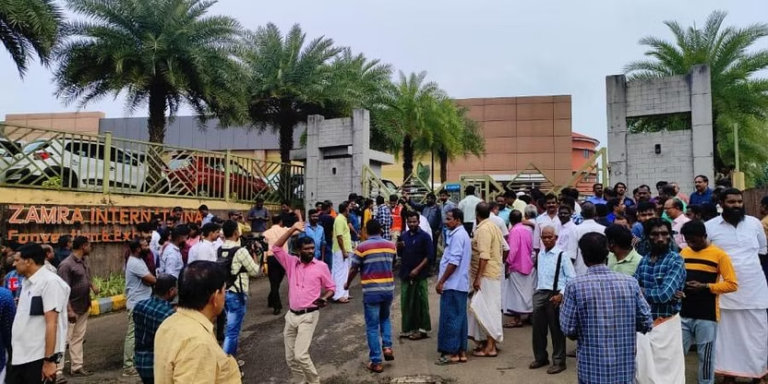
Kochi (PTI) Two women died and 51 persons were injured, some seriously, in multiple blasts at a Christian religious gathering in a convention centre near this port city on Sunday morning, sending shockwaves across Kerala.

The blasts took place at an international convention centre in Kalamassery where hundreds of followers of the minority Christian group Jehovah’s Witnesses had assembled on the concluding day of a three-day-long prayer meeting.

A few hours after the incident, a man claiming to be a member of Jehovah’s Witnesses, surrendered before police in Thrissur district of the state, saying that he carried out the multiple blasts.

Police has registered an FIR against unknown persons under Sections 302 (murder) and 307 (attempt to murder) of the IPC as well as provisions of the Explosives Act and the anti-terror law Unlawful Activities (Prevention) Act (UAPA).

Later in the day, state Health Minister Veena George said that of the 51 injured, 30 were admitted in various hospitals in the state and of them 18 were in ICUs.

Of the 18, six — including a 12-year-old child — were in critical condition with three of them having suffered over 90 per cent burns, the minister said.


READ MORE : Hungary and Slovakia are against the allocation of a €50bn aid package to Ukraine from the EU fund

She said teams of plastic surgeons and general surgeons arrived at Kalamassery Medical College from Thrissur and Kottayam medical colleges.

Besides that a 14-member medical board was also constituted to supervise the treatment being provided to the injured.

ADGP Law and Order M R Ajith Kumar told reporters here that a man named Dominic Martin had surrendered at Kodakara police station in the morning, claiming he was the one who set off the blasts.

The officer said the man gave evidence supporting his claim and the police were examining that as well as his claims and the reasons he gave for carrying out the act.

Prior to surrendering before the police, the man also put out a video message on a social media platform claiming responsibility for the blasts and stating his reasons.

In the video, which was aired on various TV channels, the man claimed that he took the decision as the teachings of the organization were “seditious.” No one from the organization has reacted to his allegations.

Meanwhile, a person claiming to be a member of the religious group told a TV channel that no such person was part of their organization presently.

Martin further claimed that Jehovah’s Witnesses and its ideology were dangerous for the country and therefore its presence had to be ended in the state. He claimed that he had told the organization several times to correct its teachings, but it was not ready to do so.

“As I had no other option, I took this decision,” the man said.

Earlier, State Police Chief Shaik Darvesh Saheb told reporters in Thiruvananthapuram that according to the preliminary probe, an improvised explosive device (IED) was used to carry out the blasts.

Jehovah’s Witnesses is a Christian religious group that originated in the United States of America in the 19th century.

“This morning at 9.40 am approximately, there was an explosion in Zamrah International Convention Centre in Kalamassery in which one person died and 36 people are undergoing treatment as per our information,” the DGP said.

“We are examining it,” he said, adding that a Special Investigation Team (SIT) will be constituted once he reaches the site.

A police source told PTI that there were three blasts, of which two were strong and the third was of low intensity.

On being asked whether tiffin boxes were used for packing the explosives as claimed by some news reports, the source said that it cannot be confirmed at this stage as the blast site was being examined by multiple agencies, including the state anti-terrorism squad and the National Investigation Agency (NIA).

Earlier, before Dominic Martin had surrendered, the DGP said he cannot say anything at this stage, and only after further investigation can he confirm whether it was an act of terror.

“Only after the investigation can I confirm the details. We are examining all the angles. We will find out who is behind this and take stringent action against them,” the top police official said.

He also urged people to maintain peace and remain calm and asked them not to spread provocative or hateful messages on social media.

The spreading of provocative or hateful messages on social media would invite strict action, he warned.

The incident was termed as “shocking” by Kerala Governor Arif Mohammed Khan and “extremely unfortunate” by Chief Minister Pinarayi Vijayan.

“Shocked to hear about the blast at a religious gathering at #Kalamassery, Ernakulam district, Kerala, killing one person and injuring over 20. “Heartfelt condolences to the kin of the deceased and prayers for speedy recovery of the injured,” the Governor said in a post on social media platform X.

Speaking to reporters in Delhi earlier, before reports of the second death in the blast, Vijayan said, “It is an unfortunate incident. One person died, and two others are in serious condition. An investigation has been launched, and further details will be available later. The incident is being viewed very seriously.” The CM also convened an all-party meeting on Monday in the wake of the blasts at the convention centre.

CPI(M) State Secretary M V Govindan, who is in Delhi along with Vijayan for some party programmes, said any terrible actions aimed at diverting attention from the Palestine issue would entail strict action.

“When Kerala stands united with the people of Palestine, any terrible action to divert attention from it will entail strict action. The government and all democratic persons will together condemn it,” he said.

Govindan also said that on viewing the incident politically in the prevailing situation, it appears to be part of a terror act.

“That needs to be examined seriously,” he said.

Kerala Revenue Minister K Rajan said no one, including the media, should take any steps or circulate information based on misconceptions about the incident.

Eyewitnesses recounted the terrifying moments following the blasts which occurred minutes after attendees began praying with their eyes closed.

Recounting her shocking experience, an elderly woman said, “When I opened my eyes after hearing the first blast, all I saw was a fireball in front of me.

“Nothing…nothing more…just a fireball. Everybody ran, scattered here and there. It was a sprawling hall, and a large number of people were inside.” Among the distressed crowd at the venue were senior citizens, including women who had participated in the morning prayers.

A man in his 70s, his voice trembling, described the shock of witnessing a blast in the midst of the densely populated prayer convention.

In all his years of attending the convention, he said, he had never witnessed anything like this before.

Visuals of the incident on TV channels showed fire rescue and police personnel in large numbers evacuating the site.

Disturbing visuals of the situation inside the convention centre shortly after the blasts showed multiple fires inside the hall as people and children were heard screaming in fear.

The video also showed some people trying to quell the fire as the hall was littered with scattered and broken chairs, many of which were ablaze.

Following the blasts, police and district administrations across the state were put on alert. PTI HMP LGK TGB.

This report is auto-generated from PTI news service. ThePrint holds no responsibility for its content.

Follow Us: Facebook | Instagram | Twitter | Youtube |

Hungary and Slovakia are against the allocation of a €50bn aid package to Ukraine from the EU fund

0

Hungary and Slovakia are against the allocation of a €50bn aid package to Ukraine from the EU fund

BUDAPEST (Reuters) – The European Union’s strategy with regards to the war in Ukraine “has failed” and the bloc should create a plan B as the Ukrainians will not win on the frontline, Prime Minister Viktor Orban told Hungarian state radio on Friday.

Orban, speaking in Brussels on the sidelines of an EU summit, said there was a “big battle” especially over support for Ukraine. Orban said he saw no reason for Hungary to send its taxpayers’ money to support Ukraine.


READ MORE : Hungary PM Orbán blasts the European Union on the anniversary of Hungary’s 1956 anti-Soviet uprising

The EU is due to decide in December on a revision of its 2021-27 budget worth 1.1 trillion euros ($1.2 trln), which is already strained by emergency spending during the COVID pandemic and since Russia invaded Ukraine in 2022.

The bloc’s executive proposed that member states chip in more to the shared coffers to provide 50 billion euros to Ukraine and spend another 15 billion euros on migration. Another proposal would allocate 20 billion euros in military aid for Ukraine.

“We found this proposal had not been worked out properly, and was not suitable to be a basis for serious negotiations so we had rejected it,” Orban said. “It was a big battle, especially on the Ukrainian issue.”

Orban said the biggest problem was that the Brussels strategy to send money and military aid to Ukraine to help its fight against Russia has failed.

“Today everybody knows but they do not dare to say it out loud, that this strategy has failed. Its obvious that this will not work….the Ukrainians will not win on the frontline,” he said, adding that a plan B was needed and a cost estimate for that.

“Once we know how much that costs, we can share that burden among ourselves.”

Nationalist Orban, who has constantly clashed with Brussels in the past 13 years over policies his critics say have eroded democratic values in Hungary, said a leadership change was needed in Brussels at the European elections next year.

Reporting by Krisztina Than; Editing by Sonali Paul and Christina Fincher

Follow Us: Facebook | Instagram | Twitter | Youtube |

An Iranian teenager injured on Tehran Metro while not wearing a headscarf has died, state media say

0

An Iranian teenager injured on Tehran Metro while not wearing a headscarf has died, state media say

BY JON GAMBRELL

DUBAI, United Arab Emirates (AP) — An Iranian teenage girl injured weeks ago in a mysterious incident on Tehran’s Metro while not wearing a headscarf has died, state media reported Saturday.

The death of Armita Geravand comes after her being in a coma for weeks in Tehran and after the one-year anniversary of the death of 22-year-old Mahsa Amini which sparked nationwide protests at the time.

Geravand’s Oct. 1 injury and now her death threaten to reignite that popular anger, particularly as women in Tehran and elsewhere still defy Iran’s mandatory headscarf, or hijab, law as a sign of their discontent with Iran’s theocracy.


READ MORE : UAE leader welcomes Iranian foreign minister in latest softening of Persian Gulf tensions

“Armita’s voice has been forever silenced, preventing us from hearing her story,” wrote the New York-based Center for Human Rights in Iran. “Yet we do know that in a climate where Iranian authorities severely penalize women and girls for not adhering to the state’s forced-hijab law, Armita courageously appeared in public without one.”

It added: “As long as the Iranian government enforces its draconian mandatory hijab law, the lives of girls and women in Iran will hang in the balance, vulnerable to severe rights violations, including violence and even death.”

Iran’s state-run IRNA news agency reported Geravand’s death, without noting the wider unrest surrounding the headscarf law. Geravand suffered her injury at the Meydan-E Shohada, or Martyrs’ Square, Metro station in southern Tehran.

“Unfortunately, the brain damage to the victim caused her to spend some time in a coma and she died a few minutes ago,” the IRNA report read. “According to the official theory of Armita Geravand’s doctors, after a sudden drop in blood pressure, she suffered a fall, a brain injury, followed by continuous convulsions, decreased cerebral oxygenation and a cerebral edema.”

What happened in the few seconds after Armita Geravand entered the train on Oct. 1 remains in question. While a friend told Iranian state television that she hit her head on the station’s platform, the soundless footage aired by the broadcaster from outside of the car is blocked by a bystander. Just seconds later, her limp body is carried off.

Iranian state TV’s report, however, did not include any footage from inside the train itself and offered no explanation on why it hadn’t been released. Most train cars on the Tehran Metro have multiple CCTV cameras, which are viewable by security personnel.

Geravand’s parents appeared in state media footage saying a blood pressure issue, a fall or perhaps both contributed to their daughter’s injury.

Activists abroad have alleged Geravand may have been pushed or attacked for not wearing the hijab. They also demanded an independent investigation by the United Nations’ fact-finding mission on Iran, citing the theocracy’s use of pressure on victims’ families and state TV’s history of airing hundreds of coerced confessions.

The Associated Press has not been able to confirm the exact circumstances of what caused Geravand’s injuries.

The Hengaw Organization for Human Rights, which reports on abuses in Iran’s western Kurdish region and earlier published a photograph of Geravand in a coma, renewed its calls Saturday for an independent international investigation citing “the practice of the Islamic Republic in concealing the truth.”

“During the last 28 days, the Islamic Republic of Iran tried to distort the narrative of the government murder of this teenage girl,” the group alleged.

The Oslo-based group Iran Human Rights similarly called for an investigation.

Supreme Leader Ayatollah “Ali Khamenei is personally responsible for Armita Garavand’s death unless an independent international investigation proves otherwise,” said Mahmood Amiry-Moghaddam, the group’s director.

Geravand’s injury and subsequent death also comes as Iran has put its morality police — whom activists implicate in Amini’s death — back on the street, and as lawmakers push to enforce even stricter penalties for those flouting the required head covering. Internationally, Geravand’s injury sparked renewed criticism of Iran’s treatment of women and of the mandatory hijab law.

Amini died in a hospital on Sept. 16, 2022, after she was detained by Iranian morality police on allegations of improperly wearing the hijab. Suspicions that she was beaten during her arrest led to mass protests that represented the largest challenge to Iran’s theocratic government since the revolution.

Since those large-scale protests subsided, many women in Tehran could be seen without the hijab in defiance of the law.

Meanwhile, imprisoned Iranian activist Narges Mohammadi won the Nobel Peace Prize earlier this month in recognition of her tireless campaigning for women’s rights and democracy, and against the death penalty. The Iranian government criticized her awarding of the prize as a political stunt, without acknowledging its own decadeslong campaign targeting Mohammadi for her work.

Iran remains squeezed by sanctions and faces ever-rising tensions with the West over its rapidly advancing nuclear program and its aid to regional militant groups, including a renewed focus on its relationship with Hamas following that group’s unprecedented attack on and war with Israel.

For observant Muslim women, the head covering is a sign of piety before God and modesty in front of men outside their families. In Iran, the hijab — and the all-encompassing black chador worn by some — has long been a political symbol as well, particularly after becoming mandatory in the years following the 1979 Islamic Revolution.

Iran and neighboring Taliban-ruled Afghanistan are the only countries where the hijab remains mandatory for women.

Follow Us: Facebook | Instagram | Twitter | Youtube |

California governor trip shows US-China engagement is still possible on a state level

0

California governor trip shows US-China engagement is still possible on a state level

BY HUIZHONG WU

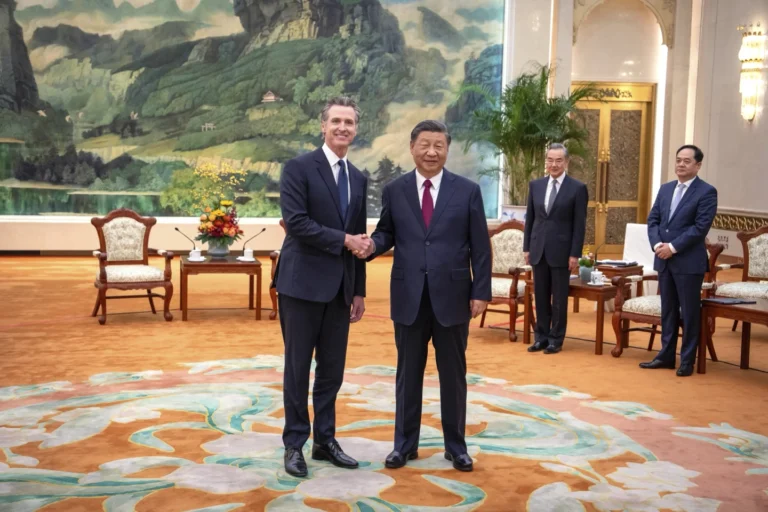
BANGKOK (AP) — California Gov. Gavin Newsom’s trip to China, with the stated goal of working together to fight climate change, resulted in a surprise meeting with leader Xi Jinping and was filled with warm words and friendliness not seen in years in the China-U.S. relationship.

The trip was seen as one of the steps in paving the way for U.S. President Joe Biden and Xi to meet in San Francisco in November during the Asia-Pacific Economic Cooperation summit, but it also highlighted the existing relationship that China has with California, showing that even when tensions are high between the two countries, collaboration is still possible on some levels.

The reception from China “sends a very clear signal that working with California is desired and, at minimum, politically safe and encouraged,” said Alex Wang, a professor of law at UCLA who focuses on the environment.


READ MORE : Agreement reached for Biden-Xi talks, but details still being worked out, official tells AP

U.S.-China relations have deteriorated significantly since 2018 over issues as wide-ranging as trade, the origin of COVID-19 and the national security crackdown in Hong Kong. That is true both for the two countries at the national level, and for state-level engagement

States’ involvement with China has fallen off rapidly in the past five years, as the bilateral relationship deteriorated under the Trump administration and further soured with the pandemic, according to research from Kyle Jaros, a professor of global affairs at University of Notre Dame.

Yet, that engagement is what China wants, he said, as it views U.S. states as pragmatic partners in business without having to wade into politics.

California has a steady and long working relationship with China.

Arnold Schwarzenegger, a Republican governor, started the formal relationship with China over climate cooperation a decade ago, Jaros said. His successor, the Democrat Jerry Brown, continued the relationship even as the U.S. started turning away from China during the Trump administration. At one point, the California government even had a staffer based in China.

The state is also home to the biggest population of Chinese-Americans nationally, sharing historical and cultural ties.

“It’s a long-standing, deep relationship where many people have met,” said Wang, who is also the co-director at UCLA’s Emmett Institute on Climate Change and the Environment.

Much of the cooperation on climate is on technical information-sharing and showing the other side how they did things, said Wang, who has done some of the collaborative work himself. The information shared is often not high-level, but is about the thousands of smaller decisions, “such as how do you finance electric buses, who pays for it, how do you set up the charging infrastructure?”

California could learn more about offshore wind technologies from China, which is a global leader in using the tech, Wang said.

Politically, the trip allowed Newsom, who appears to be positioning himself for a future presidential run, to polish his diplomatic credentials by engaging with Chinese leaders on a signature policy issue, climate change.

Newsom’s administration is pushing to expand solar power and other clean energy as the state aims to cut emissions by 40% below 1990 levels by 2030. State regulators also have banned the sale of most new gas-powered cars in California by 2035.

Newsom has repeatedly said he’s not interested in the presidency, but he is widely viewed as a likely future Democratic contender.

For the Chinese side, the meeting with Newsom could lead to economic opportunities. Experts say one reason Xi may have chosen to meet with Newsom is the economic headwinds that China is facing, and California presents a potential source of foreign investment.

“China’s economic downturn is also a factor (in) why Xi Jinping is now engaging much more with outside stakeholders,” said Alfred Wu, a professor who studies Chinese politics at the National University of Singapore.

Youth unemployment is at a high of about 20% this year, and the real-estate sector has been weak in recent years as developers are saddled with heavy debts.

Beijing’s engagement with state-level governments have always been about pragmatic things like doing business, Jaros added. Newsom’s “red-carpet” treatment “shows how Beijing wants to stabilize the sub-national plank … finding partners who are intent on working with China economically and scientifically.”

Back home, the trip has been attacked on a variety of fronts.

Newsom has faced some criticism for press access, as the Chinese government decided to shut American reporters out of Newsom’s meeting with Xi.

Meanwhile, the California family of a Christian pastor who has been detained in China since 2006 said Newsom should take any possible opportunity to argue for his release.

Newsom’s office said David Lin’s detention came up during a series of meetings in Beijing, as did human rights violations and anti-democratic efforts in Hong Kong, Taiwan and elsewhere. His office didn’t specify which Chinese officials Newsom spoke to about those issues.

___
AP writers Kathleen Ronayne in Sacramento, California, and Christopher Megerian in Washington, D.C. contributed to this report.

Follow Us: Facebook | Instagram | Twitter | Youtube |

Agreement reached for Biden-Xi talks, but details still being worked out, official tells AP

0

Agreement reached for Biden-Xi talks, but details still being worked out, official tells AP

BY DIDI TANG, MATTHEW LEE AND AAMER MADHANI

WASHINGTON (AP) — President Joe Biden and Chinese President Xi Jinping have agreed to meet on the sidelines of next month’s Asia-Pacific Economic Cooperation summit in San Francisco, according to a U.S. official familiar with the planning.

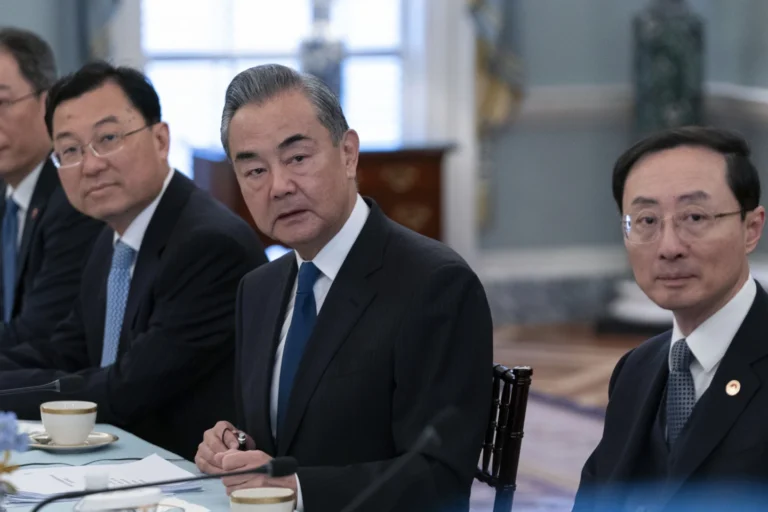
The two sides worked out an agreement in principle to hold a meeting during the summit as Chinese Foreign Minister Wang Yi met Friday with Secretary of State Antony Blinken and White House national security adviser Jake Sullivan, according to the official, who was not authorized to comment and spoke on the condition of anonymity.

The official added that the two sides have still not worked out details on the exact day of the meeting, venue and other logistics.


READ MORE :United States and China launch economic and financial working groups with aim of easing tensions

The White House said in a statement following Friday’s meetings that the two sides were “working toward” a Biden-Xi face-to-face on the sidelines of APEC, a forum of 21 Pacific countries.

Earlier Friday, Biden met with Wang, holding an hourlong talk with the senior Chinese official in the Roosevelt Room at the White House. The meeting, with Blinken and Sullivan present, was the latest in a series of high-level contacts between the two countries as they explore the possibility of stabilizing an increasingly tense relationship at a time of conflict in Ukraine and Israel.

The White House said Biden “emphasized that both the United States and China need to manage competition in the relationship responsibly and maintain open lines of communication,” and he “underscored that the United States and China must work together to address global challenges.”

White House National Security Council spokesman John Kirby said Biden viewed his meeting with Wang as “a positive development, and a good opportunity to keep the conversation going.”

Biden had been widely expected to talk with Wang, a reciprocal action after Xi met with Blinken in June.

Beijing has yet to confirm if Xi will travel to San Francisco for the annual APEC summit, which runs from Nov. 11 to Nov. 17.

Wang is in the midst of a three-day visit to Washington, where he’s been meeting with top U.S. officials. He sat down with Blinken on Friday morning for the second time during his trip.

On Thursday, after their initial meeting, the Chinese side said “the two sides had an in-depth exchange of views on China-U.S. relations and issues of common concern in a constructive atmosphere.”

In its readout, the U.S. State Department said the two men addressed “areas of difference” and “areas of cooperation,” while Blinken “reiterated that the United States will continue to stand up for our interests and values and those of our allies and partners.”

Wang said before Thursday’s meeting that China’s goal was to “push the relationship as soon as possible back to the track of healthy, stable and sustainable development.

U.S. officials had said they would press Wang on the importance of China stepping up its role on the world stage if it wants to be considered a responsible major international player. The U.S. has been disappointed with China over its support for Russia in the war against Ukraine and its relative silence on the war between Israel and Hamas.

“China should use whatever ability it has as an influential power to urge calm” in the Middle East, said State Department spokesman Matthew Miller. “We know China has relationships with a number of countries in the region, and we would urge them to use those relationships, the lines of communication they have, to urge calm and stability.”

U.S. officials believe the Chinese have considerable leverage with Iran, which is a major backer of Hamas.

Wang came to Washington at a time when tensions between the two countries remain high, including over U.S. export controls on advanced technology and China’s more assertive actions in the East and South China seas.

On Thursday, the U.S. military released a video of a Chinese fighter jet flying within 10 feet (three meters) of an American B-52 bomber over the South China Sea, nearly causing an accident. Earlier this month, the Pentagon released footage of some of the more than 180 intercepts of U.S. warplanes by Chinese aircraft that occurred in the last two years, part of a trend U.S. military officials call concerning.

The U.S. also has renewed a warning that it would defend the Philippines in case of an armed attack under a security pact, after Chinese ships blocked and collided with two Philippine vessels off a contested shoal in the South China Sea.

Beijing has released its own video of close encounters in the region, including what it described as footage of the USS Ralph Johnson making a sharp turn and crossing in front of the bow of a Chinese navy ship. The U.S. destroyer also was captured sailing between two Chinese ships.

Senior Col. Wu Qian, the spokesman of the Chinese defense ministry, said the videos showed that “the U.S. is the real provocateur, risk taker and spoiler.”

The Pentagon rejected China’s characterization of the USS Ralph Johnson’s movements, saying the video includes only “cropped segments of a 90-minute interaction.” The ship “complied with international law” and “operated in a lawful, safe and resolute manner,” the Pentagon said.

During his visit to Washington, Wang was also expected to discuss Taiwan, a self-governed island that Beijing considers to be part of Chinese territory. Beijing vows to seize it by force if necessary, but Washington, which has a security pact with Taiwan, opposes the use of force.

The Chinese president last came to the U.S. in 2017, when former President Donald Trump hosted him at his Mar-a-Lago resort in Florida. Biden, who took office in 2021, has yet to host Xi on U.S. soil. The two men last met in Bali, Indonesia, in November 2022, on the sidelines of the Group of 20 meeting of leading rich and developing nations.

The U.S.-China relationship began to sour in 2018 when the Trump administration slapped hefty tariffs on $50 billion worth of Chinese goods. It deteriorated further over a range of issues, including rights abuses, the South China Sea, Taiwan, technology and the COVID-19 pandemic.

The Biden-Xi meeting would bring much-needed stability to relations between the two countries, said Yun Sun, director of the China Program at the Washington-based think tank Stimson Center.

“The keyword here is ‘stabilization’ of bilateral ties — not really improvement, but stabilization,” Sun said. “The world needs the U.S. and China to take on a rational path and stabilize their relationship, offering the region and the world more certainty.”

___
Associated Press writer Chris Megerian contributed to this report.

Follow Us: Facebook | Instagram | Twitter | Youtube |

Nigeria’s Supreme Court refuses to void president’s election and dismisses opposition challenges

0

Nigeria’s Supreme Court refuses to void president’s election and dismisses opposition challenges

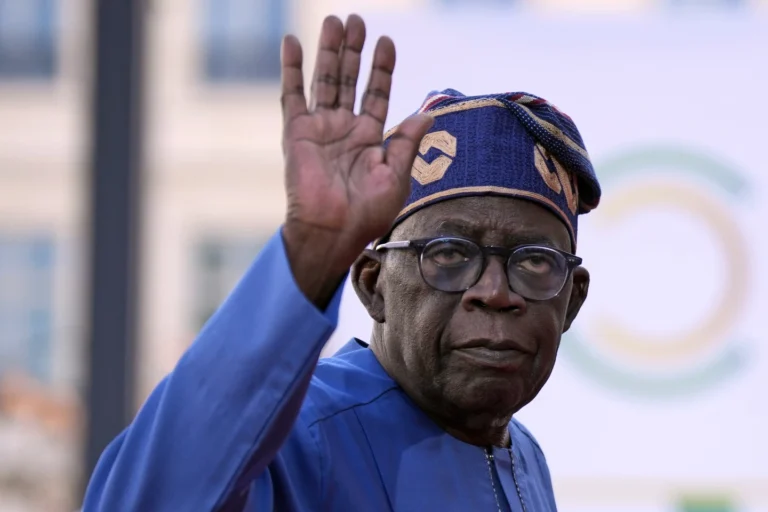
ABUJA, Nigeria (AP) — Nigeria’s Supreme Court refused Thursday to void the recent election of President Bola Tinubu and dismissed the political opposition’s challenges, which argued that the vote was flawed and that Tinubu was not qualified to seek or hold the presidency.

The court held in a majority ruling that the grounds of the challenges were “devoid of merits,” ending a dispute that had put Africa’s most populous country on the edge after the February election. An appeals court in Nigeria also rejected the petitions last month.

Two other candidates in the election separately challenged Tinubu’s win, alleging that he failed to meet the minimum educational qualification to run, did not secure the required number of votes and that the country’s election commission did not follow its own provisions in collating and announcing the election results.


READ MORE : Ex-governor Bola Tinubu closes in on Nigeria presidential election victory

During a televised hearing in Abuja, the Nigerian capital, the Supreme Court dismissed the challenges from the Peoples Democratic Party’s Atiku Abubakar and the Labour Party’s Peter Obi in their entirety, affirming the position of the election tribunal that Tinubu’s victory followed the due process.

“It is my view that there is no merit in this appeal,” Justice Inyang Okoro, who read the ruling of the seven-member court panel, said of Abubakar’s petition. A similar ruling was subsequently issued in Obi’s case.

The court also refused to admit new evidence that Abubakar’s lawyers said proved their allegations that Tinubu tendered forged academic credentials from an American university.

The court said the issue of the alleged forgery was not reflected as one of the grounds of the original petition within the time frame provided by the Nigerian Constitution.

“Facts and documents which were not pleaded in the petition have no place in deciding the dispute between the parties,” Okoro said.

The Peoples Democratic Party, Nigeria’s main opposition party, said it was “alarmed, disappointed and gravely concerned” by the court’s finding, arguing it was inconsistent with Nigerian law.

Tinubu, who was the candidate of the All Progressives Congress, lauded the ruling. “The court has done justice to all issues put up for consideration in the petitions on the merits of the law, without fear or favor,” the president said.

While millions of Nigerians followed the question of the president’s academic credentials as the major highlight of the case before the Supreme Court, Thursday’s ruling did not come as a surprise to many because no presidential election in Nigeria has ever been annulled by a court.

Some have said the conditions stipulated in Nigeria’s laws make it difficult to prove irregularities, and some questioned the independence of the judiciary.

Tinubu’s election was largely described by observers as an improvement from the 2019 election. But the observers also said the delays in uploading and announcing the election results could have left room for ballot tampering.

Follow Us: Facebook | Instagram | Twitter | Youtube |

UN Security Council fails again to address Israel-Hamas war, rejecting US and Russian resolutions

0

UN Security Council fails again to address Israel-Hamas war, rejecting US and Russian resolutions

BY EDITH M. LEDERE

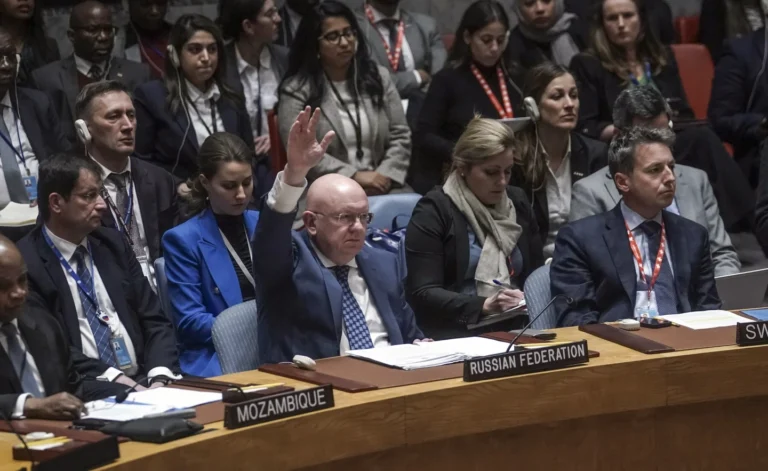
UNITED NATIONS (AP) — The U.N. Security Council failed again Wednesday to address the Israeli-Hamas war in Gaza, rejecting rival United States and Russian resolutions.

The council is the U.N.’s most powerful body, charged with maintaining international peace and security, but its divisions have left it impotent and scrambling to try to find a resolution with acceptable language.

The resolution drafted by the United States, Israel’s closest ally, would have reaffirmed Israel’s right to self-defense, urged respect for international laws — especially protection of civilians — and called for “humanitarian pauses” to deliver desperately needed aid to Gaza.


READ MORE : UN chief warns that the risk of the Gaza war spreading is growing as situation becomes more dire

In Wednesday’s vote in the 15-member council, 10 countries voted in favor, Russia, China and the United Arab Emirates voted against, and Brazil and Mozambique abstained. The resolution was not adopted because permanent council members Russia and China cast vetoes.

The Russian resolution, which was then put to a vote, would have called for an immediate “humanitarian cease-fire” and unequivocally condemned Hamas’ Oct. 7 attacks in Israel and “indiscriminate attacks” on civilians and civilian objects in Gaza.

In that vote, four countries voted in favor – Russia, China, United Arab Emirates and Gabon. The United States and United Kingdom voted against, and nine countries abstained. The resolution wasn’t adopted because it failed to get the minimum nine “yes” votes.

The failure of the two resolutions followed the council’s rejections last week of a Russian resolution that didn’t mention Hamas and also failed to get nine “yes” votes and a widely supported Brazilian resolution vetoed by the United States that would have condemned the Hamas attacks and all violence against civilians and called for “humanitarian pauses.”

After the votes, Malta’s U.N. Ambassador Vanessa Frazier, speaking on behalf of the 10 elected members of the council serving two-year terms, announced they will be working on a new proposal in the coming days.

“As elected members of this council, we also represent the rest of the international community and we have a duty and an obligation to act,” she told the council. “There is no time to waste.”

Before the vote, U.S. Ambassador Linda Thomas-Greenfield told the council that last week she had said diplomacy needed to play out before it approved a resolution. She pointed to action by U.N. Secretary-General Antonio Guterres, President Joe Biden, and regional leaders that led to the opening of the Rafah crossing from Egypt to Gaza to the delivery of some desperately needed humanitarian aid, though “much, much more help is needed” as well as the release of four of the more than 200 hostages taken from Israel.

Thomas-Greenfield called this moment a test for the international community and for the council. She accused Russia of introducing a resolution at the last minute “in bad faith” with no consultations, and urged members to vote for the “strong and balanced” U.S. text.

Russia’s U.N. Ambassador Vassily Nebenzia countered that an immediate humanitarian cease-fire is needed to de-escalate the conflict and reduce the bloodshed and “shocking” Palestinian casualties. He called the U.S. draft “politicized” and claimed the United States doesn’t want the Security Council to have any influence on a possible Israeli ground offensive that “would risk provoking an even larger-scale conflict in the region and possibly even beyond.”

After the vote, China’s U.N. Ambassador Zhang Jun said the U.S. draft contained many elements that went beyond humanitarian needs and were “deeply divisive.” He called it “evasive on the most urgent issue of ending the fighting” and said it failed to reflect the world’s strong calls for a cease-fire.

United Arab Emirates Ambassador Lana Nusseibeh, the Arab representative on the council who voted against the U.S. resolution and for the Russian draft, said the U.N. and humanitarian organizations have made clear that what is essential is a humanitarian cease-fire, the release of all hostages, and sustained humanitarian access to Gaza.

At a council meeting on the war Tuesday that heard nearly 90 speakers, there were “dozens of statements imploring this council to assign the same value to Palestinian life as it does to Israeli life,” Nusseibeh said. “We cannot allow any equivocation on this point.”

Israel’s U.N. Ambassador Gilad Erdan thanked the U.S. and other nations that supported its resolution for condemning “savage genocidal terrorists while standing up for the values of freedom and security.”

Those who voted against the resolution showed the world the Security Council is incapable of condemning “terrorists and cannot confirm the right to self -defense of the victim of these heinous crimes.”

Riyad Mansour, the Palestinian U.N. ambassador, told the Associated Press after the vote “it’s disgusting the Security Council is not shouldering its responsibility” to “stop the war.”

“You do not start by killing the people and then say that I want to deal with the situation,” he said. “We need to save lives. … That is the most urgent priority.”

With the Security Council still paralyzed, the Palestinians are turning to the 193-member General Assembly where there are no vetoes — just as Ukraine did after Russia’s February 2022 invasion. The assembly’s emergency special session opens Thursday, with 106 speakers on the list, and Arab nations have circulated a draft resolution which Mansour said he expects to be put to a vote on Friday afternoon.

The draft resolution calls for an immediate cease-fire, demands that Israel rescind its order for Gazans to move from the north to the south, calls for maximum restraint, and demands that essential goods including food, water and medicine are provided in the Gaza Strip.

Follow Us: Facebook | Instagram | Twitter | Youtube |

China sends its youngest-ever crew to space as it seeks to put astronauts on moon before 2030

0

China sends its youngest-ever crew to space as it seeks to put astronauts on moon before 2030

BY ANDY WONG

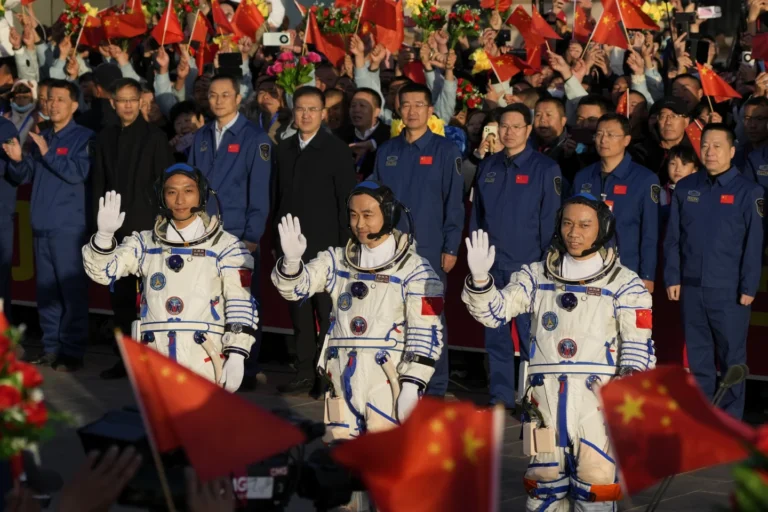
JIUQUAN SATELLITE LAUNCH CENTER, China (AP) — China launched its youngest-ever crew for its orbiting space station on Thursday as it seeks to put astronauts on the moon before 2030.

The Shenzhou 17 spacecraft lifted off from the Jiuquan Satellite Launch Center on the edge of the Gobi Desert in northwestern China atop a Long March 2-F rocket at 11:14 a.m. (0314 GMT)

According to the China Manned Space Agency, the average age of the three-member crew is the youngest since the launch of the space station construction mission, state broadcaster CCTV earlier reported. Their average age is 38, state media China Daily said.


READ MORE : UN chief warns that the risk of the Gaza war spreading is growing as situation becomes more dire

Beijing is pursuing plans to place astronauts on the moon before the end of the decade amid a rivalry with the U.S. for reaching new milestones in outer space. This reflects the competition for influence between the world’s two largest economies in the technology, military and diplomatic fields.

The trio — Tang Hongbo, Tang Shengjie and Jiang Xinlin — will replace a crew that has been on the station for six months. Tang is a veteran who led a 2021 space mission for three months.

ywAAAAAAQABAAACAUwAOw==
A long March rocket carrying a crew of Chinese astronauts in a Shenzhou-17 spaceship blasts off at the Jiuquan Satalite Lanuch Centre in northwestern China, Thursday, Oct.26,2023. Photo : Andy Wong/AP

The new crew will conduct experiments in space medicine, space technology and other areas during their mission and will help install and maintain the equipment inside and outside the station, the agency said.

On Wednesday, the agency also announced plans to send a new telescope to probe deep into the universe. CCTV said the telescope would enable surveys and mapping of the sky, but no timeframe was given for the installation.

China has researched the movement of stars and planets for thousands of years while in modern times, it has pushed to become a leader in space exploration and science.

It built its own space station after it was excluded from the International Space Station, largely due to U.S. concerns over the control of the program by the People’s Liberation Army, the military branch of the ruling Communist Party.


China’s first manned space mission in 2003 made it the third country after the former Soviet Union and the U.S. to put a person into space using its own resources.

American spending, supply chains and capabilities are believed to give it a significant edge over China, at least for now. China has broken out in some areas, however, bringing samples back from the lunar surface for the first time in decades and landing a rover on the less explored far side of the moon.

The U.S., meanwhile, aims to put astronauts back on the lunar surface by the end of 2025 as part of a renewed commitment to crewed missions, aided by private sector players such as SpaceX and Blue Origin.

In addition to their lunar programs, the two countries have also separately landed rovers on Mars, and China plans to follow the U.S. in landing a spacecraft on an asteroid.

___
Associated Press video producer Caroline Chen at the Jiuquan Satellite Launch Center and journalist Kanis Leung in Hong Kong contributed to this report.

Follow Us: Facebook | Instagram | Twitter | Youtube |

UN chief warns that the risk of the Gaza war spreading is growing as situation becomes more dire

0

UN chief warns that the risk of the Gaza war spreading is growing as situation becomes more dire

BY EDITH M. LEDERER

UNITED NATIONS (AP) — The United Nations chief warned at a high-level U.N. meeting Tuesday that the situation in the Middle East is growing more dire by the hour with the risk of the Gaza war spreading through the region increasing as societies splinter and tensions threaten to boil over.

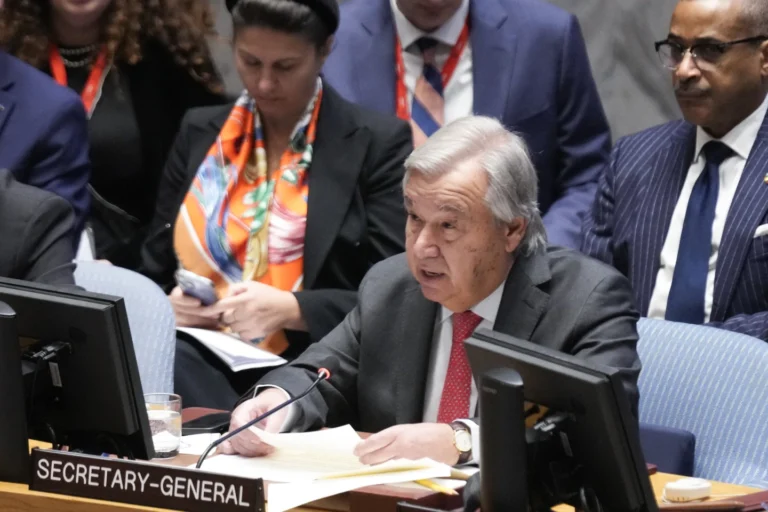
Secretary-General Antonio Guterres called for an immediate humanitarian cease-fire to deliver desperately needed food, water, medicine and fuel. He appealed “to all to pull back from the brink before the violence claims even more lives and spreads even farther.”

Guterres told the U.N. Security Council’s monthly meeting on the decades-old Israeli-Palestinian conflict — which has turned into a major event with ministers from the war’s key parties and a dozen other countries flying to New York -– that the rules of war must be obeyed.


READ MORE : Qatar becomes a key intermediary in Israel-Hamas war as fate of hostages hangs in the balance

The secretary-general said the grievances of the Palestinian people cannot justify “the horrifying and unprecedented Oct. 7 acts of terror” by Hamas in Israel and demanded the immediate release of all hostages.

But Guterres also stressed that “those appalling attacks cannot justify the collective punishment of the Palestinian people.”

He expressed deep concern at “the clear violations of international humanitarian law,” calling Israel’s constant bombardment of Gaza and the level of destruction and civilian casualties “alarming.” Protecting civilians “is paramount in any armed conflict,” he said.

Without naming Hamas, the U.N. chief stressed that “protecting civilians can never mean using them as human shields.”

Guterres also criticized Israel without naming it, saying “protecting civilians does not mean ordering more than one million people to evacuate to the south, where there is no shelter, no food, no water, no medicine and no fuel, and then continuing to bomb the south itself.”

The United States is pushing for adoption of a resolution that would condemn the Hamas attacks in Israel and violence against civilians, and reaffirm Israel’s right to self-defense. There were some expectations that it might be voted on Tuesday, but diplomats said it is still being negotiated.

A draft obtained Monday by The Associated Press would also demand the immediate release of all hostages, strongly urge respect for international laws on conducting war and protecting civilians, call on all countries to take steps to prevent a spillover, and demand immediate humanitarian access to Gaza.

Follow Us: Facebook | Instagram | Twitter | Youtube |