Home Blog Page 192

Spanish prime minister calls early general election after battering in regional vote

Spanish prime minister calls early general election after battering in regional vote

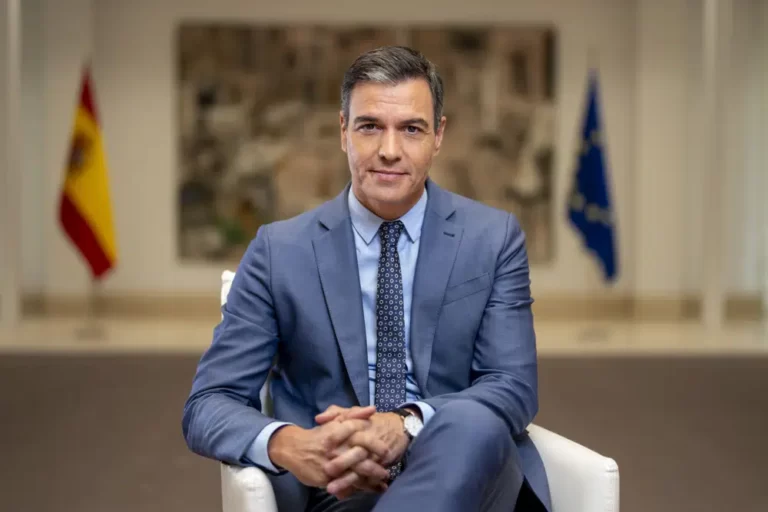
MADRID (AP) —Spanish Prime Minister Pedro Sánchez on Monday called an early general election for July 23 in a surprise move after his Socialist party took a serious battering in local and regional elections.

Prior to Sunday’s debacle, Sánchez had insisted that he would ride out his four-year term with leftist government coalition partner United We Can, indicating that a election would be held in December.

But the outcome of the local and regional votes quickly changed things.

“I have taken this decision given the results of the elections held yesterday,” Sánchez said Monday from the Moncloa presidential palace.

The woes for Sánchez and his PSOE party come as Spain is due to take over the rotating presidency of the European Union on July 1.


READ MORE : Two dead, eight wounded in Russian attack in Donetsk region – governor

Sánchez said he had spoken to King Felipe VI and would hold a special Cabinet meeting later Monday to dissolve parliament. The date chosen for the early election comes in the middle of Spain’s summer holiday period, with many people likely to be away from their voting areas.

The local and regional elections on Sunday saw Spain taking a major swing to the right and made the leading opposition conservative Popular Party, or PP, the main political force in the country.

“This is unexpected,” said Ignacio Jurado, a political scientist at Madrid’s Carlos III University. “Sánchez is trying to short circuit the PP’s rise as soon as possible.”

In the municipal vote, the Popular Party, or PP, won 31.5% of votes compared with 28.2% for the Spanish Socialist Workers Party, or PSOE. This was a 1.2 percentage point decrease for PSOE on 2019, but almost a nine point increase for the PP, which benefited from the collapse of the centrist Citizens party.

The PP, which is led by Alberto Nuñez Feijóo, won in seven of the 12 regions contested and dominated in several regions previously won by PSOE including Valencia, Aragon and La Rioja. It remains to be seen how much the PP will be forced to rely on far-right party Vox to form local and regional governments.

Feijóo said at a news conference on Monday that the results expressed “the desire for change that exists in our society.”

Vox, which is headed by Santiago Abascal, tripled its number of town councilors from the last municipal elections in 2019 after taking 7% of the vote on Sunday. The party’s support will be key if the PP wants to form governments in six of the regions it won.

Abascal called on Feijóo to join together to defeat Sánchez in July.

PP also won an absolute majority in the region and capital of Madrid, with Isabel Díaz Ayuso being reelected as Madrid’s regional president.

Spain’s regional governments have enormous power and budgetary discretion over education, health, housing and policing

Sánchez said that although the elections Sunday were local and regional, the trend in the vote sent a message.

“I take full responsibility for the results and I think it is necessary to provide an answer and put our democratic mandate to the people,” he said.

The poor showing by both by the Socialists and United We Can was immediately taken as a dire assessment of public feeling towards the ruling leftist coalition. The new leftist group Sumar, headed by Second Deputy Prime Minister Yolanda Díaz, also failed to live up to expectations.

“Sánchez reacts to a shock with another shock,” Spanish political expert Sandra León said. “He also avoids deterioration of his party in two ways: the costs of internal division in the government until December and the division with PSOE party barons in the regions.”

She said the announcement will force the parties to the left of the Socialists — United We Can and Sumar — to regroup fast.


READ MORE : Kenya and Russia to sign trade pact, President Ruto says

Although the coalition government has shepherded Spain out of the COVID-19 pandemic, made the economy among the fastest growing in the EU and introduced several ground-breaking laws, something was sorely lacking.

“The message received last night was clear: Things have to be done differently,” Díaz tweeted.

Feijóo has capitalized on criticizing the coalition’s reliance to stay in power through support from separatist parties such as the Republican Left in Catalonia and the Basque region’s EH Bildu.

Sánchez has been in office since 2018, when he brought and won a no-confidence vote against the PP prime minister at the time, Mariano Rajoy. He then led the Socialists to a general election victory in 2019 before forming Spain’s first coalition government in four decades.

By CIARÁN GILES and JENNIFER O’MAHONY

Disclaimer: This report is auto generated from the AP NEWS. Diplomat Times holds no responsibility for its content.
Two dead, eight wounded in Russian attack in Donetsk region – governor

0

Two dead, eight wounded in Russian attack in Donetsk region – governor

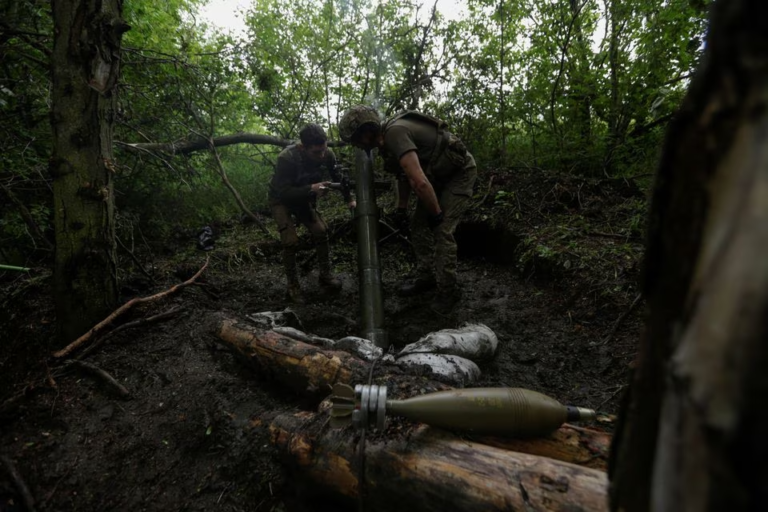
KYIV,(Reuters) – Two people were killed and eight wounded in a Russian attack on the city of Toretsk in the eastern region of Donetsk on Monday, regional governor Pavlo Kyrylenko said.

Kyrylenko said Russia had used high-explosive aerial bombs in the attack at about 11:30 a.m. (0830 GMT), damaging a gas station and a multi-storey building in the small city which had a pre-war population of about 30,000 people.

Rescue services were working at the site, he said, urging remaining residents to evacuate.


READ MORE : Russia hits military facility in Ukraine in new wave of strikes

“Every day, the Russians purposefully hit civilians in the Donetsk region,” Kyrylenko said on the Telegram messaging app.

Russia has previously denied targeting civilians and has rejected allegations of war crimes in what it calls a “special military operation”.

The Donetsk region has seen some of the fiercest battles of Russia’s war on Ukraine.

Reporting by Olena Harmash, Editing by Timothy Heritage

Disclaimer: This report is auto generated from the REUTERS. Diplomat Times holds no responsibility for its content.
 

Kenya and Russia to sign trade pact, President Ruto says

Kenya and Russia to sign trade pact, President Ruto says

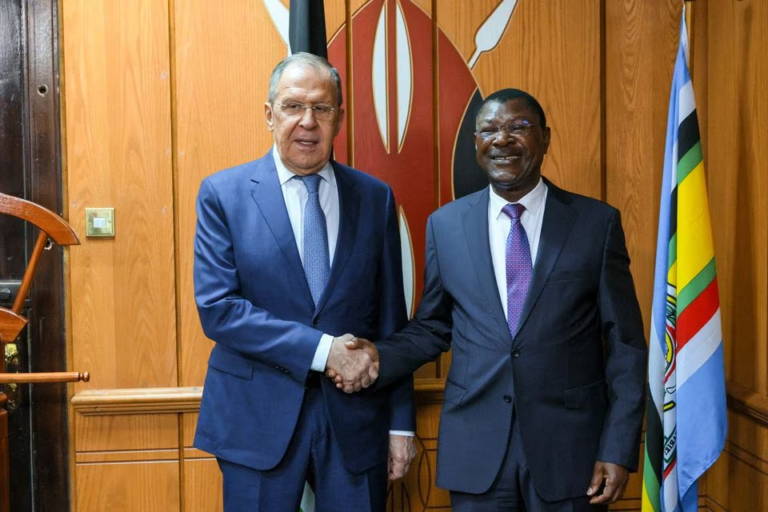
NAIROBI, (Reuters) – Kenya will sign a trade pact with Russia aimed at boosting cooperation between businesses, President William Ruto’s office said on Monday, after hosting Russian Foreign Minister Sergei Lavrov in Nairobi.

Russia has stepped up its drive to boost economic ties with Africa to help offset a big chill in relations with the West prompted by its invasion of Ukraine, and plans to hold an Africa-Russia summit in St Petersburg in July.


READ MORE : Russia’s Sakhalin-1 oil output back at peak 200,000 bpd, ONGC says

Kenya’s presidency said in a statement that bilateral trade with Russia was still low despite the potential and the pact would give business the “necessary impetus”.

It did not say when the pact might be sealed or give details on what it might encompass. Russia currently sells mostly grain and fertilizers to Kenya.

On Ukraine, the statement reiterated Kenya’s support for respecting the territorial integrity of all countries, adding:

“Kenya calls for a resolution of the conflict in a manner respectful to the two parties.”

Russia says its invasion of Ukraine, launched on Feb. 24, 2022, is aimed at protecting its own security against Ukraine’s pro-Western leadership.

Kyiv and its Western allies accuse Moscow of waging an unprovoked war of aggression. Western nations have slapped sweeping economic sanctions on Russia, prompting it to forge closer ties with China, India, African nations and others.

Lavrov has visited the African continent at least three times this year, while Ukraine’s foreign minister Dmytro Kuleba travelled to countries including Ethiopia, Rwanda and Mozambique last week.

Kenya’s presidency said Lavrov was on his way to Cape Town for a June 1 meeting of foreign ministers of the BRICS group of emerging economies, which comprises Brazil, Russia, India, China and South Africa.

Writing by Bhargav Acharya Editing by Alexander Winning and Gareth Jones

Disclaimer: This report is auto generated from the REUTERS. Diplomat Times holds no responsibility for its content.
 

Russia hits military facility in Ukraine in new wave of strikes

0

Russia hits military facility in Ukraine in new wave of strikes

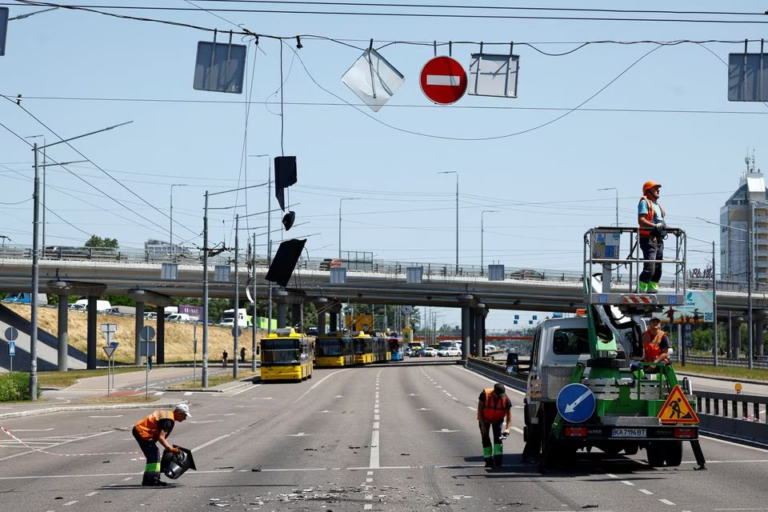
KYIV,(Reuters) – Russia said on Monday its military hit Ukrainian air bases in overnight strikes and Ukrainian forces shelled industrial facilities inside Russia as both sides sought the upper hand ahead of what Kyiv hopes will be a decisive counter-offensive.

In a rare acknowledgement of damage to a military “target”, Ukraine said that work was under way to restore a runway and that five aircraft were taken out of service in the western region of Khmelnitskiy, although it did not name the site or sites.


READ MORE : Biden to discuss about Ukraine with Brazil’s Lula, India’s Modi

A large military airfield was located in the region before the war.

“At the moment, work is continuing to contain fires in storage facilities for fuel and lubricants and munitions,” the Khmelnitskiy regional governor’s office said.

Russian state-owned news agency RIA cited the defense ministry as saying more than one air base had been hit, but there was no confirmation from Ukraine of damage to any other air bases.

The Ukrainian capital came under attack for the 16th time this month after a second successive night of bombardment. But officials said most of the drones and missiles fired overnight had been shot down and no targets were hit in the morning.

The attacks, which sent Kyiv residents running for shelter in metro stations, were part of a new wave of Russian air strikes this month as Ukraine, armed with new Western weapons, prepares a push to try to take back territory Russia has seized in the “special military operation” which it launched in February 2022.

“With these constant attacks, the enemy seeks to keep the civilian population in deep psychological tension,” said Serhiy Popko, the head of the city’s military administration.

Moscow said it invaded its neighbor to “denazify” the country and protect Russian speakers. Western opponents dismiss the invasion as an imperialist land grab in which tens of thousands have been killed, millions uprooted and whole cities reduced to ruins.

Russia has repeatedly said it is open to resuming peace talks with Kyiv, which stalled a few months after Russia invaded, and has welcomed mediation efforts from both Brazil and China.

A Ukrainian presidential aide said on Monday any post-war settlement should include a demilitarised zone of 100-120 km (62-75 miles) inside Russia along the border with Ukraine.

The zone would be necessary to protect Ukrainian regions from shelling, presidential adviser Mykhailo Podolyak wrote on Twitter.


CROSS-BORDER SHELLING

Ukraine’s military said an attack on Odesa port had caused a fire and damaged infrastructure but did not specify whether the damage threatened grain exports.

The country is an important global grain supplier and the port is vital for shipping agricultural products abroad. It is also one of three included in a U.N.-brokered deal on the safe export of grain via the Black Sea.

Russia said on Monday that the Black Sea grain deal would no longer be operational unless a U.N. agreement with Moscow to overcome obstacles to Russian grain and fertiliser exports was fulfilled.

This month Moscow reluctantly agreed to extend the grain deal until July 17.

After months of attacks on energy facilities, Russia is now targeting military facilities and supplies to try to disrupt Ukraine’s preparations for its counterattack, Kyiv says.

Moscow says Ukraine has stepped up drone and sabotage attacks against targets inside Russia as it prepares for the offensive.

The governor of Russia’s Belgorod region, which borders Ukraine, said several frontier settlements were shelled simultaneously by Ukrainian forces on Monday. Two industrial facilities were hit in the town of Shebekino and four employees were wounded, Vyacheslav Gladkov wrote on Telegram.

There was no immediate comment from Ukraine and Reuters was not able to independently verify the reports on the scale of the attacks on either side.

Ukraine said it had shot down 29 of 35 drones and 37 of 40 cruise missiles fired overnight by Russia, and the Kyiv military administration said its air defences had shot down more than 40 of the “targets” fired at it.

“Another difficult night for the capital,” mayor Vitali Klitschko said on Telegram.

The attack follows one the previous night – the largest drone barrage yet launched on Kyiv – in which one person was killed and several injured. In Sunday’s attack, 36 drones were downed over the city.

Additional reporting by Olena Harmash, Pavel Polityuk and Lidia Kelly; writing by Timothy Heritage, Philippa Fletcher and Nick Macfie; Editing by Hugh Lawson

Disclaimer: This report is auto generated from the REUTERS. Diplomat Times holds no responsibility for its content.
 

Russia’s Sakhalin-1 oil output back at peak 200,000 bpd, ONGC says

Russia’s Sakhalin-1 oil output back at peak 200,000 bpd, ONGC says

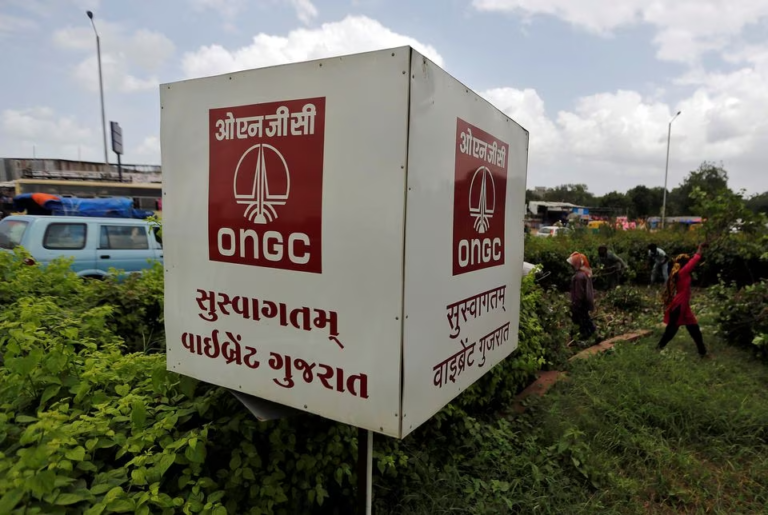
MUMBAI(Reuters) – India’s state-run Oil and Natural Gas Corp (ONGC.NS) said oil output from the Sakhalin-1 project in Russia has bounced back to its plateau level of about 200,000 barrels per day (bpd) from zero, according to a company presentation.

ONGC hopes to reclaim its 20% stake in the project in coming months after some ‘terms and conditions’ are fulfilled, Rajarshi Gupta, managing director of ONGC Videsh, the overseas investment arm of ONGC, said at a news conference.


READ MORE : Explainer: What India’s decision to scrap its 2000-rupee note means for its economy

ONGC last year applied to the new Russian operator of Sakhalin-1 to retain its stake in the oil and gas project in the country’s Far East, a person familiar with the development said in November.

Gupta said ONGC Videsh is “not in a hurry” to repatriate its less than $100 million pending dividend from the Russian project and could consider reinvesting it in the project.

ONGC Videsh also has a 26% stake in Russia’s Vankorneft, a company that owns Vankor Field and the North Vankor license.

Gupta also said that ONGC Videsh along with other state-run companies are studying recent changes in the terms announced by Guyana for its latest exploration and licensing round for a participation.

Apart from Russia, there is also a dividend pending from ONGC’s stake in Venezuela’s San Cristobal project in the Orinoco heavy oil belt.

Gupta said ONGC is in talks with U.S. authorities to receive Venezuelan oil against its pending dividend. He did not elaborate on the amount that the Indian company is yet to receive form Venezuela.

Last year the Treasury gave Chevron Corp (CVX.N) a licence to expand operations in Venezuela and export crude to the United States.

ONGC, which has set a 2038 net zero goal, is hoping that gas output from its Mozambique project will start from 2026-27, Chairman A. K. Singh said.

The project, operated by TotalEnergies (TTEF.PA), was initially set to deliver its first cargo in 2024.

Services group Saipem (SPMI.MI) said it was notified by Total to prepare for a restart in July.

Reporting by Nidhi Verma and Rajendra Jadhav; editing by Philippa Fletcher and Jason Neely

Disclaimer: This report is auto generated from the REUTERS. Diplomat Times holds no responsibility for its content.
 

World leaders congratulate Erdogan on reelection victory in historic runoff

0

World leaders congratulate Erdogan on reelection victory in historic runoff

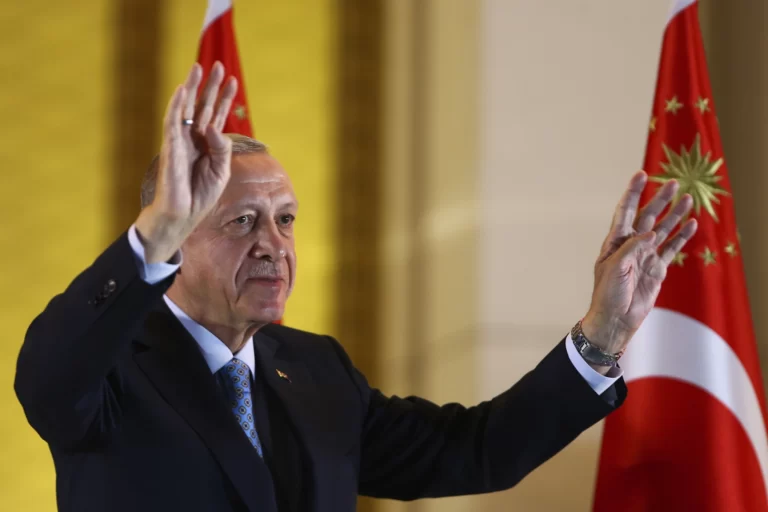
ISTANBUL, (France24)- Joe Biden and Vladimir Putin were among world leaders congratulating Turkish President Recep Tayyip Erdogan after he won Sunday’s historic runoff election to extend his two-decade rule.

US President Biden said he hoped to work with Erdogan on “shared global challenges”.

“I look forward to continuing to work together as NATO allies on bilateral issues and shared global challenges,” Biden tweeted, making no mention of recent tensions in the bilateral relationship.

Putin: ‘logical result’
Russia’s President Putin, who has collaborated closely with Erdogan on key international issues despite some disagreements, told Turkey’s leader that his win was “the logical result of your dedicated work”.

“Your victory in these elections is the logical result of your dedicated work as head of the Turkish Republic, a clear evidence of the Turkish people’s support for your efforts to strengthen state sovereignty and pursue an independent foreign policy,” Putin said, according to the Kremlin website.


READ MORE : Turkey’s Erdogan triumphs in election test, extending 20-year rule

Von der Leyen: ‘strategic importance’
Ursula von der Leyen, President of the Commission of the European Union, which Erdogan aspires for Turkey to join, said the bloc wanted to strengthen ties with the country.

“I congratulate (Erdogan) on winning the elections. I look forward to continue building the EU-Turkiye relationship,” she wrote on Twitter, using an alternate spelling for Turkey.

“It is of strategic importance for both the EU and Turkiye to work on advancing this relationship, for the benefit of our people.”

NATO Chief Stoltenberg: ‘continuing our work together’
Jens Stoltenberg, secretary general of the NATO military alliance, of which Turkey is a member, also sent congratulations.

“Congratulations President (Erdogan) on your re-election. I look forward to continuing our work together and preparing for the NATO Summit in July,” he tweeted.

Guterres: ‘strengthening the cooperation’
UN chief Antonio Guterres congratulated Erdogan on his re-election, the secretary-general’s spokesman Stephane Dujarric said in a statement Sunday.

“He looks forward to further strengthening the cooperation between Turkiye and the United Nations,” Dujarric added.

Macron: ‘immense challenges’
French leader Emmanuel Macron said the two nations had “immense challenges” to work on together.

Writing on Twitter, Macron said these included the “return of peace to Europe”.

“With President Erdogan, who I congratulate, we will continue to move forward,” he said.

Zelensky: ‘security and stability’
Ukrainian President Volodymyr Zelensky welcomed the win for Erdogan, who since Russia’s invasion of Ukraine has positioned himself as a mediator in the conflict.

“We count on the further strengthening of the strategic partnership for the good of our countries, as well as the strengthening of cooperation for the security and stability of Europe,” Zelensky said in a post on Twitter, where he congratulated Erdogan on his victory.

Germany Chancellor Scholz: ‘fresh impetus’
German Chancellor Olaf Scholz hailed the countries as “close partners and allies” whose “people and economies are deeply intertwined”.

“Congratulations to President Erdogan—together we want to advance our common agenda with a fresh impetus,” Scholz wrote on Twitter.

Indian Prime Minister Modi

“Congratulations President Erdogan on re-election as the President of Türkiye! I am confident that our bilateral ties and cooperation on global issues will continue to grow in the coming times.

Azerbaijan

Azerbaijan’s President Ilham Aliyev congratulated Erdogan in a phone call and invited him to Baku.

Brazil

Brazilian President Luiz Inacio Lula da Silva wished Erdogan a “good term with a lot of work” for the Turkish people.

Lula wrote on Twitter that Erdogan can “count on Brazil’s partnership in global cooperation for peace, in the fight against poverty and for the development of the world”.

European Union

EU Council President Charles Michel and European Commission President Ursula von der Leyen congratulated Erdogan on winning an election run-off on Sunday.

“Congratulations @RTErdogan for your reelection as President of Türkiye. I look forward to working with you again to deepen EU-TR relations in the years to come,” Michel said in a tweet.

Disclaimer: This report is auto generated from the AFP. Diplomat Times holds no responsibility for its content.
Denmark plans $2.6 bln more for Ukraine, Zelensky praises ‘major contribution’

0

Denmark plans $2.6 bln more for Ukraine, Zelensky praises ‘major contribution’

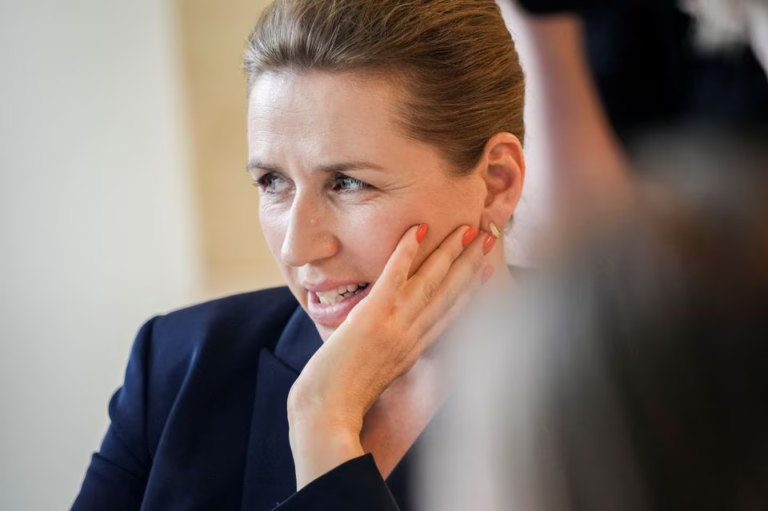
STOCKHOLM,(Reuters) – Denmark plans to increase its spending on military aid to Ukraine by 17.9 billion crowns ($2.59 billion) over this year and next, Prime Minister Mette Frederiksen said on Monday, winning thanks for Ukrainian President Volodymyr Zelenskiy.

Denmark, with a population of less than 6 million, in March established a $1 billion fund for military, civilian and business aid to Ukraine in 2023.

Frederiksen, seen as a possible contender to become new NATO chief, on Monday told Danish public radio the government planned to add another 7.5 billion crowns to the fund this year, and 10.4 billion next year.


READ MORE : Zelensky shores up weapons pledges as EU honours Ukraine fight


“This major contribution will further strengthen the combat capabilities of the Armed Forces of Ukraine in the short and medium term,” Zelenskiy said in a tweet. “Our strength is in unity!”

The new money is earmarked for military aid, Denmark’s Radio reported.

The announcement comes ahead of visits this week by U.S. Secretary of State Antony Blinken to Denmark’s fellow Nordic countries Sweden, Norway and Finland.

Jens Stoltenberg, the transatlantic military alliance’s secretary-general, is due to step down in September.

Finland recently joined NATO due to Russia’s invasion of Ukraine, and Sweden hopes to join by the alliance’s summit in Vilnius in July.

Reporting by Anna Ringstrom; Editing by Nick Macfie

Disclaimer: This report is auto generated from the REUTERS. Diplomat Times holds no responsibility for its content.
Turkey’s Erdogan triumphs in election test, extending 20-year rule

0

Turkey’s Erdogan triumphs in election test, extending 20-year rule

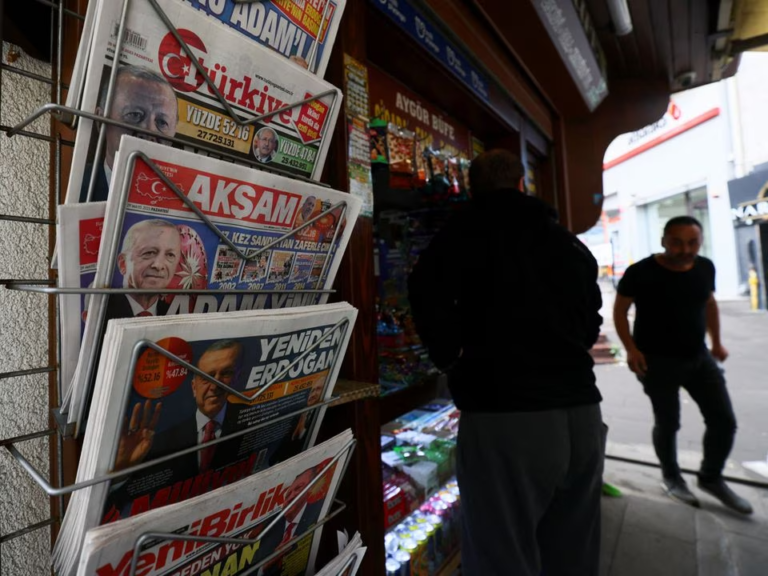
ISTANBUL,(Reuters) – President Tayyip Erdogan and supporters on Monday revelled in an election victory lengthening his rule into a third decade while Turkey’s opposition, which once counted on winning, braced for “difficult days” against an increasingly autocratic government.

His rival Kemal Kilicdaroglu said it was “the most unfair election in years” but did not dispute the outcome, which gave Erdogan a mandate to pursue policies that have polarised Turkey and strengthened its position as a regional military power.


READ MORE : Turkish election: Erdogan takes early lead in crucial Turkish election

The election had been seen as Erdogan’s biggest political challenge, with the opposition confident of unseating him and reversing his policies after polls showed a cost-of-living crisis left him vulnerable.

But he prevailed with 52.2% of the vote to Kilicdaroglu’s 47.8%. It reinforced Erdogan’s image of invincibility in the deeply divided NATO-member country, whose foreign, economic and security policy he has redrawn.

Pro-government newspapers, part of an overwhelmingly pro-Erdogan media landscape that buoyed his election campaign in the nation of 85 million people, cheered his victory.

“It’s a good result because Tayyip Erdogan is a good leader, he knows what the people want. If people have been voting for him for 20 years, he must be a successful leader,” said Altay Sahin, a construction worker in Istanbul.

Addressing supporters in a victory speech, Erdogan declared democracy the winner. “Now is the time to put the disputes and conflicts of the election period to one side and unite around our national goals,” he said.

But the prospect of five more years of Erdogan rule was a harsh blow to an opposition which accused him of undermining democracy as he amassed ever more power – a charge he denies. Kilicdaroglu had promised a new “spring” if he had won.

“I look at the people around me, who were supporting the opposition, and all of them are resentful,” said Hulya Yildirim, a lawyer. “We forgot about spring in this country, we have to make our own spring because the people seem to be happy with winter.”

The lira slipped to a record low of 20.08 against the dollar. It has lost 90% of its value in the last decade, buffeted by currency crisis and rampant inflation.

Its most recent losses were driven by uncertainty about what an Erdogan win would mean for economic policy. Critics have blamed his unorthodox, low interest-rate economic blueprint that the opposition had pledged to reverse, for the currency’s woes.

Erdogan said inflation, which hit a 24-year peak of 85% last year before easing, is Turkey’s most urgent issue.


‘DIFFICULT DAYS’

Though he called for unity, Erdogan stuck to a major theme of his campaign in accusing Kilicdaroglu and the opposition of siding with terrorists, without providing evidence.

Turkey’s main pro-Kurdish party, parliament’s third largest, was among the opposition parties opposed to Erdogan and is accused of links to Kurdish militants, which it denies.

“For the opposition, very difficult days are ahead,” said Atilla Yesilada, analyst at GlobalSource Partners, forecasting more judicial moves against the Kurdish party and saying it was not clear whether the opposition alliance would remain intact.

Kilicdaroglu’s defeat will probably be a cause for concern among Turkey’s NATO allies that have been alarmed by Erdogan’s amicable relations with Russian President Vladimir Putin, who congratulated his “dear friend” on his victory.

U.S. President Joe Biden wrote on Twitter: “I look forward to continuing to work together as NATO allies on bilateral issues and shared global challenges.” He and Erdogan were to speak by phone later on Monday, Erdogan’s office said.

U.S. relations with Turkey have been impeded by Erdogan’s objection to Sweden joining NATO as well as Ankara’s close relationship with Moscow, even as Russian forces wage a 15-month-old invasion of Ukraine, and differences over Syria.


ECONOMIC WOES

Erdogan’s victory extends his tenure as the longest-serving leader since Mustafa Kemal Ataturk established modern Turkey after the collapse of the Ottoman Empire a century ago – a politically potent anniversary to be marked in October.

Erdogan, head of the Islamist-rooted AK Party, appealed to voters with nationalist and conservative rhetoric in a divisive campaign that deflected attention from Turkey’s economic problems.

Kilicdaroglu, who had promise to set Turkey on a more democratic and collaborative path, said the election outcome showed there was a will among many Turks to remove an authoritarian government, but “all the means of the state were laid at the feet of one man”.

Erdogan’s performance wrong-footed opponents who thought voters would punish him over the state’s initially slow response to earthquakes in February, in which over 50,000 people died.

But in the first round of voting on May 14, which included parliamentary elections, his AK Party emerged top in 10 of the 11 provinces hit by the earthquakes, helping it to secure a parliamentary majority along with its allies.

Additional reporting by Ayhan Uyanik, Can Sezer, Burcu Karakas and Jonathan Spicer in Istanbul and Nevzat Devranoglu in Ankara; writing by Daren Butler; editing by Jonathan Spicer, William Maclean and Mark Heinrich

Disclaimer: This report is auto generated from the REUTERS. Diplomat Times holds no responsibility for its content.
PM Sheikh Hasina blames BNP for increased terrorism, corruption, nepotism, and exploitation

0

PM Sheikh Hasina blames BNP for increased terrorism, corruption, nepotism, and exploitation

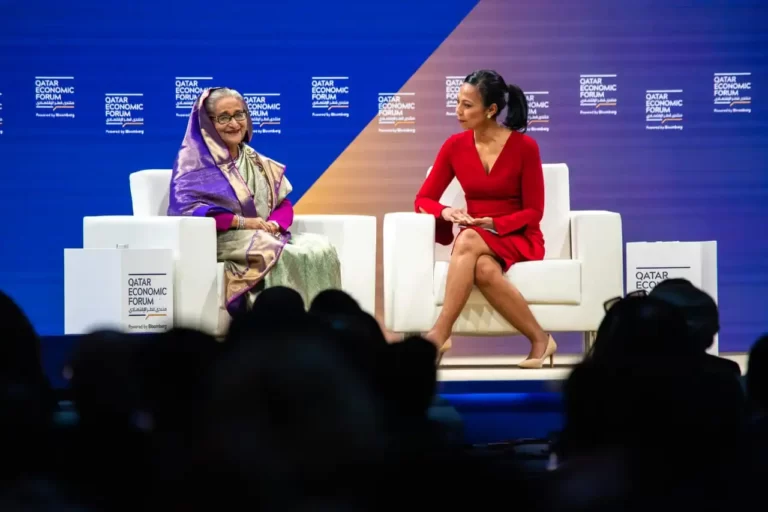
DOHA, Qatar (DT) – Prime Minister Sheikh Hasina has stated that the next general election in Bangladesh will be free and fair, upholding democracy and people’s voting rights.

“The people must decide who will lead the country.” It is the power of the people. So, I want to ensure people’s power,” she said on Wednesday during a Qatar Economic Forum session titled “In Conversation with Prime Minister Sheikh Hasina” at the Raffles Hotel in Doha.

According to the state-run news agency Bangladesh Sangbad Sangstha, Haslinda Amin, editor-at-large of QEF, anchored the session in a jam-packed audience hall room at the venue.

“I am not here to seize power.” “Rather, I want to empower our people by giving them the right to choose their government,” she said, according to BSS.

Bangladesh’s next elections are scheduled for either December of this year or the first week of next year.

Hasina criticized the BNP for refusing to participate in elections under her administration, claiming that people suffered “greatly” under the BNP’s rule due to “increased terrorism, corruption, nepotism, and exploitation.”


READ MORE : French Open: Novak Djokovic brushes past Aleksandar Kovacevic in opener

“Definitely, elections will be free and fair under our government,” Hasina said as the opposition BNP and its allies resumed street protests calling for the Awami League government to resign and the next election to be held under a neutral caretaker administration.

The prime minister is in Doha for three days to attend the Qatar Economic Forum 2023.


India gets new parliament building as Modi remakes capital’s center

0

India gets new parliament building as Modi remakes capital’s center

NEW DELHI(Reuters) – Indian Prime Minister Narendra Modi will inaugurate a new parliament complex on Sunday, the centerpiece of a $2.4 billion project that aims to remake British colonial-era buildings in the capital’s center and give it a distinct Indian identity.

The inauguration, and the ongoing makeover of the heart of New Delhi based on Indian culture, traditions and symbols, comes a year before parliamentary elections in which Modi’s Bharatiya Janata Party (BJP) will pitch its strong Hindu nationalist credentials, besides its performance in office over the last decade, to seek a third term.


READ MORE : Why the President of India Should Inaugurate the New Parliament Building

The Modi government has also similarly renovated some of Hinduism’s most revered pilgrimage centres since first sweeping to power in 2014.

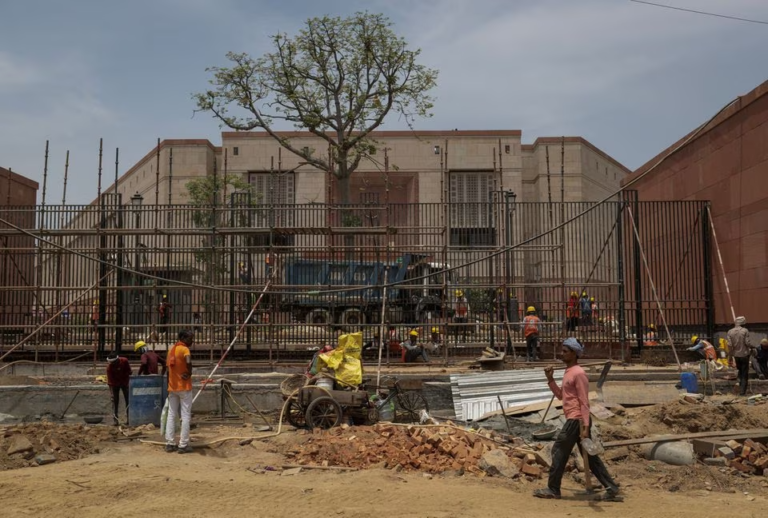
The new, triangular-shaped parliament complex is just across from the heritage building built by British architects Edwin Lutyens and Herbert Baker in 1927, two decades before India’s independence.

The old parliament will be converted into a museum, the government has said.

It has said a new parliament building is badly needed as the existing structure “is highly stressed” for a number of reasons including capacity, infrastructure, technology and safety.

The new building, Modi said when he launched its construction in December 2020 during the pandemic, “would become a witness to the creation of a self-reliant India”, underlining another pet theme.

Besides modern technology, the new parliament has a total of 1,272 seats in two chambers, nearly 500 more than the old building, and at least three times as much space.


READ MORE : Serbia orders army to Kosovo border after protest clashes

It features four storeys and halls themed according to the national symbols of the peacock, lotus and banyan tree, and murals, sculptures and art from across the country capturing 5,000 years of Indian civilization, said an architect directly involved in the project.

But critics of Modi see the new parliament, designed by an architect from his home state of Gujarat, as an attempt to bolster his brand of nationalism as part of a personal legacy.

Opposition parties have announced a boycott of the inauguration. The president, the highest executive of the country, should open the new parliament and not Modi, the opposition members said.

The president’s office declined to comment. An official in Modi’s office said the prime minister respects the constitutional head of the country.

On Friday, the Supreme Court dismissed a public interest petition that sought a direction from the court to get the president to inaugurate the building instead of Modi.

The overall makeover includes the new parliament, the construction of several government buildings along the lawns of India Gate in the centre of the city and new residences for the vice-president and the prime minister.

The plan has drawn objections from conservationists and urban planners who say it will obliterate the character of the city.

“The decision to build a new parliament building was abrupt and there has been no transparency, probity and frugality in the entire process,” said A.G. Krishna Menon, an architect and conservation consultant.

what people thinks about new parliament building

Since the construction began, however, politicians, environmentalists, and civil society groups have criticized the new building over the cost and lack of consultation. Many have questioned why the government chose not to upgrade the old building instead.

The opposition leaders have also criticized the inauguration date, which coincides with the anniversary of the birth of VD Savarkar, a divisive figure for his connection to the 1948 assassination of the freedom fighter, Mahatma Gandhi. The BJP hails Savarkar as a hero for birthing the nationalist idea of Hindutva, or ‘Hindu-ness’.

Reporting by Rupam Jain, Editing by Miral Fahmy, YP Rajesh and Raju Gopalakrishnan

Disclaimer: This report is auto generated from the REUTERS. Diplomat Times holds no responsibility for its content.