Home Blog Page 194

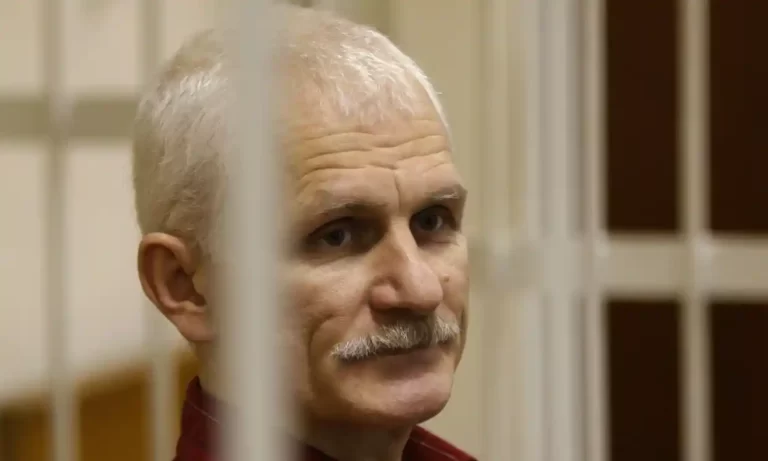
Nobel winners demand release of Belarusian peace laureate Ales Bialiatski

Nobel winners demand release of Belarusian peace laureate Ales Bialiatski

BELARUS – PEN International, the literary and free expression organization, has released a letter signed by 103 Nobel Laureates, expressing solidarity with writer, human rights defender, Nobel Peace Prize winner, and PEN member Ales Bialiatski, and condemning the Belarusian authorities’ brutal, relentless, and systematic crackdown on independent voices. Today marks the International Day of Solidarity with Prisoners of Conscience in Belarus.

More than 100 Nobel laureates, including Kazuo Ishiguro, Olga Tokarczuk and JM Coetzee, have called for the release of Nobel peace prize winner Ales Bialiatski and said they “stand with the fearless people of Belarus who continue to fight for their human rights”.

Bialiatski founded an organization called Viasna (Spring) to provide support for demonstrators who were jailed after protesting against dictatorial powers granted to Belarusian president Alexander Lukashenko following a constitutional amendment in 1996.

After its founding, Viasna evolved into a human rights organization that documents the authorities’ abuses against and torture of political prisoners.


Open letter condemning the detention of the human rights activist, who won the 2022 prize, signed by more than 100 laureates including Kazuo Ishiguro and JM Coetzee

Bialiatski’s work has seen him targeted by the authorities: he was jailed in 2011 for alleged tax evasion by the government, and released in 2014. But in 2021, the year after an election led to protests against Lukashenko’s dictatorship, Bialiatski was again jailed, this time without trial or conviction.

The Nobel peace prize was conferred on him in 2022, during his detention. Since then, he has been sentenced to 10 years in prison.

Now, 103 Nobel Laureates have signed an open letter from Pen International expressing solidarity with Bialiatski and condemning the actions of the Belarusian president.

The letter, also signed by authors including Svetlana Alexievich, Mario Vargas Llosa and Annie Ernaux, says that Bialiatski “has devoted his life to the promotion of democracy and human rights in Belarus.

“He has dared to hold President Lukashenko accountable for his brutal, relentless and systematic crackdown on independent voices,” continued the letter. “For this, he is paying the heaviest price: 10 years in prison on spurious grounds.

“Bialiatski is a symbol of hope and an inspiration to human rights defenders around the world, who should be celebrated as such.”


READ MORE : Biden to discuss about Ukraine with Brazil’s Lula, India’s Modi

The signatories say they stand with Bialiatski and the fellow members of Viasna – Marfa Rabkova, Valiantsin Stefanovich, Uladzimir Labkovich, Leanid Sudalenka, Andrei Chapiuk – who have also been imprisoned.

“We stand with the multitude of writers, journalists, cultural workers, human rights defenders and citizens of Belarus who are serving lengthy prison terms merely for peacefully expressing their views and speaking truth to power,” the letter said. “We stand with the fearless people of Belarus who continue to fight for their human rights.”

Bialiatski won the Nobel peace prize jointly with the Russian human rights organisation Memorial and the Ukrainian Centre for Civil Liberties. The citation for the prize said they demonstrated “the significance of civil society for peace and democracy”.


Who signature in this letter, List of Nobel winners

Nobel Prize in Chemistry Laureates: Peter Agre (2003), Thomas R. Cech (1989), Martin Chalfie (2008), Emmanuelle Charpentier (2020), Aaron Ciechanover (2004), Elias James Corey (1990), Johann Deisenhofer (1988), Jacques Dubochet (2017), Joachim Frank (2017), Alan Heeger (2000), Richard Henderson (2017), Dudley R. Herschbach (1986), Roald Hoffmann (1981), Robert Huber (1988), Martin Karplus (2013), Brian K. Kobilka (2012), Roger D. Kornberg (2006), Yuan T. Lee (1986), Robert J. Lefkowitz (2012), Jean-Marie Lehn (1987), Hartmut Michel (1988), John C. Polanyi (1986), Jean-Pierre Sauvage (2016), Richard R. Schrock (2005), Arieh Warshel (2013), M. Stanley Whittingham (2019).

Nobel Prize in Economic Sciences Laureates: Esther Duflo (2019), Oliver Hart (2016), Guido W. Imbens (2021), Finn E. Kydland (2004), Eric S. Maskin (2007), Paul R. Milgrom (2020), Edmund S. Phelps (2006), Alvin E. Roth (2012), Vernon L. Smith (2002), Joseph E. Stiglitz (2001).

Nobel Prize in Literature Laureates: Svetlana Alexievich (2015), J. M. Coetzee (2003), Annie Ernaux (2022), Louise Gluck (2020), Abdulrazak Gurnah (2021), Kazuo Ishiguro (2017), Elfriede Jelinek (2004), Patrick Modiano (2014), Herta Muller (2009), Orhan Pamuk (2006), Wole Soyinka (1986), Olga Tokarczuk (2018), Mario Vargas Llosa (2010).

Nobel Prize in Medicine Laureates: Harvey J. Alter (2020), J. Michael Bishop (1989), Elizabeth H. Blackburn (2009), Mario R. Capecchi (2007), Andrew Z. Fire (2006), Carol W. Greider (2009), Jeffrey Connor Hall (2017), Harald zur Hausen (2008), Jules A. Hoffmann (2011), Tasuku Honjo (2018), Sir Michael Houghton (2020), Tim Hunt (2001), Louis J. Ignarro (1998), Eric R. Kandel (2000), Barry J. Marshall (2005), Craig C. Mello (2006), Edvard Moser (2014), May-Britt Moser (2014), Erwin Neher (1991), Sir Paul M. Nurse (2001), Stanley B. Prusiner (1997), Sir Peter J. Ratcliffe (2019), Charles M. Rice (2020), Sir Richard J. Roberts (1993), Michael Rosbash (2017), James E. Rothman (2013), Gregg L. Semenza (2019), Hamilton O. Smith (1978), Harold E. Varmus (1989), Eric F. Wieschaus (1995), Torsten N. Wiesel (1981).

Nobel Peace Prize Laureates: Shirin Ebadi (2003), Dmitry Muratov (2021), Maria Ressa (2021), Oscar Arias Sanchez (1987), Juan Manuel Santos (2016).

Nobel Prize in Physics Laureates: Barry Clark Barish (2017), Albert Fert (2007), Jerome I. Friedman (1990), John L. Hall (2005), Serge Haroche (2012), Takaaki Kajita (2015), Wolfgang Ketterle (2001), Anthony J. Leggett (2003), John C. Mather (2006), Michel Mayor (2019), Konstantin Novoselov (2010), Roger Penrose (2020), William D. Phillips (1997), H. David Politzer (2004), Horst L. Stormer (1998), Kip Stephen Thorne (2017), Daniel C. Tsui (1998), Robert Woodrow Wilson (1978).


By Sarah Shaffi, Editing by Shasi Kumar | With special thanks to J.M Coetzee and Sir Richard J. Roberts.

Disclaimer: This report is auto generated from the TH. Diplomat Times holds no responsibility for its content.
Biden to discuss about Ukraine with Brazil’s Lula, India’s Modi

0

Biden to discuss about Ukraine with Brazil’s Lula, India’s Modi

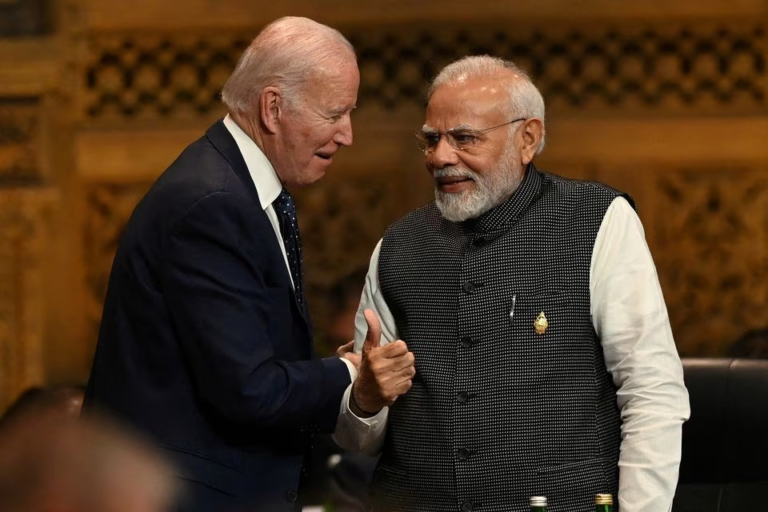
HIROSHIMA, Japan(Reuters) – U.S. President Joe Biden aims to speak this weekend with Brazil’s President Luiz Inacio Lula da Silva and Indian Prime Minister Narendra Modi about Ukraine and the “sacrosanct” issue of sovereignty and territorial integrity, U.S. national security adviser Jake Sullivan said on Saturday.

Lula and Modi are attending a summit of the Group of Seven (G7) rich nations in Hiroshima at the invitation of Japan, this year’s host of the G7, which also includes the U.S., Germany, Britain, France, Italy and Canada.

Asked if Biden would pressure or urge the two leaders to toughen their approach on China and Russia, Sullivan said, “I think pressure is just the wrong word. I mean, that’s not how President Biden operates with these key leaders with whom he has deep relationships, like President Lula and President Modi.”


READ MORE : What India’s decision to scrap its 2000-rupee note means for its economy

Instead, Biden would “look for the opportunity to speak with both of them about the constructive role that each country can play in supporting the most basic and fundamental element of any outcome, which is sovereignty and territorial integrity, which is sacrosanct in the (United Nations) Charter,” Sullivan told reporters in Hiroshima.

Brazil and India have for years sought to play bridge-building roles between the United States and Russia and China, and both countries have maintained economic and political relations with Moscow after its invasion of Ukraine in February 2022, frustrating Western efforts to isolate Moscow.

Lula last month angered many in the West by calling for the U.S. and European allies to stop supplying arms to Ukraine, saying they were prolonging the war. A White House spokesperson responded by accusing him of “parroting Russian and Chinese propaganda”.

After the backlash, the Brazilian leader toned down his comments, and on a visit to Portugal and Spain he condemned Russia’s violation of Ukraine’s territorial integrity.

Sullivan noted that Brazil has supported several key U.N. resolutions based on the underlying concept of territorial integrity, adding, “That’s really where the president wants to drive things with the key emerging economies who will be here.”

Other issues Biden wants to discuss include a G7 push to build more resilient supply chains and bolster infrastructure investments in developing countries, as well as how to deal with their massive debt burdens, Sullivan said.

Biden is slated to see Modi as part of a third Quad summit, along with the leaders of Australia and Japan on the sidelines of the G7 summit.

Reporting by Trevor Hunnicutt and Jeff Mason; Writing by Andrea Shalal and William Mallard

Disclaimer: This report is auto generated from the REUTERS. Diplomat Times holds no responsibility for its content.


‘War is not an option’, Taiwan president says amid China tensions

0

‘War is not an option’, Taiwan president says amid China tensions

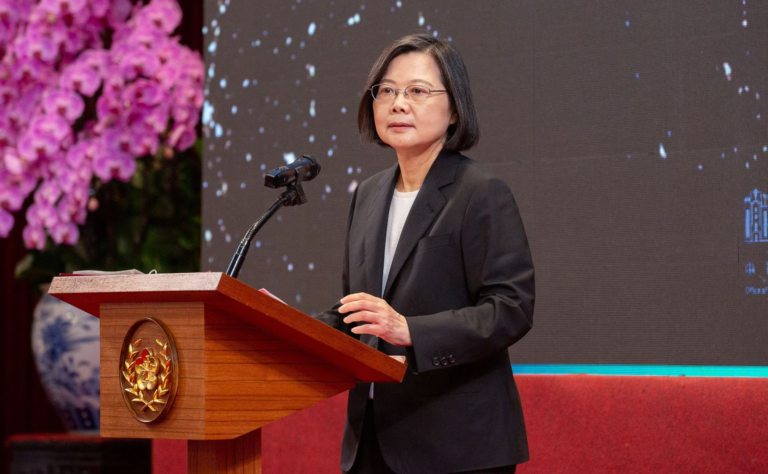
TAIPEI (Reuters) – Taiwan’s President Tsai Ing-wen vowed on Saturday to maintain the status quo of peace and stability across the Taiwan Strait amid high tensions with China, which has stepped up military pressure on the democratically governed island.

Taiwan will not provoke and will not bow to Chinese pressure, Tsai said in a speech in the presidential office in Taipei marking the seventh anniversary of her governance.


READ MORE : Taiwan threat from China serious, House GOP chairman Gallagher says

China, which considers Taiwan as its own and threatens to bring the island under its control if necessary, has stepped up military and diplomatic pressure to force the island to accept Chinese sovereignty since Tsai took office in 2016.

Beijing has rebuffed calls for talks from Tsai, regarding her to be a separatist. Tsai has repeatedly vowed to defend Taiwan’s freedom and democracy.

“War is not an option. Neither side can unilaterally change the status quo with non-peaceful means,” Tsai said. “Maintaining the status quo of peace and stability is the consensus for both the world and Taiwan.”

“Although Taiwan is surrounded by risks, it is by no means a risk maker. We are a responsible risk manager and Taiwan will stand together with democratic countries and communities around the world to jointly defuse the risks,” she said.

Leaders of the Group of Seven (G7) rich nations agreed they were seeking a peaceful resolution to issues on Taiwan, the host of the G7 summit in Hiroshima, Japanese Prime Minister Fumio Kishida, said on Friday.

Tsai said Taiwan officials are in discussions with U.S. President Joe Biden’s administration on sending $500 million worth of weapons aid to Taiwan, adding that the aid was meant to address deliveries of weapons delayed due to the COVID-19 pandemic.

She stressed the global importance of Taiwan’s supply chain, which produces most of the world’s advanced semiconductor chips, and vowed to keep the most advanced chip technologies and research and development centres in Taiwan.


READ MORE : China ready to work with America for world peace & stability: President Jinping

Taiwan is gearing up for a key presidential election in mid-January, with China tensions set to top the campaign agenda.

Representing Taiwan’s main opposition Kuomintang (KMT) party for the key vote in mid-January, New Taipei City mayor Hou Yu-ih said on Saturday that Taiwan faces a choice between “peace and war” under Tsai’s rule and he vowed to keep regional stability through unspecified “dialogue and exchanges”.

“The fears for war will never drive away the hope for peace,” Hou said at an event in Taipei to kick off his election campaign, vowing to defend the Republic of China, Taiwan’s official name.

Hou is running against Taiwan Vice President William Lai from the ruling Democratic Progressive Party.


READ MORE : G7 Summit :Ukraine President Zelenskyy arrives in Japan

The KMT, which favours close ties with China, has framed the 2024 vote as a choice between war and peace.

In the presidential office when asked about the opposition’s stance on the elections, Tsai said maintaining peace should be the consensus for all political parties in Taiwan, and that one should not “sell the fears of war for elections gains.”


Today President Tsai Ing-wen tweet her 7 year spent as president for Taiwan. Today I begin my eighth year as president of the Republic of China (Taiwan).

Seven years ago, we embraced our cause of transforming our country, and one step after the other, embarked on reform. From then to now, we have walked a long path. We have markedly changed the face of Taiwan from that of seven years ago.

Going forward, we must demonstrate our determination to create an economy and industries that are even more resilient, so that we can cement Taiwan’s key position in global supply chains.

Reporting by Yimou Lee; Editing by Jacqueline Wong

Disclaimer: This report is auto generated from the REUTERS. news service. Diplomat Times holds no responsibility for its content.

Explainer: What India’s decision to scrap its 2000-rupee note means for its economy

Explainer: What India’s decision to scrap its 2000-rupee note means for its economy

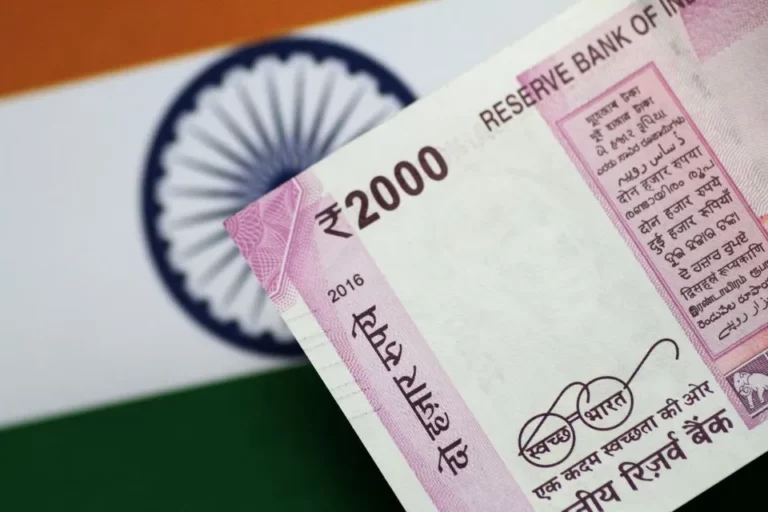
MUMBAI (Reuters) – India will withdraw its highest denomination currency note from circulation, the central bank said on Friday. The 2000-rupee note, introduced into circulation in 2016, will remain legal tender but citizens have been asked to deposit or exchange these notes by Sept. 30, 2023.

The decision is reminiscent of a shock move in 2016 when the Narenda Modi-led government had withdrawn 86% of the economy’s currency in circulation overnight.

This time, however, the move is expected to be less disruptive as a lower value of notes is being withdrawn over a longer period of time, according to analysts and economists.


WHY DID THE GOVERNMENT WITHDRAW 2000-RUPEE NOTES?

When 2000-rupee notes were introduced in 2016 they were intended to replenish the Indian economy’s currency in circulation quickly after demonetisation.

However, the central bank has frequently said that it wants to reduce high value notes in circulation and had stopped printing 2000-rupee notes over the past four years.

“This denomination is not commonly used for transactions,” the Reserve Bank of India said in its communication while explaining the decision to withdraw these notes.

ywAAAAAAQABAAACAUwAOw==

WHY NOW?

While the government and the central bank did not specify the reason for the timing of the move, analysts point out that it comes ahead of state and general elections in the country when cash usage typically spikes.

“Making such a move ahead of the general elections is a wise decision,” said Rupa Rege Nitsure, group chief economist at L&T Finance Holdings. “People who have been using these notes as a store of value may face inconvenience,” she said.

WILL THIS HURT ECONOMIC GROWTH?

The value of 2000-rupee notes in circulation is 3.62 trillion Indian rupees ($44.27 billion). This is about 10.8% of the currency in circulation.


READ MORE : India’s Modi to Visit Papua New Guinea in Outreach to Pacific Island Countries

“This withdrawal will not create any big disruption, as the notes of smaller quantity are available in sufficient quantity,” said Nitsure. “Also in the past 6-7 years, the scope of digital transactions and e-commerce has expanded significantly.”

But small businesses and cash-oriented sectors such as agriculture and construction could see inconvenience in the near term, said Yuvika Singhal, economist at QuantEco Research.

To the extent that people holding these notes chose to make purchases with them rather than deposit them in bank accounts, there could be some spurt in discretionary purchases such as gold, said Singhal.

HOW WILL IT AFFECT BANKS?

As the government has asked people to deposit or exchange the notes for smaller denominations by Sept. 30, bank deposits will rise. This comes at a time when deposit growth is lagging bank credit growth.

This will ease the pressure on deposit rate hikes, said Karthik Srinivasan, group head – financial sector ratings at rating agency ICRA Ltd.

Banking system liquidity will also improve.


READ MORE : G7 Summit: PM Narendra Modi reaches Japan to attend the G7 Summit

“Since all the 2000-rupee notes will come back in the banking system, we will see a reduction in cash in circulation and that will in turn help improve banking system liquidity,” said Madhavi Arora, economist at Emkay Global Financial Services.

WHAT ARE THE IMPLICATIONS FOR BOND MARKETS?

Improved banking system liquidity and an inflow of deposits into banks could mean that short-term interest rates in the market drop as these funds get invested in shorter-term government securities, said Srinivasan.

($1 = 81.7800 Indian rupees)

Reporting by Ira Dugal; Editing by Jacqueline Wong

Disclaimer: This report is auto generated from the REUTERS. Diplomat Times holds no responsibility for its content.
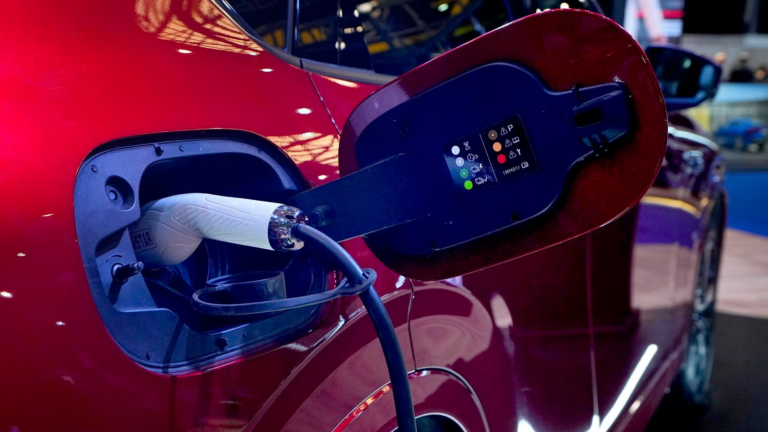
 

Demand for electric cars is booming, with sales expected to leap 35% this year after a record-breaking 2022

Demand for electric cars is booming, with sales expected to leap 35% this year after a record-breaking 2022

DT(BUSINESS)- Global sales of electric cars are set to surge to yet another record this year, expanding their share of the overall car market to close to one-fifth and leading a major transformation of the auto industry that has implications for the energy sector, especially oil.

The new edition of the IEA’s annual Global Electric Vehicle Outlook shows that more than 10 million electric cars were sold worldwide in 2022 and that sales are expected to grow by another 35% this year to reach 14 million. This explosive growth means electric cars’ share of the overall car market has risen from around 4% in 2020 to 14% in 2022 and is set to increase further to 18% this year, based on the latest IEA projections.

“Electric vehicles are one of the driving forces in the new global energy economy that is rapidly emerging – and they are bringing about a historic transformation of the car manufacturing industry worldwide,” said IEA Executive Director Fatih Birol. “The trends we are witnessing have significant implications for global oil demand. The internal combustion engine has gone unrivalled for over a century, but electric vehicles are changing the status quo. By 2030, they will avoid the need for at least 5 million barrels a day of oil. Cars are just the first wave: electric buses and trucks will follow soon.”


READ MORE : Elon Musk appoint Twitter’s new CEO is an NBCUniversal executive with deep ad industry ties

The overwhelming majority of electric car sales to date are mainly concentrated in three markets – China, Europe and the United States. China is the frontrunner, with 60% of global electric car sales taking place there in 2022. Today, more than half of all electric cars on the road worldwide are in China. Europe and the United States, the second and third largest markets, both saw strong growth with sales increasing 15% and 55% respectively in 2022.

Ambitious policy programmes in major economies, such as the Fit for 55 package in the European Union and the Inflation Reduction Act in the United States, are expected to further increase market share for electric vehicles this decade and beyond. By 2030, the average share of electric cars in total sales across China, the EU and the United States is set to rise to around 60%.

The encouraging trends are also having positive knock-on effects for battery production and supply chains. The new report highlights that announced battery manufacturing projects would be more than enough to meet demand for electric vehicles to 2030 in the IEA’s Net Zero Emissions by 2050 Scenario. However, manufacturing remains highly concentrated, with China dominating the battery and component trade – and increasing its share of global electric car exports to more than 35% last year.

Other economies have announced policies to foster domestic industries that will improve their competitiveness in the EV market in years to come. The EU’s Net Zero Industry Act aims for nearly 90% of annual battery demand to be met by domestic battery manufacturers. Similarly, the US Inflation Reduction Act places emphasis on strengthening domestic supply chains for EVs, batteries and minerals. Between August 2022, when the Inflation Reduction Act was passed, and March 2023, major EV and battery makers announced investments totalling at least USD 52 billion in EV supply chains in North America.

Despite a concentration of electric car sales and manufacturing in only a few big markets, there are promising signs in other regions. Electric car sales more than tripled in India and Indonesia last year, albeit from a low base, and they more than doubled in Thailand. The share of electric cars in total sales rose to 3% in Thailand, and to 1.5% in India and Indonesia. A combination of effective policies and private sector investment is likely to increase these shares in the future. In India, the government’s USD 3.2 billion incentive programme, which has attracted investments worth USD 8.3 billion, is expected to increasing battery manufacturing and EV rollout substantially in the coming years.

In emerging and developing economies, the most dynamic area of electric mobility is two- or three-wheel vehicles, which outnumber cars. For example, over half of India’s three-wheeler registrations in 2022 were electric, demonstrating their growing popularity. In many developing economies, two- or three-wheelers offer an affordable way to get access to mobility, meaning their electrification is important to support sustainable development.

Disclaimer: This report is auto generated from the IEA. Diplomat Times holds no responsibility for its content.

G7 Summit :Ukraine President Zelenskyy arrives in Japan

0

G7 Summit : Ukraine President Zelenskyy arrives in Japan

Zelenskyy arrives at G7 after Ukraine wins access to US-made F-16 jet fighters

JAPAN (ALZelenskyy’s arrival at the G7 summit comes a day after winning long-sought access to advanced US fighter jets and training for Ukrainian pilots.

His surprise appearance in Japan follows shortly after he welcomed as “historic” Biden’s decision to allow Ukrainian pilots to train to fly F-16 fighters.

Until now the Biden administration had effectively vetoed the transfer of F-16s, with US officials citing long pilot training times and the risk of escalating the conflict with Russia.

US National Security Advisor Jake Sullivan insists there was no U-turn in US policy.

Until now the Biden administration had effectively vetoed the transfer of F-16s, with US officials citing long pilot training times and the risk of escalating the conflict with Russia.

US National Security Advisor Jake Sullivan insists there was no U-turn in US policy.


READ MORE : Zelensky takes his diplomatic campaign against Russia to Arab summit, G7

“We’ve reached a moment where it’s time to look down the road and to say ‘What is Ukraine going to need … to be able to deter and defend against Russian aggression?’

“F-16s, fourth-generation fighter aircraft, are part of that mix,” Sullivan told reporters on Saturday.

“We are going to do everything we can to support Ukraine in its defence of its sovereignty and territorial integrity, and we are also going to proceed in a way that avoids World War III,” he added.

Disclaimer: This report is auto generated from the ALJAZEERA. Diplomat Times holds no responsibility for its content.
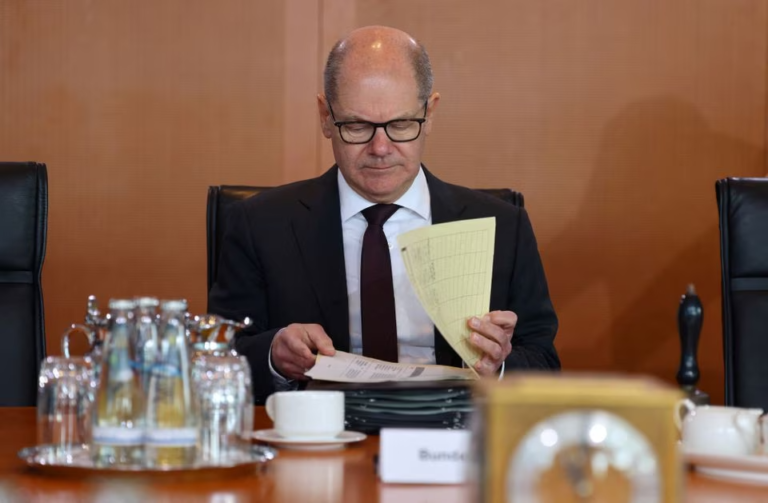
German Cabinet Publishes New Draft Legislation on Citizenship Reform to Attract Skilled Migrants

German Cabinet Publishes New Draft Legislation on Citizenship Reform to Attract Skilled Migrants

BERLIN(REUTERS) The German interior ministry has unveiled a draft legislation aimed at streamlining the process for individuals to apply for citizenship, as Germany seeks to enhance migration and open up job opportunities in Europe’s largest economy. The proposed legislation introduces provisions such as a multiple citizenship option and shortened residency requirements, thereby reducing the naturalization period from eight years to either five or three years.

According to recent data, by the end of 2021, Germany was home to approximately 72.4 million individuals holding German citizenship and around 10.7 million individuals with foreign citizenship. Among these, approximately 5.7 million foreign citizens had resided in Germany for at least a decade.


READ MORE : Zelensky meets Federal Chancellor Scholz in Germany

The draft legislation specifically seeks to address the situation of the “Gastarbeiter” generation, predominantly composed of Turkish migrants who arrived in Germany during the 1950s and 60s as laborers. It includes measures to ease the German language proficiency requirements for this generation, recognizing their significant contributions and long-standing presence in the country.

Interior Minister Nancy Faeser emphasized the importance of allowing individuals who have integrated into German society to participate in shaping the country’s democratic processes. Minister Faeser cited examples from countries like Canada, highlighting the crucial role of such perspectives in attracting skilled workers to meet Germany’s labor demands.

“We want people who have become part of our society to be able to help shape our country democratically,” Interior Minister Nancy Faeser said in a statement, adding that examples from countries like Canada show this perspective was crucial to attract the skilled workers Germany needs. The German government last year agreed plans to reform its immigration law, as Berlin seeks to open the job market to much-needed workers from outside the European Union to fill hundred of thousands of vacancies in sectors from gastronomy and childcare to IT and renewable energies.

The German government’s move to reform its immigration law comes as a response to the pressing need for workers from outside the European Union to fill hundreds of thousands of vacancies across various sectors, including gastronomy, childcare, IT, and renewable energies.

However, the draft legislation has encountered opposition both within the ruling coalition and from the conservative opposition party. Critics argue that the proposed legislation might encourage illegal migration while undermining incentives for migrants to fully integrate into German society.

Disclaimer: This report is auto generated from the REUTERS. Diplomat Times holds no responsibility for its content.
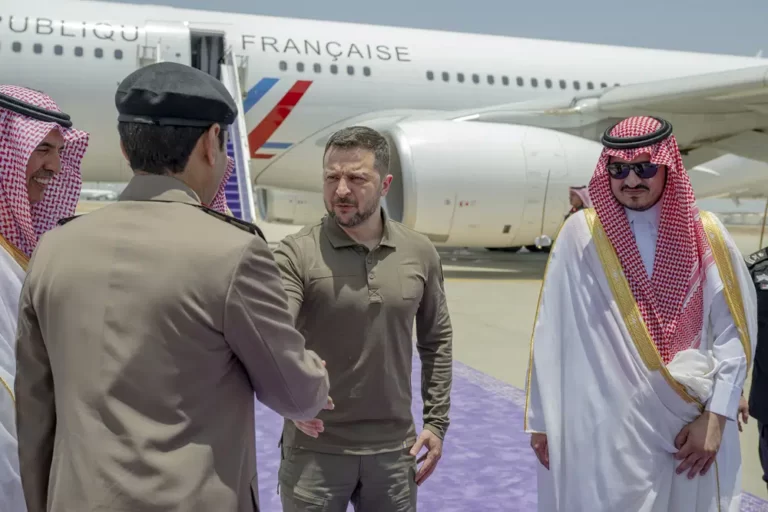
Zelensky takes his diplomatic campaign against Russia to Arab summit, G7

0

Zelensky takes his diplomatic campaign against Russia to Arab summit, G7

KYIV, Ukraine (AP) — Ukrainian President Volodymyr Zelenskyy addressed a summit of Arab leaders in Saudi Arabia on Friday before what a senior official said would be a trip to Japan for a meeting with the leaders of the world’s most powerful democracies.

Zelenskyy has in recent months made foreign trips to shore up diplomatic support for Ukraine’s fight against Russia’s full-scale invasion almost 15 months ago and solicit more military support.

He earlier this week returned from a three-day trip to Italy, the Vatican, Germany, France and the United Kingdom.

Ukraine and Russia are squaring up for a major and potentially decisive phase in the war as Kyiv prepares an expected counteroffensive. The conflict has been bogged down in a war of attrition in recent months amid bad weather.


READ MORE : Zelensky Will Attend the G7, Seeking Arms and Aid, Officials Say

Zelenskyy’s office said he was invited to attend the Arab League summit in Jeddah where he met with Saudi Crown Prince Mohammed bin Salman before holding other bilateral meetings.

They discussed Zelenskyy’s peace plan, the security situation in Ukraine and possible investments in the reconstruction of the country, a presidential statement said. Zelenskyy also invited Prince Mohammed to visit Ukraine.

Zelenskyy urged leaders at the summit to resist Moscow’s influence and consider his peace proposals, which include the withdrawal of the Kremlin’s forces from occupied areas of Ukraine.

“I’m more than sure that none of you will agree to surrender a third of your country to the invaders,” Zelenskyy said in English.

“Another priority is the protection of the Muslim community of Ukraine,” Zelenskyy said. “Crimea was the first to suffer from the Russian occupation, and most of those who suffer repression in occupied Crimea are Muslims.”

Crimean Tatar leader Mustafa Dzhemilev accompanied Zelenskyy on the visit.

Zelenskyy will later travel to a Group of Seven summit in Japan where leaders of the world’s most powerful democracies aim to step up punishment on Russia for its full-scale invasion of Ukraine, according to Oleksiy Danilov, the secretary of Ukraine’s National Security and Defense Council.

However, Danilov’s office later posted a statement backtracking on his announcement and saying Zelenskyy would appear at the G-7 summit via video link. Zelenskyy’s movements are kept secret for security reasons.

Meanwhile, Russia’s forces kept up their long-range bombardment of Ukrainian targets while drones reportedly damaged train lines behind their front line.

About 130 meters (430 feet) of railway track were damaged and trains were halted for hours after an explosion derailed eight cars of a freight train carrying grain in Russia-occupied Crimea, Russian state media reported on Friday.

Thursday’s blast prompted renewed suspicions about possible Ukrainian saboteur activity behind Russian lines.

Train traffic was also halted in northern Crimea on Thursday night after a drone hit a railway track near the town of Dzhankoi, Russia’s Baza Telegram channel reported.

Sergei Aksyonov, the Kremlin-appointed head of Crimea, said in a separate post that four Ukrainian drones were shot down overnight in the peninsula’s north. Aksyonov claimed there was no damage or casualties.

Russia overnight fired cruise missiles, drones and artillery at targets across Ukraine, killing two civilians, officials said Friday.

The attacks included an air assault on Kyiv for the second straight day and the 10th time in three weeks. The Kremlin’s forces also took aim at central, eastern and southern Ukraine, and the western Lviv region near the border with Poland.

Russia launched 22 Iranian-made Shahed drones and six Kalibr cruise missiles during the night, the Ukrainian Air Force said. It said air defenses downed 16 drones and three missiles.

The Russian shelling killed two civilians and wounded nine others in Ukraine’s eastern Donetsk region, its Gov. Pavlo Kyrylenko said.

The missile attacks that have intensified recently aim to “disrupt Ukraine’s plans and preparations for active military operations during the spring-summer campaign,” according to a statement from Ukraine’s intelligence agency, published on Telegram.

The targets are Ukraine’s military control points and barracks, supply routes and the places where ammunition, equipment, fuel are stored, it said.

___

Hanna Arhirova contributed to this report from Kyiv.

Disclaimer: This report is auto generated from the AP NEWS. Diplomat Times holds no responsibility for its content.
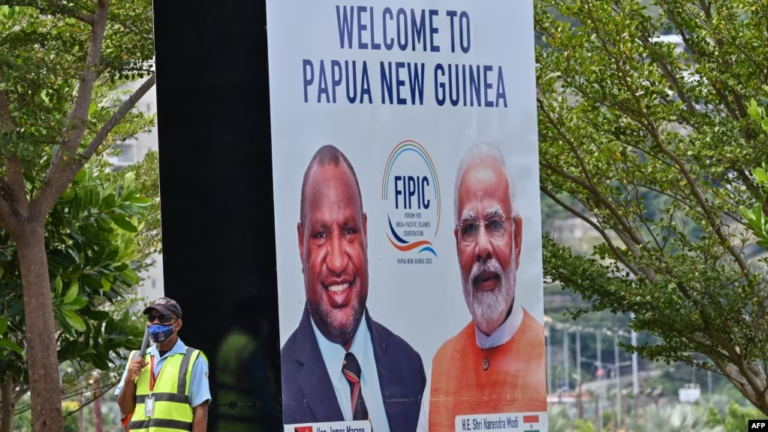
India’s Modi to Visit Papua New Guinea in Outreach to Pacific Island Countries

0

India’s Modi to Visit Papua New Guinea in Outreach to Pacific Island Countries

NEW DELHI — Indian Prime Minister Narendra Modi heads to Papua New Guinea later this week for a visit aimed at shoring up India’s outreach to Pacific Island countries, with an eye on countering China’s growing footprint in the Pacific.

The first visit by an Indian prime minister to the largest of the Pacific Island nations comes as New Delhi’s hostilities with Beijing have prompted it to work more closely with countries such as the United States, Japan and Australia in the Indo-Pacific region.

Modi will stop in Papua New Guinea capital Port Moresby on the second leg of a three-nation tour during which he will first attend the Group of Seven summit in Japan and then go on to Australia.


READ MORE :  PM Narendra Modi reaches Japan to attend the G7 Summit

On May 22, Modi and Papua New Guinean Prime Minister James Marape will host the third summit of the Forum for India-Pacific Islands Cooperation, a grouping of India and 14 Pacific Island countries.

The summit, which is being held eight years after India hosted the last one in 2015, could give fresh momentum to New Delhi’s bid to establish a presence in the Pacific Island countries. India began its outreach in 2014, but it has been slow to get off the ground.

“Those places are very strategic if you want to make a naval base or a friendly port or friendly airstrip and they also have vast ocean resources,” retired navy chief Arun Prakash told VOA Tuesday.

“The main worry for Western countries and India is that several of these countries are a void and China tends to walk into voids and fill them up.”

The 14 countries set to participate in the Port Moresby summit range from such large islands as Fiji, Papua New Guinea and the Solomon Islands to smaller ones such as Tonga and Tuvalu. The other countries will be Kiribati, Samoa, Vanuatu, Niue, Micronesia, Marshall Islands, Cook Islands, Palau and Nauru.

Papua New Guinea is especially significant. The island of 9.5 million is the largest of the Pacific Island countries and one of the few with which India has longstanding ties and a trade relationship. It is also home to a small Indian population of about 3,000.

Modi and Marape will meet Monday and the two sides are expected to sign pacts that include cooperation in micro- and small to medium enterprises to agreements between their state broadcasters and reciprocal arrangements for issuing visas on arrival.

“One of the important challenges that Papua New Guinea faces is climate change and adaptation. These are areas where India can play an important role by offering affordable partnerships in areas like solar energy,” Swati Prabhu, an associate fellow at the Center for New Economic Diplomacy in New Delhi told VOA.

Papua New Guinea also wants to shift its economy from export of primary materials such as natural gas and minerals to finished products.


READ MORE : Zelensky Will Attend the G7, Seeking Arms and Aid, Officials Say

The country is being courted by the U.S. and its allies amid concerns about China’s growing military and economic influence in the region. Chinese President Xi Jinping visited in 2018.

U.S. President Joe Biden was to visit Papua New Guinea on May 22 but has canceled the visit to focus on debt limit talks in Washington.

China has begun making inroads in the Pacific Island countries with its Belt and Road initiative – last year Beijing signed a security deal with the Solomon Islands and in March it won a contract to redevelop the port in its capital city, Honiara.

Analysts say India hopes to partner with the Pacific Island countries with development initiatives in areas such as clean energy, technology and community development projects such as solar electrification and supply of agricultural equipment.

Affordable clean energy initiatives are especially important in a region whose leaders say climate change is their greatest security threat amid worsening cyclones and rising sea levels.

Some see India’s outreach to the Pacific Island countries as part of its ambitions to be viewed as an emerging global power.

Analysts however say that while India’s bid to build influence in the Pacific Island countries marks an ambitious beginning, it has its limitations as it cannot match China’s resources and New Delhi’s primary focus will have to remain on its immediate neighborhood in South Asia and the Indian Ocean.

“If you call yourself an Indo-Pacific power and are part of the Quad grouping, you must make some outreach to the Pacific also. But whether it is within our capabilities to sustain ourselves that far out in the Pacific is a question mark. We don’t have such deep pockets and our navy is also relatively small,” Prakash said. “But perhaps in coordination with Japan, Australia and United States, we can render assistance there,” he said.

Disclaimer: This report is auto generated from the VOA. Diplomat Times holds no responsibility for its content.
 

G7 Summit: PM Narendra Modi reaches Japan to attend the G7 Summit

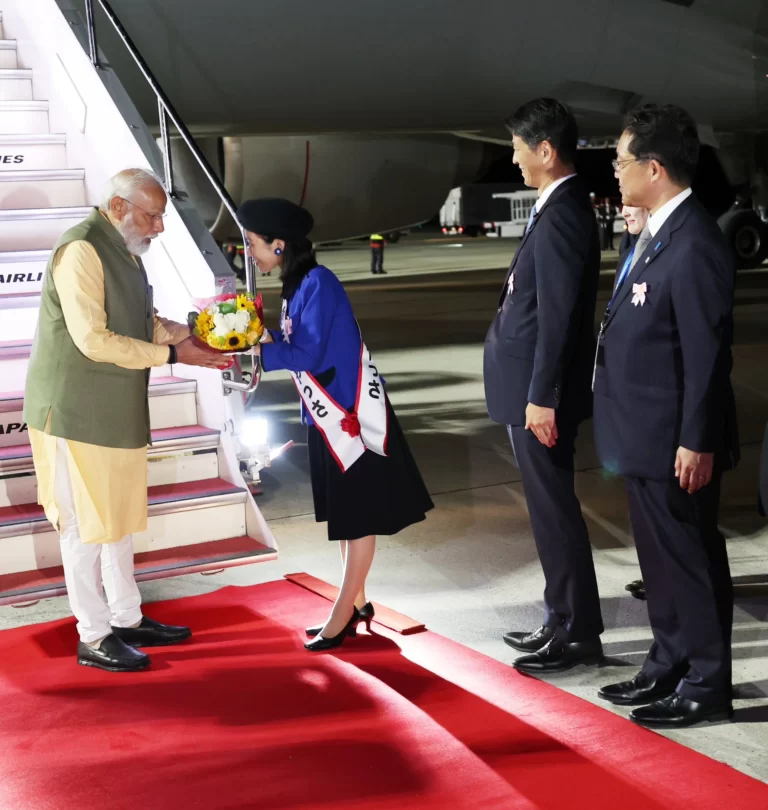
G7 Summit: PM Narendra Modi reaches Japan to attend the G7 Summit

JAPAN (FS)- Prime Minister Modi has reaches in Hiroshima ahead of the G7 Summit in Japan where he has been invited as a guest.

As part of his three-nation tour, PM Modi will also visit Papua New Guinea and Australia after attending the G7 summit.

During his visit, PM Modi is likely to have a series of bilateral meetings with various world leaders including Japanese Prime Minister Fumio Kishida.

He will also unveil a statue of Mahatma Gandhi in Hiroshima. Before leaving for Japan he tweeted, “I will leave for Hiroshima, Japan to attend the G7 Summit under the Japanese Presidency at the invitation of Fumio Kishida, Prime Minister of Japan. It will be a pleasure to meet Prime Minister Kishida again after his recent visit to India for the India – Japan Summit. My presence in this G7 Summit is particularly meaningful as India holds the G20 Presidency this year.”

During his trip, he will also meet Ukraine President Volodymyr Zelenskyy who is also attending the G7 meeting.

The two leaders will meet for the first time since Russia launched a war on Ukraine last year in February.

According to Bloomberg, Zelenskyy will fly on a US military plane to Japan after an expected stop in Saudi Arabia to attend the Arab League summit.

The two leaders are expected to hold discussions on the current situation in Ukraine and also look at ways of furthering bilateral relations.

Zelensky will arrive in Hiroshima on Saturday.

I look forward to exchanging views with the G7 countries and other invited partners on challenges that the world faces and the need to collectively address them. I would also be holding bilateral meetings with some of the leaders attending the Hiroshima G7 Summit,” Modi added.

After concluding his visit to Japan, PM Modi will travel to Port Moresby, Papua New Guinea.

PM tweeted after reaching japan.

Disclaimer: This report is auto generated from the FP. Diplomat Times holds no responsibility for its content.