Home Blog Page 23

Cyprus Prepares for EU Presidency, Deputy Minister Marilena Raouna Highlights Strong EU-UK Partnership

0

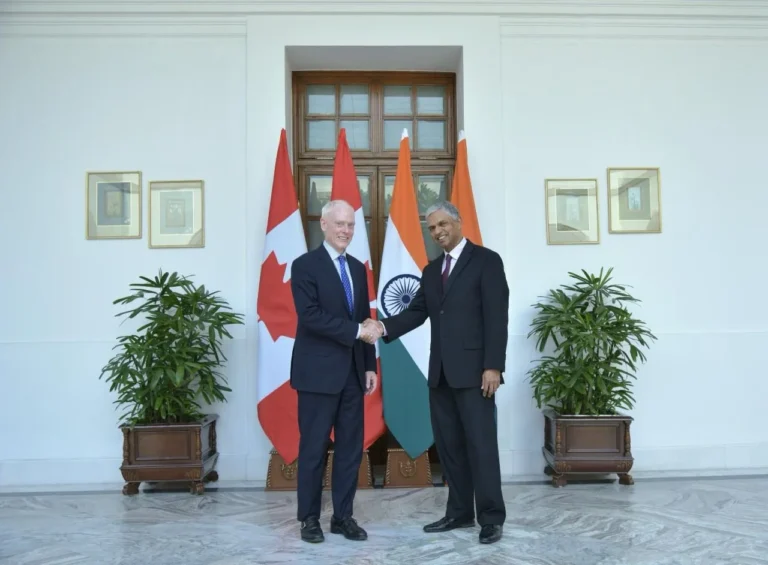
Brussels, Belgium — With its upcoming Presidency of the Council of the European Union on the horizon, Cyprus is stepping into the spotlight as a mediator and consensus-builder within Europe. Deputy Minister for European Affairs Marilena Raouna underlined this ambition in Brussels during talks with UK Minister Nick Thomas-Symonds, focusing on security, migration, and the future of EU-UK relations.

“Cyprus reaffirms its commitment to act as an honest broker during its Presidency, working constructively with both EU partners and the UK to further strengthen EU-UK relations,” Raouna said.

Cyprus’ growing role in EU decision-making

As one of the EU’s smaller member states, Cyprus has often been underestimated in terms of influence. Yet the island nation has consistently positioned itself as a geostrategic bridge — between Europe and the Middle East, between the EU’s northern and southern priorities, and increasingly between Brussels and London in the post-Brexit era.

The Presidency of the Council, which Cyprus will hold in 2026, offers Nicosia a rare opportunity to set the agenda on pressing European challenges:

  • Security and defence, in light of continued instability in Ukraine and the wider neighborhood.
  • Climate and sustainability, issues that are particularly acute for Mediterranean states.
  • Migration management, where Cyprus has first-hand experience as a frontline country.

Raouna stressed that Cyprus intends to use this platform to ensure that the EU speaks with a unified voice while keeping open constructive dialogue with external partners.

Building on EU-UK momentum

The meeting in Brussels highlighted the positive momentum in EU-UK relations, with both sides focusing on implementing the outcomes of the most recent EU-UK Summit. For Cyprus, the UK remains a “vital, like-minded partner”, with strong historical, cultural, and economic ties that endure beyond Brexit.

RELATED NEWS : Russian government explores way to make ends meet as budget deadline looms

“Our Presidency will be about bridge-building,” Raouna said. “Strengthening cooperation with the UK, particularly in areas such as defence, environment, and people-to-people exchanges, while reinforcing EU unity, will be central to our role.”

Support for Ukraine and global responsibilities

Both ministers reaffirmed the importance of sustained support for Ukraine, a commitment Cyprus has consistently upheld within the EU. The Deputy Minister linked this to Cyprus’ broader vision for its Presidency: an EU that is principled, outward-looking, and resilient in the face of global crises.

Cyprus as a trusted mediator

Observers say Raouna’s leadership reflects Cyprus’ strategy to be recognized as more than a small state, but rather as a trusted mediator. With its location at the crossroads of Europe, the Eastern Mediterranean, and the Middle East, Cyprus is uniquely positioned to facilitate dialogue — both within the EU and with external partners.

The upcoming Presidency, diplomats suggest, could allow Cyprus to amplify its voice on issues where it has direct expertise: maritime security, migration pressures, and regional stability.

Looking ahead

The Brussels meeting was more than routine diplomacy; it was a signal that Cyprus is preparing to play a more assertive role in shaping the EU’s external relations.

With Deputy Minister Marilena Raouna at the helm of European Affairs, Nicosia is presenting itself as a practical, forward-looking, and values-driven partner — determined to leave its mark on the EU Presidency and reinforce Europe’s relationship with key allies like the UK.


SOURCE : DT & X |  Follow Us: Facebook | Instagram | Twitter | Youtube |

Russian government explores way to make ends meet as budget deadline looms

0

Moscow, Russia – The Russian government is considering raising the rate of value-added tax to keep the budget deficit in check and maintain reserves, four sources told Reuters, despite public assurances from President Vladimir Putin that there will be no tax rises.
The draft budget is expected to be submitted to parliament on September 29. Its key components are agreed with Putin beforehand and are unlikely to be significantly altered during the formal parliamentary debate.

RELATED NEWS : Russia Reports 1,435 Ukrainian Casualties in a Single Day, Russian Defense Ministry

Russia, in the fourth year of its war in Ukraine, has raised personal income and corporate taxes this year, but the government still had to triple its federal budget deficit estimate to 1.7% of gross domestic product (GDP) in May.
It is now set to exceed that target, according to an unnamed official quoted by state media this month. The 0.9% of GDP deficit for 2026 included in a budget law last year also looks likely to be exceeded.

INCREASE COULD HALVE THE PROJECTED BUDGET DEFICIT

Four sources close to the government confirmed a report this week by The Bell, a media outlet based outside Russia, that the government is discussing lifting the value-added tax (VAT) rate to 22% from 20% to curb the deficit.

The report did not specify a possible timeline for a decision but one of the sources told Reuters it was being considered for the 2026 budget as long as the budget rule which sets aside windfall oil revenues remains in place.

“How can the deficit be reduced while adhering to the budget rule? Only by raising taxes, because there’s hardly anything left to cut, either military spending or social spending,” one source said.

VAT accounted for 37% of federal budget revenues in 2024 and the possible increase could halve the projected 2026 deficit, according to Reuters calculations.

Russia’s economy has continued to grow despite tightening Western sanctions over the war in Ukraine. But GDP is expected to slow to around 1% from 4.3% last year and inflation remains above 8% in a country where much of the workforce and 40% of revenues now go to defence and security.

Government spending is the key driver of economic growth in Russia, and with Putin expressing displeasure at the economic slowdown and the need to continue financing the war of attrition in Ukraine, spending cuts are unlikely.

NO FINAL DECISION YET

Finance Minister Anton Siluanov has insisted that the budget rule, under which energy revenues collected above Russia’s target oil price, currently $60 per barrel, are directed to the fiscal reserve fund, will remain in place.

After Russia sent troops into Ukraine in 2022, Western nations prohibited insurers and maritime service providers from facilitating Russian oil exports unless they were below $60 a barrel. India boosted its Russian oil imports sharply but now faces pressure from U.S. President Donald Trump to halt them.

The Russian fund, which is separate to the country’s central bank reserves, currently has about 4 trillion roubles in liquid assets, which can also be used to cover the deficit. This year the government plans to tap the fund for 447 billion roubles.

Putin, who in 2024 pledged no major changes to the tax system before 2030 following the tax hikes, which were introduced in 2025, has asked the government on September 5 to increase revenues through higher productivity, not taxes.

The source who said there was little room for cuts in the federal budget, argued that military spending could not be cut and minor cuts in the social sphere would not help much.
“It is like shearing a piglet—lots of squealing, not much use. If we could cut 1–2 trillion roubles, sure, but you can’t cut amounts like that, they just aren’t there. You can trim a few million, maybe hundreds,” the source said.

GROWING CONCERN ABOUT THE BUDGET

A two percentage point 2019 VAT hike contributed 0.6 percentage points to inflation that year, according to the central bank, which has pledged to halve inflation to return it to its 4% target.
However, central bank governor Elvira Nabiullina cautiously backed a tax increase, saying after the September 12 board meeting that it was better to raise extra revenue than to widen the deficit.
She linked the size of the deficit to the central bank’s ability to cut rates further from the current 17%, a level economists see as too high to revive growth.

Putin has said that Russia’s low level of debt allows it to borrow more and that new debt should not be feared, but rates even for the government are around 13%, with interest expenses expected to reach 2% of GDP in 2025.


SOURCE : REUTERS |  Follow Us: Facebook | Instagram | Twitter | Youtube |

BRICS Forum in Brasília Unveils Shared “Traditional Values” as Foundation for Deeper Cooperation

0

Brasília, Brazil — The second BRICS “Traditional Values” Forum, taking place from September 15 to 17 in the Brazilian capital, has formally presented an official list of common values that member states say will serve as a foundation for stronger cooperation in cultural, economic, and humanitarian fields.

The gathering, hosted at Brazil’s National Congress, has brought together parliamentarians, business leaders, academics, and cultural figures from BRICS member countries, along with representatives from partner nations and candidate states. The event aims to bridge policy and cultural dialogue at a moment when the bloc is seeking to expand its role in shaping global governance.

Shared values at the heart of BRICS cooperation

Addressing the forum, Dmitry Kuznetsov, Deputy of the State Duma of the Russian Federation, member of the Committee on International Affairs, and Vice President of the Forum, emphasized the philosophical and cultural dimension of BRICS. He cited the words of iconic Brazilian author Jorge Amado, who envisioned “a world where man no longer sees another man as an enemy, and differences in skin color mean no more than differences in age.”

RELATED NEWS : BRICS Traditional Values Forum to Convene in Brasilia, Focus on Culture, Cooperation, and Global Challenges

“This dream is what unites our nations today,” Kuznetsov declared, adding that BRICS must build its cooperation not only on pragmatic interests but also on a “spiritual foundation.”

He underscored the importance of literature and the arts in shaping shared identities:
“Writers give form to what we believe in, what we hope for, and what we pass on to future generations. Strengthening cooperation among writers of different countries is essential to creating this shared value base.”

A list of common values

Based on the analysis of works submitted to the BRICS Literature Award, forum experts compiled a list of values said to unite member states. These include:

  • Mercy and humanism
  • Cultural sovereignty and equality of cultures
  • Economic well-being and social justice
  • A multipolar world order
  • Health and sustainable development
  • Responsibility to future generations
  • Mutual respect and solidarity
  • Moderation and avoidance of fanaticism
  • A culture of honesty

Organizers stressed that these principles represent not just abstract ideals but actionable guidelines for policy and cooperation across BRICS nations.

Cultural and institutional cooperation

Kuznetsov thanked the Brazilian Academy of Letters, the Union of Writers of Russia, the Russian Book Union, and similar organizations from other BRICS countries for their role in shaping the discussion. He highlighted the creation of the Writers’ Unions Alliance and the establishment of the BRICS Literature Award as concrete platforms fostering cultural dialogue.

“The recognition of shared values through literature is not symbolic alone,” he said. “It provides an intellectual basis for cooperation across fields such as business, technology, health, and humanitarian work.”

New initiatives on the horizon

Forum participants announced plans to launch new initiatives in education, preventive medicine, business innovation, and humanitarian projects. According to Kuznetsov:
“Faith without deeds is dead. I thank those preparing to take decisive steps for our peoples — in business, in healthcare, in innovation, and above all, in culture.”

Toward a joint declaration

The forum will culminate with the signing of a Brasília Declaration, the first point of which affirms the shared values identified through the BRICS Literature Award process. The declaration will call on member states to integrate these principles into international projects aimed at strengthening people-to-people ties and promoting a “value-based dialogue” across the bloc.

Organizers stress that this values framework is intended as a counterweight to global polarization. “Strengthening universally understood moral and spiritual benchmarks,” the closing statement reads, “is an important step toward fairer and more harmonious international cooperation in the face of global challenges.”

The BRICS “Traditional Values” Forum continues through September 17, with sessions on cultural sovereignty, education, and the role of civil society in shaping multipolar cooperation.


SOURCE : BRICS & DT |  Follow Us: Facebook | Instagram | Twitter | Youtube |
Ecuador declares state of emergency in provinces hit by transport strike

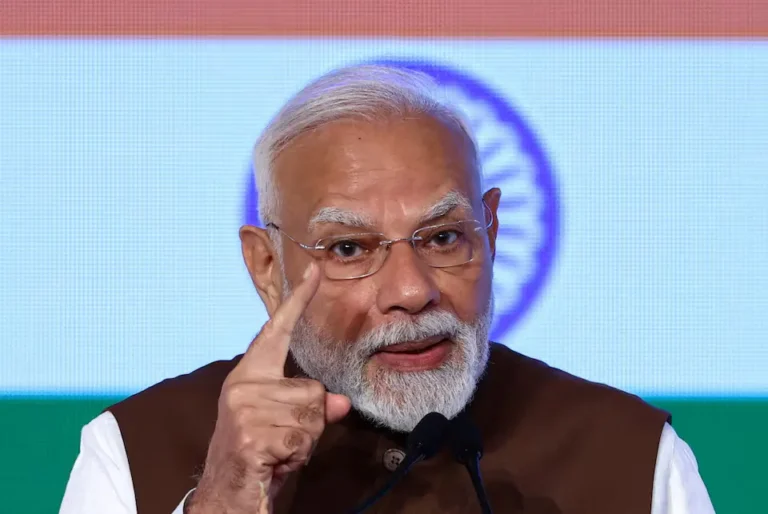
Quito, Ecuador – Ecuadorian President Daniel Noboa on Tuesday declared a 60-day state of emergency in seven provinces following widespread unrest triggered by a nationwide transport strike. The strike began on Monday after the government’s decision to eliminate long-standing diesel subsidies, sparking road blockades, protests, and confrontations with security forces.

The presidential decree cited “serious internal unrest” as the reason for the emergency order, noting that protests and road closures had “escalated and disrupted public order.” The provinces affected by the decree are those most impacted by the strike and ongoing demonstrations, though the government has not ruled out expanding the measures if protests spread.

RELATED NEWS : Claudia Sheinbaum Makes History as First Woman to Lead Mexico’s Independence Day

The decision to lift diesel subsidies was announced last Friday, part of Noboa’s broader economic reform program aimed at reducing fiscal deficits and meeting commitments with international lenders, including the International Monetary Fund (IMF). For decades, subsidized fuel has been a politically sensitive issue in Ecuador, with past attempts to roll back subsidies often leading to widespread protests and clashes.

In his decree, President Noboa stressed that the state of emergency “does not imply any restriction on the right to demonstrate, provided that it is peaceful and does not affect the rights, freedoms, and guarantees of other citizens.” However, the order grants the armed forces and national police authority to intervene to ensure public order, prevent violence, and protect both citizens and economic activities.

Security forces have been deployed to clear blocked highways, a tactic commonly used by striking transport unions to pressure the government. Noboa’s administration emphasized that the measure is aimed at safeguarding free movement of goods and people across the country, especially as food supply chains and essential services began to feel the strain of the strike.

The transport unions argue that the elimination of diesel subsidies will sharply raise operating costs for buses, trucks, and taxis, ultimately hitting consumers through higher prices. They are demanding that the government reconsider the decision, warning that the measure will disproportionately affect low- and middle-income Ecuadorians who rely heavily on road transport for daily life.

RELATED NEWS : 7 killed, 4 wounded in Ecuador pool hall shooting amid gang violence

This is not the first time Ecuador has faced major unrest over fuel prices. In 2019, then-President Lenín Moreno attempted to cut subsidies under IMF-backed reforms, triggering weeks of violent protests led by transport unions and Indigenous organizations. Moreno was eventually forced to reinstate subsidies after dialogue with protest leaders.

President Noboa, who took office in November 2023, has argued that continuing fuel subsidies is unsustainable and diverts billions of dollars annually that could otherwise be invested in social programs and infrastructure. His government maintains that targeted support measures will be put in place to cushion the impact on vulnerable groups.

The situation remains tense, with unions vowing to continue their strike until the government reverses its decision. Human rights organizations have urged authorities to ensure that security forces respect the right to peaceful protest and avoid excessive use of force.

As the emergency enters into effect, all eyes are on whether Noboa can withstand the mounting pressure or if he, like his predecessors, will be forced into concessions to restore calm.


SOURCE : XINHUA & DT | Follow Us: Facebook | Instagram | Twitter | Youtube |
Israel Launches Airstrikes on Yemen’s Hodeidah Port, Key Hub for Houthi Forces

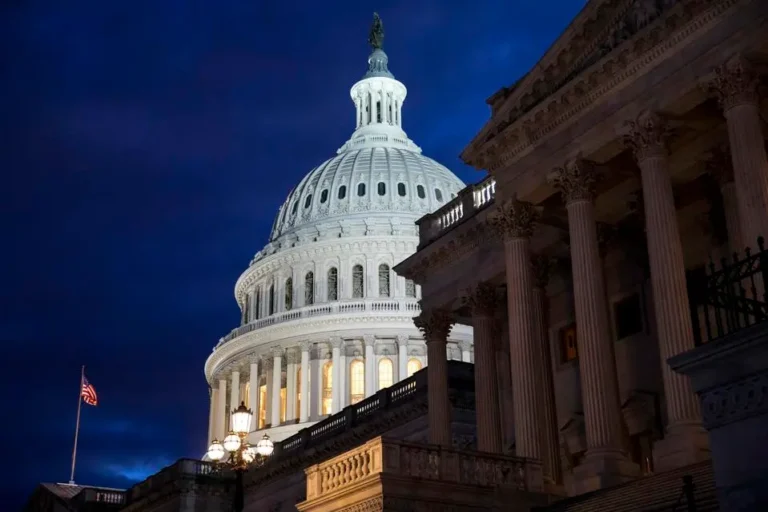
Jerusalem, Israel — Israeli forces have launched airstrikes on the Yemeni port city of Hodeidah and are continuing operations in Gaza City, Prime Minister Benjamin Netanyahu confirmed on Tuesday.

Netanyahu said Israeli pilots struck Hodeidah, describing it as the main supply port for the Houthi movement, which Israel designates as a terrorist organization. “At the same time, our forces are operating in Gaza City with the objective of defeating the enemy while also evacuating civilians,” he added.

RELATED NEWS : At least 35 people killed and 131 injured amid Israeli attacks on Yemen

Strikes in Yemen

The Israeli military later confirmed that it carried out airstrikes on the Houthi-controlled port of Hodeidah in western Yemen. According to the statement, the operation began after evacuation warnings were issued to the local population. Yemeni media outlets reported that Houthi air defenses were attempting to intercept Israeli aircraft during the strikes.

The escalation follows a series of missile and drone attacks launched by Houthi forces against Israel in recent weeks, which Jerusalem says prompted the retaliation.

European Union Response

Meanwhile, in Brussels, the European Commission is preparing to announce a new round of sanctions against Israel in response to the ongoing war in Gaza. Spokesperson Paula Pinho said the College of Commissioners will adopt measures aimed at suspending certain trade provisions in agreements between the EU and Israel.

The decision, expected to be unveiled after Wednesday’s meeting, marks a significant escalation in the European Union’s diplomatic and economic response to Israel’s military campaign. According to EU officials, the new package is intended to increase pressure on Prime Minister Netanyahu’s government over the conduct of the war.

Regional Tensions

The strikes in Yemen and the looming European sanctions add new layers to an already volatile conflict. The Houthi movement, which controls much of northern Yemen, has declared solidarity with Palestinian factions during the war in Gaza. Israeli officials have warned that cross-regional attacks could expand the conflict beyond Gaza’s borders.

So far, neither casualty figures from the Hodeidah strikes nor detailed information on damage to the port have been released.


SOURCE : PM ISRAEL X |  Follow Us: Facebook | Instagram | Twitter | Youtube 

Russia Reports 1,435 Ukrainian Casualties in a Single Day, Russian Defense Ministry

Moscow, Russia – Over the past day, the Ukrainian army has suffered 1,435 military personnel losses in the zone of the special military operation, the Russian Defense Ministry said in a bulletin.

The casualties of the Ukrainian army in the area of responsibility of the North group of forces reached 185 soldiers, the West exceeded 230 soldiers, the South amounted to 260, the Center reached 445, the East over 255, the Dnepr saw up to 60 soldiers.

RELATED NEWS : Ukrainian troops destroy Russian Orion drone valued in millions, Magyar shares footage

The North, West, and South Battlegroups

Units of the North group of forces repelled formations of two mechanized brigades, an assault regiment of the Ukrainian army, and a border detachment of the Ukrainian Border Service in the areas of the settlements of Pavlovka, Alekseyevka, Stepnoye, and Yunakovka in the Sumy Region. In the Kharkov direction, units of the mechanized and motorized infantry brigades of the Ukrainian army were defeated in the areas of the settlements of Ploskoye and Volchansk in the Kharkov Region. The Ukrainian army lost seven vehicles and three field artillery pieces, including a 155-mm M777 US-made howitzer. Two counter-battery radar stations and six material depots were destroyed.

The units of the Zapad group of forces have enhanced their tactical position. They defeated the manpower and equipment of three mechanized, two assault brigades of the Ukrainian army and a National Guard brigade in the areas of Kupyansk, Nechvolodovka, Boguslavka, Borovskaya Andreyevka, Gorokhovatka in the Kharkov Region, and Yampol in the Donetsk People’s Republic. The enemy’s losses amounted to 29 vehicles and two artillery pieces. Five electronic warfare stations and four ammunition depots were destroyed.

The units of the Southern group of forces have taken more favorable positions. The formations of five mechanized motorized infantry brigades of the Ukrainian army, the National Guard brigade, and the assault brigade of the National Police of Ukraine were defeated in the areas of the settlements of Seversk, Druzhkovka, Konstantinovka, and Minkovka of the Donetsk People’s Republic. The enemy lost five armored combat vehicles, 12 vehicles, and four field artillery pieces, including a 155-mm Paladin self-propelled artillery system manufactured by the United States. An electronic warfare station and three ammunition depots were destroyed.

Battlegroups Center, East, Dnepr

The Center group of forces has strengthened its position along the front line. It defeated the manpower and equipment of three mechanized, motorized infantry, jaeger, assault, three amphibious assault brigades, three assault regiments of the Ukrainian army, three marine brigades, two air defense brigades, and two National Guard brigades in the areas of the settlements of Artyomovka, Rodinskoye, Dimitrov, and Krasnoarmeisk of the Donetsk People’s Republic. The losses of the Ukrainian army amounted to an armored combat vehicle and four vehicles.

The units of the Vostok group of forces continued to advance into the depth of the enemy’s defenses. They defeated formations of three mechanized, assault brigades of the Ukrainian army and three air defense brigades in the areas of the settlements of Chervonoye, Dorozhnyanka, Novogrigorovka in the Zaporozhye Region, Velikomikhailovka, and Alekseyevka in the Dnepropetrovsk region. The Ukrainian army lost an armored combat vehicle and 15 vehicles.

Units of the Dnepr group of forces defeated the manpower and equipment of the mechanized, mountain assault brigades, and three coastal defense brigades of the Ukrainian army in the areas of the settlements of Magdalinovka, Stepnogorsk in the Zaporozhye Region, Burgunka, Antonovka, and Belozerka in the Kherson Region. The losses of the Ukrainian army amounted to eight vehicles and an artillery piece. Four electronic warfare stations, and four ammunition and materiel depots were destroyed.


SOURCE : TASS |  Follow Us: Facebook | Instagram | Twitter | Youtube |

Claudia Sheinbaum Makes History as First Woman to Lead Mexico’s Independence Day

0

Mexico City, Mexico — Claudia Sheinbaum is set to make history today as the first woman to lead Mexico’s traditional Independence Day “Grito de Dolores” from the presidential balcony, a ceremony that has been exclusively male for more than a century.

Sheinbaum, who won a landslide victory in 2024 to become Mexico’s first female president, will ring the historic bell and wave the national flag in Mexico City’s Zócalo, recreating the 1810 call to rebellion made by Father Miguel Hidalgo in Dolores, Guanajuato. The event marks a symbolic milestone for gender equality in the country’s highest offices.

RELATED NEWS : PNG Marks Independence, Set to Sign Pukpuk Treaty with Australia Today

“For the first time a woman will deliver the Grito. It’s quite novel,” Sheinbaum said last week when reflecting on the historic moment. Since assuming office on October 1, 2024, she has embraced the title “presidenta” and refers to herself as “comandanta” of the armed forces, often appearing in garments featuring colorful Indigenous embroidery — a style mirrored by military officials who address her accordingly.

Historians describe Sheinbaum’s role as both historic and symbolic. “It opens a space that was tacitly closed to women,” said Mexican historian Lorenzo Meyer, noting that her leadership reflects a broader acceptance that “gender doesn’t matter” in the country’s most important offices.

Ceremony and Traditions

Despite promising a simple ceremony, Sheinbaum — whose approval ratings consistently exceed 70% — has rehearsed the steps for the Grito, which she calls “emotional and fundamental.” She will receive the national flag from a military escort before calling out the traditional patriotic cheers, prompting the gathered crowd to respond with a resounding “¡Viva México!” The Zócalo, often wet from September rains, has historically seen thousands gather to participate in this ritual, which commemorates the start of Mexico’s independence movement.

Sheinbaum will also preside over the Independence Day military parade, which will pass through the capital’s historic center. The parade features a display of Mexico’s armed forces, highlighting both ceremonial tradition and the nation’s military capabilities.

Historical Significance of the Grito

The Grito tradition dates back to September 16, 1810, when Father Miguel Hidalgo rang a church bell in the town of Dolores and called for rebellion against Spanish colonial rule. He reportedly shouted, “Long live the Virgin of Guadalupe! Long live Ferdinand VII, and death to bad government!” This declaration sparked a war that eventually led to Mexico’s independence in 1821.

While widely accepted as the origin of the ritual, historians note that the celebration’s formalization has evolved over time. Lorenzo Meyer points out that Emperor Maximilian of Habsburg, who ruled Mexico from 1864 to 1867, promoted commemorations of the Grito, which were later institutionalized by President Porfirio Díaz in 1896. Since then, the bell has been rung by successive Mexican presidents from the national palace balcony, a practice Sheinbaum now continues as the country’s first female leader.

Symbolism and Gender Progress

For many Mexicans, Sheinbaum’s role represents a historic breaking of gender barriers. Traditionally, the ceremony has been a male-dominated political stage, with presidents and male officials symbolizing authority and national leadership. Her leadership is seen as a step toward gender equality in a country where women have long fought for representation at the highest political levels.

“She is redefining the image of leadership in Mexico,” Meyer said. “The fact that a woman now stands at the center of one of the nation’s most significant rituals sends a powerful message about gender and political inclusion.”

As the nation celebrates its 50th Independence Day under a female president for the first time, thousands are expected to witness the event live, waving flags, cheering “¡Viva México!” and marking a historic moment in Mexico’s ongoing journey toward gender parity in political life.


SOURCE : AGENCIES |  Follow Us: Facebook | Instagram | Twitter | Youtube |
China Says Philippine Vessels Illegally Entered Its Newly Established Nature Reserve

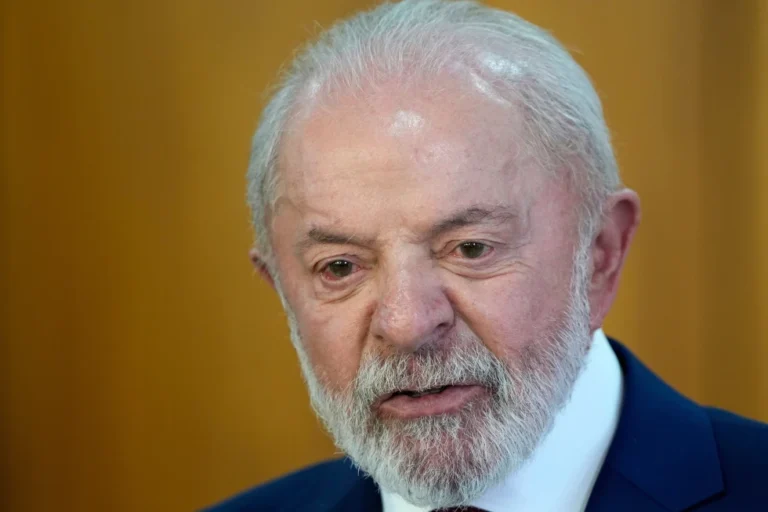
Beijing, China — A fresh confrontation between China and the Philippines erupted at Scarborough Shoal on Tuesday, after the Chinese coastguard fired water cannons at Philippine vessels and accused them of staging an “illegal intrusion” into disputed waters in the South China Sea. Manila has rejected the claims as “propaganda,” further intensifying tensions over one of Asia’s most contested maritime features.

Chinese Coastguard’s Account

According to Gan Yu, spokesperson for China’s coastguard, more than 10 Philippine vessels entered the waters around Scarborough Shoal from “different directions,” disregarding warnings from Chinese patrol ships. Gan alleged that one Philippine coastguard vessel deliberately rammed a Chinese vessel, damaging its deck railing.

RELATED NEWS : Australia and Papua New Guinea to sign defense pact as China’s influence grows

“The China coastguard lawfully implemented control measures against the Philippine ships,” Gan said in a statement, citing route restrictions, verbal warnings, and the spraying of water cannons. Beijing later released video footage showing a Philippine vessel’s bow making contact with a Chinese ship while being targeted by water jets.

Manila’s Response

The Philippines quickly dismissed China’s version of events. A spokesperson for the Philippine Maritime Council said the Chinese coastguard statement contained “no truth,” describing it as “another case of Chinese disinformation and propaganda.” Officials in Manila insisted that the Philippine ships were operating lawfully within the country’s exclusive economic zone (EEZ).

A Disputed Maritime Hotspot

Scarborough Shoal, known in China as Huangyan Island and in the Philippines as Panatag Shoal, is a 150-square-kilometre chain of reefs and rocks located about 200 kilometres off the Philippine coast. Under international law, the shoal lies within the Philippines’ EEZ, but China has asserted sweeping claims over the area, citing historical grounds.

The shoal is valued for its rich fishing grounds and a turquoise lagoon that provides natural shelter for vessels during storms. Since a 2012 standoff, China has maintained effective control over access to the atoll, blocking Philippine fishing boats and patrols despite a 2016 international tribunal ruling in The Hague that dismissed Beijing’s expansive claims in the South China Sea.

China’s New Nature Reserve

The latest clash comes just days after Beijing announced the creation of a 3,524-hectare national nature reserve covering the northeastern section of Scarborough Shoal, an area close to its only navigable entrance. China said the reserve would help preserve coral reef ecosystems, but Manila and several analysts view it as a strategic move to reinforce Beijing’s territorial grip.

Security expert Jennifer Parker said last week that the “nature reserve” designation was likely intended to push Filipino vessels further out of the shoal, giving China greater control under the guise of environmental protection.

Strategic and Diplomatic Implications

Scarborough Shoal has become a flashpoint in the wider rivalry between China, the Philippines, and their allies. The United States, which has a mutual defence treaty with Manila, has repeatedly warned Beijing that an armed attack on Philippine public vessels in the South China Sea would trigger its obligations under the treaty.

Despite simmering tensions, no incidents at the shoal have escalated into armed conflict. However, the latest clash highlights the risks of miscalculation as both sides harden their positions.

Beijing insists its actions are lawful and defensive, while Manila accuses China of repeated harassment and violation of international maritime law. The competing narratives reflect a broader struggle over sovereignty, maritime rights, and influence in one of the world’s most strategically significant waterways.


SOURCE : ABC NEWS |  Follow Us: Facebook | Instagram | Twitter | Youtube |
PNG Marks Independence, Set to Sign Pukpuk Treaty with Australia Today

0

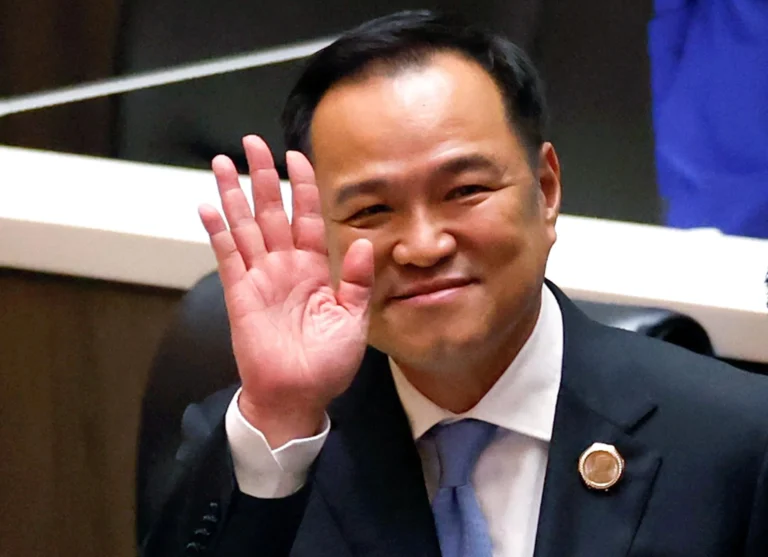
Port Moresby, Papua New Guinea — Australia and Papua New Guinea are set to enter a landmark defence treaty that will legally bind the two countries to defend each other in the event of a military attack, the ABC has revealed.

The agreement, expected to be signed this week, will also grant the Australian Defence Force unrestricted access to designated military facilities and areas across Papua New Guinea.

RELATED NEWS : Australia and Papua New Guinea to sign defense pact as China’s influence grows

The treaty coincides with PNG’s 50th anniversary of independence, marking a significant shift in its regional security posture. Multiple PNG ministers confirmed on Monday that cabinet had endorsed the pact, though Prime Minister James Marape said on Tuesday that the approval process was still ongoing.

Known as the Pukpuk Treaty—after the Tok Pisin word for crocodile—the pact is described in cabinet documents as a measure to ensure both militaries are “battle-ready” for any future threat. The submission states: “It has the ability to bite and like a crocodile, its bite force speaks of the interoperability and preparedness of the military for war.”

Mutual Defence and Military Integration

According to a copy of the agreement seen by the ABC, both countries acknowledge that an armed attack on one would endanger the security of the other, committing them to act against any “common danger.”

The treaty will also enable reciprocal recruitment of citizens into each other’s defence forces, annual joint military drills dubbed the Pukpuk Exercises, and collaboration in areas such as cyberspace and electromagnetic warfare.

Prime Minister Marape stressed the need to strengthen PNG’s military capacity. “If someone chose to invade our country right now, I don’t have the capacity to defend you,” he told journalists. “I have a moral obligation to build my military to a level that I can have the capacity to defend Papua New Guinea, every child.”

Anthony Albanese arrived in Port Moresby on Monday, 16 Sep, 2025. Photo : AAP/MiCK Tsikas

Strategic Context

The agreement comes amid intensifying geopolitical competition in the Pacific, with Australia and the United States seeking to counter growing Chinese influence in the region.

Australian Prime Minister Anthony Albanese, joined by Deputy Prime Minister Richard Marles and Pacific Minister Pat Conroy, arrived in Port Moresby on Monday ahead of independence celebrations. Albanese described the treaty as “a very significant upgrade” of the defence relationship.

“It provides for mutual defence, which means we will provide support for each other,” he said. “It provides for integration of our interoperability, our assets, and our respective defence forces.”

Concerns Over Sovereignty

Despite government backing, the treaty has sparked debate within PNG’s security community. Former PNG Defence Force commanders have voiced concern that deeper integration with Australia could compromise national sovereignty and contradict PNG’s long-standing foreign policy of non-alignment—“friends to all and enemies to none.”

Retired Commodore Peter Ilau, Defence Force commander from 2001 to 2010, warned: “The most important question here is, who takes ownership of the Papua New Guinea Defence Force? Loyalty number one must be to Papua New Guinea.”

Former commander Jerry Singirok said PNG should avoid being drawn into strategic rivalries. “I think we’ve been blinded by the fact that Australia is seeing China as a threat,” he argued.

China’s environment minister Huang Runqiu, visiting Port Moresby on Tuesday, declined to comment directly on the proposed treaty, saying it was unrelated to his delegation’s talks.


SOURCE : ABC NEWS |  Follow Us: Facebook | Instagram | Twitter | Youtube |
UK summons Russian ambassador over NATO airspace violations

0

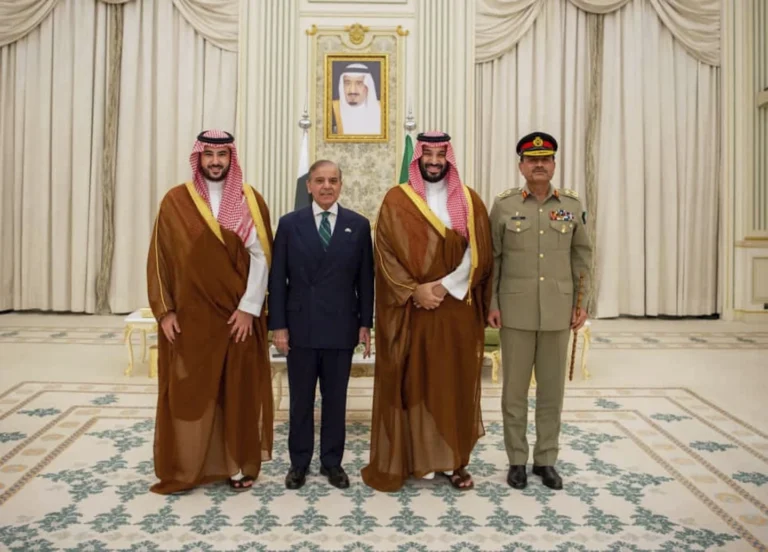
London, UK – Britain has summoned the Russian ambassador following Russia’s violation of NATO airspace last week, the British Foreign Office said on Monday.

Poland shot down Russian drones last Wednesday in the first known action of its kind by a member of the Western military alliance during Russia’s war in Ukraine. Days later, Romania scrambled jets when a Russian drone breached its airspace.

RELATED NEWS : US, Britain to announce more than $10 billion in deals during Trump visit, US officials say

The incursions into NATO airspace were “utterly unacceptable”, a Foreign Office spokesperson said in a statement, adding that the UK stands united with its NATO allies in condemning the “reckless actions”.

“Russia should understand that its continued aggression only strengthens the unity between NATO allies and our determination to stand with Ukraine, and any further incursions will again be met with force,” the spokesperson added.

Russia’s embassy in London said on Tuesday that Ambassador Andrei Kelin had received a “formal protest”.

“The British side was reminded that there had been no plans to target any facilities on Polish territory during the recent air strikes against the installations of Ukraine’s military-industrial complex,” the embassy said in a statement on its Telegram channel.

“We reiterate that Russia has no interest in heightening tensions with Poland or NATO.”


SOURCE : REUTERS |  Follow Us: Facebook | Instagram | Twitter | Youtube