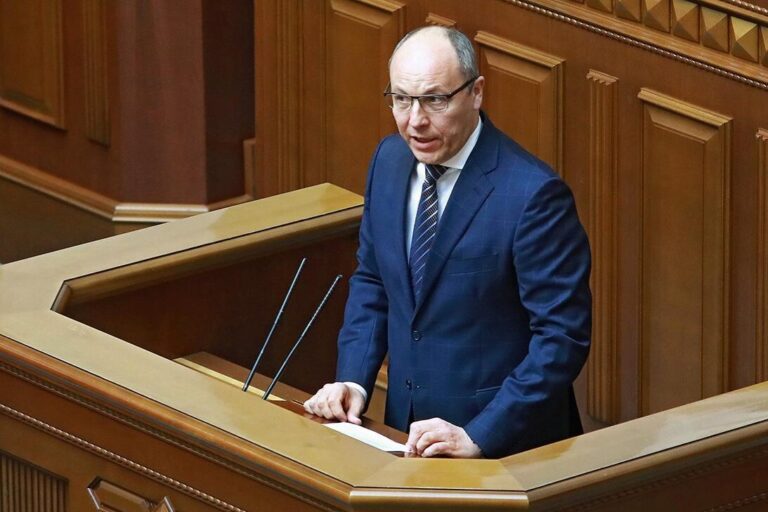
Lviv, Ukraine — Former Ukrainian parliamentary speaker Andriy Parubiy was shot dead in the western city of Lviv, President Volodymyr Zelenskiy confirmed on Saturday.
“Ukraine’s Minister of Internal Affairs Ihor Klymenko and Prosecutor General Ruslan Kravchenko have just reported the first known circumstances of the horrendous murder in Lviv. Andriy Parubiy was killed. My condolences to his family and loved ones. All necessary forces and means are engaged in the investigation and search for the killer,” Zelenskiy wrote on X.
Parubiy, 54, served as Chairman of the Verkhovna Rada, Ukraine’s parliament, from 2016 to 2019. Earlier, he was appointed as Secretary of the National Security and Defence Council of Ukraine in 2014 following the Euromaidan protests and the revolution that year, a post he held until his resignation in August 2014.
According to Ukraine’s public broadcaster Suspilne, Parubiy was assassinated on August 30 by a gunman disguised as a delivery courier on an e-bike.
Authorities have launched a large-scale investigation, with security forces mobilized to track down the perpetrator.
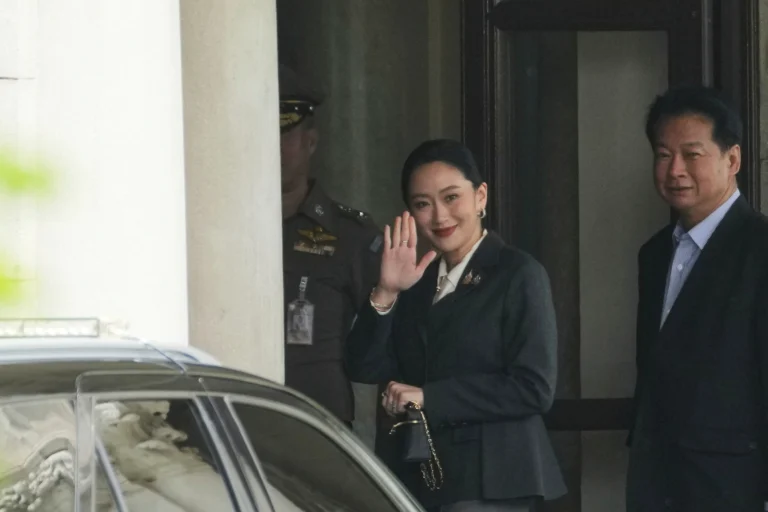
Bangkok, Thailand — Thailand’s Constitutional Court on Friday dismissed Prime Minister Paetongtarn Shinawatra, ruling that she violated ethics rules in a phone call with a high-ranking Cambodian official.
The decision ends the term of the nation’s youngest prime minister and delivers the latest blow to the powerful Shinawatra political dynasty that has dominated Thai politics for more than two decades.
The call, which became public just weeks before a deadly border conflict erupted between the two countries, sparked outrage in Thailand. Audio of the conversation revealed Paetongtarn addressing Hun Sen as “uncle” and appearing to criticize a Thai army general as an “opponent” while discussing the tense border situation.
Complaint alleged alignment with Cambodia
The complaint against Paetongtarn lodged by a group of senators alleged that “due to a personal relationship that appeared aligned with Cambodia, (she) was consistently willing to comply with or act in accordance with the wishes of the Cambodian side.”
It further charged that her reference to the Thai general “lacked demonstrable honesty and integrity, and seriously violated or failed to comply with ethical standards.”
However, the court said in its ruling that Paetongtarn intended to uphold Thailand’s national interests and tried to prevent serious conflicts that could affect its sovereignty and border security. It concluded that her actions did not clearly appear to be dishonest. The majority opinion nevertheless found that her conversation constituted a breach of ethical standards.
Paetongtarn, 39, has defended herself by arguing that her familiar tone during the call was a negotiating tactic aimed at de-escalating tensions. She apologized, but insisted that it did not damage national security.
After the court’s ruling Friday, she said she would accept it but insisted that she was innocent and had acted with the sole purpose of saving lives.
A leaked phone call
Audio of the call was leaked online by Hun Sen, who was Cambodia’s prime minister for 38 years until his son Hun Manet took over the job in 2023. The phone call came as long-standing border tensions escalated after a Cambodian soldier was killed in a brief fracas with Thai troops in disputed territory in May.
In late June, the two countries engaged in five days of combat that killed dozens of people and displaced more than 260,000.
The friendly tone of Paetongtarn’s call raised hackles among many Thais because of her family’s history.
Her father, Thaksin Shinawatra, a business owner who earned a vast fortune in the telecommunications sector and who was prime minister from 2001-2006, has in the past faced allegations of putting his personal interests over those of the nation, and had a seemingly warm friendship with Hun Sen.
Friday’s ruling is also a blow to Thaksin, who was ousted from power by a military coup but has managed to remain a dominant force in Thai politics
Thai politics is again in disarray
The court’s ruling puts the ruling coalition led by Paetongtarn’s Pheu Thai party on shaky ground. Controversy over the phone call already caused the Bhumjaithai Party, the biggest partner of Pheu Thai, to drop out, leaving the coalition with a slim majority of seats in the House of Representatives.
Paetongtarn was already suspended from her duties on July 1 when the court agreed to hear the case against her, and Deputy Prime Minister Phumtham Wechayachai took over her responsibilities.
The Cabinet led by Phumtham will stay in place on a caretaker basis until Parliament approves a new prime minister, though a vote has not yet been scheduled. The caretaker Cabinet could also dissolve Parliament and call a new election.
Taipei, Taiwan — Beijing will roll out the red carpet for more than two dozen world leaders at two major, defense-related events in the coming week. The guest lists, including notable omissions, are a window into China’s ambitions, alliances and continued attempts to expand its influence.
The two events are the annual summit of the Shanghai Cooperation Organization (SCO), a group established by China and Russia in 2001 with a focus on security in Central Asia and the wider region, and a massive military parade commemorating the 80th anniversary of the end of World War II, where China emerged victorious over its neighbor Japan.
High-profile guests of Chinese President Xi Jinping will include the Russian and North Korean leaders, as well as heads of state and government from most Southeast Asian and Central Asian nations.
But the guest lists for the SCO forum and the military parade don’t fully overlap, reflecting Beijing’s interests, loyalties and limitations among its neighbors and beyond.
Russia, India and Central Asia will be present at the SCO summit
World leaders will start pouring in for the SCO summit, to be held Sunday and Monday in the port city of Tianjin, just southeast of Beijing. Then on Wednesday, there will be a massive military parade in Beijing marking the 80th anniversary of Japan’s surrender at the end of World War II.
The parade is set to showcase some of China’s most advanced homegrown weapons, including more than 100 aircraft, and numerous tanks and missiles.
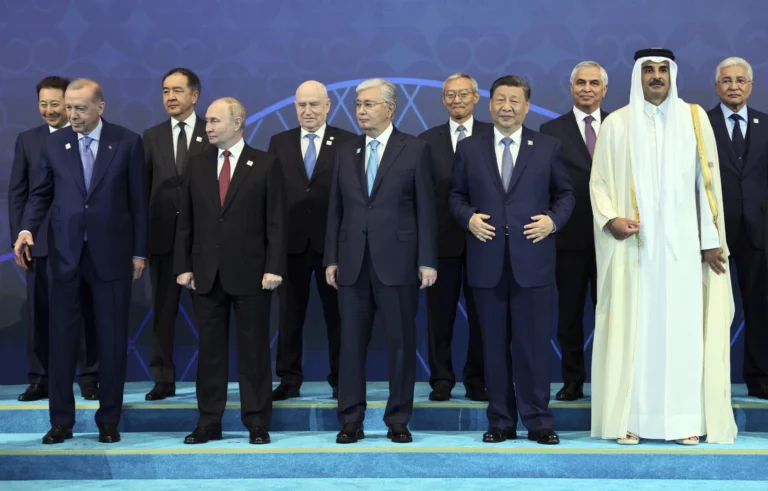
The guest list for the SCO summit includes leaders of the organization’s 10 member states, along with representatives from almost two dozen other countries, some of which may join the group at a later date.
Russian President Vladimir Putin, right, and Chinese President Xi Jinping, left, talk as they watch the Victory Day military parade in Moscow, Russia, on May 9, 2025, during celebrations of the 80th anniversary of the Soviet Union’s victory over Nazi Germany during the World War II. File Photo : Sergei Bobylev/Photo host agency RIA Novosti via AP
SCO was established by China, Russia, Kazakhstan, Kyrgyzstan and Tajikistan and later expanded to include members such as India, Iran, Pakistan and Belarus. Afghanistan and Mongolia are observer states, and 14 other countries, mostly from Southeast Asia and the Middle East, serve as “dialogue partners.” The country hosting the annual summit rotates every year.
Russian President Vladimir Putin, Iranian President Masoud Pezeshkian, and Indian Prime Minister Narendra Modi top the list of dignitaries attending the summit. Also attending are Turkish President Recep Tayyip Erdogan and Egyptian Prime Minister Mustafa Madbouly, whose countries are “dialogue partners” within SCO.
Some countries that are not SCO members will also be represented, mostly from Southeast Asia. These include Indonesia, Laos, Malaysia and Vietnam, reflecting China’s desire to shore up its ties within the region.
Not everyone will stay for the military parade
Most of the high-level guests at the SCO forum and the military parade will overlap, but there will be some notable departures — and additions.
The leaders of India, Egypt and Turkey will leave Beijing before the military show. Egypt will be represented by a lower-level official. Like most Western countries and their allies, India and Turkey generally refrain from posing alongside China’s top leaders at military parades, which take place every few years.
Instead, joining Xi and Putin to observe Chinese troops marching in lockstep on Chang’an Avenue will be North Korean leader Kim Jong Un, who will not have attended the earlier SCO summit. This will be Kim’s first meeting with Xi in more than six years, and his first occasion to come together with a group of world leaders since the reclusive North Korean leader took office, in late 2011.
Xi, Putin and Kim potentially seated together in Tiananmen Square will make for a defiant show of unity at a time when the West is increasingly frustrated over Russia’s war in Ukraine. Beijing, though on paper neutral in the conflict, has not condemned Moscow’s invasion of Ukraine and is accused of selling weapon components to Russia. Meanwhile, North Korea has sent troops to aid the Russians in the war.
Additionally, Myanmar’s junta chief Min Aung Hlaing, who is the country’s acting president in the wake of a military coup in 2021, will also attend the military parade.
Cuban President Miguel Díaz-Canel, as well as the leaders of the Democratic Republic of Congo and Zimbabwe, will also be there.
The only European heads of state attending the parade but not the SCO summit will be the Russia-friendly Serbian President Aleksandar Vucic and Slovakian Prime Minister Robert Fico.
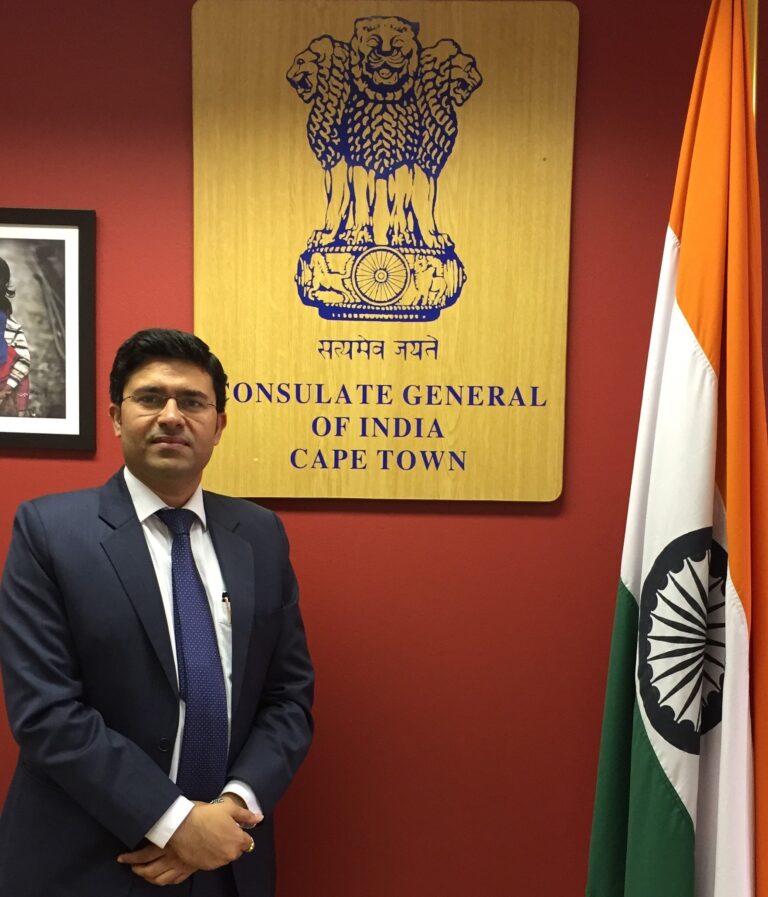
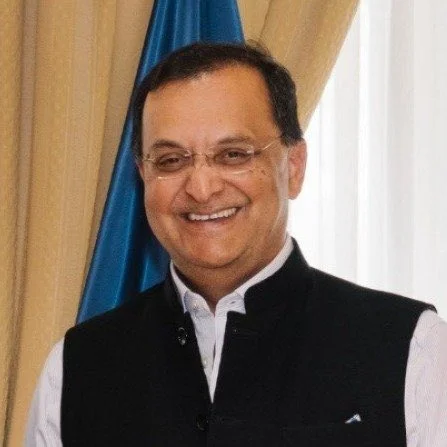
New Delhi, India – The Ministry of External Affairs (MEA) has appointed Abhishek Shukla, a 2006-batch officer of the Indian Foreign Service (IFS) and currently serving as Deputy Chief of Mission at the Indian Embassy in Beijing, as the next Ambassador of India to the Republic of Serbia. The accomplished diplomat is expected to assume his new responsibilities shortly.
Mr. Shukla’s diplomatic journey spans over a decade, with assignments in China, the United Kingdom, South Africa, and at India’s MEA headquarters. His career reflects a strong blend of economic diplomacy, political engagement, protocol management, and multilateral coordination.
China (2008–2013): Mr. Shukla began his international career in Beijing, studying Mandarin at the China Foreign Affairs University. He served as Third, Second, and First Secretary, focusing on trade and economic relations, facilitating Indian businesses in China, and promoting Chinese investments in India’s priority sectors, including infrastructure, IT, and manufacturing.
United Kingdom (2013–2015): In London, he served as First Secretary (Political) at the High Commission of India, overseeing parliamentary engagement and political liaison work, while also acting as Staff Officer to the High Commissioner and managing high-level diplomatic initiatives.
Protocol Division, MEA (2015–2017): On returning to New Delhi, Mr. Shukla was appointed Deputy Chief of Protocol (Ceremonials), coordinating high-profile foreign visits and Prime Minister Narendra Modi’s official trips to the United States, Germany, Japan, and China. He played a key role in hosting the 2016 BRICS Summit in Goa, which, for the first time, brought BIMSTEC leaders alongside BRICS member states, showcasing India’s growing multilateral influence.
Consul General, Cape Town, Serving as Consul General of India in Cape Town, South Africa, Mr. Shukla strengthened India’s outreach in southern Africa through cultural, commercial, and diaspora engagement.
Deputy Chief of Mission, Beijing (2023–Present): Returning to China in July 2023, he assumed charge as Deputy Chief of Mission at the Indian Embassy in Beijing, a key position amidst evolving Indo-China dynamics.
Personal Background
Hailing from Uttar Pradesh, Mr. Shukla is married to Saloni Shukla, a former banker who transitioned into education. The couple has a son.
As India’s new Ambassador to Serbia, Mr. Shukla will represent New Delhi’s interests in a strategically positioned European nation with deep historical ties through the Non-Aligned Movement (NAM). His appointment is expected to enhance bilateral cooperation in diplomacy, trade, investment, education, and cultural exchange.
With wide-ranging experience across four continents and a proven track record in bilateral and multilateral diplomacy, Mr. Shukla is well-positioned to further consolidate India–Serbia relations in the coming years.
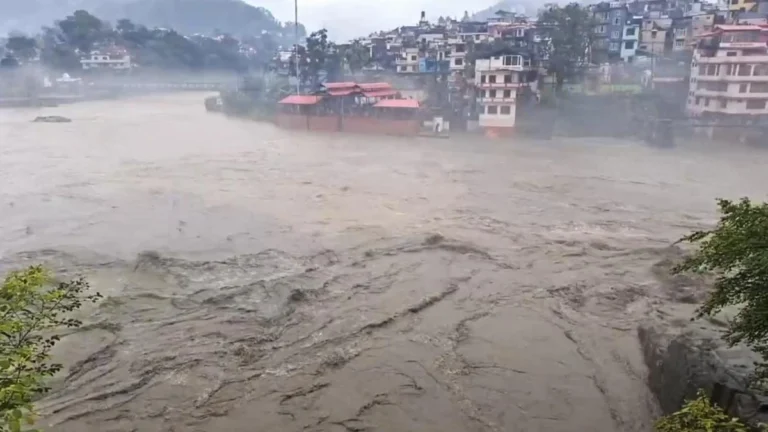
Mandi, Himachal Pradesh — The fury of the monsoon continues to batter Himachal Pradesh, where the season’s toll has climbed to 310 deaths, accompanied by severe damage to homes, infrastructure and livelihoods. The State Disaster Management Authority (SDMA) has described the situation as one of the most challenging in recent years, with rescue and restoration operations hampered by relentless rains and recurring landslides.
Human Toll and Regional Impact
Since June 20, the state has reported 158 deaths in rain-related incidents including landslides, flash floods, cloudbursts, drowning, lightning strikes and electrocution. Another 152 people have died in road accidents, as treacherous stretches, poor visibility, and debris from landslides turned travel into a deadly risk.
The highest fatalities have been reported from Kangra (30 deaths), Mandi (29), Chamba (14), Kinnaur (14) and Kullu (13) — districts that have also witnessed extensive damage to infrastructure and agriculture.
Property and Livelihood Losses
Private property losses are mounting. According to SDMA figures, 324 houses have been completely destroyed and 396 partially damaged, while thousands of shops, cowsheds and small structures have been flattened. The livestock sector too has been badly hit, with 1,846 head of cattle and over 25,755 poultry birds lost to the disaster, deepening the economic crisis for rural households.
Roads, Power and Water Supply Hit
Restoration of connectivity has emerged as the state’s biggest challenge. Currently, over 670 roads, including three national highways, remain blocked. In Mandi district alone, 342 roads — including NH-03 — are shut, while Kullu faces 131 blockages with NH-305 out of service. In Kinnaur, NH-05 is blocked at Nigulsari Tranda, a known landslide-prone stretch.
The State Emergency Operation Centre reported that 1,413 electricity transformers are down and 420 water supply schemes disrupted, leaving many areas without reliable power and drinking water.
Relief and Ongoing Challenges
Authorities say restoration work is ongoing on a war footing, with engineers and disaster-response teams working round the clock. However, the combination of fresh landslides, flash floods and continuous rainfall is slowing down progress. The state government has appealed for central assistance to cope with the mounting losses, while local administrations have been tasked with ensuring immediate relief for displaced families.
The SDMA has urged residents in vulnerable zones to remain on high alert, avoid unnecessary travel, and adhere to safety advisories, warning that unstable slopes and saturated soil conditions make further incidents likely.
Looking Ahead
With the monsoon season far from over, officials and experts fear that the toll could rise further if the rains persist with the same intensity. The unfolding crisis has once again drawn attention to the state’s fragile mountain ecology and inadequate disaster preparedness, raising urgent questions about infrastructure planning and long-term resilience in Himachal Pradesh.
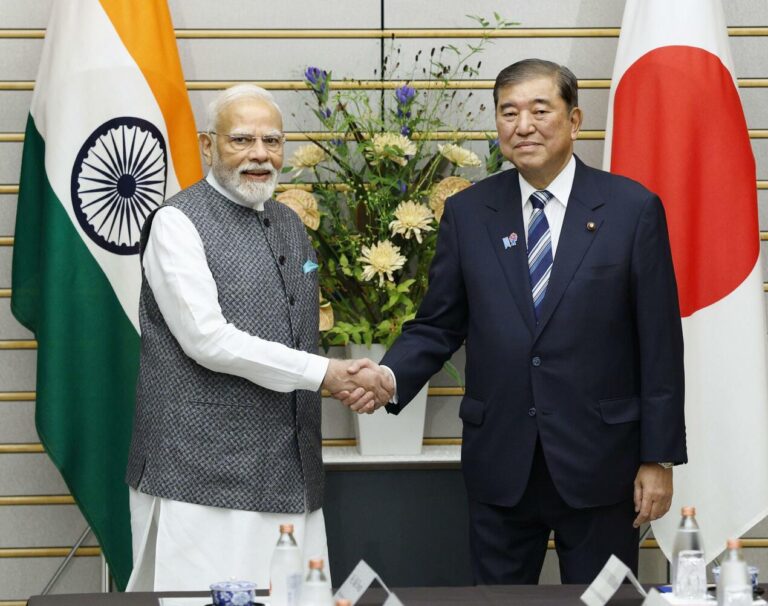
Tokyo, Japan – Japanese Prime Minister Shigeru Ishiba and Indian Prime Minister Narendra Modi agreed on Friday to further bolster economic and security cooperation over the next decade, as Tokyo places greater emphasis on India’s growing global role amid challenges.
After talks in Tokyo, Ishiba and Modi unveiled a “joint vision” outlining their collaboration, with goals of boosting Japanese investment in India to 10 trillion yen ($68 billion) and raising mutual personnel exchanges to 500,000 within five years.
The two countries also expressed “serious concern” over the East and South China seas, according to a separate joint statement, apparently alluding to intensifying Chinese military activity in the waters.
“Japan and India are both responsible for maintaining and strengthening a free and open international order based on the rule of law,” Ishiba said at a joint press conference following the talks.
The two issued a joint declaration on security cooperation, which was revised “to reflect the new stage of their partnership,” vowing to expand drills between the Japan Self-Defense Forces and the Indian Armed Forces. The document was the first update since its adoption in 2008.
Japanese Prime Minister Shigeru Ishiba (R) and Indian Prime Minister Narendra Modi attend a joint press conference in Tokyo on Aug. 29, 2025. Photo : Kyodo
Japan also has deep security ties with India, with both being members of the Quad alongside the United States and Australia.
Modi invited Ishiba to visit India for a Quad summit slated for later this year, and Ishiba accepted “with pleasure,” according to the statement.
The partnership between India and Japan “is rooted in mutual trust, reflects our national priorities and is shaped by our shared values and beliefs,” Modi said.
As for India’s high-speed railway project to link the western cities of Mumbai and Ahmedabad, the two leaders agreed to work together on the introduction of the “latest Japanese shinkansen” bullet train technology toward the “earliest” start of operations.
“We believe Japanese technology and Indian talent are a winning combination,” Modi said.
They also announced new bilateral initiatives to promote artificial intelligence, support startups and address economic security challenges such as securing stable supplies of crucial minerals and semiconductors.
Ahead of the summit, Ishiba and Modi attended an economic forum in Tokyo to discuss investment issues and potential areas of collaboration in cutting-edge technology, among other topics.
“Amid an increasingly uncertain international economy, it is essential to build resilient supply chains and ensure economic security together with a credible partner,” Ishiba said, with Modi stressing what he called India’s political and economic stability.
Japan places great value on its relationship with India, which has the world’s largest population, exceeding 1.4 billion, and a fast-growing economy that is on track to become the world’s third-largest in the near future, behind the United States and China.
The relationship between India and the United States has become tense recently, with President Donald Trump imposing a 50 percent tariff on Indian imports on Wednesday.
Trump cited New Delhi’s ongoing oil purchases from Russia, with which it traditionally maintains friendly ties, as his reasoning for the tariff amid Moscow’s ongoing invasion of Ukraine.
On Saturday, Ishiba and Modi will travel to the northeastern Japan prefecture of Miyagi by shinkansen bullet train, where they will visit a production base of major semiconductor manufacturer Tokyo Electron Ltd., the Japanese government said.
Modi last visited Japan in May 2023 when he was invited as a guest to a Group of Seven summit held in Hiroshima.
Tianjin, China — The upcoming Shanghai Cooperation Organization (SCO) Summit 2025 in Tianjin is shaping up to be a pivotal moment in global geopolitics, as India, Russia, and China signal their intent to deepen cooperation against the backdrop of heightened U.S. trade pressures.
U.S. President Donald Trump’s escalating tariff war has rattled global markets and placed immense strain on traditional alliances. For India, Washington’s aggressive trade posture has created fresh diplomatic challenges, nudging New Delhi closer to Moscow and Beijing within the SCO framework.
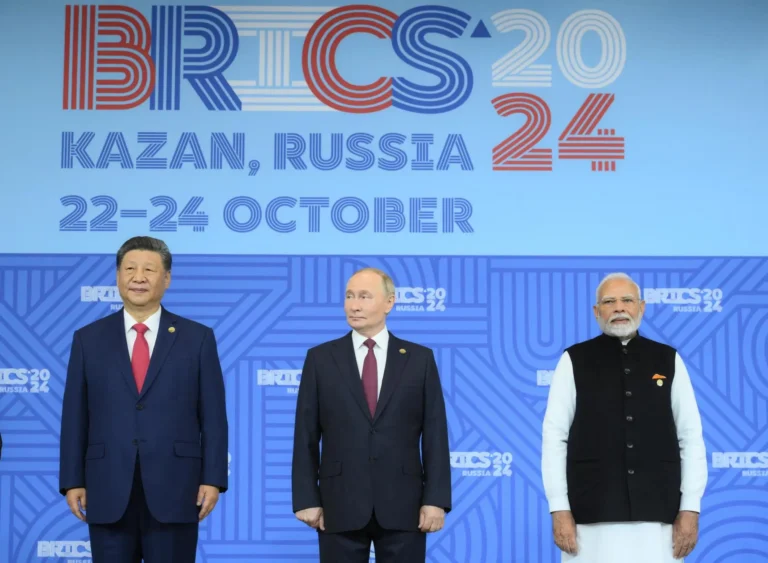
Indian Prime Minister Narendra Modi is expected to hold talks with Chinese President Xi Jinping on Sunday, as ties between the Asian rivals begin to thaw against the backdrop of Trump’s imposition of punitive tariffs on New Delhi. Modi is on his first visit to China in seven years to participate in the SCO summit, which brings together key regional players including Russia and Iran.
A successful trilateral understanding at the summit would mark a significant strategic realignment, projecting an emerging bloc with the potential to counterbalance U.S. influence in Asia and beyond.
However, the path forward remains complicated. Longstanding border disputes and geopolitical mistrust between India and China continue to cast a shadow over prospects for a full-fledged breakthrough. Analysts note that while shared concerns over U.S. trade policy may unite the three powers tactically, building durable trust will require overcoming deep-seated tensions.
The Tianjin summit, therefore, is expected to serve not only as a test of India’s recalibrated foreign policy, but also as a litmus case for whether the SCO can evolve into a more assertive geopolitical platform in a rapidly shifting world order.
About Shanghai Cooperation Organization
Established in Shanghai in 2001 with six founding members — Russia, China, Kazakhstan, Kyrgyzstan, Tajikistan, and Uzbekistan — the Shanghai Cooperation Organization (SCO) has expanded significantly over the past decade. India and Pakistan joined in 2017, followed by Iran in 2023 and Belarus in 2024, bringing the total membership to ten.
In addition, the SCO counts Afghanistan and Mongolia as observers and maintains ties with 14 dialogue partners, among them Turkey, Egypt, Armenia, Azerbaijan, several Gulf nations, and other Asian states. With the combined population of its core members, the SCO stands today as the world’s largest regional organization by population.
New Delhi, India – India on Thursday appointed Shri Dinesh K. Patnaik as the next High Commissioner of India to Canada, nearly nine months after New Delhi recalled its High Commissioner Sanjay Kumar Verma and other senior diplomats from Ottawa amid a diplomatic row.
The Ministry of External Affairs (MEA) confirmed the appointment in a statement: “Shri Dinesh K. Patnaik (IFS:1990), presently Ambassador to the Kingdom of Spain, has been appointed as the next High Commissioner of India to Canada. He is expected to take up the assignment shortly.”
Background: Diplomatic Strain
In October 2024, India recalled High Commissioner Sanjay Kumar Verma following tensions triggered by Canadian Prime Minister Justin Trudeau’s statement in Parliament alleging “credible allegations” of India’s involvement in the killing of Khalistani extremist Hardeep Singh Nijjar. The accusations led to a major diplomatic row, with Canada labeling India’s High Commissioner and other diplomats as “persons of interest” in its investigation.
India strongly rejected the allegations as “absurd” and “motivated,” accusing Ottawa of providing space to extremist and anti-India groups. The MEA conveyed that it had “no faith in the Canadian Government’s commitment” to ensure the security of Indian diplomats and reserved the right to take further steps in response. The diplomatic strain was further compounded by Khalistani extremists in Canada openly targeting Hindus and their places of worship, prompting strong remarks from Prime Minister Narendra Modi about the Trudeau government’s leniency toward such groups.
Signs of Recovery
Relations began to show signs of improvement after Mark Carney assumed office as Canadian Prime Minister. In June 2025, Carney invited PM Modi to the G7 Outreach Summit in Kananaskis, where both leaders held a pivotal bilateral meeting. The June 18 meeting was described as “very positive and constructive” by Foreign Secretary Vikram Misri.
Both leaders agreed to restore High Commissioners at the earliest opportunity as a first step toward normalizing ties. “They agreed to take calibrated steps to restore stability to this very important relationship, and the first of these steps was to restore High Commissioners to each other’s capitals. Other diplomatic steps will follow in due course,” Misri said.
About Shri Dinesh K. Patnaik
A senior diplomat with decades of experience, Shri Patnaik has served in key Indian missions abroad and held important assignments in the MEA, including roles in cultural diplomacy, economic cooperation, and strategic affairs. His appointment comes at a crucial time for India–Canada relations and is expected to focus on strengthening political, economic, and diaspora engagements.
India and Canada share strong ties rooted in people-to-people connections, trade, education, and technology partnerships. Over 1.6 million persons of Indian origin and a large student community in Canada make the bilateral relationship strategically and culturally significant.
Shri Patnaik is expected to take charge of his new assignment shortly.
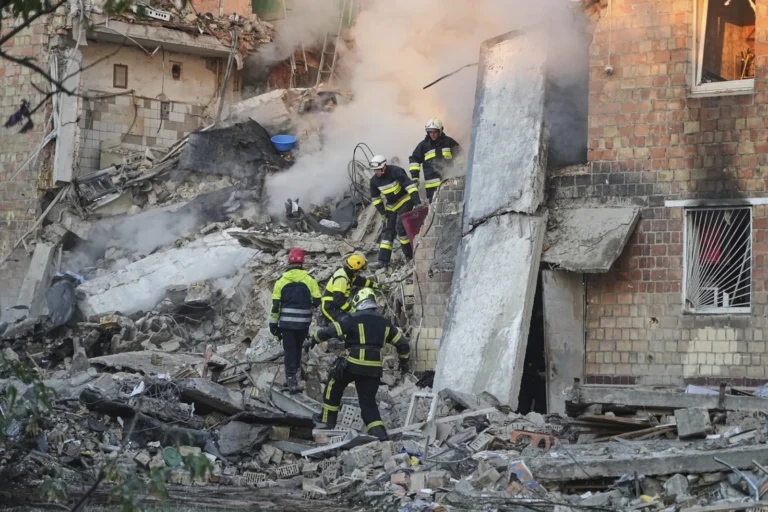
Kyiv, Ukraine — Russia launched a major air attack early Thursday on Kyiv that included a rare strike on the city center, killing at least 21 people, wounding 48 and damaging European Union diplomatic offices, authorities said.
The bombardment of drones and missiles was the first major Russian attack on Kyiv in weeks as U.S.-led peace efforts to end the three-year war struggled to gain traction. Britain said the attack sabotaged peace efforts, while top EU diplomat Kaja Kallas summoned Russia’s EU envoy to Brussels over the strikes that damaged EU offices.
Ukraine on Thursday requested an emergency meeting of the U.N. Security Council to discuss the overnight bombardment, while two of Ukraine’s top envoys were set to meet Friday with the Trump administration regarding mediation.
The Kremlin said Russia remained interested in continuing peace talks despite Thursday’s air attack, which was one of the war’s biggest since it began in 2022.
Among the dead were four children between 2 and 17, said Tymur Tkachenko, the head of Kyiv’s city administration. He said more people could still be under the rubble, and search and rescue efforts continued on Thursday evening.
The attack was one of the few times Russian drones and missiles have penetrated the heart of Kyiv since the start of the full-scale invasion.
Firefighters work on the site of a burning building after a Russian attack in Kyiv, Ukraine, early Thursday, Aug. 28, 2025. Photo : APEfrem Lukatsky
Ukraine’s Air Force said Russia launched 598 strike drones and decoys and 31 missiles of different types across the country early Thursday, most of them striking targets in Kyiv.
At least 33 locations across all 10 of the city’s districts were directly hit or damaged by debris, Tkachenko said. Thousands of windows shattered as nearly 100 buildings were damaged, including a shopping mall in the city center.
Oleksandr Khilko arrived at the scene after a missile hit the residential building where his sister lives in the capital’s Darnytsia district. He heard screams from people who were trapped under the rubble and pulled out three survivors, including a boy.
“It’s inhuman, striking civilians,” Khilko said, his clothes covered in dust and the tips of his fingers black with soot. “With every cell of my body I want this war to end as soon as possible. I wait, but every time the air raid alarm sounds, I am afraid.”
Sophia Akylina said her home in Kyiv’s Holosiivskyi district was damaged.
“It’s never happened before that they attacked so close,” the 21-year old said. “Negotiations haven’t yielded anything yet, unfortunately people are suffering.”
EU and UK summon Russian envoys after strikes hit their buildings
European Commission President Ursula Von der Leyen said two strikes landed 20 seconds apart about 50 meters (165 feet) from the EU Mission to Ukraine building in Kyiv. She said no staff were injured in the strike.
“No diplomatic mission should ever be a target. In response, we are summoning the Russian envoy in Brussels,” Kaja Kallas, the European Union’s top diplomat, said Thursday in a post on X.
In this photo provided by the Ukrainian Presidential Press Office, Ukrainian President Volodymyr Zelenskyy, left, shakes hands with Keith Kellogg, Trump’s special envoy to Ukraine in Kyiv, Ukraine, Monday, Aug. 25, 2025. Photo : Ukrainian Presidential Press Office via AP
The British Council, which promotes cultural relations and educational opportunities, also said its Kyiv office had been “severely damaged” in the attack and was closed to visitors until further notice.
The organization posted a photo showing the building with its windows and entrance smashed open and surrounded by glass and debris. A guard was injured and is “shaken but stable,” council chief executive Scott McDonald posted on X.
British Prime Minister Keir Starmer said Russian President Vladimir Putin was “sabotaging” hopes of peace following the “senseless” strikes. The Russian ambassador to London was summoned to the foreign office.
Diplomatic efforts to reach peace have stalled
Thursday’s attack is the first major combined Russian mass drone and missile attack to strike Kyiv since U.S. President Donald Trump met with Putin in Alaska earlier this month to discuss ending the war in Ukraine.
“Russia chooses ballistics instead of the negotiating table,” Ukrainian President Volodymyr Zelenskyy said in a post on X following the attack. “We expect a response from everyone in the world who has called for peace but now more often stays silent rather than taking principled positions.”
While a diplomatic push to end the war appeared to gain momentum shortly after that meeting, few details have emerged about the next steps.
Western leaders have accused Putin of dragging his feet in peace efforts and avoiding serious negotiations while Russian troops move deeper into Ukraine. This week, Ukrainian military leaders conceded Russian forces have broken into an eighth region of Ukraine seeking to capture more ground.
Zelenskyy hopes for harsher U.S. sanctions to cripple the Russian economy if Putin does not demonstrate seriousness about ending the war. He reiterated those demands following Thursday’s attack.
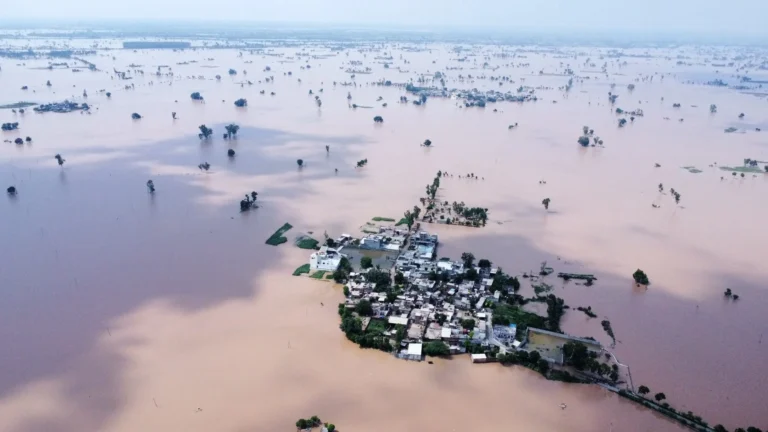
Gurdaspur, Punjab — Torrential floods have left thousands of people stranded on rooftops across Punjab as swollen rivers breached embankments, submerging villages, damaging crops, and washing away homes. Massive rescue and relief operations are underway with the NDRF, Army, BSF, and IAF pressed into action in the worst-hit districts of Gurdaspur, Pathankot, Amritsar, and Ferozepur.
Officials said incessant rainfall, combined with the release of dam waters, triggered flooding across tributaries, devastating newly planted paddy crops. Families marooned on rooftops have appealed for urgent relief, including food and cattle fodder.
Several BSF check posts along the India-Pakistan border were damaged or washed away. In Ferozepur, BSF teams braved rising waters to evacuate villagers and even rescued Army personnel and critical military equipment after floodwaters entered a nearby camp. “BSF’s prompt action not only protected lives but also ensured vital assets were secured,” the force said in a post on X.
Indian Army personnel evacuate flood-affected residents by boat from an inundated village in Punjab, August 28, 2025. Photo : Western Command – Indian Army
The Border Security Force has carried out a series of timely evacuations in border villages, saving dozens of lives. In Gurdaspur, BSF rescue teams conducted special operations in Makora and Chakmakoda villages, where 70 villagers were safely evacuated using inflatable boats by the trained BSF Water Wing. In Ferozepur’s Kaluwala village, 14 villagers were ferried across the flooded Sutlej River. In another operation, BSF personnel evacuated a sick elderly resident from flood-hit Mahar Jamsher village in Fazilka, rushing him to the Civil Hospital. Civil authorities and locals have lauded BSF’s tireless efforts to protect lives and extend critical support in the flood-ravaged border belt.
The Indian Air Force and Army Aviation have intensified Humanitarian Assistance and Disaster Relief (HADR) missions. So far, more than 1,600 people have been evacuated, including 11 Punjab government officials and 212 paramilitary personnel stranded along the Chenab, Ravi, and Beas rivers.
🔹 12 helicopters deployed 🔹 95 winch operations and 101 low-hover missions conducted 🔹 3,800 kg of relief material airdropped in affected areas
In Pathankot, IAF helicopters evacuated 46 civilians and delivered emergency supplies, while in Dera Baba Nanak, a high-risk mission rescued 38 Army and 10 BSF personnel.
Punjab Chief Minister Bhagwant Mann has directed all ministers, MLAs, and officers to remain in their constituencies to provide immediate relief. More than 400 villages, particularly in Ropar, Anandpur Sahib, Jalandhar, and Kapurthala districts, have been badly hit by the overflowing Sutlej River.
In addition to official operations, eco-activist and MP Sant Balbir Singh Seechewal, renowned for reviving the sacred Kali Bein rivulet, has been mobilizing volunteers with boats to deliver supplies and assist in plugging breaches.