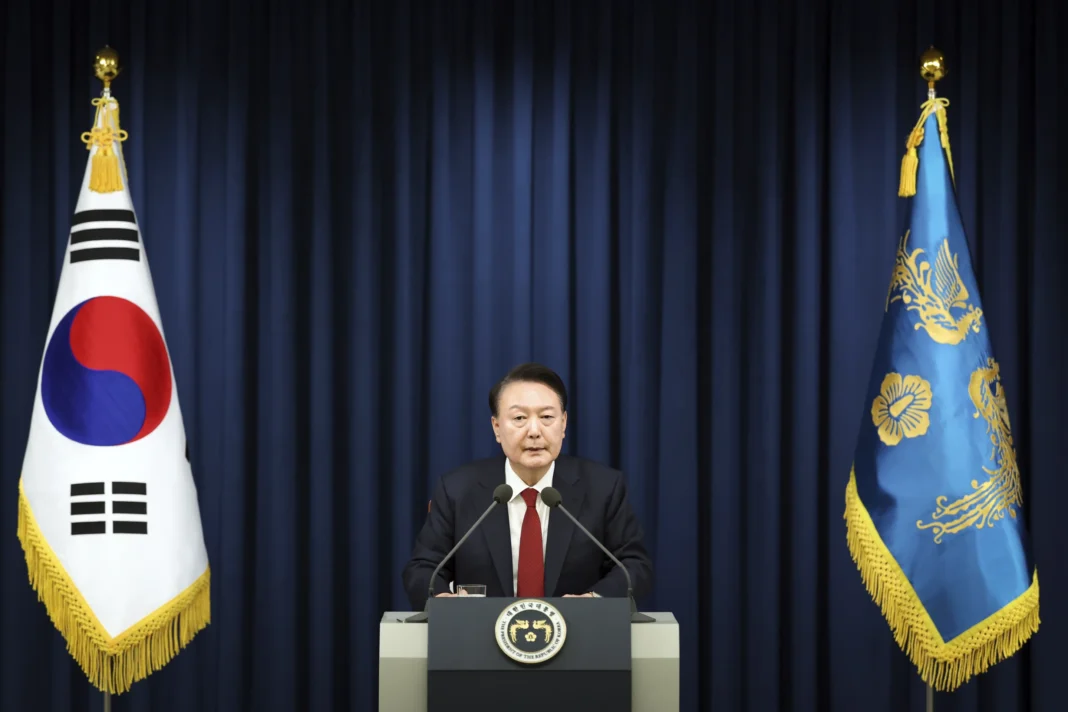
Seoul, South Korea — In a historic ruling, South Korea’s Constitutional Court has formally removed President Yoon Suk Yeol from office, setting the stage for a deeply polarized by-election while raising concerns about the future of the country’s democracy.
The unanimous court decision on Friday upheld Yoon’s impeachment, citing his unconstitutional imposition of martial law and attempt to deploy military force against lawmakers. With South Korea now required to elect a new president within 60 days, the political landscape is bracing for further upheaval.
A Divisive Leader Ousted but Not Silenced
Despite his removal, Yoon remains a powerful figure, rallying his conservative base while facing criminal charges of rebellion. His influence over the ruling party remains strong, with supporters calling for his reinstatement and questioning the legitimacy of the impeachment process. Analysts warn that Yoon’s continued presence in politics could further deepen the already severe ideological divide in South Korea.
The crisis began on December 3, when Yoon declared martial law and deployed troops to the National Assembly. Lawmakers defied military presence to overturn the order within hours, leading to Yoon’s impeachment on December 14. The Constitutional Court ruled that Yoon’s actions violated the nation’s laws, rejecting his argument that the martial law decree was merely symbolic.

Election Ahead, But Stability in Question
South Korea now faces a crucial election within two months, one that experts predict will be among the most contentious since the country’s transition to democracy in the 1980s. Yoon’s removal has further inflamed political tensions, with his supporters already demonstrating against the ruling.
Concerns over election security are mounting, with fears of potential disruptions at polling stations and challenges to the legitimacy of the results. Political analyst Kim Su-min warned that distrust in the democratic process is reaching a dangerous tipping point.
“If people refuse to accept any election outcome that doesn’t favor them, it could create a cycle of political instability that threatens South Korea’s democratic foundations,” said Professor Kim Tae-hyung of Soongsil University.
As South Korea prepares for a new presidential race, the country finds itself at a crossroads—one that will test its democratic resilience and determine whether it can emerge from this crisis united or further divided.
SOURCE : AGENCIES | Follow Us: Facebook | Instagram | Twitter | Youtube |