CACONDE, Brazil (AP) — Silvio Almeida’s coffee plantation sits at an ideal altitude on a Brazilian hillside, whose clay-rich soil does well at retaining moisture from rainfall and a nearby reservoir.
Lately, though, water is scarce on Almeida’s modest farm in Caconde, a town in one of Sao Paulo state’s key growing regions. He can’t get his coffee to grow the way it should.
In Brazil, the world’s largest coffee producer, Almeida and other farmers have started grappling with the nation’s worst drought in more than seven decades and above-average temperatures. Almeida expected to harvest 120 sacks of coffee beans this harvest season, but instead managed just 100.
“Given the conditions here, the 2025 crop is already affected,” he told The Associated Press, pointing to a part of his plantation where flower buds died before blooming. “I won’t say it’s doomed, because with God anything is possible. But based on the situation, it’s already compromised.”
Brazil’s harvest season that ends this month was virtually flat from last year, and exports surged, but the ongoing drought is already complicating the start of the 2025/2026 season, according to a report Monday by the Center for Advanced Studies on Applied Economics at the University of Sao Paulo’s agribusiness school.

At the same time, Vietnam, the world’s second-biggest coffee producer, is experiencing heat and drought, affecting its crops. Potential supply shortages in both countries have started driving up global coffee prices, according to the report.
The market is closely monitoring how Brazilian coffee plants endure these adverse climate conditions, which can cause flowers to stop blooming, fail to turn into cherries or produce lower-quality beans, said Felippe Serigati, who coordinates the master’s program in agribusiness at the Getulio Vargas Foundation, a university in Sao Paulo.
“It could result in a smaller coffee harvest,” Serigati said. “Since the market tends to anticipate these movements, we’ve already seen the price of arabica coffee in New York and robusta (coffee) in Europe trading at higher levels.”
Coffee prices haven’t reached the record highs the world saw in the late 1970s, after a severe frost wiped out 70% of Brazil’s coffee plants. But they have been soaring in recent years, and adjusted for inflation are at a 13-year high, according to the International Coffee Organization.
In August, the organization’s Composite Indicator Price – which combines the price of several types of green coffee beans – averaged $2.38 per pound, up nearly 55% from the same month a year ago.
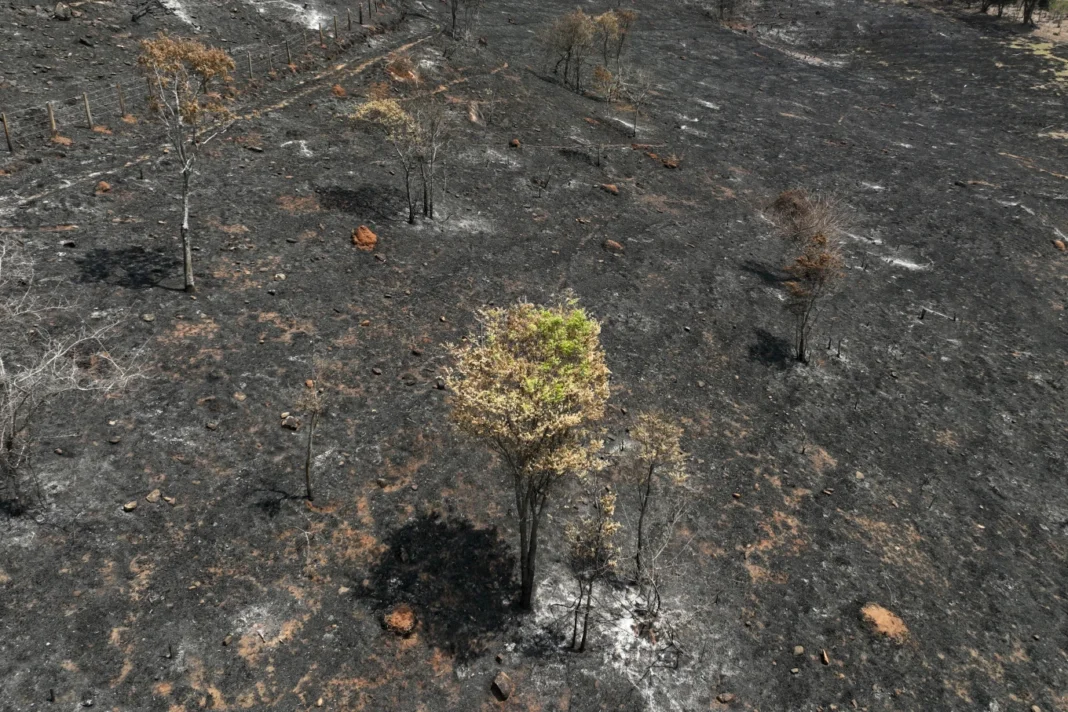
In part, prices are rising because of higher demand, particularly in Asia. But weather is also driving increases. Drought, frost and fire have damaged as much as one-fifth of arabica coffee producers’ growing areas in Brazil, said Billy Roberts, a senior economist for food and beverage at Colorado-based CoBank.
“It’s not looking like it will get that much better in the near term. They will need consistent rainfall to recover,” he said.