Home Blog Page 55

Kurdish Fighters Withdraw from Aleppo Under Deal with Syrian Transitional Government

Aleppo, Syria Around 500 fighters from the Kurdish-led Syrian Democratic Forces (SDF) withdrew from the northern city of Aleppo on Friday, marking the beginning of a phased pullout under a negotiated agreement with Syria’s transitional government.

Local officials confirmed that the remaining SDF fighters are expected to leave in the coming days, pending the completion of a prisoner exchange.

“The prisoner swap will be carried out in two phases in the coming days. After that, the Kurdish forces will completely withdraw from Aleppo’s neighborhoods,” said Mohamed Arhim, spokesperson for Aleppo’s newly established city administration.

The agreement, finalized earlier this week, stipulates a full SDF withdrawal from the predominantly Kurdish districts of Sheikh Maqsoud and Ashrafieh. These areas, long controlled by Kurdish forces, are geographically isolated from the SDF’s main strongholds in eastern Syria.

On Friday, the transition of authority officially began, with the first convoy of Kurdish fighters departing the city and heading east of the Euphrates River under the supervision of the Syrian Ministry of Defense. “The neighborhoods will now be administered by the General Security Forces and the Ministry of Interior,” Arhim added.

Temporary Arrangement Reflects Shifting Power Dynamics

The withdrawal comes after years of strained relations between Kurdish factions and the former regime of Bashar al-Assad, who was ousted in December. The country’s transitional authority took over governance at the end of March.

Both Sheikh Maqsoud and Ashrafieh have witnessed repeated clashes and sieges over the past decade, emblematic of the broader conflict between Kurdish forces and state-aligned militias.

Zana Amedi, a spokesperson for the Kurdish People’s Protection Units (YPG), confirmed the retreat via social media.

“Our forces are leaving Aleppo, handing over the areas to our allies in the Asayish,” Amedi posted on X, referring to the Kurdish internal security force. A video accompanying the post showed YPG and Women’s Protection Units (YPJ) vehicles exiting the city to applause from local residents.

Although full security control will ultimately be handed to Damascus, the transitional agreement permits the Asayish to maintain two operational centers within the neighborhoods. A joint committee has been tasked with evaluating future governance structures in the area.

The first phase of the prisoner exchange took place on Thursday, with Kurdish sources reporting that 146 SDF-affiliated detainees and 97 government-aligned prisoners were released.

Just two weeks ago, the SDF and Syria’s transitional authorities reached a broader political agreement aimed at ending years of division, including the integration of some Kurdish fighters into state institutions.

Understanding Syria’s Kurds

The Kurds are a stateless ethnic group spread across Syria, Iraq, Turkey, and Iran. In Syria, they are primarily concentrated in the northeast, where they established a semi-autonomous administration following the outbreak of the civil war in 2011.

The SDF—backed by the United States during the campaign against the Islamic State—is a multi-ethnic coalition largely made up of Kurdish fighters from the YPG and YPJ.

The withdrawal from Aleppo marks a pivotal shift in Kurdish strategy and could reshape the balance of power in northern Syria amid an ongoing political transition.

While they gained international recognition for defeating ISIS, relations with Damascus remained tense due to their demands for autonomy.

The recent agreement marks a significant shift in Syria’s political landscape as the new transitional government works to restore centralized authority and end over a decade of fragmentation.

Syrian Foreign Minister Assad-al-Shaibani expressed hope that growing international support for the new administration would lead to the lifting of long-standing sanctions.

“There is hope these unjust sanctions will be lifted, allowing Syria to rebuild and recover,” he said earlier this week.

SOURCE : EFE. |  Follow Us: Facebook | Instagram | Twitter | Youtube 

Modi’s Visit to Sri Lanka Strengthens Bilateral Ties with Key Defense and Energy Deals

0

Colombo, Sri Lanka — Indian Prime Minister Narendra Modi on Saturday reinforced New Delhi’s growing influence in Sri Lanka by inaugurating the construction of a joint solar power plant and overseeing the signing of key defense and energy agreements during a high-level visit to Colombo.

The visit marks a significant step in consolidating India’s position in the island nation, which has seen growing Chinese involvement in recent years. Sri Lanka’s location along one of the world’s busiest shipping routes gives it strategic importance in the Indian Ocean region—an area India considers vital to its national interests.

RELATED NEWS : Nepal-India: Is a Longstanding Rift Giving Way to Closer Ties? Oli and Modi Meet at BIMSTEC

During his visit, Modi met with Sri Lankan President Anura Kumara Dissanayake. The two leaders jointly inaugurated, via video link, the groundbreaking of a 120-megawatt solar power plant funded by India. The project, a bilateral joint venture, symbolizes deepening cooperation in sustainable energy and infrastructure development.

The agreements signed span both energy collaboration and defense cooperation, signaling a shift toward greater strategic alignment between the two nations. While details of the defense deals remain under wraps, analysts view them as part of India’s broader push to counterbalance China’s influence in South Asia.

China has invested heavily in Sri Lanka over the past decade, funding large-scale infrastructure projects through billions of dollars in loans. However, Sri Lanka’s economic collapse in 2022 reshaped its geopolitical orientation, providing India an opportunity to step in with substantial financial aid and diplomatic support.

Still, Sri Lanka continues to rely on China for loan restructuring and long-term financial negotiations—making Colombo’s balancing act between the regional powers a delicate one.

Members of the Frontline Socialist Party shout anti Indian slogans during Indian Prime Minister Narendra Modi’s Sri Lankan state visit in Colombo, Sri Lanka, Saturday, April 5, 2025. : Photo : AP/Eranga Jayawardena

Modi’s visit, however, is seen as a clear message: India is ready to play a leading role in Sri Lanka’s recovery and development, and to forge stronger ties grounded in mutual strategic interests.

Sri Lanka, grappling with a severe power crisis in 2022 due to unpaid oil and coal imports for its electricity plants, is now pushing to reduce its reliance on fossil fuels. Against this backdrop, Indian Prime Minister Narendra Modi welcomed new agreements on defense and security cooperation with Sri Lanka during a recent bilateral meeting.

Modi highlighted the joint commitment to enhance security in the Indian Ocean through the Colombo Security Conclave, a regional grouping that includes Bangladesh, Maldives, and Mauritius. “I am grateful to President Dissanayake for his sensitivity towards India’s interests,” Modi said. “We share interconnected and co-dependent security interests.”

Emphasizing India’s “Neighbourhood First Policy,” Modi underscored Sri Lanka’s special role and India’s support during its past struggles. “We have fulfilled our duties as a truly friendly neighbor,” he added, signaling deeper collaboration ahead.


SOURCE : APNEWS |  Follow Us: Facebook | Instagram | Twitter | Youtube |

Microsoft Employees Stage Pro-Palestinian Protest at 50th Anniversary Party Over Israel Contract

Redmond, Washington – A pro-Palestinian protest by Microsoft employees disrupted the company’s 50th anniversary celebration Friday, marking the latest backlash against the tech industry’s role in supplying artificial intelligence technology to the Israeli military.

The demonstration unfolded during a high-profile event at Microsoft’s headquarters, attended by co-founder Bill Gates, former CEO Steve Ballmer, and current CEO Satya Nadella—the first joint public appearance of the trio since 2014.

The protest erupted as Microsoft AI CEO Mustafa Suleyman presented product updates and a long-term vision for the company’s AI assistant, Copilot. Employee Ibtihal Aboussad interrupted the speech, walking toward the stage and shouting, “Mustafa, shame on you! You claim that you care about using AI for good, but Microsoft sells AI weapons to the Israeli military. Fifty thousand people have died, and Microsoft powers this genocide in our region.”

Suleyman paused, responding, “Thank you for your protest, I hear you,” as Aboussad continued, declaring that Suleyman and “all of Microsoft” had “blood on their hands.” She then threw a keffiyeh scarf—a symbol of solidarity with Palestinians—onto the stage before security escorted her out. Moments later, a second employee, Vaniya Agrawal, briefly disrupted another segment featuring Gates, Ballmer, and Nadella, amplifying the dissent.

The unrest centers on Microsoft’s $133 million contract with Israel’s Ministry of Defense, which has faced criticism following reports that AI models from Microsoft and OpenAI were used to select bombing targets in Gaza and Lebanon. An Associated Press investigation earlier this year linked such technology to a 2023 Israeli airstrike in Lebanon that killed three young girls and their grandmother, fueling accusations of civilian harm.

The protest echoes a February incident where five employees were removed from an internal meeting with Nadella for opposing the same deal. Friday’s demonstration, broadcast via livestream, drew broader attention, with some staff also rallying outside. Aboussad later told reporters she and Agrawal lost access to their work accounts after the event, suggesting potential retaliation.

Microsoft responded in a statement: “We provide many avenues for all voices to be heard. Importantly, we ask that this be done in a way that does not cause a business disruption.” The company declined to address specific disciplinary measures.
The clash overshadowed what was intended as a milestone celebration of Microsoft’s 50-year legacy, highlighting deepening divisions within the tech giant over its military ties.


SOURCE : APNEWS |  Follow Us: Facebook | Instagram | Twitter | Youtube |
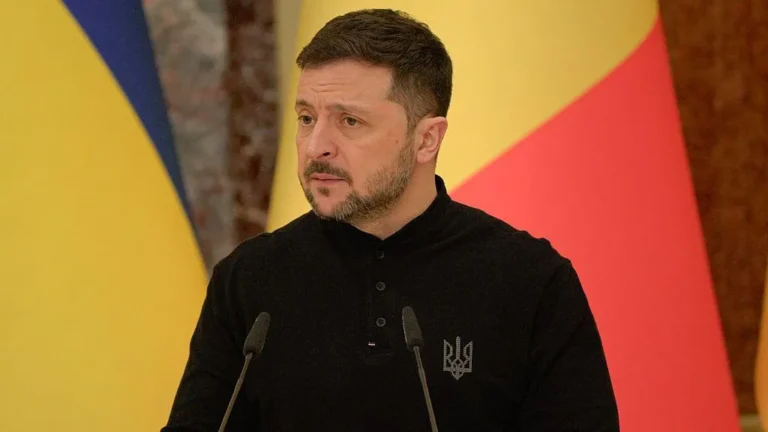
Escalating Trade Tensions Threaten to Overlook the Poor and Vulnerable

Geneva, Switzerland – As major economies prepare to roll out sweeping new tariffs, the global trade system is teetering on the edge of a critical phase, warns UN Trade and Development (UNCTAD). The escalating disputes threaten to derail growth, investment, and development progress, with the heaviest toll falling on the world’s poorest and most vulnerable economies.

RELATED NEWS : Trump sets 10% global tariffs, hikes rates for Asia and EU

“This hurts the vulnerable and the poor,” said UNCTAD Secretary-General Rebeca Grynspan. “Trade must not become another source of instability. It should serve development and global growth.”

The rising tensions, marked by tit-for-tat measures and stalled negotiations, are driving up the cost of essentials like food and medicine, hitting low-income communities hardest. For businesses and policymakers, the unpredictability in trade and investment has become a serious barrier to planning and growth.

Vulnerable Countries Bear the Brunt

While just 10 of the nearly 200 U.S. trade partners account for almost 90% of its trade deficit, the fallout is disproportionately affecting smaller players. Least developed countries and small island developing states—responsible for a mere 1.6% and 0.4% of the deficit, respectively—are seeing their economies squeezed. These nations, UNCTAD notes, will neither resolve the trade imbalance nor generate significant revenue from the tariffs, yet they face severe consequences.

In many low-income economies, a “perfect storm” is brewing: worsening external conditions, unsustainable debt, and slowing domestic growth. Disrupted imports are straining fragile healthcare systems, while small-scale farmers struggle with shrinking export markets.

A Call for Dialogue Over Escalation

UNCTAD acknowledges the need for trade reform to address imbalances, concentrated gains, and outdated rules. However, the agency insists that solutions must emerge through dialogue, not escalation. “This is a time for cooperation,” Grynspan emphasized. “Global trade rules must evolve to reflect today’s challenges, but they must do so with predictability and development at their core, protecting the most vulnerable.”

The agency has issued an urgent plea to decision-makers: reconsider tariffs that disproportionately harm vulnerable countries. Without swift action, these measures could inflict profound suffering on millions, exacerbating inequality and instability.

As trade talks remain deadlocked, advocates warn that the focus on geopolitical victories risks overshadowing the human cost. For the world’s poorest, the stakes could not be higher.

The Impact of Trade Imbalances on the U.S. Economy

American trade policy contributed to a $1.2 trillion trade imbalance in the U.S. last year—an economic gap that some experts argue must be addressed to safeguard the nation’s long-term economic stability.

However, many economists point out that the trade deficits targeted by former President Trump stem from more complex factors than just foreign tariffs or protectionist policies. They argue that relying solely on trade deficits to justify tariffs overlooks key drivers like strong U.S. consumer demand for imported goods.


SOURCE : UNCTAD |  Follow Us: Facebook | Instagram | Twitter | Youtube |
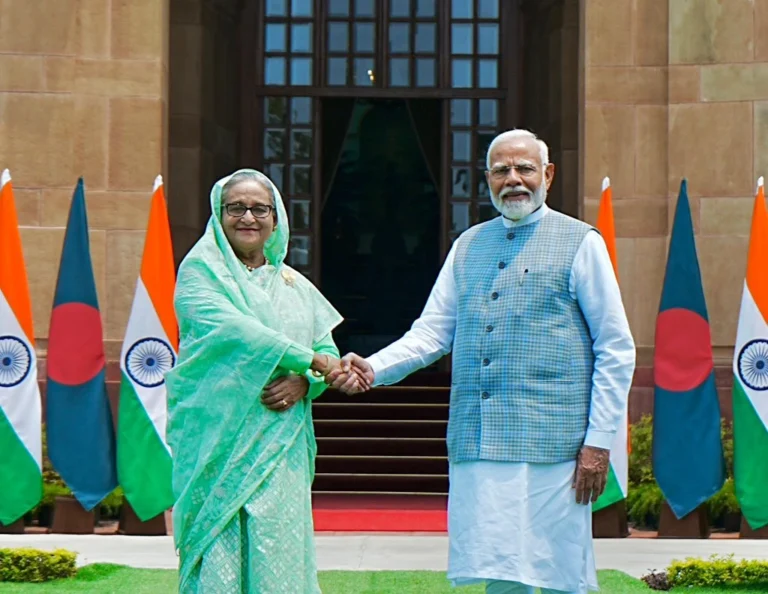
Nepal-India: Is a Longstanding Rift Giving Way to Closer Ties? Oli and Modi Meet at BIMSTEC

 
Jagdishor Panday, Nepal

Bangkok, Thailand — After nearly a decade of frosty relations, Nepal’s Prime Minister KP Sharma Oli and Indian Prime Minister Narendra Modi appear to have taken a step toward reconciliation. Their much-anticipated meeting on the sidelines of the 6th BIMSTEC Summit in Bangkok has sparked fresh hopes of a reset in bilateral ties.

The one-on-one meeting, which lasted over 30 minutes, comes after years of tension stemming from the promulgation of Nepal’s new constitution in 2015 and subsequent disputes over border maps. For years, Oli and Modi found themselves locked in a political tug-of-war, often marked by nationalistic rhetoric and strategic realignments.

But in Bangkok, the atmosphere seemed markedly different.

RELATED NEWS : India and New Zealand Forge Stronger Ties with Free Trade Revival and Defense Pact

Recent global and regional developments, including India’s increasingly complex neighborhood dynamics, appear to have nudged both leaders toward dialogue. In a gesture seen as both symbolic and strategic, Oli and Modi shared details of their meeting on social media — each posting in the other’s native language. Oli wrote in Hindi, while Modi posted in Nepali, signaling a softer tone and a willingness to build bridges.

“Had a warm and heartfelt meeting with my dear friend, Prime Minister Shri Narendra Modi Ji. Our discussions were highly meaningful and constructive. I express my appreciation over our cordial exchange,” Oli wrote on X (formerly Twitter).

Modi echoed a similarly positive sentiment:
“Had a productive meeting with Prime Minister KP Sharma Oli in Bangkok. India attaches immense priority to relations with Nepal. We discussed different aspects of India-Nepal friendship, especially in sectors like energy, connectivity, culture and digital technology. We also talked about some of the key positive outcomes from this year’s BIMSTEC Summit, especially in areas of disaster management and maritime transport.”

This meeting marks the first substantial direct engagement between the two since Oli returned to power in July 2024 with the unexpected backing of the Nepali Congress. Notably, New Delhi has yet to officially invite Oli for a state visit — a break from tradition, as newly-appointed Nepali prime ministers typically make India their first bilateral destination.

Instead, Oli visited China first, where he received a warm welcome from President Xi Jinping. The two leaders signed a framework agreement under China’s Belt and Road Initiative (BRI), further cementing Nepal’s commitment to the Chinese-led infrastructure project — one that India has long viewed with skepticism.

Meanwhile, efforts to re-engage with India continued. Oli extended multiple invitations to Modi, including during their encounter at the 79th United Nations General Assembly in New York last September. However, that meeting failed to produce results. A proposed one-on-one session never materialized, and a larger group meeting soured after Oli raised concerns about SAARC and other contentious regional issues.

The Bangkok meeting, therefore, represents a significant pivot. For India, rebalancing ties with Nepal comes at a time of increasing friction with several neighboring countries. Relations with Bangladesh have cooled following a government change in Dhaka, and ties with the Maldives and Pakistan remain strained. In this context, Modi’s renewed outreach to Nepal, even if cautious, could be seen as part of a broader recalibration of India’s neighborhood-first policy.

Still, tensions linger. Beijing has capitalized on India’s hesitation, deepening its ties with Kathmandu, particularly in infrastructure and energy cooperation. The signing of the BRI framework puts Nepal squarely in China’s strategic orbit, even as Oli seeks to maintain a balancing act between the two Asian giants.

Domestically, the situation is equally complex. Rising royalist sentiments in Nepal have raised eyebrows, with some political figures alleging India’s tacit support — a claim New Delhi has firmly denied. Last month, Indian External Affairs Minister S. Jaishankar told Nepali counterpart Arzu Rana Deuba that India had “nothing to do” with pro-monarchist movements.

While the exact content of the Bangkok discussions remains undisclosed, sources suggest the two leaders touched on recent internal developments in Nepal, including those monarchist movements. What is clear, however, is that the meeting broke the ice.

Whether this thaw leads to lasting warmth or proves to be a temporary diplomatic gesture remains to be seen. But for now, Bangkok offered a rare moment of harmony in a relationship often defined by mistrust and missed opportunities.


SOURCE : X |  Follow Us: Facebook | Instagram | Twitter | Youtube |

South Korea Faces Uncertainty as Court Removes President Yoon Suk Yeol

0

Seoul, South Korea — In a historic ruling, South Korea’s Constitutional Court has formally removed President Yoon Suk Yeol from office, setting the stage for a deeply polarized by-election while raising concerns about the future of the country’s democracy.

The unanimous court decision on Friday upheld Yoon’s impeachment, citing his unconstitutional imposition of martial law and attempt to deploy military force against lawmakers. With South Korea now required to elect a new president within 60 days, the political landscape is bracing for further upheaval.

A Divisive Leader Ousted but Not Silenced

Despite his removal, Yoon remains a powerful figure, rallying his conservative base while facing criminal charges of rebellion. His influence over the ruling party remains strong, with supporters calling for his reinstatement and questioning the legitimacy of the impeachment process. Analysts warn that Yoon’s continued presence in politics could further deepen the already severe ideological divide in South Korea.

The crisis began on December 3, when Yoon declared martial law and deployed troops to the National Assembly. Lawmakers defied military presence to overturn the order within hours, leading to Yoon’s impeachment on December 14. The Constitutional Court ruled that Yoon’s actions violated the nation’s laws, rejecting his argument that the martial law decree was merely symbolic.

Impeached South Korean President Yoon Suk Yeol waves to his supporters as he comes out of a detention center in Uiwang, South Korea, on March 8, 2025. Photo : (Hong Hyo-shik/Newsis via AP, File

Election Ahead, But Stability in Question

South Korea now faces a crucial election within two months, one that experts predict will be among the most contentious since the country’s transition to democracy in the 1980s. Yoon’s removal has further inflamed political tensions, with his supporters already demonstrating against the ruling.

Concerns over election security are mounting, with fears of potential disruptions at polling stations and challenges to the legitimacy of the results. Political analyst Kim Su-min warned that distrust in the democratic process is reaching a dangerous tipping point.

“If people refuse to accept any election outcome that doesn’t favor them, it could create a cycle of political instability that threatens South Korea’s democratic foundations,” said Professor Kim Tae-hyung of Soongsil University.

As South Korea prepares for a new presidential race, the country finds itself at a crossroads—one that will test its democratic resilience and determine whether it can emerge from this crisis united or further divided.


SOURCE : AGENCIES |  Follow Us: Facebook | Instagram | Twitter | Youtube |

Netanyahu and Orbán Defy ICC in Bold Stand from Budapest

0

Budapest, Hungary — Israeli Prime Minister Benjamin Netanyahu arrived in Budapest on Thursday to a warm reception from Hungarian Prime Minister Viktor Orbán, marking his first visit to a European Union nation since the International Criminal Court (ICC) issued an arrest warrant against him in November 2024 for alleged war crimes in Gaza.

The visit underscored Hungary’s bold decision to withdraw from the ICC, a move Netanyahu hailed as a courageous stand against what both leaders decried as a biased and politicized institution.

READ MORE : Putin is not a war criminal”: Prime Minister of Hungary Viktor Orban made a wonder statement

At a joint press conference held in the historic Carmelite Monastery overlooking the Danube, Orbán set the tone with a scathing critique of the ICC. “This is no longer an impartial court, a rule-of-law court, but rather a political court. This has become clearest in light of its decisions on Israel,” he declared, flanked by Netanyahu and their respective delegations.

The Israeli leader, visibly buoyed by the support, congratulated Orbán for displaying “extraordinary courage in the face of antisemitism” and praised Hungary’s withdrawal as a historic step. “Hungary is the first European state to walk away from this corruption, and it will resonate with many around the world,” Netanyahu said, prompting applause from his team.

The visit, which saw Netanyahu greeted with full military honors despite the ICC warrant, highlighted Hungary’s defiance of international legal norms. Orbán, who extended the invitation months ago with a promise to ignore the court’s directive, framed the decision as a defense of national sovereignty. The move positions Hungary as the third country—after Burundi and the Philippines—to exit the ICC, a process that could take up to a year but has already sent shockwaves through the international community.

Both leaders seized the opportunity to align their narratives, warning of shared threats to what they called “Judeo-Christian civilization.” Netanyahu pointed to “radical Islam” as an existential danger, singling out Iran and its proxies—“the three H’s: Hezbollah, Hamas, and the Houthis.”

“Israel is determined to dismantle the Iranian axis of terror,” he asserted, casting his country’s actions as a bulwark for Europe as well as the Middle East. Orbán echoed this sentiment, tying his controversial immigration policies to the fight against antisemitism. “Illegal immigration into Europe is a driver of antisemitism, and the elites in Brussels are not dealing with it,” he charged, accusing the European Commission of neglecting Jewish safety. “We are showing zero tolerance, and Jews in Hungary can feel safe.”

The rhetoric drew sharp criticism from opponents. Hungary’s opposition Democratic Coalition condemned Orbán for hosting Netanyahu, accusing him of “intentionally provoking” EU and NATO allies. “Once again, Orbán distances himself from Hungary’s partners,” the social-democratic group said in a statement. Meanwhile, human rights organizations, including Amnesty International, labeled the visit a “cynical effort to undermine the ICC” and a blow to global accountability.

Hours after the press conference, Netanyahu’s office revealed that he and Orbán had spoken by phone with U.S. President Donald Trump, who reportedly endorsed Hungary’s ICC withdrawal. The call, details of which remain sparse, underscored the trio’s shared skepticism of international institutions—a stance Trump has championed since his return to the White House in January 2025.

Beyond his talks with Orbán, Netanyahu met with Hungarian President Tamás Sulyok, thanking him for Budapest’s unwavering support, according to state news agency MTI. The Israeli leader’s four-day itinerary includes a visit to Budapest’s Holocaust Museum, a symbolic gesture amid his defense of Israel’s policies.

The trip comes at a tumultuous time for Netanyahu domestically. In Israel, he faces a crisis over a Supreme Court ruling that suspended his government’s attempt to sack the head of the Shin Bet security service. Compounding the pressure is the “Qatargate” scandal, in which two of his close advisors are under arrest for allegedly accepting funds to advance Qatar’s interests in Israel. Despite these challenges, Netanyahu projected defiance in Budapest, framing his visit as a testament to resilience.

As the Israeli premier’s stay extends through Sunday, the Budapest summit has exposed deep fissures within the EU, where all 27 members are ICC signatories. While nations like Spain and Ireland have vowed to enforce the warrant, others, including Germany, have hinted at leniency. For now, Hungary’s gambit—backed by Netanyahu’s presence—casts a long shadow over the future of international justice, with Budapest emerging as a flashpoint in the clash between sovereignty and global accountability.


Follow Us: Facebook | Instagram | Twitter | Youtube |

Trump sets 10% global tariffs, hikes rates for Asia and EU

Washington, USA — United States President Donald Trump escalated his trade war on Wednesday by imposing a 10% global tariff on all imports, an increase rate of 34% for China and 20% for European Union products.

Trump decided instead to relieve Mexico and Canada, his main trading partners, by again postponing the imposition of tariffs on Mexican and Canadian products protected by the Agreement between the US, the United Mexican States, and Canada (USMCA).

“This is one of the most important days, in my opinion, in American history. It’s our declaration of economic independence,” the president said at the White House Rose Garden, surrounded by manufacturing workers.

The Republican leader, who has been calling the tariffs unveiling, the “liberation day” for weeks, gave details of the expected raft of tariffs he will impose in retaliation for barriers to US exports worldwide.

The global baseline tax will be 10%, although the US will sum up an additional tariff for those nations or economic blocs Washington deems the “worst offenders.”

Higher rates for Asia and Europe

The US will impose additional tariffs on very important trading partners of US companies: 34% on imports from China (currently at 54%), an additional 20% on the EU, and 24% on Japan.

Taiwan, a key semiconductor partner, will see a 32% increase; India, 26%; South Korea, a powerful exporter of cars or electronics, 25%; and Israel, 17%.

“You know, you think of European Union very friendly. They rip us off. It’s so sad to see it’s so pathetic,” Trump said.

The US president stressed that his tariffs were “friendly” in nature, as they were half of what the White House calculates each nation averages on US imports.

He showed a table that included 10% tariffs for several Latin American countries, including Argentina, Brazil, Colombia, Chile, Ecuador, Guatemala, Honduras, Peru, the Dominican Republic, and Costa Rica.

These countries will therefore only be subject to the 10% minimum imposed by the US.

Other Latin American countries will be subject to higher tariffs, such as Venezuela, which will pay 15% to export to the US, and Nicaragua, an exporter of gold and clothing to the US, at 18%.

According to a press conference with senior US officials, the minimum tariff of 10% will come into effect on Apr. 5, while the additional part affecting each country will be applied from Apr. 9.

Trump declared a “national emergency” to impose these tariffs, saying the current trade situation poses a security risk to the US, officials said.

Mexico and Canada dodge tariffs again

Mexico and Canada, which Trump has been threatening for months with tariffs in retaliation for the fentanyl trade and the flow of migrants, do not appear in the table presented by the Republican.

At the end of the event, the White House announced it was extending the imposition of 25% tariffs on imports from Mexico and Canada protected by the USMCA, which includes everything from agricultural products to auto parts and certain types of machinery.

Taxing these products would effectively spell the death of the trade deal that Trump signed in his first term.

Since his return to the White House on Jan. 20, the Republican has used tariffs as a bargaining chip with other countries.

On Wednesday midnight, for example, a 25% tariff will be imposed on all cars and car parts manufactured outside the US, except for auto parts made in Mexico and Canada.

Trump argued that the tariffs would cause companies to move production to the US, creating jobs, yet the tariff increases do not take into account poor or small nations with fragile economies or vulnerable to US giants.

Warnings from economists that such a policy could lead to higher prices for US consumers were dismissed by the New York tycoon.

On Wednesday, the White House invited steel and auto workers, as well as farmers and craftspeople.

Brian Pannebecker, a retired autoworker from Michigan, took the floor and said: “My entire life I have watched plant after plant after plant in Detroit and in the Metro Detroit area close. There are now plants that are underutilized, and Donald Trump’s policies are going to bring product back into those underutilized plants.”


SOURCE : EFE. |  Follow Us: Facebook | Instagram | Twitter | Youtube |

Yesterday, everyone got naked in the parliament… JDU in a tussle over the Waqf bill, Ghulam Rasool Baliavi got upset

0

Patna, Bihar — The passage of the Waqf Amendment Bill in the Lok Sabha has ignited a fierce internal conflict within Bihar Chief Minister Nitish Kumar’s Janata Dal (United) (JDU), exposing deep fissures over the party’s stance on the controversial legislation. Muslim leaders within the JDU, long seen as a secular ally in India’s political landscape, have openly rebelled against the bill, with former MLC Ghulam Rasool Baliyavi leading the charge by announcing plans to challenge it in the Supreme Court.

Speaking to reporters on Thursday, Baliyavi launched a scathing attack on his own party, accusing it of abandoning its principles. “Yesterday, everyone was exposed in Parliament. There’s no difference left between secular and communal,” he said, his voice thick with frustration. Baliyavi revealed that he had exhausted every avenue to halt the bill’s progress, including appeals to the Joint Parliamentary Committee (JPC) tasked with reviewing the legislation and direct pleas to Nitish Kumar. “No one listened. No consideration was given,” he lamented, signaling a profound sense of betrayal.

The Waqf Amendment Bill, which seeks to overhaul the management of Waqf properties and has been criticized by opposition parties as an assault on Muslim autonomy, passed the Lok Sabha on Wednesday with JDU’s support—a move that has stunned its Muslim leadership. Baliyavi, undeterred, urged opponents of the bill to “use their brains” and join him in a legal battle. He hinted at convening a meeting in the coming days to strategize and confirmed his intent to file a petition in the Supreme Court, setting the stage for a high-stakes showdown.

Baliyavi is not alone in his dissent. Senior JDU leader and former Rajya Sabha MP Ahmed Ashfaq Karim, alongside MLC Ghulam Gaus, have also publicly condemned the bill, accusing the party of bowing to pressure from its ally, the Bharatiya Janata Party (BJP), which dominates the National Democratic Alliance (NDA) coalition. “This bill undermines the rights of Muslims and the spirit of secularism we’ve stood for,” Karim said in a statement, echoing Baliyavi’s outrage. Gaus, meanwhile, warned that the decision could alienate the party’s Muslim voter base in Bihar, a state where communal harmony has long been a political tightrope.

The rebellion marks a rare fracture within JDU, which has prided itself on maintaining unity under Nitish Kumar’s leadership. Despite the vocal opposition from its Muslim leaders, the party’s parliamentary contingent toed the NDA line, voting in favor of the bill—a decision that analysts say could spark a broader revolt. “This is a turning point. The dissonance between the leadership and its Muslim representatives is now undeniable,” said political commentator Sanjay Yadav.

For Nitish Kumar, the controversy poses a delicate challenge. The veteran leader, who has navigated Bihar’s complex caste and communal dynamics for decades, now faces accusations of compromising JDU’s secular credentials to preserve his alliance with the BJP. Baliyavi’s threat of legal action and the prospect of a party meeting to rally dissenters signal that the unrest may not remain confined to rhetoric.

As the fallout unfolds, the JDU’s internal tussle could ripple beyond Bihar, complicating the NDA’s cohesion ahead of key state elections. For now, Baliyavi and his allies are digging in, determined to take their fight from the party room to the courtroom, with the Supreme Court looming as the next battleground in this escalating saga.


SOURCE : DT |  Follow Us: Facebook | Instagram | Twitter | Youtube

United Hands of Hope Champions Talent Development at Kaani Lions Girls School

0
United Hands of Hope (UHHC) Empowers Young Girls Through Talent Development to Combat Femicide

Nairobi, KenyaUnited Hands of Hope, led by Gen. Michael Harrison, launched the 4th edition of its Talent Development Awareness Campaign at Kaani Lions Girls School, reinforcing the power of talent as a tool for social change.

Under the theme “Talent Development as a Tool to Fight Femicide,” the campaign aimed to empower young girls by nurturing their skills and talents, promoting respect, discipline, and purpose as key elements in preventing gender-based violence.

United Hands of Hope CEO, Gen. Michael Harrison, Angelique Harrison, and Capt. Allan Nicholas Maina, the organization’s director and Guest of Honor Dr. Marietta Reformado’s group photo. Photo : DT Staff

Serving as the chief guest, Dr. Marietta Reformado delivered an inspiring speech, urging students to embrace self-expression and skill-building as pathways to empowerment. “Harnessing one’s talents not only builds confidence but also creates opportunities for safer, more inclusive communities,” she emphasized.

The event was attended by United Hands of Hope CEO, Gen. Michael Harrison, alongside Angelique Harrison, Capt. Allan Nicholas Maina, the organization’s director, and Dr. Reformado as the Guest of Honor. Their participation underscored the organization’s commitment to mentorship, education, and leadership development as key strategies to steer youth toward positive engagement and away from violence.

Guest of Honor, Dr. Reformado, alongside the students of the school. Photo : DT Staff

Students participated in interactive workshops, mentorship sessions, and leadership activities, equipping them with practical tools for confidence-building and personal growth. Dr. Reformado stressed the importance of continuous support and guidance, stating, “With the right mentorship, these young minds can transform their talents into lasting success and positive societal change.”

As part of its ongoing efforts, United Hands of Hope announced a Talent Scouting event scheduled for March 30, 2025, designed to identify and nurture young talent while providing a platform for students to showcase their abilities.

MORE NEWS : Myanmar earthquake death toll exceeds 1,600 as Thailand rushes to rescue workers

This initiative is set to leave a lasting impact—not just on the students of Kaani Lions Girls School, but also on out-of-school youth and the broader Nairobi community. Through talent development, United Hands of Hope is championing a future where empowerment, respect, and purpose triumph over gender-based violence.


SOURCE : DT |  Follow Us: Facebook | Instagram | Twitter | Youtube