Home Blog Page 122

Vietnam storm deaths rise to 64 as a bridge collapses and flooding sweeps away a bus

0

Hanoi, Vietnam (AP) — A bridge collapsed and a bus was swept away by flooding in Vietnam on Monday, raising the death toll in the Southeast Asian country to at least 64 from a typhoon and subsequent heavy rains that also damaged factories in export-focused northern industrial hubs, state media reported.

READ MORE : Bangladesh floods leave 71 dead, fears of waterborne disease rise

Nine people died on Saturday after Typhoon Yagi made landfall in Vietnam before weakening into a tropical depression. The rest died in the floods and landslides that followed on Sunday and Monday, state media VN Express reported.

The water levels of several rivers in northern Vietnam were dangerously high.

ywAAAAAAQABAAACAUwAOw==
People carry belongings in flood triggered by Typhoon Yagi in Lang Son province, Vietnam Monday, Sept. 9, 2024. (Nguyen Anh Tuan/VNA via AP)

A bus carrying 20 people was swept into a flooded stream by a landslide in mountainous Cao Bang province on Monday morning. State media said four bodies were recovered from the bus and one person was rescued alive. The others were still missing.

In Phu Tho province, rescue operations were continuing after a steel bridge over the engorged Red River collapsed Monday morning. Reports said 10 cars and trucks along with two motorbikes fell into the river. Some people were pulled out of the river and taken to a hospital, but at least 10 people were still missing.

Nguyen Minh Hai, who fell into the flooded river, told state Vietnam Television, “I was so scared when I fell down. I felt like I’ve just escaped death. I can’t swim and I thought I would die.”

ywAAAAAAQABAAACAUwAOw==
Flood triggered by Typhoon Yagi submerges houses in Phu Tho province, Vietnam Monday, Sept. 9, 2024. (Ta Van Toan/VNA via AP)

Pham Truong Son, 50, told VN Express that he was driving on the bridge on his motorcycle when he heard a loud noise. Before he knew what was happening, he was falling into the river. “I felt like I was drowning at the bottom of the river,” Son told the news outlet, adding that he managed to swim and hold on to a drifting banana tree to stay afloat before he was rescued.

Dozens of businesses in Haiphong province haven’t resumed production because of extensive damage to their factories, state newspaper Lao Dong reported. It said the roofs of several factories were blown apart and water seeped inside, damaging finished goods and expensive equipment. Some companies said they still didn’t have electricity on Monday and that it would take at least a month to resume production.

Parts of Haiphong and Quang Ninh provinces were still without power on Monday. The two provinces are industrial hubs, housing many factories that export goods, including EV maker VinFast and Apple suppliers Pegatrong and USI. Authorities are still assessing the damage to factories, but initial estimates showed that nearly 100 enterprises were damaged, resulting in millions of dollars in losses, the newspaper reported.

ywAAAAAAQABAAACAUwAOw==
Traffic moves slowly past fallen trees on the roads of Hanoi, Vietnam, Sunday Sept. 8, 2024. (AP Photo/Aniruddha Ghosal)

Prime Minister Pham Minh Chinh visited Haiphong city on Sunday and approved a $4.62 million package to help the port city recover.

Typhoon Yagi was the strongest typhoon to hit Vietnam in decades when it made landfall Saturday with winds up to 149 kph (92 mph). It weakened Sunday, but the country’s meteorological agency warned that continuing downpours could cause floods and landslides.

On Sunday, a landslide killed six people including an infant and injured nine others in Sapa town, a popular trekking base known for its terraced rice fields and mountains. Overall, state media reported 21 deaths and at least 299 people injured from the weekend.

Skies were overcast in the capital, Hanoi, with occasional rain Monday morning as workers cleared uprooted trees, fallen billboards and toppled electricity poles. Heavy rain continued in northwestern Vietnam and forecasters said it could exceed 40 centimeters (15 inches) in places.

Yagi also damaged agricultural land.

Before hitting Vietnam, Yagi caused at least 20 deaths in the Philippines last week and four deaths in southern China.

Chinese authorities said infrastructure losses across Hainan island province amounted to $102 million with 57,000 houses collapsed or damaged, power and water outages and roads damaged or impassable due to fallen trees. Yagi made a second landfall in Guangdong, a mainland province neighboring Hainan, on Friday night.

Storms like Typhoon Yagi are “getting stronger due to climate change, primarily because warmer ocean waters provide more energy to fuel the storms, leading to increased wind speeds and heavier rainfall,” said Benjamin Horton, director of the Earth Observatory of Singapore.


Associated Press writer Kanis Leung in Hong Kong contributed to this report. By ANIRUDDHA GHOSAL FOR AP

Harris’ past debates: A prosecutor’s style with narrative flair but risks in a matchup with Trump

Atlanta, USA (AP) — From her earliest campaigns in California to her serving as President Joe Biden’s running mate, Kamala Harris has honed an aggressive but calibrated approach to debates.

She tries to blend punch lines with details that build toward a broader narrative. She might shake her head to signal her disapproval while her opponent is speaking, counting on viewers to see her reaction on a split screen. And she has a go-to tactic to pivot debates back in her favor: saying she’s glad to answer a question as she gathers her thoughts to explain an evolving position or defend a past one.

READ MORE : Trump says he will appoint Musk head of government efficiency commission if elected

Tuesday’s presidential debate will put the Democratic vice president’s skills to a test unlike any she’s faced. Harris faces former President Donald Trump, the Republican nominee, who will participate in his seventh general election debate since 2016 for an event that will be seen by tens of millions of viewers just as early voting in November’s election starts around the country.

People who have competed against Harris and prepared her rivals say she brings a series of advantages to the matchup, including her prosecutorial background juxtaposed with Trump being the first U.S. president convicted of felony crimes. Still, Harris allies warn that Trump can be a challenging and unpredictable opponent who veers between policy critiques, personal attacks, and falsehoods or conspiracy theories.

“She can meet the moment,” said Marc Short, who led Republican Vice President Mike Pence’s debate preparation against Harris in the fall of 2020. “She has shown that in different environments. I would not underestimate that in any way.”

Julian Castro, a Democrat who ran for president against Harris in the 2020 primary, said Harris blended “knowledge, poise and the ability to explain things well” to stand out during crowded primary debates.

“Some candidates get too caught up with trying to be catchy, trying to go viral,” Castro said. “She’s found a very good balance.

Balancing narrative and detail

A former Harris aide, who spoke on condition of anonymity to talk about her approach, said the vice president views the events like a jury trial she would have led when she was district attorney in San Francisco or querying a judicial nominee on Capitol Hill as a U.S. senator. The idea, the former aide said, has always been to win the debate on merit while leaving more casual or piecemeal viewers with key takeaways.

“She understands that debates are about the individual interactions themselves but also about a larger strategy of offering a vision for what your leadership and style looks like,” said Tim Hogan, who led Sen. Amy Klobuchar’s 2020 primary debate preparation.

Kathleen Hall Jamieson, a political communications professor at the University of Pennsylvania, said Harris makes deductive arguments but folds them into a broader narrative — the same way she would talk to jurors.

“She states a thesis and then follows with fact, fact, fact,” Jamieson said.

Jamieson pointed to the 2020 vice presidential debate in which Harris hammered Trump’s handling of the COVID-19 pandemic and the economy, and to her most memorable 2019 primary debate when she skewered Biden for how he had talked about race and institutional racism. She weaved her critique of Biden’s record with her own biography as a young, biracial student in the early era of school integration.

ywAAAAAAQABAAACAUwAOw==
FILE – Democratic vice presidential candidate Sen. Kamala Harris, D-Calif., left, speaks as Vice President Mike Pence listens during the vice presidential debate Oct. 7, 2020, in Salt Lake City. (AP Photo/Julio Cortez, File)

“That little girl was me,” Harris said in a widely circulated quip that punctuated her story about court-ordered busing that helped non-white students attend integrated schools.

“Most people who are good at the deductive argument aren’t good at wrapping that with an effective narrative,” Jamieson said. “She’s good at both.”

Landing memorable punches

Castro said Harris has a good feel for when to strike, a quality he traced to her trial experience. In 2019, as multiple Democratic candidates talked over one another, Harris sat back before getting moderators to recognize her.

“Hey, guys, you know what? America does not want to witness a food fight. They want to know how we’re going to put food on their table,” she said, taking control of the conversation and drawing applause.

When Harris faced Pence in 2020, it was a mostly civil, substantive debate. But she got in digs that framed Pence as a serial interrupter, as Trump had been in his first debate with Biden.

“Mr. Vice President, I’m speaking,” she said at one point, with a stern look. At another: “If you don’t mind letting me finish, we can have a conversation.”

Finding traps in policy

Debates have sometimes put Harris on the defensive.

In the 2020 primary matches, Tulsi Gabbard, who this year has endorsed Trump, blitzed Harris over how aggressively she prosecuted nonviolent drug offenders as a district attorney.

That fall, Pence made Harris sometimes struggle to defend Biden’s positions. Now, her task will be to defend not just Biden’s record, but her own role in that record and what policies she would pursue as president.

Short, one of Pence’s top aides, noted that Republicans and the media have raised questions about more liberal positions Harris took in her 2020 primary campaign, especially on fracking, universal healthcare, reparations for slavery and how to treat migrants who cross the U.S. border illegally.

ywAAAAAAQABAAACAUwAOw==
FILE – Democratic presidential candidate Sen. Kamala Harris, D-Calif., from left, Sen. Bernie Sanders, I-Vt., former Vice President Joe Biden and Sen. Elizabeth Warren, D-Mass., participate in a Democratic presidential primary debate, Oct. 15, 2019, in Westerville, Ohio. (AP Photo/John Minchillo, File)

“We were surprised that she missed some opportunities (against Pence) when the conversation was centered around policy,” Short said.

Timing, silence and nonverbal communication

One of Harris’ earliest debate triumphs came in 2010 as she ran for California attorney general. Her opponent was asked about his plans to accept his public pension while still being paid a salary for a current public post.

“I earned it,” Republican Steve Cooley said of the so-called “double-dipping” practice.

Harris looked on silently, with a slightly amused look as Cooley explained himself. When moderators recognized her, she said just seven words – “Go for it, Steve. You earned it!” — in a serious tone but with a look that communicated her sarcasm. The exchange landed in her television ads within days.

“Kamala Harris is quite effective at nonverbal communication and knowing when not to speak,” Jamieson said.

The professor said Harris often will shake her head and, with other looks, telegraph her disapproval while her opponent is speaking. Then she smiles before retorting, or attacking, in a conversational tone.

“She defuses some of the argument that Trump makes that she is ‘a nasty woman,’ that she’s engaging in egregiously unfair behavior, because her nonverbal presentation is actually undercutting that line of attack,” Jamieson said.

Meeting a new challenge with Trump
For all of Harris’ debate experience, Tuesday is still a new and massive stage. Democrats who ordinarily tear into Trump instead appeared on Sunday’s news shows to make clear that Harris faced a big task ahead.

“It will take almost superhuman focus and discipline to deal with Donald Trump in a debate,” said Transportation Secretary Pete Buttigieg, yet another of Harris’ 2020 opponents, on CNN. “It’s no ordinary proposition, not because Donald Trump is a master of explaining policy ideas and how they’re going to make people better off. It’s because he’s a master of taking any form or format that is on television and turning it into a show that is all about him.”

Castro noted that Trump is “a nasty and crafty stage presence” who makes preparation difficult. And with ABC keeping the candidates’ microphones off when they are not speaking, Harris may not find it as easy to produce another viral moment that hinges on viewers having seen or heard Trump at his most outlandish.

“The best thing she can do,” Castro said, “is not get distracted by his antics.”


By BILL BARROW FOR AP

Mass polio vaccination campaign to immunise 200,000 children in southern Gaza extended by a day

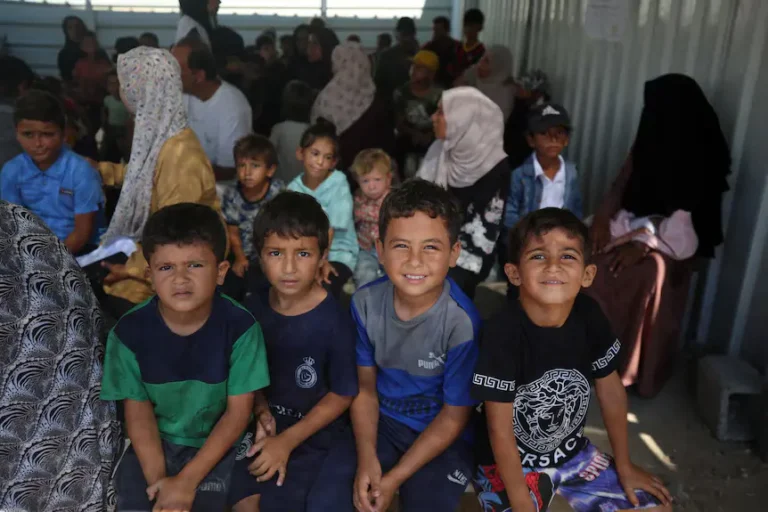
Gaza, Israel/Palestine (AFP/REUTERS) – campaign to vaccinate children in the southern Gaza Strip against polio by an extra day.

Gaza’s health ministry reported the first case of polio in 25 years last month, amid the Israel-Hamas war in the Palestinian territory.

The campaign aims to vaccinate 640,000 children in Gaza, 200,000 of them in the south, according to UNRWA, the UN agency responsible for Palestinian refugees.

READ MORE : 3 sons and 2 grandchildren of the Hamas chief, Ismail Haniyeh were killed in an Israeli airstrike on a car

“I live in a tent next to a sewage pond with significant disease and epidemic issues, and mosquitoes and worms have infected us,” said 37-year-old Amani Ashur, who brought his one-year-old son Abdul Rahman to be vaccinated.

He said the boy had fallen ill from diseases spreading through makeshift shelters in the Al-Amal neighbourhood of Khan Younis.

“The war, lack of cleanliness, and living in tents and streets, along with the widespread sewage issues, have all contributed to the spread of disease,” Safaa al-Balbisi, 34, said about her two-year-old son Yahya.

ywAAAAAAQABAAACAUwAOw==
The vaccination campaign began at the start of the month in the central Gaza Strip.  (Reuters: Ramadan Abed)

The first phase of the vaccination campaign in the middle areas of Gaza started on September 1.

The second phase in the southern Gaza Strip began on Thursday and was extended on Sunday, before it moves to the north on Monday for the third phase.

UN officials said they were making progress, having reached more than half of the children needing the oral drops in the first two stages of the campaign.

Follow-up vaccinations will take place in a month’s time.

Limited pauses in the fighting to allow the vaccinations to go ahead have been agreed to by Israel, Palestinian groups and the UN’s World Health Organization (WHO).

Senior Gaza emergency service official reportedly killed in Israeli strike

An Israeli air strike on a house in Jabalia in northern Gaza killed the deputy director of the Gaza Civil Emergency Service on Sunday, health officials said.

Four members of Mohammad Morsi’s family were also killed, the officials said.

There was no immediate Israeli comment on Mr Morsi’s death.

Residents said Israeli forces had also blown up several houses in the Zeitoun suburb of Gaza City, five kilometres from Jabalia.

Medical teams said they were unable to answer desperate calls by some of the residents who had reported being trapped inside their houses, some wounded.

“We hear constant bombing in Zeitoun, we know they are blowing up houses there, we don’t sleep because of the sound of explosions, the roaring of tanks sound close and the drones don’t stop circling,” said a resident who lives about 1km away.

The latest bloodshed in the decades-old Israeli-Palestinian conflict was triggered on October 7 when the Hamas militant group attacked Israel, killing 1,200 people and taking about 250 hostages, according to Israeli tallies.

Israel’s subsequent assault on Gaza has killed more than 40,900 Palestinians, according to the local health ministry, while also displacing nearly the entire population of 2.3 million, causing a hunger crisis and leading to genocide allegations at the World Court, which Israel denies.


Follow Us: Facebook | Instagram | Twitter | Youtube |

Chinese families seeking to escape a competitive education system have found a haven in Thailand

0

Chiang Mai,Thailand (AP) — The competition started in second grade for DJ Wang’s son.

Eight-year-old William was enrolled at a top elementary school in Wuhan, a provincial capital in central China. While kindergarten and first grade were relatively carefree, the homework assignments started piling up in second grade.

By third grade, his son was regularly finishing his day around midnight.

“You went from traveling lightly to carrying a very heavy burden,” Wang said. “That sudden switch, it was very hard to bear.”

READ MORE : China to raise defense budget by 7.2 percent this year

Wang, who traveled often to Chiang Mai in northern Thailand for his job in tourism, decided to make a switch, moving his family to the city that sits at the base of mountains.

ywAAAAAAQABAAACAUwAOw==
Rodney Feng a arranges his clothes after returning from school in Chiang Mai province, Thailand, Tuesday, April 23, 2024. (AP Photo/Sakchai Lalit)

The family is among a wave of Chinese flocking to Thailand for its quality international schools and more relaxed lifestyle. While there are no records tracking how many are moving abroad for education, they join other Chinese expats leaving the country, from wealthy entrepreneurs moving to Japan to protect their wealth, to activists unhappy with the political system, to young people who want to opt out of China’s ultra-competitive work culture, at least for a while.

Jenson Zhang, who runs an education consultancy, Vision Education, for Chinese parents looking to move to Southeast Asia, said many middle-class families choose Thailand because schools are cheaper than private schools in cities like Beijing and Shanghai.

“Southeast Asia, it’s within reach, the visa is convenient and the overall environment, as well as people’s attitude towards Chinese people, it allows Chinese parents to feel more secure,” Zhang said.

A 2023 survey by private education company New Oriental found Chinese families also increasingly considering Singapore and Japan for their children’s overseas study. But tuition and the cost of living are much higher than in Thailand.

Within Thailand, the slow-paced city of Chiang Mai often ends up being the top choice. Other options include Pattaya and Phuket, both popular beach resorts, and Bangkok, though the capital is usually more expensive.

The trend has been ongoing for about a decade, but in recent years it’s gathered pace.

Lanna International School, one of Chiang Mai’s more selective schools, saw a peak of interest in the 2022-2023 academic year, with inquiries doubling from a year earlier.

“Parents were really in a rush, they wanted to quickly change to a new school environment” because of pandemic restrictions, said Grace Hu, an admissions officer at Lanna International, whose position helping Chinese parents through the process was created in 2022.

Du Xuan of Vision Education says parents coming to Chiang Mai fall into two types: Those who planned in advance what education they want for their kids, and those who experienced difficulties with the competitive Chinese education system. The majority are from the second group, she said.

In Chinese society, many value education to the point where one parent may give up their job and rent an apartment near their child’s school to cook and clean for them, and ensure their life runs smoothly. Known as “peidu,” or “accompanied studying,” the goal is academic excellence, often at the expense of the parent’s own life.

ywAAAAAAQABAAACAUwAOw==
Relatives and teachers of students taking the annual national college entrance exam also known as “Gaokao” wait for the morning session to finish as it rains in Beijing, Friday, June 7, 2024. Over 13 million students have registered for China’s 2024 national college entrance examination, marking an increase of 510,000 students from last year, according to the Chinese Ministry of Education. (AP Photo/Ng Han Guan)

That concept has become twisted by the sheer pressure it takes to keep up. Chinese society has come up with popular buzzwords to describe this hyper-competitive environment, from “neijuan” — which roughly translated means the rat race that leads to burnout — or “tang ping,” rejecting it all to drop out, or “lie flat.”

The terms reflect what success looks like in modern China, from the hours of cramming required for students to succeed on their exams to the money parents spend hiring tutors to give their kids an extra edge in school.

The driving force behind it all is numbers. In a country of 1.4 billion people, success is viewed as graduation from a good college. With a limited number of seats, class rank and test scores matter, especially on the college entrance exams known as the “gaokao.”

“If you have something, it means someone else can’t have that,” said Vision Education’s Du, whose own daughters attend school in Chiang Mai. “We have a saying about the gaokao: ‘One point will topple 10,000 people.’ The competition is that intense.”

Wang said his son William was praised by his second-grade teacher in Wuhan as gifted, but to stand out in a class of 50 kids and continue to get that level of attention would mean giving money and gifts to the teacher, which other parents were already doing before he was even aware of the need.

Back in Wuhan, parents are expected to know the material covered in extracurricular tutoring classes, as well as what is being taught in school, and ensure their child has mastered it all, Wang said. It’s often a full-time job.

In Chiang Mai, freed from China’s emphasis on rote memorization and hours of homework, students have time to develop hobbies.

Jiang Wenhui moved from Shanghai to Chiang Mai last summer. In China, she said, she had accepted that her son, Rodney, would get average grades because of his mild attention deficit disorder. But she could not help thinking twice about her decision to move given how competitive every other family was.

“In that environment, you’ll still feel anxious,” she said. “Should I give it another go?”

In China, her energy was devoted toward helping Rodney keep up in school, shuttling him to tutoring and keeping him on top of his coursework, pushing him along every step of the way.

In Thailand, Rodney, who’s about to start 8th grade, has taken up acoustic guitar and piano, and carries around a notebook to learn new English vocabulary — all of it his own choice, Jiang said. “He’d ask me to add an hour of English tutoring. I thought his schedule was too full, and he told me, ‘I want to try and see if it’s OK.’”

He has time to pursue hobbies and hasn’t needed to see a doctor for his attention deficit disorder. After bonding with one of his teachers about snakes, he is raising a pet ball python called Banana.

Wang says his son William, who is now 14 and about to enter high school, finishes his homework well before midnight and has developed outside interests. Wang, too, has changed his perspective on education.

“Here, if he gets a bad grade, I don’t think much of it, you just work on it,” he said. “Is it the case that if he gets a bad grade, that he will be unable to become a successful adult?”

“Now, I don’t think so.”


By HUIZHONG WU FOR AP

South Korea’s President Yoon Holds Final Summit with Japanese Prime Minister Kishida

0

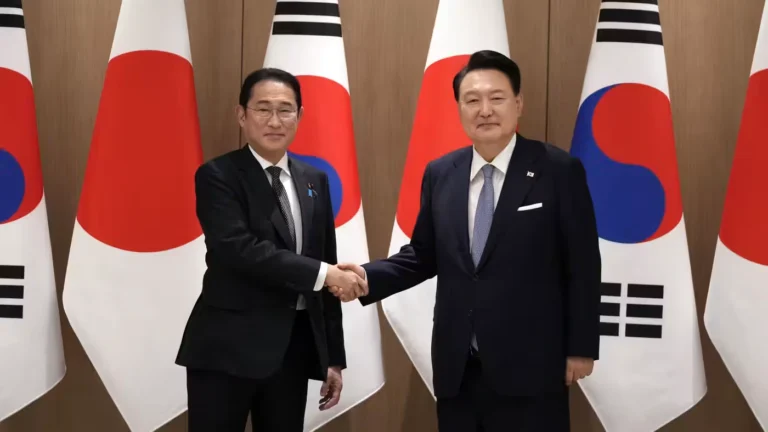
Seoul, South Korea ( Nikkei/ DT) – On Friday, the leaders of Japan and South Korea pledged to advance new areas of cooperation, including immigration procedures and citizen evacuation during emergencies, during a summit marking the end of a period of improved bilateral relations fueled by their personal rapport.

Prime Minister Fumio Kishida arrived in Seoul for a farewell meeting with President Yoon Suk-yeol. Kishida, who will step down as prime minister in early October following the election of a new leader of the ruling Liberal Democratic Party later this month, used the occasion to reflect on their collaborative achievements.

READ MORE :“Azerbaijani President Ilham Aliyev Meets with Italian Prime Minister Giorgia Meloni in Rome”

“Over the past two years, working with President Yoon, who has been committed to enhancing our bilateral relationship, we have made significant progress and opened a new chapter in Japan-South Korea relations,” Kishida told reporters. “It is crucial for both nations to continue building on this momentum.”

President Yoon echoed the sentiment, underscoring the importance of sustaining efforts to strengthen ties between the two countries.

ywAAAAAAQABAAACAUwAOw==
Japanese Prime Minister Fumio Kishida and his wife Yuko Kishida arrive at Seoul Air base in Seongnam, South Korea on Sept 6. Photo : Kyodo

“It is crucial to maintain the positive momentum in our bilateral cooperation that Prime Minister Kishida and I have developed,” President Yoon Suk-yeol said in a statement from his office. He noted that next year will mark the 60th anniversary of diplomatic relations between Seoul and Tokyo and expressed hope that relations could reach “a new level” by 2025.

During the meeting, Kishida and Yoon agreed to start detailed discussions on streamlining immigration procedures and confirmed their commitment to collaborating on evacuating citizens during emergencies in third countries.

They also addressed security concerns related to North Korea, affirming their intention to continue working together, alongside their shared ally, the U.S., on issues concerning Pyongyang and Russia.

The trip is the prime minister’s second to South Korea for a bilateral summit with Yoon during his term. In May of last year, Kishida became the first sitting Japanese prime minister to participate in a bilateral summit in South Korea in 12 years.

Kishida announced in August that he would not seek a new term as head of the LDP in its leadership contest. That means he will also be replaced as prime minister as the LDP is the majority party in parliament.

“The importance of Japan-South Korea relations will remain unchanged in the future” Kishida said. “I myself, in whatever role I take on, will do my utmost to make the Japan-South Korea relationship more solid and broad-based.”

Kishida and Yoon have partnered to achieve considerable rapprochement between their historically rival countries.

The conservative Yoon started his term in May of 2022, less than a year after Kishida took office nearly three years ago, and called for a “future-oriented” reset to long-frayed bilateral ties with Japan, a signal that Kishida did not ignore.

Analysts said the cooperation between the two East Asian democracies is likely to survive Kishida’s departure.

“While Prime Minister Kishida deserves credit for breaking the ice with Seoul, I do not see continued cooperation between Japan and South Korea as contingent on his presence,” Rob York, director for regional affairs at the Hawaii-based Pacific Forum think tank, told Nikkei Asia.

“The current government in Seoul has staked much of its agenda on enhancing its diplomatic prestige within the U.S.-led order, and the U.S. will continue to encourage that cooperation,” York said.

The men held their first summit when Yoon traveled to Tokyo in March 2023. Before traveling to Japan, where he also became the first sitting South Korean president to participate in a bilateral summit in 12 years, Yoon had announced a plan to pave the way for a fresh start between the two Asian democracies and staunch U.S. allies.

That vision centered on creating a fund with donations from private companies to provide compensation to South Koreans forced to work for Japanese companies during World War II. The question of providing financial compensation to the laborers had long been a source of tension between Seoul and Tokyo, with the workers, their descendants and some civic groups insisting on an official payment from the Japanese government.

Tokyo has steadily insisted that all such war and colonial-era era matters were settled under an agreement signed in 1965 under which Japan provided financial aid and the two sides established formal diplomatic relations. Japan ruled the Korean Peninsula from 1910 to its defeat in World War II in 1945.

Yoon’s plan garnered pushback from the left-wing opposition at home and civic groups, but the two sides still went on to bolster trade and security cooperation in the ensuing months. Seoul and Tokyo both removed trade restrictions they had implemented in connection with their historical disagreements.

They also strengthened ties with their shared ally, the U.S. Kishida and Yoon held a summit near Washington in August last year with U.S. President Joe Biden, in which the three countries agreed to work together to better guard against threats from North Korea.

In a joint statement, they pledged to “operationalize” their real-time sharing of missile warning data. Washington has warmly welcomed the friendly ties between Seoul and Tokyo, and had long pushed for reconciliation between the countries that are critical to its global military and security strategy.

Last year, the John F. Kennedy Presidential Library and Museum presented its annual Profiles in Courage award to Kishida and Yoon in recognition of their efforts to heal ties despite long-standing historical issues and domestic pushback.

“Both leaders chose a more hopeful future for their countries as opposed to being held captive by the past,” the award’s organizers said.


Additional reporting by Mayumi Hirosawa in Seoul and Yuichi Nitta and Nancy Zheng in Tokyo FOR Nikkei

Follow Us: Facebook | Instagram | Twitter | Youtube |

We need to do more to keep the air we breathe clean: UN weather agency

0

UN NEWS (Daniel Johnson) – Almost everybody on Earth, basically nine out of 10 people breathe air that is essentially unfit for purpose,” said Lorenzo Labrador, Scientific Officer at WMO. “This means that it is air that exceeds the [UN World Health Organization] WHO guideline limits and contains a high level of pollutants with low and middle-income countries basically being the most affected.”

Heat driver

That stark finding is just one of many unsettling discoveries featuring in the latest WMO Air Quality and Climate Bulletin. It highlights, for instance, that the first eight months of 2024 have seen no let-up in periods of intense heat and persistent droughts around the world, fuelling the risk of wildfires and air pollution.

“Climate change means that we face this scenario with increasing frequency. Interdisciplinary science and research is key to finding solutions,” the UN agency warned.

The clear link between polluted air and poor health is clear, according to the WHO, which has urged global action to counter “one of the greatest environmental risks to health” and numerous preventable illnesses including stroke, heart disease, lung cancer and acute respiratory diseases, including asthma.

READ MORE : Global Plastic Pollution Reaches Alarming New High, 57 Million Tons Annually

“Ambient air pollution alone mostly coming from vehicles and industry causes more than 4.5 million premature deaths a year,” WMO’s Mr. Labrador told journalists in Geneva.

“This is more than those death by malaria and HIV AIDS combined; so air pollution is the biggest environmental risk of our time. But not only is it a health risk in itself, it also exacerbates climate change.”

Regional trends

A snapshot of regional emissions variations featured in the UN agency report indicated a trend for “lower pollution in Europe and China” than North America and India, where there was an increase in pollution emissions from human and industrial activities.

This is likely the “direct result of a reduction in emissions in those countries over the years, and we have been noticing this tendency since we started publishing the bulletin back in 2021.”

And while it is generally widely understood that polluted air containing microscopic particulates – including sulphates, nitrates, ammonia, soot from human activity and wildfires – is harmful, Mr. Labrador reiterated the UN agency’s 2023 findings that these and other pollutants have a damaging impact on food security, too.

Crop yields down

“Particulate matter can severely affect the productivity of crops – of staple crops – such as maize, rice and wheat,” he said. “Many of this particulate matter pollution that affect crop yields are due to man-made practices, which include the land use practices such as tillage and harvesting. Also, application of fertilizers and stubble-burning at the end the season, of the growing seasons.”

New data-crunching on naturally occurring wildfires around the world last year also indicated that the inferno that spread across Canada in 2023 “was even stronger with respect to emissions” than the 2021 wildfire season in Siberia – although that was “very, very strong”, the WMO officer insisted.

“[The Canada fires] broke records concerning the amount of surface area burned over a 20-year period.”

To coincide with this year’s Clean Air for Blue Skies Day on Saturday 7 September, the UN agency urged governments to protect health, the environment and the economy, given the cost ramifications of the air pollution.

“The first thing that cities have to do is to recognize that the problem exists in the first place,” Mr. Labrador said. “So, those cities and those countries have to acknowledge first that there is an air quality problem and there is sufficient data around the world to basically acknowledge that it is a worldwide problem, particularly in urban areas.”


UN demands ‘full investigation’ on killing of Turkish-American activist by Israeli forces in West Bank

0

Hamilton, Canada (AA/DT) – On Friday, the United Nations called for a “full investigation” and accountability regarding the death of a Turkish-American activist at the hands of the Israeli army in the northern occupied West Bank.

During a news conference, UN spokesman Stéphane Dujarric responded to Anadolu’s inquiry about whether the UN condemns the killing, stating: “We would like to see a thorough investigation into the circumstances of the incident and ensure that those responsible are held accountable.”

Dujarric emphasized that “civilians must be protected at all times.”

READ MORE : UN Security Council passes resolution demanding ‘an immediate ceasefire’ during Ramadan

When asked if there had been any accountability for UN personnel killed by Israel, he replied, “We have not seen any developments in that regard.”

He noted that investigations and accountability measures are expected to take place “once the fighting ceases,” while acknowledging some progress in addressing the mistreatment of Palestinian detainees.

A Turkish-American activist, Aysenur Ezgi Eygi, was shot dead by Israeli forces on Friday while participating in a protest against illegal Israeli settlements in Beita, a town in the Nablus district of the occupied West Bank.

Indian passenger plane Vistara makes emergency landing in Türkiye over ‘bomb threat’

Eezurm, Türkiye (AA/DT) – An Indian passenger plane made an emergency landing in Türkiye’s eastern city on Friday afternoon while en route to Germany over “security reasons,” according to Anadolu Agency.

The Vistara Airlines plane carrying the passengers was en route from India to Germany when it made an emergency landing at Erzurum Airport “due to security reasons.”

Vistara Airlines said in a statement after the emergency landing that its “flight UK27 from Mumbai to Frankfurt (BOM-FRA) has been diverted to Turkey (Erzurum airport) due to security reasons and has landed safely at 1905 hours.”


READ MORE : Ugandan Olympic athlete dies after being severely burned by her partner

However, some reports suggest that the Indian plane landed due to a “bomb threat.”

According to sources, Turkish emergency response teams, including the Disaster and Emergency Management Authority (AFAD), medical personnel, police, and firefighters, were immediately dispatched to the airport following the emergency landing.

Passengers have been safely evacuated, and a thorough search of the cabin and cargo areas is currently underway, said the sources.

Erzurum Governor Mustafa Cifci, in a statement to the Anadolu, confirmed that the plane was carrying 247 passengers and crew members.

“Right now, teams are on the ground, inspecting the luggage. AFAD teams have safely evacuated the passengers. Law enforcement, including special operations police, and all our teams are on site.

“All necessary security measures have been taken both inside and around the aircraft. Erzurum airspace has been closed to flights,” he said.

Russia’s top diplomat notes Türkiye’s serious intentions to join BRICS

0

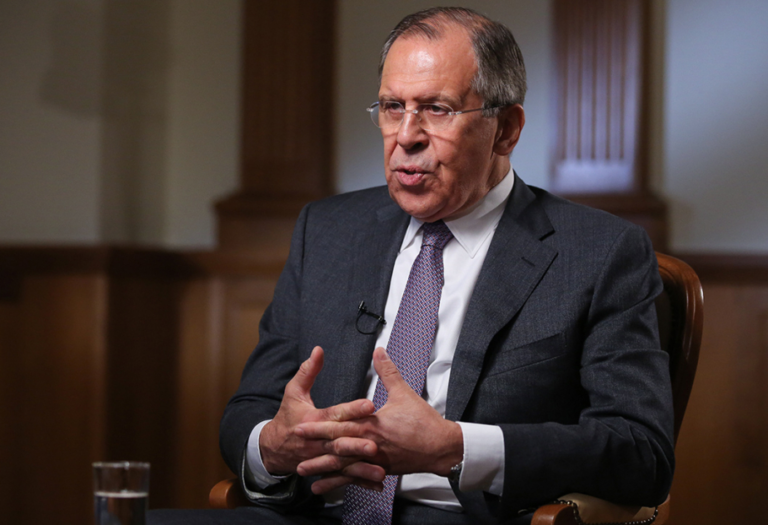
Mascow, Russia (TASS) – Russian Foreign Minister Sergey Lavrov said he saw a serious approach behind the Turkish government’s aspirations to join BRICS group, TASS reports.

“I assume that when a government says that they are making a specific step, it is backed by serious intentions,” the minister said in an interview with RBC when asked to comment on Turkey’s plans to become a member of the group.

At BRICS, there are no rules forbidding members of certain organizations from having ties with the grouping, Russia’s top diplomat added. He referred to Turkey’s NATO membership and EU candidate status that has been on the books for long.

RAED MORE : Turkey seeks to join the BRICS bloc of emerging economies, a Kremlin official says

“The main thing for full-fledged members and countries developing various forms of cooperation with BRCIS is to share common values that are different from the ones the European Union has been defending in Ukraine,” he underscored.

“All BRICS members stand ready to comply with provisions of the UN Charter in their entirety and interconnection. Not on an optional or random basis. For this is what constitutes multipolarity,” Lavrov concluded.

China’s global battery ram will be hard to stop

Hong Kong (Reuters Breakingviews) – China’s electric cars have zoomed into a new era of battery-powered driving. Now models such as BYD’s (002594.SZ), opens new tab Seal and Great Wall Motor’s (601633.SS), opens new tab Funky Cat face an international backlash.

The U.S. is quadrupling duties on imports of electric vehicles from the People’s Republic to more than 100%, while the European Union is lifting total tariffs close to 50% for some marques. The Chinese-made batteries that power the vehicles are an obvious next target for trade restrictions. But that battle will be even harder for the West to win.

ywAAAAAAQABAAACAUwAOw==

China is a battery powerhouse. The $115 billion Contemporary Amperex Technology (300750.SZ), opens new tab and its smaller compatriots accounted for two-thirds of the global market for power cells used in electric cars in the first half of 2024, Bernstein analysts reckon.

Companies from the People’s Republic are also growing faster: installations by SVOLT Energy Technology more than doubled in the period from January to June, while those from rivals CALB (3931.HK), opens new tab, Guoxuan (002074.SZ), opens new tab, CATL and BYD all grew by more than a fifth compared to 2023. They’re profitable too, with CATL raking in more than 40 billion yuan ($5.6 billion) in earnings last year.

Much of that output is exported: the total volume of lithium battery units leaving China roughly doubled between 2015 and 2023, according to the International Trade Centre. The U.S. and Europe have become major buyers of Chinese cells, squeezing local operators like Sweden’s Northvolt.

ywAAAAAAQABAAACAUwAOw==

THE BACKLASH

Now Western policymakers are pushing back. President Joe Biden in May laid out plans to hike tariffs on imports of batteries and their parts to 25%, from the previous 7.5%. His flagship Inflation Reduction Act, which subsidises electric cars by up to $7,500, from 2025 explicitly excludes vehicles for which battery materials were extracted, processed or recycled by a “Foreign Entity Of Concern, opens new tab”. That term covers companies headquartered or incorporated in China, and firms where the government holds 25% or more of its equity, voting rights or board seats.

Chinese manufacturers are also excluded from the Bipartisan Infrastructure Law’s $6 billion of credits for batteries and the critical minerals required to make them.

EU policymakers in Brussels are erecting similar barriers for Chinese-made batteries. They have not introduced additional tariffs, but a slew of guidelines on local and responsible sourcing makes trade increasingly costly and complex. So will the EU’s proposed carbon border tax, which will impose levies on emissions-intensive imports, including cars and related parts from 2030, opens new tab.

These efforts are likely to intensify as political relationships become testier. U.S. efforts to minimise the country’s dependence on its main strategic rival have broad bipartisan support. Officials are also anxious about the presence of Chinese tech in so-called dual-use products that have military applications. Batteries are crucial for submarines and drones.

And although the IRA is one of Biden’s signature policies, Donald Trump would probably hesitate to reverse it wholesale if he returns to the White House. Battery-related investments spurred by the tax credit scheme are concentrated in Republican-leaning states, UBS analyst Tim Bush points out.

LEAP OF FAITH

To successfully unplug from Chinese suppliers, however, Western countries will need to develop alternatives. Korean battery giants such as LG Energy Solution (373220.KS), opens new tab, SK On and Samsung SDI (006400.KS), opens new tab, which account for a combined global market share of 23.5%, are expanding in the U.S. and the European Union. However, relying on this trio has downsides, because they lag larger Chinese rivals’ technical prowess. None have so far managed to ramp up mass production of increasingly popular lithium-iron phosphate cells, for instance.

Developments in battery technology may allow upstarts to leapfrog established leaders. The most promising prospect is solid-state batteries, which use a lithium-metal layer in place of a conventional anode – the part of the device to which current travels during charging. This offers higher energy density so that the pack powering a car can be safer, smaller, and lighter without sacrificing range.

Pioneers are jostling to bring the science out of the lab, and no one has a clear lead. Benchmark Minerals predicts that by 2030 the U.S. and China could each account for around a third of the market for this chemistry. Chinese leaders including CATL and BYD are exploring solid-state batteries. The world’s largest carmaker, Toyota Motor (7203.T), opens new tab, says, opens new tab it could be as little as three years away from putting vehicles using those products on the road. Volkswagen (VOWG_p.DE), opens new tabis partnering, opens new tab with New York-listed QuantumScape (QS.N), opens new tab to do the same.

BRAWN AND BRAINS

Yet overtaking Chinese battery makers is a tricky proposition. Solid-state products still use lithium, and some versions also require graphite, nickel and cobalt. Although China holds only around 7% of the world’s lithium reserves, it controls around 80% of lithium chemical production, according to the Organisation for Research on China and Asia, as well dominating in nickel and cobalt. The People’s Republic has such a tight grip on graphite that the United States recently had to push back restrictions on overseas supplies. Battery makers including Ford Motor (F.N), opens new tab are urging the U.S. Trade Representative’s Office to ease proposed duties on imports of the material, Reuters reported last week.

ywAAAAAAQABAAACAUwAOw==

If engineers concoct new recipes for cathodes and anodes, processing the necessary materials would probably still be less costly in China. The country currently churns out batteries at about three-quarters of the price of those made elsewhere. Research and development are more affordable in the People’s Republic, too. Researchers accounted for 80% of BYD’s record recruitment, opens new tab last year.

A large domestic customer base offers Chinese companies a vast testing ground that allows them to scale and commercialise new ideas quickly and cheaply. Nearly two-fifths of global patent applications relating to solid-state batteries come from China, according to local media.
State support further defrays costs. Last year, CATL was the top corporate recipient of government grants, the Nikkei reported. The company pocketed more than $800 million, opens new tab in 2023, double the 2022 figure, according to the Center for Strategic & International Studies.

NO ROOM FOR COMPLACENCY

Chinese stakeholders are not taking the status quo for granted. In January, a Tsinghua University professor warned China could lose its lead in batteries if it was not prepared for the risks posed by the rise of new technology. The state is coordinating a project involving six companies and investments of more than 6 billion yuan to incubate solid-state technology, Reuters reported in May, citing sources.
It’s too soon to declare victory in the war for the next generation of battery technology. However, it is currently hard to imagine China losing its edge in both mass production and innovation. Opting out of those products will make electric cars more expensive and less sophisticated. Beijing’s global battery ram looks very hard to stop.


Editing by Peter Thal Larsen and Ujjaini Dutta BY By Katrina Hamlin FOR REUTERS