Cuban Ambassador to Cambodia Liurka Rodríguez Barrios honored with the Order of Solidarity
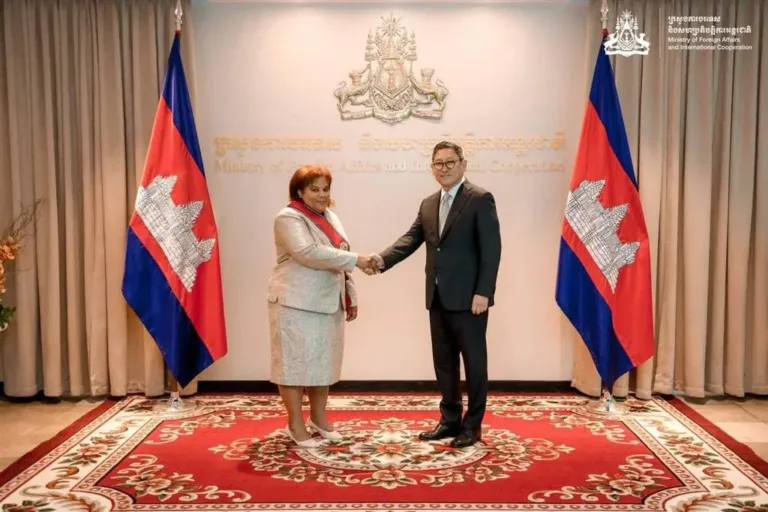
Phnom Penh, CAMBODIA (Prensa Latina/DT) – The Cuban ambassador to Cambodia, Liurka Rodríguez Barrios, today received the Order of Solidarity in the Grade of Grand Officer, in recognition of her commendable work in seeking to strengthen ties of friendship and cooperation.
The high award, granted by the King of Cambodia, Norodom Sihamoni, was awarded to him this Thursday here by the Deputy Prime Minister and Chancellor of the Kingdom, Sok Chenda Sophea, who appreciated the work of Rodríguez Barrios at the end of his mission.
Chenda Sophea also praised the progress in the historic ties between both countries, established at the diplomatic level on April 15, 1960, as well as the agreements and consensus reached in the exchange of high-level visits.
In thanking the decoration, the ambassador said she accepted it “on behalf of the heroic Cuban people, who have always had a close friendship with Cambodia,” and thanked the countless signs of support offered by this Indochinese nation to the noble causes defended by its compatriots.
Rodríguez Barrios, who ends his work here, was also received by the King of Cambodia, Norodom Sihamoni, an occasion that was conducive to taking stock of the state of bilateral relations, with progress in areas such as health, education, sports and agriculture, among others.
The president of the National Assembly of the Kingdom, Khuon Sudary, also held a meeting with the head of mission in which she highlighted the central role that Cuban and Cambodian women play in the construction of their respective nations.
Sudary called to continue expanding bilateral ties, especially in the legislative field, and ratified the commitment to continue accompanying Cuba in the fight to end the economic, financial and commercial blockade imposed more than six decades ago by the United States.
According to the Cuban diplomat, respect, admiration and the identification of common objectives of progress, despite the geographical distance, are hallmarks of the ties between her country and Cambodia.
These links also have a key historical component, Rodríguez Barrios stressed when meeting with members of the Association of Cambodian Graduates in Cuba, diplomats, sports collaborators and Cubans residing in the Kingdom on the eve of commemorating the 63rd anniversary of the establishment of diplomatic relations.
Georgia proud of friendship, strategic partnership with Türkiye: FM Ilia Darchiashvili
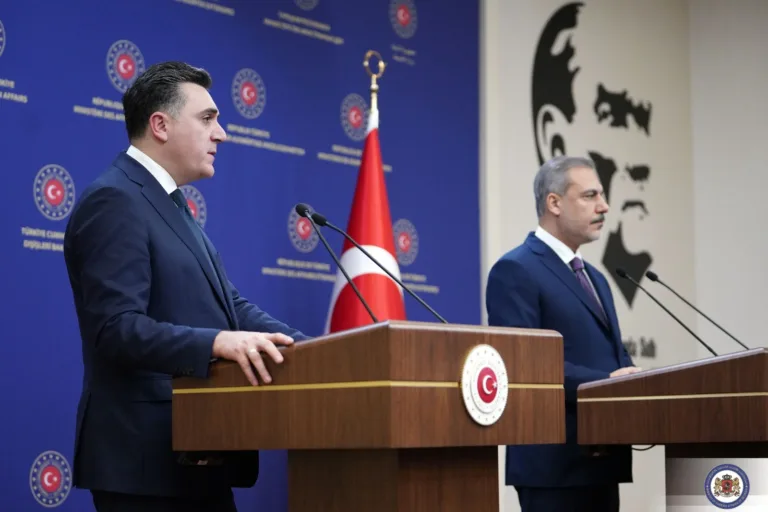
Istanbul, TURKEY (AA/DT) – Georgia’s foreign minister said on Thursday that his country is “proud” of its friendship and strategic partnership with neighboring Türkiye.
“We are really proud of our good neighborliness, friendship and strategic partnership with Türkiye, and we attach great importance to these relations,” Ilia Darchiashvili said in a news conference with his Turkish counterpart Hakan Fidan in the Turkish capital Ankara.
Underlining that strategic cooperation helps further strengthen Türkiye-Georgia ties, Darchiashvili said they also help them achieve efficient results in bilateral and multi-formats.
“The importance of our strategic cooperation, both regionally and globally, is paramount,” Darchiashvili added.
He highlighted the importance of regional peace and stability for Georgia and that its cooperation with Türkiye be consolidated and further strengthened as soon as possible.
On his meeting with Fidan, he said they agreed on continuing active work on organizing a visit by Turkish President Recep Tayyip Erdogan to Georgia, as well as a visit by Georgian Prime Minister Irakli Kobakhidze to Türkiye.
During my official visit to the Republic of Turkey, I held a fruitful meeting with my Turkish counterpart. We delved into insightful discussions on the crucial elements of the bilateral agenda between Georgia 🇬🇪 and Turkey 🇹🇷, highlighting the potential for enhancing our strategic partnership. Foreign Minister of Georgia shared this update on X platform.
Within my official visit to the Republic of Türkiye, had a very good meeting with my Turkish colleague @HakanFidan. We had an insightful discussion on the core themes of 🇬🇪🇹🇷 bilateral agenda, with the focus on the prospects for the further development of our strategic… pic.twitter.com/NQH2164qfs
Darchiashvili also said he conveyed to Fidan an invitation to visit Georgia, adding that they discussed ways to fully utilize the potential between the two nations.
During their meeting, Fidan reaffirmed Türkiye’s “determined stance and support for Georgia’s sovereignty and territorial integrity,” Darchiashvili said.
“We discussed with my esteemed counterpart the problems we face in terms of security and the processes in the region in general, and what we can do to strengthen peace and stability in the region,” he said, adding that Türkiye maintains its place as Georgia’s largest commercial partner.
India to launch first helicopter emergency medical service in Uttarakhand
New Delhi, INDIA (DT) – On Thursday, the Indian government revealed plans to inaugurate the nation’s inaugural Helicopter Emergency Medical Service (HEMS) from Uttarakhand, a northern state.
Indian Civil Aviation Minister Jyotiraditya Scindia shared the announcement via a video posted on his social media account.
देश की पहली हेलीकॉप्टर इमरजेंसी मेडिकल सर्विस (HEMS) उत्तराखंड से प्रारम्भ की जा रही है, जहाँ एक हेलीकाप्टर एम्स ऋषिकेश तैनात किया जाएगा ताकि अगर 150 किलोमीटर की क्षेत्र में अगर कोई दुर्घटना होती है तो उस व्यक्ति को तुरंत हेलीकाप्टर के माध्यम से अस्पताल पहुँचाया जाएगा। pic.twitter.com/LtdLyz0CeW
“I wish to inform the people of Uttarakhand that the country’s inaugural HEMS service will commence from your state,” stated Scindia. “The helicopter designated for this purpose is currently undergoing assembly and certification. It is under my direct supervision, and I am overseeing its progress.”
Scindia further detailed that a helicopter would be stationed at the All India Institute of Medical Sciences (AIIMS) in Rishikesh. Its operational range would extend up to 150 km, facilitating the airlifting of accident victims from highways or other locations to the medical facility.
The introduction of HEMS aligns with the government’s initiative to utilize helicopters for extending medical outreach and trauma care services to remote areas. This initiative aims to ensure prompt transportation of accident victims and patients from challenging terrains, facilitating immediate critical care following emergencies.
How many countries currently operate Helicopter Emergency Medical Services (HEMS)?
According to research gate data website Helicopter EMS (HEMS) services were operational in 24 countries as of 2020. Cyprus, Iceland, Lithuania, and Serbia reported that they did not have active HEMS services. Denmark, the Netherlands, Norway, Portugal, Slovakia, and Switzerland reported 24/7 HEMS availability across all regions.
Additionally, 18 countries had established first responder systems, where volunteers were alerted to out-of-hospital cardiac arrests (OHCA) by dispatch centers, either in some or all areas. Albania, Belgium, Cyprus, Finland, Greece, Poland, Portugal, Serbia, and Slovakia were among the countries that did not have first responder systems in place.
A history of Helicopter Emergency Medical Services
According to Air Bus story in late spring of 1969, a young boy named Björn Steiger spends the day at the local swimming pool in his hometown of Winnenden, Germany.
On his way home that afternoon, he is struck by a car. The local police and Red Cross are immediately contacted, but it takes almost a full hour before the ambulance arrives on the scene. Björn Steiger dies on the way to the hospital.
This story and many others were the reality of what emergency medical services looked like for much of the 20th century. Whether suffering an injury at the top of a mountain or in the middle of a highway, a nascent emergency medical response system meant that many victims did not receive the care they needed fast enough.
Today, Helicopter Emergency Medical Services (HEMS) systems have matured in many countries around the world. The biggest advantage is that helicopters can reach a location three-to-five-times faster than a ground vehicle and sometimes is the only way to access inhospitable terrain.
The pioneering Bo 105 helicopter has been purchased by more than 300 operators around the globe, including Germany’s ADAC air rescue service. Photo AirBus
Patients receive medical treatment earlier and the chance of survival in critical cases goes up significantly. Airbus products were instrumental in the development of the HEMS systems working today.
Air medical evacuation first began its story with fixed-wing aircraft. It wasn’t until the Korean and Vietnam wars that helicopter use became standard for military medical evacuation (MEDEVAC). With such a positive impact, HEMS soon was introduced into the civilian sphere.
Several countries led the way in adopting helicopter use for civilian populations. Flight for Life became the United States’ first civilian HEMS operator in 1972, based at St. Anthony Central Hospital in Denver, Colorado.
The French Sécurité Civile began rescue missions dating back all the way to 1959 when for the first time it rescued a mountaineer suffering from a heart attack at the highest resting point on Mont Blanc (and indeed the highest in all of Europe) the Vallot refuge, at 4,362 metres.
The SAF Group followed suit and in 1979 began rescue operations in the French Alps. In Germany, the authorities took the decision to launch a medical helicopter trial period with a doctor and a paramedic onboard in order to shorten the response time for accidents, pioneering the concept of taking the physician to the scene of the accident. This approach provided primary care within 10-20 minutes after sounding the alarm.
A day after his latest hospital release, Austin presses for urgent military aid for Ukraine
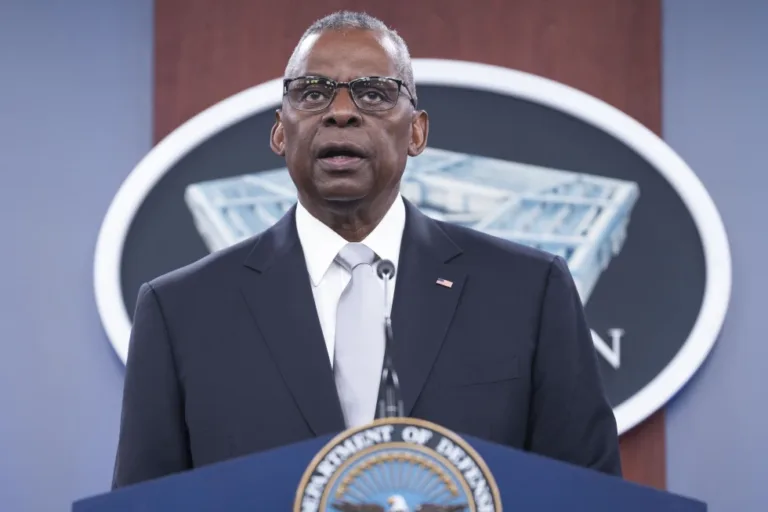
WASHINGTON (AP) — A day after his latest hospital stay for health issues following treatment for prostate cancer, Defense Secretary Lloyd Austin hosted a virtual session on Ukraine to help resource urgently needed ammunition and artillery for Kyiv as it faces shortages in its now almost two-year war with Russia.
In his opening remarks to the Ukraine Defense Contact Group, a regular gathering of about 50 member countries that coordinate military support for Ukraine, Austin said Wednesday he’d intended to be with the group in person, “but I had to return to the hospital for non-surgical procedures.”
“I’m in good condition, and my cancer prognosis remains excellent,” he said.
Austin conducted the virtual session from his home, where he is still recovering from complications from his December surgery to treat prostate cancer. Austin was released from Walter Reed National Military Medical Center Monday after being treated for a bladder issue.
The Pentagon has been out of funds to send weapons and ammunition to Ukraine since December. Since then European allies have continued to send some support but the loss of regular shipments of ammunition to Ukraine is having an impact.
Austin said in his opening remarks that the contact group would work Wednesday on resourcing some of Ukraine’s most critical near-term needs, “including its urgent need for more artillery, ammunition and air defense missiles.”
It’s not clear if, or when, Congress will come to an agreement that would give the Pentagon additional funds to restart regular shipments of ammunition to Ukraine’s front lines.
The Senate passed its latest version of a multibillion-dollar war funding package early Tuesday with some Republican senator support, stripping out controversial border security language that has been a sticking point for conservative members in hopes that the pared-down bill could gain Republican support in the House.
But House Speaker Mike Johnson has already indicated that it could be weeks or months before Congress sends the legislation to President Joe Biden’s desk — if at all.
The Pentagon has argued that the Ukraine and Israel funding package is also good for the U.S. economy. The war spending has pumped billions into the economy as the military ramps up domestic production of ammunition and weapons systems in order to replenish its own stockpiles.
The $95.3 billion legislation includes $60 billion for Ukraine; $14 billion for Israel’s war with Hamas, $8 billion for Taiwan and partners in the Indo-Pacific to counter China, and $9.1 billion in humanitarian assistance for Gaza and the West Bank, Ukraine, and other populations caught in conflict zones across the globe.
Prabowo Subianto, the Indonesian defense chief associated with past human rights abuses, clinches victory in presidential election
JAKARTA, Indonesia (AP) — Defense Minister Prabowo Subianto, an ex-general linked to past human rights atrocities, claimed victory in Indonesia’s presidential election on Wednesday based on unofficial tallies.
The 72-year-old candidate, who was once banned by the United States from entering for two decades due to his human rights record, told thousands of supporters in a sports stadium in the capital, Jakarta, that the victory, according to an early, unofficial “quick count,” was “the victory of all Indonesians.”
There was no declaration by electoral officials and the two former provincial governors who also contested the election in the world’s third-largest democracy have not conceded defeat.
Subianto was an army general during the brutal period of the Suharto dictatorship that ended just over 25 years ago. He served as a special forces commander in a unit linked to torture and disappearances, allegations that he vehemently denies.
According to the unofficial tallies conducted by Indonesian polling agencies, Subianto had between 57% and 59% of votes, with more than 80% of the vote counted in polling places sampled.
The quick counts are based on the actual vote count at a sample of polling stations across Indonesia. The laborious official count may not be finished for up to a month, but quick counts have provided an accurate picture of the results of all four presidential elections held in Indonesia since it began direct voting in 2004.
“We are grateful for the quick count results,” he said in the speech, broadcast on national television. “We should not be arrogant, we should not be proud, we should not be euphoric, we still have to be humble, this victory must be a victory for all Indonesian people.”
To avoid a runoff against his rivals, Anies Baswedan and Ganjar Pranowo, Subianto needs more than 50% of all votes cast and at least 20% in each of the country’s provinces.
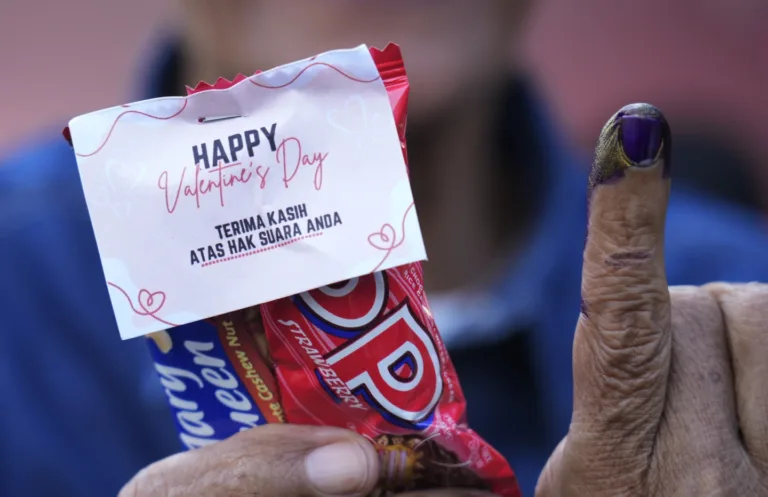
President candidate Anies Baswedan shows his Inked finger after casting the vote at a polling station during election in Jakarta, Indonesia, Wednesday, Feb.14,2024. Photo : Tatan Syuflana/AP
Subianto has presented himself as an heir to immensely popular sitting President Joko Widodo, whose son he chose as his running mate.
Widodo’s successor will inherit an economy with impressive growth and ambitious infrastructure projects, including the ongoing transfer of the nation’s capital from congested Jakarta to the frontier island of Borneo at a staggering cost exceeding $30 billion.
The election also has high stakes for the United States and China, since Indonesia has a huge domestic market, natural resources like nickel and palm oil, and diplomatic influence with its Southeast Asian neighbors.
Widodo’s rise from a riverside slum to the presidency has shown the vibrancy of Indonesia’s democracy in a region rife with authoritarian regimes.
But with a leading candidate linked to a former dictator, and Widodo’s son on the ballot, some observers fear that democracy is eroding.
Indonesians voted on Wednesday in an election that took just six hours. The logistics of the vote across the tropical nation’s 17,000 islands inhabited by 270 million people were daunting: Ballot boxes and ballots were transported by boats, motorcycles, horses and on foot in some of the more far-flung locations.
Aside from the presidency, some 20,000 national, provincial and district parliamentary posts were contested by tens of thousands of candidates in one of the world’s largest elections, which authorities said concluded with no major problems. About 10,000 aspirants from 18 political parties eyed the national parliament’s 580 seats alone.
Voters interviewed by The Associated Press expressed hope their next leader would help them achieve greater prosperity in a country where nearly a tenth of the population still lives in poverty.
“I hope Indonesia can progress better and that I did not vote for the wrong person,” said Indra Nurohim, a 17-year-old high school student and first-time voter. “I hope we will have a better government.”
Subianto, the oldest presidential candidate at 72, lost in two previous runs to Widodo but was the front-runner in independent surveys. His running mate, Widodo’s eldest son, Gibran Rakabuming Raka, was allowed to run when the Constitutional Court made an exception to the minimum age requirement of 40. The court was then headed by Widodo’s brother-in-law, who was removed by an ethics panel for not recusing himself, and Widodo was accused of favoritism and nepotism.
Critics have accused Widodo of trying to build a political dynasty despite his being the first president to emerge from outside the political and military elite since the 1998 end of the dictatorial rule of Suharto, characterized by widespread human rights violations, plunder and political unrest.
Vice President candidate Gibran Rakabuming Raka, center, the eldest son of Indonesian President Joko Widodo, and his wife Selvi Ananda walks upon their arrival at a polling station during the election in Solo, Indonesia, Wednesday, Feb.14,2024. Photo : Achmed Ibrahim/AP
Subianto, a former lieutenant general who married one of Suharto’s daughters, was a longtime commander in the army special forces, called Kopassus. He was dishonorably discharged in 1998 after Kopassus forces kidnapped and tortured political opponents of Suharto.
Of at least 22 activists kidnapped that year, 13 remain missing to this day, and their families protest weekly outside the presidential palace demanding the activists be accounted for. Subianto never faced a trial and denied any involvement, although several of his men were tried and convicted.
During the campaign period that concluded last weekend, Subianto and his strategists used AI and social media platforms like TikTok to soften his image by portraying him as a cuddly grandfather to his youthful running mate. Rejected by human rights activists, he danced on the campaign stage and promised to generate nearly 20 million jobs in his first term if elected.
Baswedan, the former head of an Islamic university, served as governor of Jakarta until last year. A former Fulbright scholar, Baswedan was education and culture minister from 2014 to 2016, when Widodo removed him from the Cabinet after accusing him of failing to address problems of thousands of students affected by forest fires.
Baswedan opposes Widodo’s plan to move the Indonesian capital from Jakarta to Nusantara on Borneo island, which involves constructing government buildings and residential enclaves by clearing lush tropical rainforests.
In an interview with the AP last month, he said democracy in Indonesia is under threat, given Subianto’s choice of the president’s son as running mate.
“This means that there is a decline in trust, it means that our democracy is experiencing a decline in quality, it means that many legal rules are being bent,” he said.
Pranowo is the governing party candidate but does not have Widodo’s support. He was a national legislator for the ruling Indonesian Democratic Party of Struggle for 10 years before being elected in 2013 for the first of two terms as governor of the vote-rich Central Java region.
While governor, Pranowo refused to allow Israel to participate in the Under-20 FIFA World Cup to be held in his province. FIFA subsequently dropped Indonesia as host of the games, angering Indonesian soccer fans and Widodo.
Israel and Indonesia, the world’s largest Muslim-majority nation, do not have diplomatic ties.
Under Widodo, Indonesia saw a period of remarkable growth averaging 5% annually, except in 2020, when the economy contracted due to the coronavirus pandemic.
His economic roadmap, called “Golden Indonesia 2045,” projects Indonesia becoming one of the world’s top five economies with GDP of up to $9 trillion, exactly a century after it won independence from Dutch colonizers.
BY NINIEK KARMINI AND EDNA TARIGAN
Associated Press journalist Jim Gomez contributed to this report.
Thai man given 36 years in jail for Facebook posts deemed critical of monarchy
Bangkok, THAILAND (EFE) – A Thai court has sentenced a man to 36 years in prison for publishing messages on social media deemed in violation of the country’s strict lese majeste and computer crimes law, legal sources reported Wednesday.
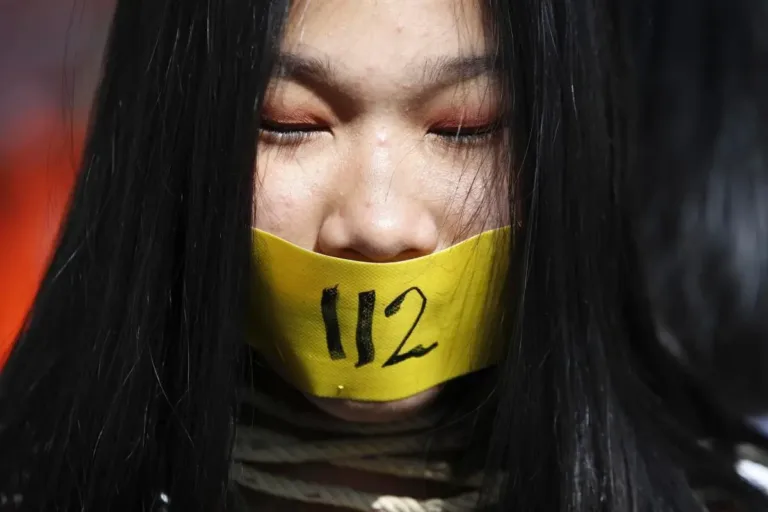
Anti-government protester holds pictures of detained leaders and some protesters during a rally standing for 112 minutes calling to free them, at Victory Monument in Bangkok, Thailand, 02 May 2021. EFE-EPA FILE/NARONG SANGNAK
According to the NGO Thai Lawyers for Human Rights (TLHR), the man, identified only as Wut, was initially sentenced to 36 years in prison but had the sentence reduced to 18 years due to admission and cooperation with authorities.
The individual, about 51 years of age, has been detained in Minburi district, on the outskirts of Bangkok, since March 2023 and had his request for bail denied repeatedly, TLHR noted in a statement, describing him as a political prisoner.
The accusations date back to 2021, when the authorities denounced Wut for publishing a dozen entries on Facebook with content that was “insulting, slanderous, defamatory, and expressed hostility” towards the king of Thailand and other members of the royal family.
Some of the images included portraits of royals in a way that led users to “understand the king, queen and royal family as not good people,” according to prosecution reports compiled by TLHR.
Wut was convicted of violating the country’s hardline lese majeste law, which punishes offenses deemed to be insulting or defaming the royal family with up to 15 years in prison, and committing computer crimes.
TLHR denounced the increase in lese majeste cases in Thailand since November 2020, when the government resumed arrests and prosecutions under the law, apparently to suffocate the pro-democracy protest movement led by university students across 2020 and 2021.
According to the NGO’s most recent data, as of December 2023, at least 1,938 people have been prosecuted for political expression since July 2020, including 286 minors under 18 years of age. EFE
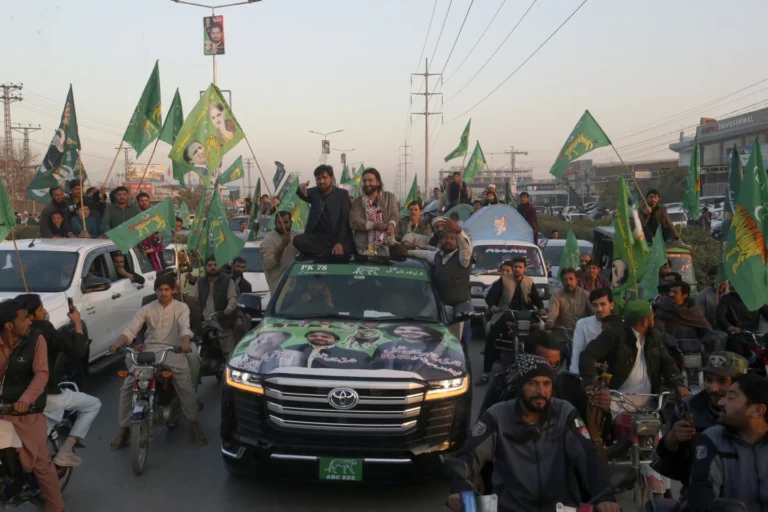
Allies of imprisoned ex-Prime Minister Imran Khan won the most seats in the lower house of parliament in the elections last Thursday. It was a shock outcome given the obstacles: His Pakistan Tehreek-e-Insaf party could hold no campaign rallies, had no polling agents on election day and faced internet restrictions. They won 93 out of 265 National Assembly seats. It’s not enough to form a government, however.
The other two mainstream parties, led by Khan’s rivals, also failed to secure enough seats to form a government on their own. They are the PML-N of former Prime Minister Nawaz Sharif and the PPP, led by political dynasty scion Bilawal-Bhutto Zardari. They won 75 and 54 seats respectively.
It’s Pakistan’s parliament that chooses the next prime minister, so having a majority is crucial.
WHO’S IN THE RUNNING?
Not Imran Khan. He’s in prison and barred from holding public office. The PTI said it doesn’t want or need an alliance, claiming it has enough seats. It doesn’t. The party has public support — as shown by the number of seats that candidates scooped up — but it doesn’t have the backing of political peers.
Analyst Azim Chaudhry said the other parties have “grievances and grudges” against Khan from his time in office and that they’re not ready to shake hands with him because he’s made it clear he doesn’t want to talk to them.
The PML-N and PPP started coalition talks once it became clear that Khan loyalists had taken a lead. They claim to have pacts with smaller parties and newly minted parliamentarians, including defectors from Khan’s side, to bump up their seat quota to the magic majority number of 169.
But knowing who could become prime minister from this ragtag crowd is trickier.
Party insiders say Sharif isn’t suited to a coalition because of his temperament. His younger brother, Shehbaz, led a coalition after Khan was ousted from power and is regarded as more accommodating.
And then there’s Bhutto-Zardari, a former foreign minister. It’s not clear if he’ll want the top job in a government that came to power through such a tainted election.
But he and his party are key to any coalition because they have the third largest share of seats. Not for nothing is his father, Asif Ali Zardari, regarded as a kingmaker. He won’t do something that jeopardizes his son’s political future, like joining hands with Khan, according to Chaudhry.
There’s a chance of an outside candidate becoming prime minister to keep all sides happy, but it’s hard to see the two families relinquishing their claim to power.
WHAT’S THE MOOD?
People are unhappy about the way the election unfolded and how votes were counted. Legal challenges are underway to contest some results. There are protests and allegations about vote-rigging, with Khan’s supporters in particular angry about what they perceive as electoral theft. Police have used tear gas to disperse crowds and arrested dozens of people in sporadic demonstrations that have broken out across Pakistan. The international community and rights groups have expressed concern about voting irregularities.
WHAT HAPPENS NEXT?
Pakistan’s president has to convene the inaugural session of the new National Assembly within 21 days of the election, or Feb. 29. Lawmakers are sworn in during that session. They submit nomination papers for a number of key roles, including the speaker and leader of the house. After these positions are filled, a new prime minister is elected through a parliamentary vote, a task that requires a simple majority.
Police use tear gas against Indian farmers marching to New Delhi to demand guaranteed crop prices
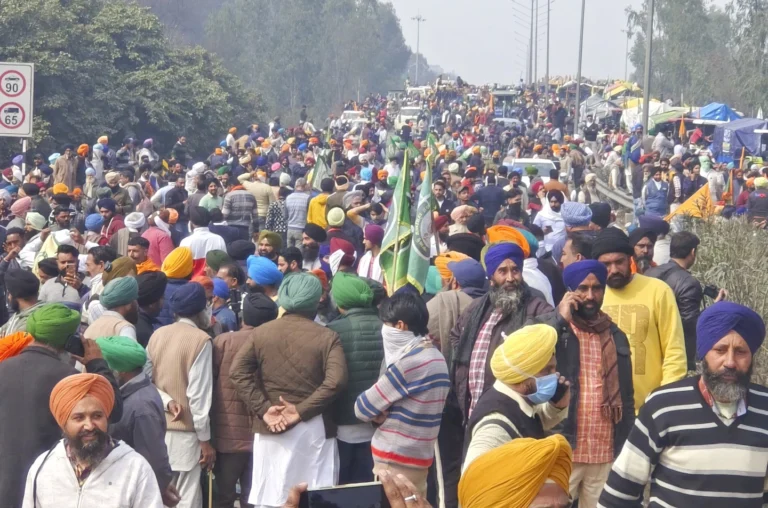
New Delhi, INDIA (AP) — Indian police on Tuesday used tear gas and detained some farmers who clashed with them and tried to break barricades blocking their way to New Delhi to demand guaranteed crop prices in a repeat of 2021 protests, when they camped on the capital’s outskirts for more than a year.
Police dropped tear gas canisters on the protesting farmers from a drone at one of the border points in northern Haryana state that leads to New Delhi, where tens of thousands of farmers are headed on tractors and trucks.
Police have sealed multiple entry points into the capital with barriers of giant metal containers, barbed wire, spikes and cement blocks. The government has banned large gatherings in the capital and suspended internet service in some districts of neighboring Haryana state to prevent communication among the protesters.
The farmers, who began their march in northern Haryana and Punjab states, are asking for a guaranteed minimum support price for all farm produce. The government protects agricultural producers against any sharp fall in farm prices by announcing a minimum purchase price for certain essential crops at the beginning of the sowing season, taking into account the cost of production.
Police barricade a major highway at Ghazipur near New Delhi to stop thousands of protesting farmers from entering the capital, India, Tuesday, Feb.13,2024. Photo : Sohnal Ganguly/AP
Farmers are also pressing the government to meet its promise to double their income and waive their loans. They say they will protest in New Delhi until their demands are met.
The withdrawal of the agricultural laws in November 2021 was seen as a major retreat by the Modi government, which was shocked in January that year when tens of thousands of farmers stormed the historic Red Fort in New Delhi.
After withdrawing the laws, the government said it would set up a panel of farmers and government officials to find ways to ensure support prices for all farm produce. Multiple meetings since then have made no progress.
The current march comes just months before a national election in which Modi is widely expected to win a third term.
Vehciles move at snail pace after Police barricade a major highway at Ghazipur near New Delhi to stop thousands of protesting farmers from entering the capital, India, Tuesday, Feb.13,2024. Photo : AP
The protests could pose a significant challenge for Modi and his governing Bharatiya Janata Party as farmers form the most influential voting bloc in India and politicians have long considered it unwise to alienate them. The stakes are high in Harayana and Punjab, where farmers form a sizeable population, as the two states send 23 lawmakers to India’s lower house of Parliament.
“We do not want to break any barricades. We want a resolution of our issues through dialogue. But if they (the government) do nothing, then what will we do? It is our compulsion,” Sarwan Singh Pandher, a leader of one of the farmer groups, told reporters Tuesday.
Pandher said talks between farm leaders and government ministers on Monday failed to produce any consensus on their key demands and the government refused to make a decision.
Some farmer and trade unions have also announced a countrywide rural strike on Friday.
(This story has not been edited by Diplomat Times’s staff and all content from auto-generated from a syndicated feed.)
Indian Farmers Stage Resurgence in Protests Against Government Policies
New Delhi, INDIA (AP/DT) – Tens of thousands of Indian farmers are marching toward the capital to demand guaranteed crop prices, renewing a movement from two years ago that succeeded in getting the government to repeal contentious new agricultural laws.
On Tuesday, police used tear gas, detained a number of farmers and heavily barricaded border points to block the protesters from entering New Delhi.
Authorities are determined to control the new demonstrations to avoid a repeat of the 2021 protests, in which tens of thousands of farmers camped outside the capital for over a year, enduring a harsh winter and a devastating COVID-19 surge.
In a significant resurgence, Indian farmers have once again taken to the streets to protest against government policies that they claim are detrimental to their livelihoods and well-being. The renewed protests mark a continuation of the farmers’ agitation that began over a year ago and have intensified in recent weeks.
WHY ARE FARMERS PROTESTING AGAIN?
The farmers, who rode on tractors and trucks from neighboring Haryana and Punjab states, say the government has failed to meet some of their key demands from the previous protests.
Farmers run for cover after police fired tear gas to disperse protesting farmers who were marching to New Delhi near the Punjab-Haryana border at Shambhu, India, Tuesday, Feb.13, 2024. (AP Photo/Rajesh Sachar)
In 2021, Prime Minister Narendra Modi repealed a set of agricultural laws that had triggered the first round of protests from farmers, who said the legislation would hurt their incomes.
But farmer groups that are leading the current march say that since then, the government hasn’t made progress on other important demands such as guaranteed crop prices, a doubling of farmers’ income and loan waivers.
The demand for legislation that will guarantee minimum support prices is at the heart of their protests.
Currently, the government protects agricultural producers against any sharp fall in farm prices by setting a minimum purchase price for certain essential crops, a system that was introduced in the 1960s to help shore up food reserves and prevent shortages. But the farmers are demanding that this be extended to all farm produce, and not just essential crops.
WHAT HAPPENED LAST TIME?
In November 2021, Modi’s announcement that his government would quash the controversial laws was widely seen as a win for the farmers and a rare retreat by the populist leader.
The government had defended the laws as necessary reforms to modernize Indian farming, but farmers feared the government’s move to introduce market reforms in agriculture would leave them poorer.
The protests, which began in northern India, triggered nationwide demonstrations and drew international support. Dozens of farmers died due to suicides, bad weather conditions and the pandemic.
Political commentators said the protest movement was the biggest challenge until that time for the Modi government, which then tried to paint its decision to scrap the laws as a move that prioritized farmers.
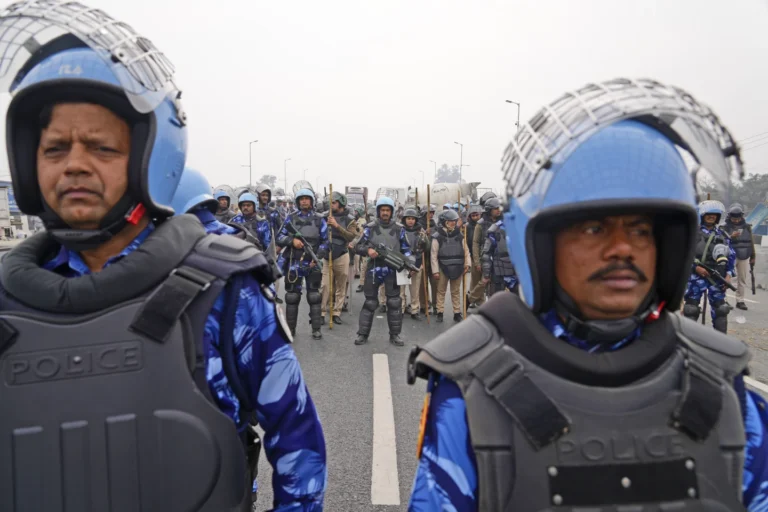
Rapid Action Force personnel guard a major highway at Singhu near New Delhi to stop thousands of protesting farmers from entering the capital, India, Tuesday, Feb.13, 2024. (AP Photo/Manish Swarup)
WHAT DOES THIS MEAN FOR MODI’S GOVERNMENT?
The protests come at a crucial time for the governing party and Modi, who is widely expected to sweep upcoming national polls and secure a third successive term.
In 2021, Modi’s decision to do away with the laws was seen as a move to appease farmers ahead of crucial state polls.
Farmers form the most influential voting bloc in India and are often romanticized as the heart and soul of the nation.
Politicians have long considered it unwise to alienate them, and farmers are also particularly important to Modi’s base. Northern Haryana and a few other states with substantial farmer populations are ruled by his party.
If the protests were to gain the same kind of momentum as last time, it could pose a new test for Modi and his government just a few months before the general election.
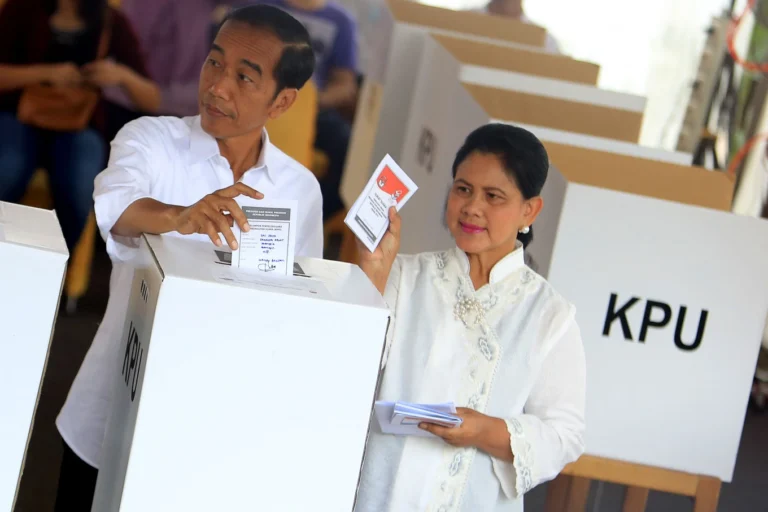
Indonesia election :Tomorrow, Indonesian President Jokowi and the First Lady will cast their votes at the Gambir Polling Station in Jakarta
Jakarta, INDONESIA (DT/ANTARA) – President Joko Widodo (Jokowi) and First Lady Iriana are slated to exercise their voting rights for the 2024 General Elections on February 14 at Polling Station No. 10 in Gambir, Central Jakarta.
They received their voter notification card from Hamdy Basjar, the head of Polling Station No. 10 organizing committee, at the Merdeka Palace on Monday.
The upcoming event holds significant importance in Indonesia’s democratic process, underscoring the crucial role of citizen participation and the exercise of voting rights in the nation’s electoral system.
The President’s designated polling station is situated within the State Administration Agency Building in the Gambir sub-district, east of the Presidential Palace, as confirmed by officials.
This polling station is expected to accommodate 120 registered voters listed in the final voters’ list. Additionally, it will cater to voters listed in the supplementary voters’ list (DPTb) and those who choose to register on-site at the polling station.
It is anticipated that the President, along with the First Lady, will exercise their voting rights at this polling station, with the expected timeframe for their visit spanning from 8 a.m. to 12 p.m., as indicated by officials.
It is noteworthy that the President had previously cast his vote at the same polling station during the 2019 General Election.
Furthermore, Basjar shared that apart from the President and the First Lady, other government officials are expected to cast their votes at Polling Station No. 10. However, the identities of these officials will only be revealed upon their arrival at the polling station on Election Day.
President Jokowi’s forthcoming presence at the polling station signifies the government’s unwavering commitment to upholding democratic principles, which form the foundation of Indonesia’s governance. As the nation’s leader, his participation serves as a compelling example to Indonesians, urging them to actively engage in the electoral process and contribute to shaping the nation’s future.
Accompanied by the First Lady, President Jokowi will join millions of Indonesians nationwide in selecting their representatives across various government levels. Their visit to the polling station not only underscores the significance of the impending elections but also highlights the imperative of transparency and accountability in the electoral process.
As Indonesians prepare to head to the polls, the nation stands united in its devotion to democracy, with President Jokowi and the First Lady leading by example through their active involvement in the electoral process. Their actions epitomize Indonesia’s democratic journey and its unyielding commitment to amplifying the voices of its citizens.
Public opinion regarding the frontrunner for the 2024 General Election leadership
Surveys suggest Prabowo has a strong lead, with polls released last week projecting that he could secure more than 50% of the votes on Wednesday – a requirement to win. Candidates are also required to win at least 20% of the vote in at least half of the country’s 38 provinces. Without this, the vote will go to a second round.
Prabowo, who has projected a much softer image in recent years, is running to be president for the third time, having lost against Jokowi in 2014 and 2019.
Prof Burhanuddin Muhtadi, executive director of Indonesia’s independent public opinion research institute, Indikator Politik Indonesia, said that support for Prabowo has continued to increase, but that there was still a possibility that the vote would go to a second round.
Voter turnout, especially among younger voters would be a crucial factor, he said.
“A decent turnout level among young voters will certainly help Prabowo to win the election outright in just one-round. Any significantly weak turnout rate among young voters would present a significant challenge especially if the voter turnout for Anies and Ganjar supporters is higher,” he added.