Home Blog Page 149

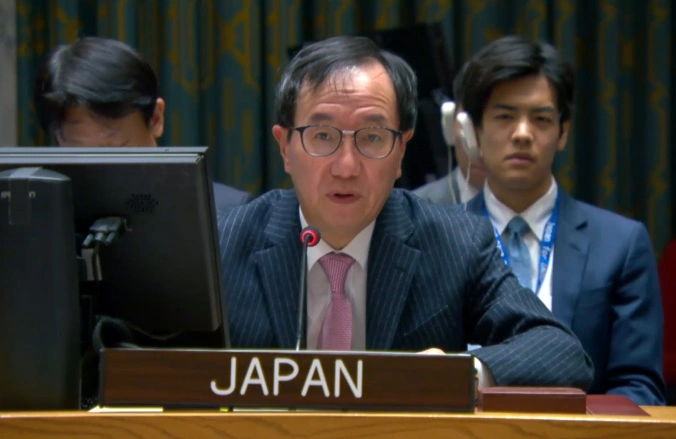
New Permanent Representative of Japan Presents Credentials to UN

0

New Permanent Representative of Japan Presents Credentials to UN

UNITED NATION – The new Permanent Representative of Japan to the United Nations, Yamazaki Kazuyuki, presented his credentials to UN Secretary-General António Guterres today.

Prior to his appointment, Mr. Yamazaki served as Permanent Representative to the International Organizations in Geneva, beginning in 2019.  Joining the Ministry of Foreign Affairs in 1983, he held several positions, including Senior Deputy Minister for Foreign Affairs from 2017 to 2019; Deputy Minister (Budget, Personnel, Parliamentary Relations) from 2015 to 2017; Deputy Director-General, Foreign Policy Bureau from 2012 to 2014; and Director, North American Affairs Bureau in the North America Division from 2003 to 2005.


READ MORE : UN Security Council in intense negotiations on Gaza humanitarian resolution, trying to avoid US veto

Between 2010 and 2012, he was Minister and Head of the Economic Section at the Embassy of Japan in Beijing, China.  He also served as Minister from 2009 to 2010, as well as Counsellor and Deputy Head of Political Section from 2001 to 2003 at the Embassy of Japan in Washington, D.C.  In addition, he served as Personal Assistant to the Prime Minister, Prime Minister’s Office in 2008 and as Chief of Staff to the Minister for Foreign Affairs, from 2005 to 2008.

Mr. Yamazaki attended the diplomatic training programme at Swarthmore College in the United States from 1984 to 1986, and received a bachelor’s degree in economics at Hitotsubashi University, in 1983 in Tokyo, Japan.

Follow Us: Facebook | Instagram | Twitter | Youtube |

Brazil wants G20 to boost resources for environmental protection

0

Brazil wants G20 to boost resources for environmental protection

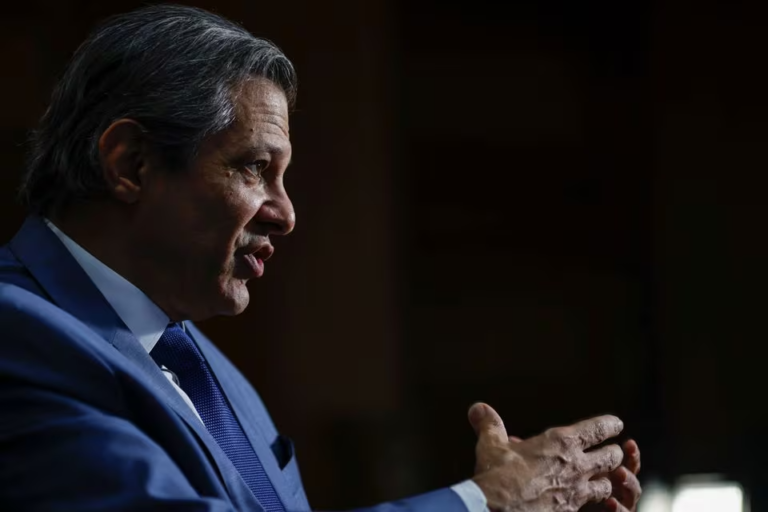
BRASILIA (Reuters) – The Brazilian presidency of the G20 group will strive to boost financial flows to countries in greatest need of resources for environmental protection, Brazil’s Finance Minister Fernando Haddad said on Thursday.

Addressing a G20 event in Brasilia, Haddad emphasized the need to review the functioning of existing climate funds and facilitate flows to the so-called Global South.


READ MORE :Brazil President Lula says G20 to debate more representative global institutions

At the same time, he underscored Brazil’s “particular concern” with strengthening multilateral banks, saying that along with international organizations, they are not equipped to face current challenges.

Brazil took over the G20 presidency earlier this month, prioritizing the fight against hunger and inequality, promoting sustainable development and energy transition, and reforming global governance.

During the opening of the group’s financial track, Haddad said the world needed “systemic solutions that place social considerations at the center of the climate change debate.”

Additionally, he emphasized the need for countries to use fiscal policy to support quality public investments to combat inequality and propel a fair global energy transition.

Haddad highlighted growing demand from the “increasingly vocal Global South” for a more ambitious international fiscal agenda to ensure that the world’s wealthiest contribute their fair share in taxes.

He expressed optimism about progress within G20 discussions on financial inclusion, crypto assets and cross-border payments, noting these topics would be addressed on Friday by Brazil’s central bank chief Roberto Campos Neto.

Reporting by Marcela Ayres; editing by Christina Fincher


Follow Us: Facebook | Instagram | Twitter | Youtube |

The $10 billion charity no one has heard of

0

BY ALEX DANIELS OF THE CHRONICLE OF PHILANTHOPY

UNITED NATIONS – A donor-advised fund dedicated to advancing the United Nations Sustainable Development Goals has undergone a remarkable transformation, transitioning from a relatively modest charity to one boasting assets comparable to major foundations like the Andrew W. Mellon and David and Lucile Packard foundations.

The SDG Impact Fund, headquartered in Cartersville, Georgia, surged from $238 million in assets in 2020 to an impressive $10 billion in 2021. This exceptional growth, seemingly propelled by the soaring popularity of cryptocurrencies and digital art assets, has raised inquiries from philanthropy and tax experts.

The less stringent legal reporting obligations for donor-advised funds (DAFs), in contrast to private foundations, create challenges in comprehending the SDG Impact Fund’s substantial expansion. The source of donations remains undisclosed, as DAFs are not obligated to disclose contributors. Furthermore, it remains unclear how the fund utilized its charitable contributions or whether donors are receiving any associated benefits. Despite repeated inquiries, leaders of the SDG Impact Fund have not provided responses to questions regarding the fund’s assets, expansion, and donations.


READ MORE : The UN peacekeeping mission in Mali ends after 10 years, following the junta’s pressure to go

Donor-advised funds have quickly become one of the most powerful forces in philanthropy, in part because the law allows people to put assets into a donor-advised fund, take an immediate tax deduction, but then wait indefinitely to use the money to make a charitable contribution. Donors are under no deadline to make gifts from their accounts — unlike foundations, which are required to pay out 5% in total assets every year in charitable giving.

“One of the biggest problems with philanthropy we see nowadays is that a lot of what wealthy donors do with their charity is perfectly legal but ethically problematic,” said Helen Flannery, a fellow at the progressive Institute for Policy Studies. “It’s in keeping with the letter of charity law but not its spirit.”

The quick rise of SDG Impact Fund

The SDG Impact Fund was founded as a nonprofit in 2013 by Anthony Suber and Amber Nystrom, whose backgrounds are in finance and wealth management, and Colborn Bell, founder of the crypto investment advisory firm Finite Square Well and founder-director of the Museum of Crypto Art.

In 2018, a news release described the fund as the first to accept all types of crypto, token, and digital assets to support the U.N. Sustainable Development Goals, 17 interlinked global objectives designed to reduce hunger, improve the environment, and increase equality.

By 2022, many of the board members had ties to the crypto industry. They included Vincent Molinari, co-founder of the Blockchain Commission for Sustainable Development, and Bryan Doreian, who serves as an adviser to PIVX, a cryptocurrency founded in 2015.

Donor-advised funds have long touted their ability to liquidate noncash gifts like stock and collectible art and turn them into charitable dollars. In recent years, as crypto soared to dizzying heights and then plummeted, large donor-advised funds like Fidelity Charitable reported huge swings in crypto donations. (Cryptocurrency is digital money exchanged through a computer network that is not reliant on or maintained by a government or bank.)

In 2021, donors gave the equivalent of $331 million in crypto to Fidelity accounts, up from $28 million the previous year, likely because high crypto valuations in 2021 allowed them to make larger gifts and lock in larger tax deductions. In 2022, the amount was down to $38 million, as the collapse of the FTX crypto exchange roiled the market for digital currency.

Flannery and Brian Mittendorf, an accounting professor specializing in nonprofits at Ohio State University, were researching donor-advised funds when they came across SDG Impact Fund’s 990 filings with the Internal Revenue Service.

They found that most of the donations to the SDG Impact Fund in 2021 came in the form of noncash assets, such as art and collectibles, as well as crypto-gifts, including nonfungible tokens, or NFTs, which are unique digital assets that are often traded as art.

The SDG Impact Fund’s assets skyrocketed over a couple of years — and stayed in the stratosphere. In 2017, the fund reported $117,000 in assets. By 2020, that had ballooned to $238 million. Then, on its 2021 Form 990, the fund reported $10 billion in assets.

Perhaps more remarkable than its steep rise in 2021 is the fact it reported roughly the same asset figure in 2022, when crypto values plummeted and new donations to the fund dwindled to about $13.6 million.

Flannery and Mittendorf said that the fund’s last two annual 990 filings raise questions about whether the fund’s main purpose of late has been to increase tax benefits for donors who held NFTs and cryptocurrency with highly appreciated values.

SDG Impact Fund’s high asset value in 2022 is curious to art adviser Todd Levin because cryptocurrency plummeted that year and NFT values “were in the toilet.” That the fund did not record a sharp reduction in value in 2022 raises a lot of questions, says Andie Kramer, a lawyer who specializes in cryptocurrency transactions.

Those questions are difficult to answer based on publicly accessible information. For instance, it is unclear how much of the gifts SDG Impact received were in the form of NFTs or cryptocurrency. The fund reported more than $9.8 billion in noncash donations in 2021, which could include NFTs and cryptocurrency as well as nondigital artwork and equity and stock holdings.

But on the form’s Schedule M, where nonprofits list noncash donations, the fund itemized less than $2 billion, meaning that donations of nearly $8 billion that year were not accounted for in the filing, according to Mittendorf.

Mittendorf said that providing a full itemization would help people understand the nature of the gifts it received.

“Taking into account the scale of assets we are talking about, this is an outlier that certainly deserves additional explanation,” he said.

The latest IRS tax filing is not signed by an independent accounting firm, which Kramer says is unusual for a fund of that size.

“If you had $10 billion, would you be filling out this form yourself?” asked Kramer.

Donating 0.1% of assets

SDG Impact Fund’s website states its “giving is aligned with the U.N. Sustainable Development Goals. In addition to charitable gifts, the fund provides systemic and regenerative impact investment and frontier tech enabled opportunities for catalytic gifts that have the opportunity to grow over time.”

On its website, the fund allows donors to click on links to contribute to any of 16 causes. They include Gaia Gives, a crowdfunding platform dedicated to meeting the Sustainable Development Goals through “storytelling and engagement,” and the Costa Rica Regenerative Retreat Sanctuary, where visitors “level up your life so you can be more productive in sharing your gifts with the world, making a lasting positive change for humanity.”

Another link on the site’s “impact” section leads to “Donate to Win,” which offers participants the chance to buy into a lottery for tickets to a Taylor Swift concert and a college football game.

The website does not explain how these tickets are related to achieving the Sustainable Development Goals. The SDG Impact site also does not indicate how much each cause received. (Donor-advised funds are only required to identify grantees that receive more than $5,000.)

One criticism of DAFs is that they allow the wealthy to derive benefits from charitable giving — without the actual charitable-giving part, at least not at the time they receive the tax benefit.

In 2021, the first year the SDG Impact Fund reported its $10 billion asset figure, the fund made $4.3 million in grants, according to its 990 form.

The following year, it reported $8.5 million in grants from its 146 donor-advised fund accounts, meaning less than one-tenth of a percent of its asset base went to charitable causes.

Given the dearth of information, Flannery is dubious that much of the $10 billion valuation will ever be directed to actual charities advancing the U.N. Sustainable Development Goals. She said the lack of information about who is making donations and how exactly the fund is using them is symptomatic of the lack of transparency of donor-advised funds.

“We need to make sure that donors aren’t using donor-advised funds for creative tax avoidance,” she said. “We need to make sure that we’re getting charitable works back.”


This article was provided to The Associated Press by The Chronicle of Philanthropy. Alex Daniels is a senior reporter at the Chronicle. Email: alex.daniels@philanthropy.com. The AP and the Chronicle receive support from the Lilly Endowment for coverage of philanthropy and nonprofits and are solely responsible for this content. For all of AP’s philanthropy coverage, visit https://apnews.com/hub/philanthropy.

Follow Us: Facebook | Instagram | Twitter | Youtube

Brazil President Lula says G20 to debate more representative global institutions

0

Brazil President Lula says G20 to debate more representative global institutions

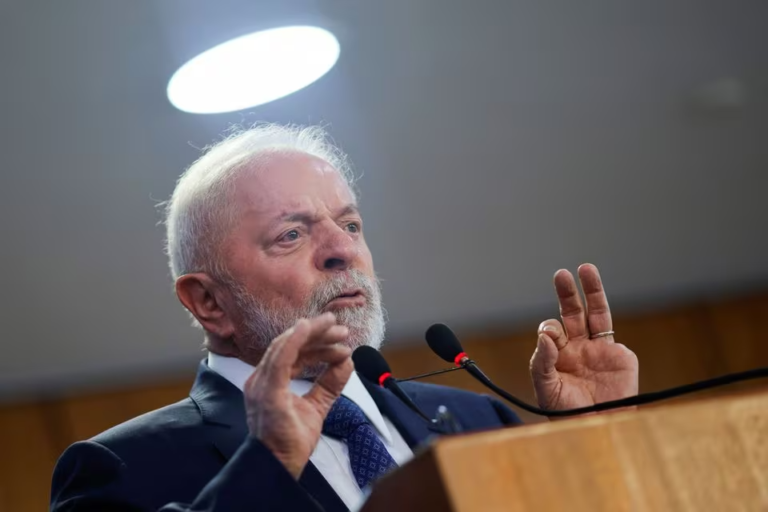
BRASILIA (Reuters) – Brazil’s President Luiz Inacio Lula da Silva on Wednesday urged the international community to work for a two-state solution to the Israel-Palestinian conflict, and called for better representation in global institutions like the United Nations.

Speaking at a preparatory meeting of sherpas ahead of the November G20 meeting that Brazil will host, Lula said Brazil will continue to work for a permanent ceasefire that allows humanitarian aid to enter Gaza and for the immediate release of all hostages held by Hamas.


READ MORE : G7 nations urge ‘urgent action’ to help civilians trapped in Gaza, including pauses in the fighting

“It is essential that the international community works towards a two-state solution, living side by side in security,” he said.

Lula said the G20 group of the world’s top economies is currently the political and economic forum with the greatest capacity to positively influence the international agenda in a world marked by the resurgence of conflicts, the emergence of protectionist blocs and environmental destruction.

“We want to seriously confront the debate about the anachronism of global governance institutions, which no longer have representation,” he said, referring to the five-member permanent U.N. Security Council create din 1945.

Lula called for reform of multilateral financial institutions so debtor nations are better represented and suggested looking at international taxation mechanisms to help finance development.

Brazil’s priorities as G20 president over the next 11 months will be the fight against hunger and poverty in the world, the promotion of sustainable development and the reform of global governance institutions, he said.

Reporting by Lisandra Paragguassu and Anthony Boadle, editing by Christina Fincher, William Maclean


Follow Us: Facebook | Instagram | Twitter | Youtube |

Indian Parliament Turmoil: Intruders Breach Security, Sparking Concerns and Calls for Rigorous Investigation

0

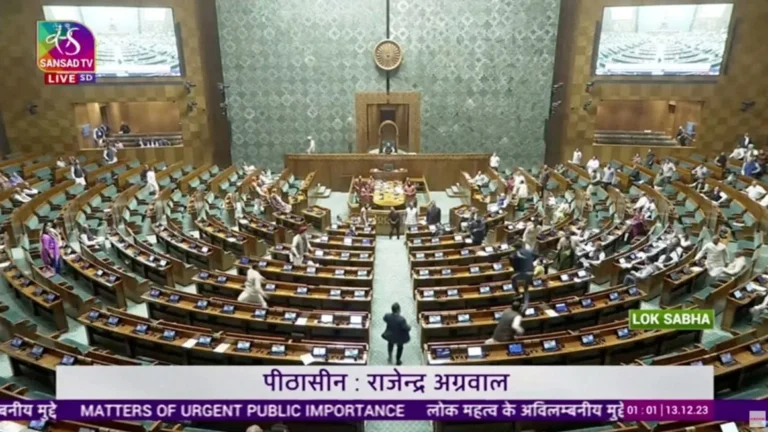
In a striking reminiscent event from the past, the Indian Parliament experienced a notable security breach on Wednesday, precisely 22 years after the distressing attack of December 13, 2001 Indian Parliament Turmoil

NEW DELHI – On Wednesday, a significant security breach occurred in India’s lower house of parliament when two unidentified individuals stormed the premises, coinciding with the anniversary of a deadly attack on the complex over two decades ago.

Sansad TV, the official parliamentary channel, broadcast live footage revealing one man vaulting over tables and dashing toward the speaker’s chair, prompting chaos among lawmakers attempting to restrain him. Simultaneously, another individual in the visitor’s gallery was observed releasing yellow smoke within the building.

In response to the disturbance, the parliamentary session was briefly adjourned as lawmakers evacuated the premises. Meanwhile, outside the building, two additional individuals were apprehended while chanting slogans, surrounded by the presence of law enforcement.

READ MORE : Kenyan President William Ruto accorded ceremonial welcome at Rashtrapati Bhavan, warm welcome by PM Modi

Upon the resumption of parliament, Om Birla, the speaker of the lower house, informed lawmakers that all four individuals had been arrested, and their possessions seized. Opposition lawmakers expressed grave concerns about the breach, with Mallikarjun Kharge, the leader of India’s primary opposition Congress party, emphasizing the seriousness of the situation. He questioned how two individuals managed to breach the elaborate security measures in place.

On Wednesday, Prime Minister Narendra Modi of India honored the individuals who lost their lives in the aforementioned incident.

“Today, we commemorate and extend sincere tributes to the courageous security personnel who sacrificed their lives in the Parliament attack of 2001. Their valor and dedication in the midst of peril will remain indelibly etched in our nation’s collective memory,” he expressed on X.

In 2001, a devastating attack on the Indian Parliament claimed nine lives and left several others injured. The assailants, armed with AK-47 rifles, grenade launchers, pistols, and grenades, infiltrated security using a vehicle with counterfeit government labels. This act was attributed to the Jaish-e-Mohammed and Lashkar-e-Taiba groups, both recognized as terrorist organizations by the United States. The attack had far-reaching consequences, contributing to heightened tensions between India and Pakistan in 2001.

Follow Us: Facebook | Instagram | Twitter | Youtube |
The UN peacekeeping mission in Mali ends after 10 years, following the junta’s pressure to go

0

The UN peacekeeping mission in Mali ends after 10 years, following the junta’s pressure to go

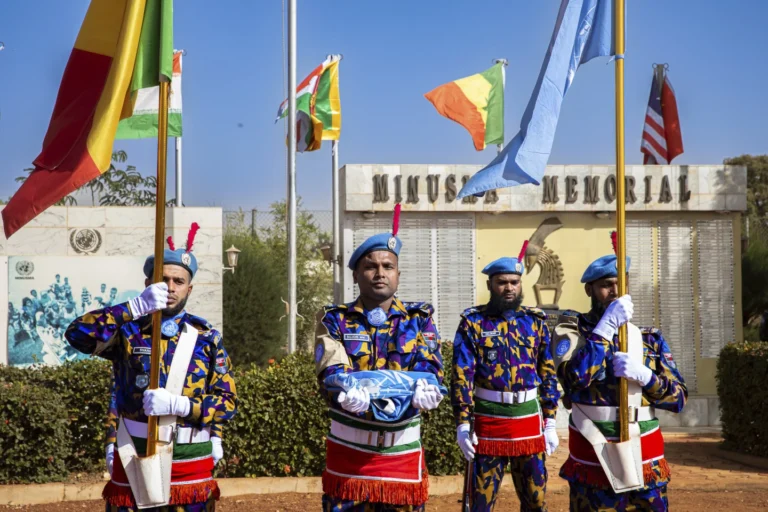
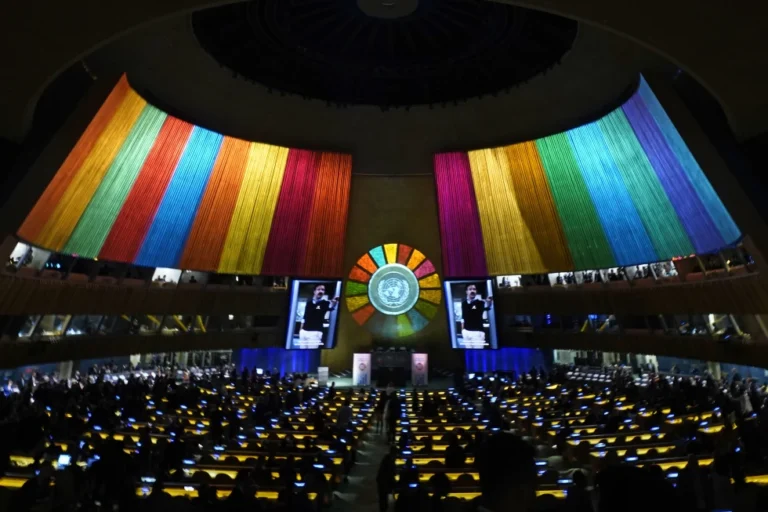
BAMAKO, Mali (AP) — The United Nations ended its 10-year peacekeeping mission in Mali on Monday following the government’s request that alleged the force was inadequate to respond to growing violent extremism in the West African nation.

“The Malian terrain was vast and difficult,” the commander of the 13,000-strong force, Maj. Gen. Mamadou Gaye, told the closing ceremony in Bamako, the capital.

The U.N. effort in Mali has been the deadliest peacekeeping mission in the world, with more than 300 personnel killed.


READ MORE : UN peacekeepers have departed a rebel stronghold in northern Mali early as violence increases

Landlocked Mali has struggled to contain an Islamic extremist insurgency since 2012. Extremist rebels were forced from power in northern cities the following year with the help of a French-led military operation. But rebels regrouped in the desert and began launching attacks on the Malian army and its allies — which soon included the U.N. force.

In June, however, Mali’s junta asked the U.N. mission to leave, claiming that its “future outlook doesn’t seem to respond to the security needs” of the country. The French force left last year under pressure from the junta.

Gaye, the U.N. mission commander, expressed confidence in Mali’s security forces to resolve the security crisis.

“It’s been a very positive mission which, when all is said and done, has given us a great deal of satisfaction, even if we’d like to do more with the limited resources we have,” he said.

But many in Mali have said the peacekeeping force has brought no stability, especially in the north where rebels are fighting to expand the territories they control.

Mahamadou Bassirou Tangara, a security analyst and researcher with the Conflict Research Network West Africa, said although the peacekeepers were not successful in helping to recover lost territories, they were able to improve the capacity of Malian security forces to tackle the crisis.

“MINUSMA (the mission) was here not to fight but to be a kind of bridge between the national army and some of the rebels” in the pursuit of peace, Tangara said.

There are growing concerns that U.N. peacekeeping operations are increasingly becoming unwelcome in parts of Africa, where a majority of the missions operate. In September, Congo requested the withdrawal of the U.N. mission trying to contain violence in the country’s east.

Last week, the U.N.’s top peacekeeping official defended the organization’s missions worldwide but noted limited funds to finance operations.

___
Associated Press writer Chinedu Asadu in Abuja, Nigeria contributed

Follow Us: Facebook | Instagram | Twitter | Youtube
Leaders of Guyana and Venezuela to meet this week as region worries over their territorial dispute

Leaders of Guyana and Venezuela to meet this week as region worries over their territorial dispute

GEORGETOWN, Guyana (AP) — As the leaders of Guyana and Venezuela prepare to meet this week to address an escalating dispute over a region rich in oil and minerals, Guyana’s president said he is coming with “goodwill’ but insisted that his country be respected and the case be heard at the International Court of Justice.

President Irfaan Ali spoke to reporters late Sunday, while his security detail wore shirts reading “ESSEQUIBO BELONGS TO GUYANA.”

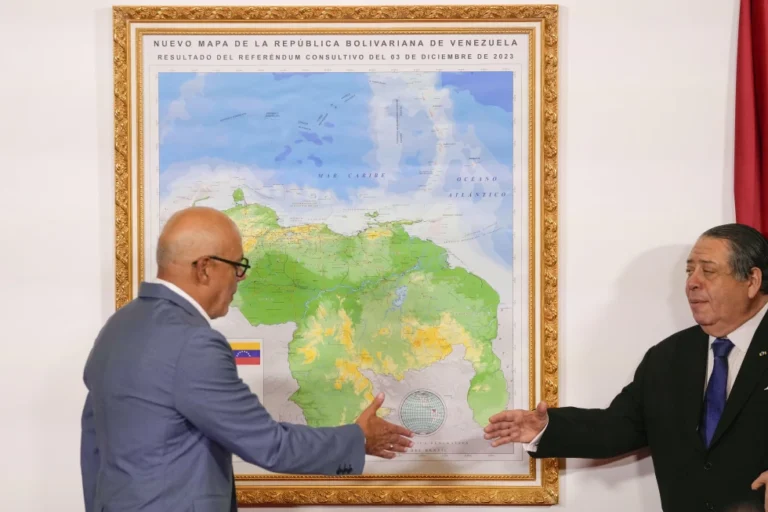
The dispute over Essequibo, which represents two-thirds of Guyana and borders Venezuela, worsened after Venezuela held a referendum earlier this month on whether to claim sovereignty over the region located near massive oil deposits.


READ MORE : Guyana Defense Force (GDF) helicopter with 3 crew members and 4 passengers missing near Arau border

Venezuela maintains that Essequibo was within its boundaries during the Spanish colonial period, and it rejects the border drawn by international arbitrators in 1899 when Guyana was under British rule.

Guyana’s president is scheduled to meet Thursday with Venezuelan President Nicolás Maduro behind closed doors on the eastern Caribbean island of St. Vincent. Invited to the talks are leaders including Brazilian President Inacio Lula da Silva.

“We are very confident that good sense will prevail,” Ali said. “We want peace, but we must be respected.”

He stressed that Guyana will not negotiate with Venezuela, insisting that the case be heard by the International Court of Justice in the Netherlands as planned.

“The world is behind us,” he said.

When asked if the U.S. has committed any military aid, Ali said he signed an advanced defense agreement with the U.S. to ensure that “major training programs and exercises” will continue.

“We also are talking to many other partners,” he said, without details. “We don’t want any conflict. We don’t want any war.”

Venezuelan Foreign Minister Yvan Gil told reporters Monday that “any decision must be mutual” and asserted that the dispute cannot be settled by the world’s court. He characterized the scheduled meeting as a “profound success” for Maduro, arguing that the Venezuelan president has long insisted on the need for dialogue between the countries.

In a video posted Sunday on social media, Gil said he met with his counterpart in Guyana and noted, “We are always in favor of dialogue between both countries to solve this controversy.”

Gil said he also has met with the presidents of CELAC — the Community of Latin American and Caribbean States — and Caricom, a Caribbean trade bloc.

In a statement Saturday, Ralph Gonsalves, prime minister of St. Vincent and the Grenadines, said the leaderships of CELAC and Caricom believe there is “the urgent need to de-escalate the conflict and institute an appropriate dialogue.”

Gonsalves noted that Ali agreed to discuss the controversy with Maduro despite Guyana’s Parliament unanimously instructing him not to do it.

“Let us all resolve to make this historic gathering a successful one,” Gonsalves said. “So much is at stake for our Caribbean and Latin American civilization.”


WHY IS THE BORDER UNDER DISPUTE?

Venezuela says it was the victim of a land theft conspiracy in 1899, when Guyana was a British colony and arbitrators from Britain, Russia and the United States decided the boundary. The U.S. represented Venezuela in part because the Venezuelan government had broken off diplomatic relations with Britain.

Days before Guyana Defence Force (GDF) helicopter wiThe Guyana Defence Force (GDF) minutes ago announced that it has lost contact with its GDF BELL 412 Helicopter (8R-AYA) approximately 30 miles east of Arau on the country’s western borders there were 3 crew members and 4 passengers were missing near Arau border.

___
Associated Press writer Regina Garcia Cano in Caracas, Venezuela contributed.

Follow Us: Facebook | Instagram | Twitter | Youtube |
Where in Europe speaks the best English and where will Anglophones struggle?

0

Where in Europe speaks the best English and where will Anglophones struggle?

PARIS ( EURONEWS)- Some of Europe’s most popular tourist destinations are the least proficient in English.

Moving to a new country can be daunting, especially if you don’t speak the language.

With English being the world’s most common second language, it’s often the de facto fallback while you’re still learning the local tongue.

So where in Europe will you be best understood – and in which countries do you need some local language proficiency from the get go?

Each year, global education company Education First (EF) pulls together the top (and bottom) countries when it comes to English speaking in its English Proficiency Index (EPI). Analysing the results of 2.2 million adults who took EF’s Standard English Tests in 2022, it gives each country a ranking out of 800 points.

Here’s how Europe fared in 2023.


READ MORE : Putin moves a step closer to a fifth term as president after Russia sets 2024 election date

Which European countries have the best English language skills?

As in 2022, the Netherlands once again took the top spot with 647 points, having the best second-language English skills both in Europe and of 113 countries globally.

But there are plenty of other places in Europe where you’re likely to be understood if you speak English.

Also among the top countries boasting ‘very high proficiency’ were Austria, which made it to 3rd place globally with 616 points. Nordic countries Denmark, Norway and Sweden dominated the next three spots, followed by Belgium, Portugal, Germany, Croatia and Greece.

European countries with a ‘high proficiency’ in English included Poland (13th globally), Finland, Romania, Bulgaria, Hungary, Slovakia, Lithuania, Luxembourg, Estonia, Serbia, the Czech Republic and Switzerland (30th place).


France falls behind in English skills

Some of Europe’s most popular tourist destinations, however, only have ‘moderate proficiency’ in English.

France has dropped down the scale since 2021, when it sat in the ‘high proficiency’ category in 31st place globally. In 2022, it dropped to ‘moderate proficiency’ with 541 points, placing it 34th. This year, it has fallen to 43rd place globally and 34th in Europe, with 531 points – the lowest of all Northern European countries included in the study.

With 535 points, Italy and Spain also fell in the ‘moderate proficiency’ category, coming in joint 35th place globally, or 32nd and 33rd in Europe – similar to their 2022 positions.

They were beaten by Georgia and Belarus, in 32nd and 33rd place globally. Other European countries in the ‘moderate proficiency’ category include Moldova (35th), Albania, Russia, Ukraine and Armenia (48th).

Places where you might really struggle to be understood include Türkiye (66th) and Azerbaijan (83rd) – both of which fall in the ‘low proficiency’ category.

Despite Spain, Italy and France ranking lower than many European countries, English proficiency is high in their capital cities.


Europe’s English skills have slumped this year

EF has been monitoring trends since the publication of its first EPI in 2011.

Despite Europe dominating the top of the index, it found that the continent’s English skills have slumped this year, with a number of high and very high proficiency countries reporting slightly lower scores. Generally though, European countries show steady improvement in the longer term.

It also found that English proficiency has plummeted globally among 18-20 year olds since 2020, due to educational disruption during the COVID-19 pandemic.

Native English speakers fall far behind in second language skills

With the rise of AI, EF predicts that we may eventually innovate our way out of linguistic constraints. But for now, it recognises the significance of English as a global language in driving innovation, opportunities and cultural understanding.

This has notoriously led to complacency among native English speakers. According to European Commission data from 2018, only 32 per cent of 15-30 year olds in the UK said they could confidently read and write in two or more languages.

This pales in comparison to the 80 per cent average across EU Member States. In France, 79 per cent of respondents said they could read and write in two or more languages, in Spain 85 per cent and in Italy 90 per cent.

Looking to skill-up? Serbia, Portugal and Romania are some of the easiest countries to learn the language in Europe, according to a study by learning platform Preply.

Follow Us: Facebook | Instagram | Twitter | Youtube |
Putin moves a step closer to a fifth term as president after Russia sets 2024 election date

0

Putin moves a step closer to a fifth term as president after Russia sets 2024 election date

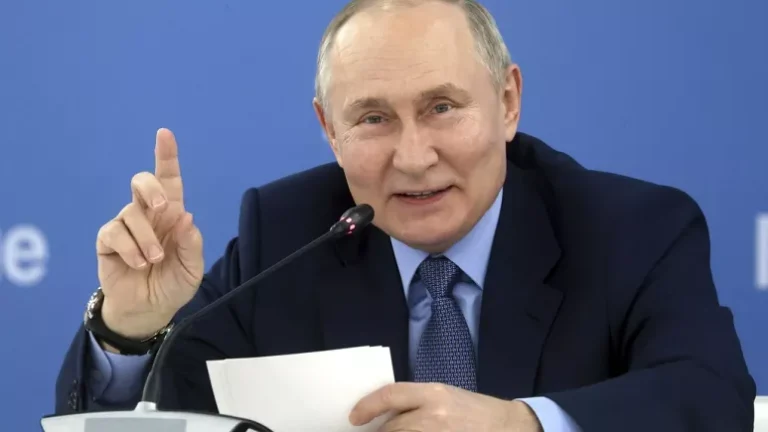
Moscow (AP) – Lawmakers in Russia set the country’s 2024 presidential election for March 17, moving Vladimir Putin a step closer to a fifth term in office.

Members of the Federation Council, Russia’s upper house of parliament, voted unanimously to approve a decree setting the date.

“In essence, this decision marks the start of the election campaign,” Valentina Matviyenko, the chamber’s speaker, said.


READ MORE : Is Belarus the Real Beneficiary of Putin’s War?

Putin, 71, hasn’t yet announced his intention to run again, but he is widely expected to do so soon now that election day is scheduled. Russia’s Central Election Commission plans to hold a meeting Friday on the presidential campaign.

Asked whether Putin had decided to seek reelection, Kremlin spokesman Dmitry Peskov urged reporters to “be patient.”

Under constitutional reforms he orchestrated, Putin is eligible to seek two more six-year terms after his current term expires next year, potentially allowing him to remain in power until 2036.

The tight control over Russia’s political system that he has established during more than 20 years in power makes his reelection in March all but assured. Prominent critics who could challenge him on the ballot are either in jail or living abroad, and most independent media have been banned.

Neither the costly, drawn-out war in Ukraine nor a failed rebellion last summer by mercenary chief Yevgeny Prigozhin appear to have affected his high approval ratings reported by independent pollsters.

Who would run against Putin next year remains unclear. Imprisoned opposition leader Alexei Navalny urged his supporters in an online statement Thursday to vote for anyone but Putin.

“Putin views this election as a referendum on approval of his actions. A referendum on approval of the war. Let’s disrupt his plans and make it happen so that no one on March 17 is interested in the rigged result, but that all of Russia saw and understood: the will of the majority is that Putin must leave,” the statement said.

Members of Navalny’s team said Thursday that they placed a number of billboards up in Moscow, St. Petersburg and other Russian cities reading “Russia” and “Happy New Year,” with links and QR codes leading to the website of their campaign against the Russian president, titled ”Russia without Putin.”

The Associated Press found that some of the billboards already had been taken down.

Two people have announced plans to run: former lawmaker Boris Nadezhdin, who holds a seat on a municipal council in the Moscow region, and Yekaterina Duntsova, a journalist and lawyer from the Tver region north of Moscow, who once was a member of a local legislature.

Allies of Igor Strelkov, a jailed hard-line nationalist who accused Putin of weakness and indecision in Ukraine, have cited his ambitions to run as well, but extremism charges levied against him by the Russian authorities render his candidacy unlikely.

Strelkov, a retired security officer who led Moscow-backed separatists in eastern Ukraine in 2014 and was convicted of murder in the Netherlands for his role in the downing of a Malaysia Airlines passenger jet that year, has criticized Putin as a “nonentity” and a person of “cowardly mediocrity.”

Strelkov was arrested in July and has remained behind bars ever since. He is facing five years in prison if convicted.

For Nadezhdin and Duntsova, getting on the ballot could be an uphill battle. Unless one of five political parties that have seats in the State Duma, Russia’s lower house, nominates them as their candidate, they would have to gather tens of thousands of signatures across multiple regions.

According to Russian election laws, candidates put forward by a party that is not represented in the State Duma or in at least a third of regional legislatures have to submit at least 100,000 signatures from 40 or more regions. Those running independently of any party would need a minimum of 300,000 signatures from 40 regions or more.

Those requirements apply to Putin as well, who has used different tactics over the years. He ran as an independent in 2018 and his campaign gathered signatures. In 2012, he ran as a nominee of the Kremlin’s United Russia party, so there was no need to gather signatures.

At least one party — A Just Russia, which has 27 seats in the 450-seat State Duma — is willing to nominate Putin as its candidate this year. The Interfax news agency quoted the party’s leader, veteran lawmaker and staunch Putin supporter Sergei Mironov, as saying Thursday that A Just Russia would nominate Putin at a Dec. 23 congress even if the president decides to run as an independent.


Could anybody realistically challenge Putin?

It is not clear who will challenge him on the ballot. Imprisoned opposition leader Alexei Navalny urged his supporters to vote for anyone but Putin in an online statement put out on Thursday

It wasn’t immediately clear whether the Kremlin agreed to those plans. The party’s press service told the AP it was the party’s initiative, and the Kremlin did not immediately comment on it.

ywAAAAAAQABAAACAUwAOw==
Igor Girkin also know as Igor Strelkov, the former military chief for Russia-backed separatists in eastern Ukraine, pictured in Moscow’s City Court in AugustAlexander Zemlianichenko/The AP

Running as an independent is more likely for Putin, said independent political analyst Dmitry Oreshkin. “It will be too much honor for a party, he values himself highly. Therefore, I think he will run as an independent candidate, and will probably collect signatures. This will be a good pretext to promote the campaign in the regions.”

Oreshkin, a professor at the Free University in Riga, Latvia, expects Putin and several other significantly less popular candidates to be on the ballot, such as Nadezhdin or longtime Communist Party leader Gennady Zyuganov.

The Central Election Commission plans online voting in addition to traditional paper ballots in about 30 Russian regions and is considering stretching the voting across three days -– a practice that was adopted during the pandemic and widely criticized by independent election monitors.

Those measures on top of restrictions on monitoring adopted in recent years will severely limit the possibility of independent observers, according to Stanislav Adnreychuk, co-chair of Golos, a prominent independent election monitoring group.

Andreychuk told The Associated Press that only registered candidates or state-backed advisory bodies, the Civic Chambers, can assign observers to polling stations, decreasing the likelihood of truly independent watchdogs. There is very little transparency with online voting, and if the balloting lasts for three days, it will be incredibly hard to cover nearly 100,000 polling stations in the country -– not to mention ensuring that ballots aren’t tampered with at night, he said.

“Regular monitoring (at the polls) poses the biggest problem at this point,” Andreychuk said.

“But we will be working in any case” he said of Golos’ plans, adding that they will conduct monitoring throughout the campaign and support activists who get to polling stations on election day.

Analyst Oreshkin said the vote will be more of a “ritual” than a competitive electoral process.

“This electoral ritual, electoral rite has a big significance for Putin and his team. It is important because it measures the loyalty of regional elites and (indicates) that the system works,” he said.

Follow Us: Facebook | Instagram | Twitter | Youtube |
Guyana Defense Force (GDF) helicopter with 3 crew members and 4 passengers missing near Arau border

0

Guyana Defense Force (GDF) helicopter with 3 crew members and 4 passengers missing near Arau border

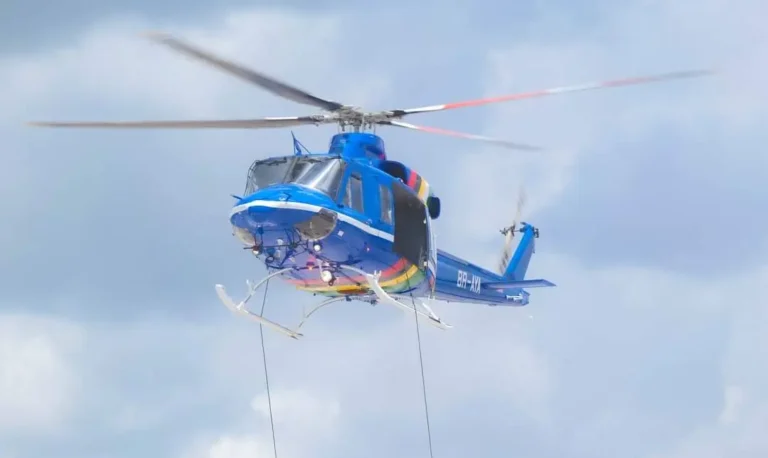
GEORGETOWN (SN) – Guyana Defence Force (GDF) helicopter wiThe Guyana Defence Force (GDF) minutes ago announced that it has lost contact with its GDF BELL 412 Helicopter (8R-AYA) approximately 30 miles east of Arau on the country’s western borders.th 3 crew members and 4 passengers missing near Arau border.


READ MORE : Suspect in custody after 6 dead and 3 wounded in series of attacks in Texas, authorities say

By the The Guyana Defense Force statement ,  The Guyana Defense Force, in collaboration with private sector aircraft operators, has initiated a Search and Rescue operation to locate a missing GDF Bell 412 Helicopter (8R-AYA).

Senior Government and Military sources have confirmed to News Source that contact has been lost with the crew of a GDF helicopter that was flying in an area close to the Venezuelan border between Arau and Eteringbang.

The helicopter departed Base Camp Ayanganna at 09:23 hours today for Arau, carrying three (3) crew members and four (4) passengers.

The aircraft transmitted an Emergency Locator Transmitter signal at 11:20 hours, from coordinates approximately 30 miles east of Arau on our western borders.

The ongoing search and rescue operation is impacted by adverse weather conditions in the area.

Further information will be provided as soon as they are made available.

Follow Us: Facebook | Instagram | Twitter | Youtube |