Home Blog Page 2

7 Killed in helicopter crash in Kenya, Including Ecuador intelligence chief and tv executive

Samburu county, Kenya —  Seven people were killed when a helicopter crashed in northern Kenya on Wednesday, including Michele Sensi-Contugi, director general of Ecuador’s National Intelligence Center (CNI), his wife Stephany Hollihan, and José Alberto Suárez, a senior Telemundo executive in Florida.

The U.S. State Department said five of those killed were U.S. citizens. “The U.S. embassy is in touch with local authorities and is providing consular assistance,” the department said, extending its condolences to the victims’ families and loved ones.

READ MORE : At least 14 dead, 20 injured after suicide bombing at Swat police station

The identities of all the victims have not been publicly released. However, a Miami television station reported that José Suárez, 55, president and general manager of several Telemundo stations in Florida, was among those killed.

“We are heartbroken to learn the tragic news that José was killed in a helicopter accident in Kenya,” NBCUniversal and Telemundo leadership said in a joint statement quoted by the NBC affiliate in Miami.

Suárez had been at the helm of Telemundo stations in Orlando, Tampa and Fort Myers-Naples since 2024.

“José was an exceptional colleague and mentor to many. He cared deeply about his teams, the communities they served and the essential role our stations play in people’s lives,” the company said.

“He brought energy, humor, warmth and a strong sense of purpose to his work, and his impact was felt far beyond the stations he led,” it added.

Ecuador’s Presidency also confirmed the deaths of Sensi-Contugi and his wife.

“The Presidency of the Republic of Ecuador expresses its deep sorrow over the deaths of Michele Sensi-Contugi, director general of the National Intelligence Center, and his wife, Stephany Hollihan,” the Executive Branch said in a press release.

Sensi-Contugi, 44, was considered one of the officials closest to Ecuadorian President Daniel Noboa and had headed the CNI, formerly known as CIES, since January 2024.

According to the Kenya Civil Aviation Authority (KCAA), the helicopter crashed at 9:13 a.m. local time (6:13 GMT) in Samburu County, near Mount Ololokwe, a rugged area and popular tourist destination.

The Eurocopter EC130 B4 was reportedly flying between Loisaba and Ewasonyiro when the accident occurred. The helicopter, operated by local company Lady Lori Helicopters, was carrying guests traveling with tour operator &Beyond.

Lady Lori Helicopters said the aircraft was operating a charter flight when it crashed.

The crash claimed the lives of all six passengers and the pilot. Kenyan authorities have launched an investigation to determine the cause of the accident.


Brazil bus-lorry head-on crash kills more than 20, Dozens injured

0

São Paulo, Brazil — A devastating head-on collision between a minibus and a semi-truck in southern Brazil’s Paraná state has killed 23 people and injured five others, authorities said.

The crash occurred at around 3:30 a.m. Wednesday on the BR-373 highway near Ipiranga, in Paraná’s Campos Gerais region, about 180 kilometers (112 miles) from Curitiba. The collision took place at kilometer 209 of the highway and caused extensive damage to both vehicles.

READ MORE : 14 killed in Saudi Aramco helicopter crash in Ras Tanura

The minibus belonged to the municipal health department of Imbituva and was carrying patients and their relatives to medical appointments and treatment at hospitals in the Greater Curitiba region. Most of those killed were passengers traveling in the minibus. The truck driver was also among the fatalities.

According to Brazil’s Federal Highway Police, preliminary findings indicate that the truck crossed into the opposite lane and collided head-on with the minibus. Investigators have not yet determined why the truck left its lane, and authorities are continuing to examine the circumstances surrounding the crash.

The victims included 13 women, eight men and two children. Five people survived the crash with injuries and were taken to hospitals in the nearby city of Ponta Grossa. Three of the injured were reported to be in serious condition.

The scale of the tragedy prompted an immediate emergency response involving the Federal Highway Police, firefighters, forensic specialists and other emergency teams. The highway was completely closed for several hours as rescue workers treated survivors, recovered the victims and examined the wreckage. The road remained blocked for nearly seven hours before authorities began reopening the route.

The crash has caused widespread shock in Imbituva, where many of the victims lived. Local authorities have been providing psychological and legal support to relatives as forensic teams work to formally identify the deceased and return their remains to their families. A collective wake was also organized in the municipality for families who chose to gather at a municipal sports facility.

Paraná Governor Ratinho Júnior declared three days of official mourning following the disaster and expressed condolences to the victims’ families. The state authorities said the investigation would seek to establish precisely what caused the truck to cross into the opposing lane and trigger the fatal collision.

The accident is being described by Brazilian authorities as the deadliest road crash in Paraná since 2021. It has also renewed concerns about road safety in a country where deadly traffic accidents remain a serious public-safety issue.

The investigation remains ongoing, with police and forensic authorities examining the vehicles, the highway conditions and other available evidence to determine the exact sequence of events that led to the collision.


SOURCE : AGENCIES |  Follow Us: Facebook | Instagram | Twitter | Youtube


This story has been sourced from a third party syndicated feed, agencies. Diplomattimes accepts no responsibility or liability for its dependability, trustworthiness, reliability and data of the text. Diplomattimes management/diplomattimes.com reserves the sole right to alter, delete or remove (without notice) the content in its absolute discretion for any reason whatsoever.

Pop star Shakira visits earthquake-Hit Colombia, Pledges to rebuild schools

Bogota, Colombia — Colombian superstar Shakira made a surprise visit Monday to the earthquake-devastated region of Chocó, pledging to help rebuild schools and support the reconstruction of a damaged university.

Shakira toured schools in Quibdó, the capital of Chocó, where around 40 schools completely collapsed and hundreds more were damaged. She met students, hugged them and posed for photos during the emotional visit.

READ MORE : Colombia earthquake: At least 132 dead and 570 injured after a 7.4-magnitude quake

“What worries me the most is that schools are not rebuilt once this emergency is over,” Shakira told journalists. “Every day that children don’t go to school is a day they miss out on their future.”

Shakira was accompanied by philanthropist Howard Buffett, son of billionaire Warren Buffett and a longtime supporter of humanitarian projects in Colombia. The Howard G. Buffett Foundation will work with Shakira’s Fundación Pies Descalzos (Barefoot Foundation) to rebuild 10 schools.

“When she calls, I come,” Buffett said during the visit.

Shakira also announced that she would make rebuilding a severely damaged technological university in Chocó one of her personal priorities. Additional funding commitments include $500,000 each from the FIFA Global Citizen Education Fund and Live Nation, along with $250,000 from CAF Development Bank of Latin America and the Caribbean.

The 7.4-magnitude earthquake that struck western Colombia on August 10 killed at least 287 people and destroyed more than 26,000 homes, according to authorities. The government has reported 194 people missing, while some civilian-run databases have reported a significantly higher figure. Thousands of educational centers were also affected.

Chocó, one of Colombia’s poorest regions, was at the center of the devastation, with at least 3,100 homes destroyed, according to the regional government.

Aid groups and officials are continuing to assess the scale of the destruction in Chocó, a vast province roughly the size of Switzerland where difficult terrain and limited infrastructure have slowed relief efforts. Few roads connect the region to the rest of Colombia, while many towns and villages are accessible mainly by rivers and unpaved roads.

Most of Chocó’s roughly 600,000 residents live in poverty, according to figures published last year by Colombia’s national government. The province is home to large Indigenous and Afro-Colombian communities that have historically faced significant economic and infrastructure challenges.

“There is not a way to alleviate the pain of so many, there are no magic solutions,” Shakira, 49, said during a visit to a large high school in Quibdó.

“But what there is, is commitment to be here alongside those from Chocó, to not abandon El Chocó like it historically has been abandoned, until every Colombian and every person from Chocó can return to their normal lives like they deserve and all the children can return to their schools and dream of the futures they deserve,” she said.

“It’s a place I love, a place where I’ve seen our students grow in our classrooms,” Shakira said in a video posted on X by Colombian news outlet La FM.

Her Fundación Pies Descalzos has worked in Chocó for 22 years and operates two schools that have educated hundreds of students.

“I really want to see it rebuild again,” Shakira said, turning her visit into a renewed commitment to education and recovery for children affected by the disaster.


SOURCE : AGENCIES |  Follow Us: Facebook | Instagram | Twitter | Youtube


This story has been sourced from a third party syndicated feed, agencies. Diplomattimes accepts no responsibility or liability for its dependability, trustworthiness, reliability and data of the text. Diplomattimes management/diplomattimes.com reserves the sole right to alter, delete or remove (without notice) the content in its absolute discretion for any reason whatsoever.

IFS Soumendu Bagchi appointed as the next Ambassador of India to Switzerland

0

New Delhi, India  —  Senior Indian Foreign Service officer Soumendu Kumar Bagchi, currently serving as India’s Ambassador to Iraq, has been appointed as India’s next Ambassador to Switzerland, the Ministry of External Affairs announced on August 17.

A 1993-batch IFS officer, Bagchi is expected to take up his new assignment in Bern shortly. His appointment comes after a diplomatic career spanning more than three decades, during which he has served in key Indian missions abroad and held several senior positions at the Ministry of External Affairs in New Delhi.

Bagchi will head India’s diplomatic mission in Switzerland at a time when bilateral relations encompass a wide range of areas, including trade and investment, technology, education, innovation and multilateral cooperation.

Who Is Soumendu Bagchi?

Soumendu Kumar Bagchi is a veteran career diplomat from the 1993 batch of the Indian Foreign Service. Over the course of his career, he has handled a broad range of diplomatic and foreign policy portfolios, including counter-terrorism, energy security, investment and technology promotion, regional groupings, and India’s relations with Southeast Asia and West Africa.

Before taking charge as India’s Ambassador to Iraq, Bagchi served as Deputy and Acting Director General of the Indian Council of World Affairs, a New Delhi-based foreign policy think tank.

His overseas assignments have included postings in Brussels, Dhaka and San Francisco, giving him extensive diplomatic experience across Europe, South Asia and the United States.

Bagchi’s appointment to Switzerland is expected to further strengthen India-Switzerland relations and deepen cooperation in areas of mutual strategic and economic interest.


IFS Ajay A. Kumar appointed India’s next Ambassador to Iraq

0

New Delhi, India The Ministry of External Affairs has appointed Ajay A. Kumar (IFS: 2001), currently serving as Joint Secretary in the Ministry, as India’s next Ambassador to the Republic of Iraq. He is expected to take up the assignment shortly.

The appointment comes as India and Iraq continue to strengthen their longstanding historical and civilisational ties, with sustained high-level political exchanges and growing cooperation across several areas.

READ MORE : IFS Ngulkham Jathom Gangte named India’s next ambassador to Mexico

India has emerged as a preferred destination for Iraqi citizens seeking medical treatment, while more than 10,000 Iraqi students have pursued PhD, master’s and undergraduate degrees in India.

Capacity building remains an important area of bilateral cooperation. In June 2025, 34 young Iraqi diplomats from the Ministry of Foreign Affairs of Iraq completed the 5th Special Course for Diplomats conducted by the Sushma Swaraj Institute of Foreign Service in New Delhi.

India has also allocated 200 ITEC training slots to Iraq to support capacity building among Iraqi government officials. More than 100 Iraqi professionals availed themselves of ITEC training during 2025–26.

Ajay A. Kumar’s appointment brings significant diplomatic experience to the post. His new assignment is expected to further strengthen India-Iraq relations, particularly in areas such as energy, trade, healthcare, education, capacity building and people-to-people ties.


Farah Delance Foundation brings Haiti and Caribbean Perspective to UN tax talks

0

New York, USA — Haiti and the wider Caribbean are seeking a stronger voice in the emerging global tax system as governments and stakeholders debate how countries should cooperate on taxation in an increasingly digital and interconnected global economy.

From August 3 to 13, 2026, the United Nations Headquarters in New York hosted the fifth session of the Intergovernmental Negotiating Committee on the United Nations Framework Convention on International Tax Cooperation. The session brought Member States and accredited stakeholders together to negotiate the foundations of a future global framework for international tax cooperation.

I had the privilege of participating in the process as a representative of the Farah Delance Foundation, bringing to the discussions a perspective rooted in Haiti, the Caribbean, civil society, women, youth and the connection between public resources and human development.

For me, the global tax debate is about much more than tax rates, corporate structures or technical provisions.

It is about whether governments have the resources to build schools, hospitals, roads and digital infrastructure. It is about whether young people can envision a future in their own communities rather than believing that migration is their only path to opportunity. And it is about whether developing countries have a meaningful voice when international rules governing the global economy are established.

For Haiti and the Caribbean, these questions are particularly urgent.

Haiti: Taxation, Development and Migration Are Connected

Haiti cannot discuss taxation separately from development.

When governments lack sufficient domestic resources to finance public services, infrastructure, education, healthcare and economic opportunity, the consequences extend far beyond national budgets. They affect families, communities and, ultimately, migration patterns.

My position throughout this engagement has therefore been clear: international tax cooperation must be connected to development.

Haitians should not be compelled to look beyond their homeland simply because their country has been unable to mobilize and retain sufficient resources to create sustainable opportunities.

Migration is complex, and taxation alone cannot solve Haiti’s challenges. However, responsible taxation, stronger institutions, transparency, investment and fairer international economic rules can help create conditions in which people can choose to travel, study, work or build businesses abroad without feeling that leaving home is their only path to survival or advancement.

For Haiti, the central question should be: How can international tax cooperation help countries mobilize the resources necessary to invest in their own people?

That question belongs at the heart of the global tax conversation.

Jamaica’s Important Role in the Negotiations

Jamaica has also played an important role in the UN tax process.

The Jamaican delegation has been actively engaged in the negotiations, with Jamaican tax official Marlene Nembhard-Parker serving as co-lead of Workstream III, focused on the prevention and resolution of international tax disputes, alongside Germany’s Michael Braun.

For the Caribbean, dispute resolution is not an abstract technical issue. Small and developing economies can face significant differences in negotiating capacity when dealing with larger economies and multinational businesses. Effective and fair mechanisms for resolving tax disputes are therefore important to protecting national interests.

Jamaica’s participation demonstrates that Caribbean countries are not simply observers of the emerging international tax architecture. They possess expertise and perspectives that can help shape the rules themselves.

The Caribbean Cannot Afford to Be Absent

The wider Caribbean has a direct stake in the outcome of these negotiations.

Small island developing states often face a difficult combination of limited domestic markets, exposure to external economic shocks, climate vulnerability, high financing costs and substantial development needs.

Barbados, for example, has advocated for an inclusive, fair, transparent and equitable international tax system and emphasized the importance of the United Nations as an inclusive forum for international tax cooperation. It has also called for greater consideration of environmental and climate-related taxation within the international tax agenda.

This Caribbean perspective is essential.

The region needs an international tax system that recognizes that a country’s economic size should not determine the strength of its voice.

A Divided International Debate

The negotiations have also exposed significant differences among Member States.

The Terms of Reference adopted in 2024 received support from 110 countries, while eight countries — Australia, Canada, Israel, Japan, New Zealand, the Republic of Korea, the United Kingdom and the United States — voted against it. Forty-four countries abstained, including Argentina and Trinidad and Tobago.

The disagreement was not simply about whether countries support taxation. It involved deeper questions concerning institutional authority, decision-making, the scope of the proposed framework, its relationship with existing international tax arrangements, and how future commitments should be negotiated and implemented.

The United States, for example, raised concerns about the level of global support for the process and warned about the potential for greater fragmentation within the international tax system.

Canada, Australia, New Zealand, Japan, the Republic of Korea, Israel and the United Kingdom likewise opposed the Terms of Reference.

At the same time, developing countries have been among the strongest supporters of the initiative.

The African Group has emerged as a major political force behind efforts to create a more inclusive international tax architecture and strengthen the participation of developing countries in global tax decision-making.

At its core, the debate raises a much broader question about global governance:

Who gets to establish the rules of the international economy?

Taxation in the Digital Economy

Another major issue for developing countries is the taxation of income generated through cross-border and increasingly digital economic activity.

The first early protocol under negotiation addresses taxation of income derived from the provision of cross-border services in an increasingly digitalized and globalized economy.

This issue is particularly important for Caribbean economies.

A company no longer necessarily needs a traditional physical presence in a country to generate substantial economic value from its consumers, businesses or digital market.

For Caribbean nations seeking to expand their digital economies, the future rules governing cross-border services could influence how much revenue governments can mobilize from economic activity taking place within, or connected to, their jurisdictions.

That is precisely why developing countries must have a meaningful seat at the negotiating table.

Tax Justice Must Become Development Justice

Representing the Farah Delance Foundation, I entered this process with a clear conviction: tax justice cannot be separated from social justice, economic development and human dignity.

Governments have responsibilities to their people. Citizens and businesses also have responsibilities to contribute to the societies in which they operate. But international rules must ensure that taxation is transparent, equitable and capable of supporting sustainable development.

For Haiti, that means strengthening domestic capacity.

For Jamaica and other Caribbean nations, it means ensuring that the international system recognizes the realities and vulnerabilities of small economies.

For developing countries more broadly, it means ensuring that international tax rules are not shaped exclusively according to the priorities of the world’s largest economies.

And for civil society, it means ensuring that the voices of women, young people, communities and development organizations are not lost within highly technical negotiations.

The Farah Delance Foundation’s Commitment

The Farah Delance Foundation will continue advocating for an international tax system that contributes to inclusive and sustainable development.

Our position is not that taxation is a solution to every problem.

Rather, it is that without adequate and fairly mobilized public resources, governments cannot sustainably finance the solutions their populations need.

Tax revenues can help strengthen education systems, improve healthcare, finance essential infrastructure, support youth development, expand opportunities for women and girls, and create economic conditions in which migration becomes a choice rather than an economic necessity.

That is the conversation Haiti deserves.

That is the conversation the Caribbean deserves.

And that is why civil society must remain actively engaged in the global tax negotiations.

From New York to Nairobi

The fifth session marks another important stage in a negotiating process scheduled to continue through 2027.

The United Nations has scheduled the sixth session for November 30 to December 11, 2026, in Nairobi, Kenya, followed by further negotiations in 2027 before the proposed framework convention and protocols are submitted for consideration by the General Assembly.

The work, therefore, does not end in New York.

For the Farah Delance Foundation, participation in the fifth session is part of a broader commitment to ensuring that Haiti, the Caribbean, women, youth and developing communities are represented in the conversations where the rules of the global economy are being shaped.

The international tax system of tomorrow is being negotiated today.

The Caribbean must be in the room. Haiti must have a voice. And development must remain at the heart of the conversation.

Farah Linot Delance, MPH, is President & CEO of the Farah Delance Foundation. She participated in the fifth session of the United Nations Intergovernmental Negotiating Committee on the United Nations Framework Convention on International Tax Cooperation in New York as a representative of the Farah Delance Foundation.


SOURCE : FDL  |  Follow Us: Facebook | Instagram | Twitter | Youtube
Trump says secret service switched his plane over Iran threat during Türkiye visit

0

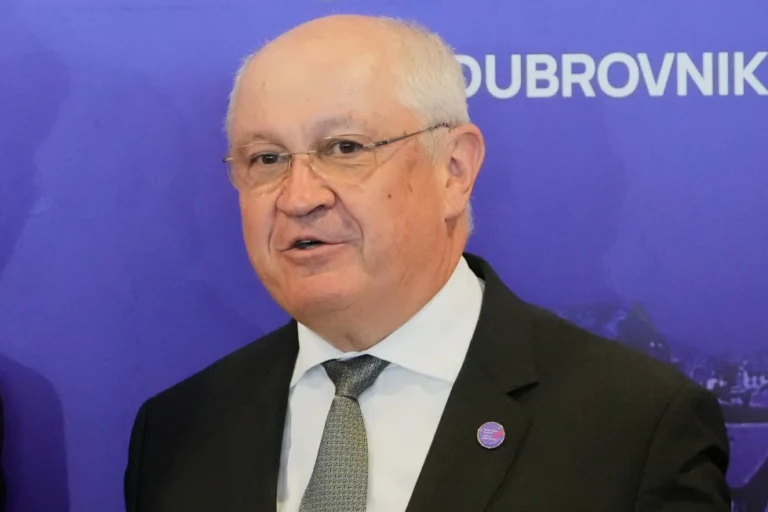
Washington, USA — US President Donald Trump confirmed Tuesday that the Secret Service and military directed him to use a “different plane” when departing Türkiye last month following a NATO summit, citing security concerns.

“It’s only up to the Secret Service. I just follow what they like to do. So I go by the Secret Service and the military. They wanted me to go in a different flight, a different plane, equal safety,” Trump told reporters at Joint Base Andrews in Maryland after returning from Ohio.

READ MORE : Trump accuses Iran of violating ceasefire with drone attacks on ships in the Strait of Hormuz

“They wanted me to do it, so I do it. I do what they say,” he said.

Trump added that he believed there had been a threat but said he was not given details.

“I guess there was a threat out there. I didn’t really ask too much about it. I get a lot of threats,” he said.

Trump made the remarks in response to a report by The Washington Post that he secretly switched aircraft after initially appearing to board Air Force One in Ankara.

According to the report, Trump was moved from Air Force One to a smaller military aircraft in a covert operation, while Air Force One continued its journey with White House officials, security personnel and journalists aboard.

The Washington Post reported that the operation was prompted by an alleged assassination threat from Iran. Trump was reportedly moved from Air Force One through an airport catering vehicle before boarding another aircraft.

The operation took place following Trump’s participation in the NATO summit in Ankara on July 7–8.


SOURCE : AGENCIES |  Follow Us: Facebook | Instagram | Twitter | Youtube

Colombia earthquake: At least 132 dead and 570 injured after a 7.4-magnitude quake

0

Bogotá, Colombia — At least 132 people have died and more than 570 were injured after a powerful 7.4-magnitude earthquake struck Colombia on Monday, according to a preliminary report from the Colombian Association of Capital Cities (Asocapitales).

Pereira, the capital of Risaralda, has reported the highest number of fatalities, with 60 deaths. The city borders San José del Palmar in Chocó, near the earthquake’s epicenter.

The Colombian Geological Service (SGC) said the earthquake struck at 7:34 a.m. local time at a depth of approximately 82 kilometers (50 miles).

In an earlier update, Eder said 188 people were still missing in the city, while 37 had been rescued.

Some 40 buildings have collapsed in the cultural hub of about 2 million people in Colombia’s southwest, a city internationally known for its salsa dancing.

Just a month ago, at least 164 people were killed and 971 injured after two powerful earthquakes, measuring 7.2 and 7.5 in magnitude, struck Venezuela’s Caribbean coast on Wednesday. The quakes caused widespread devastation, collapsed buildings, and disrupted communications across the country.

According to the United States Tsunami Warning Centers, the two earthquakes occurred just 39 seconds apart, initially described by seismologists as a “seismic doublet”—a rare event in which two major earthquakes strike the same region within seconds. Authorities later clarified, following further seismic analysis, that the initial 7.2-magnitude tremor was a precursor to the 7.5-magnitude mainshock.


SOURCE : AGENCIES |  Follow Us: Facebook | Instagram | Twitter | Youtube
Kerala rains leave 8 dead, 8 missing, 13 injured as landslides, Floods wreak havoc

0

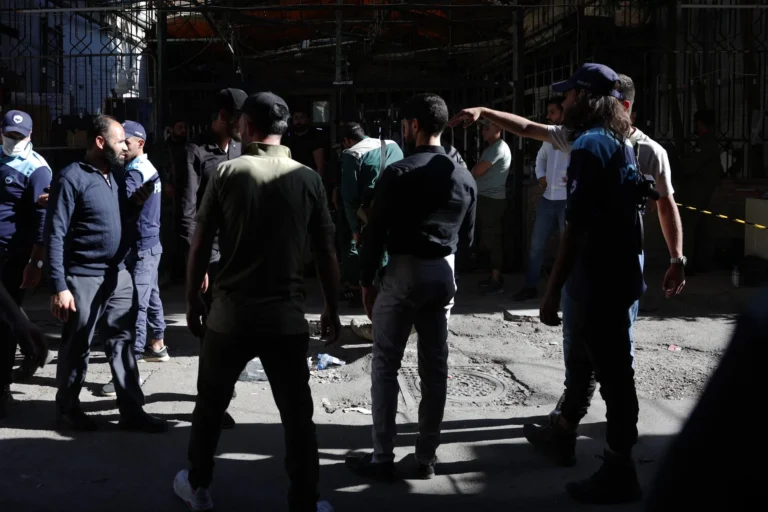
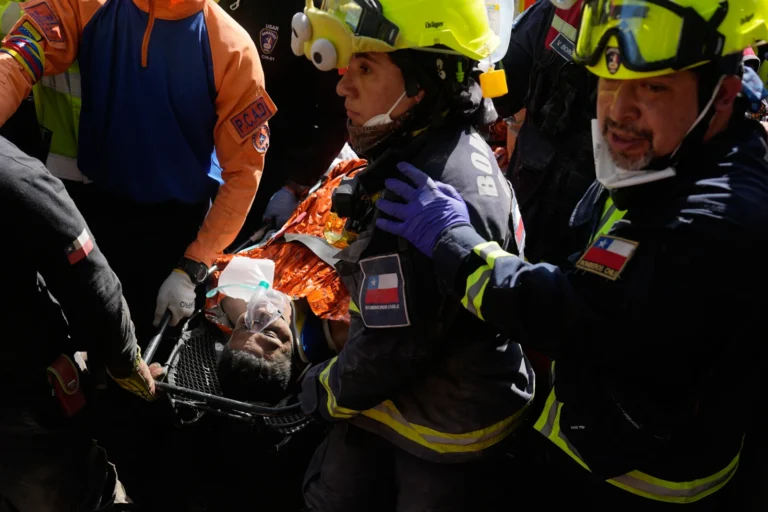
Thiruvananthapuram, Kerala — Kerala Chief Minister V.D. Satheesan on Sunday said eight people were killed, eight remain missing, and 13 others were injured after torrential rains triggered landslides, flash floods, and widespread destruction across the state on Saturday.

In a statement issued by the Chief Minister’s Office, Satheesan said 27 houses were completely destroyed, 196 were partially damaged, and 5,792 people had been evacuated to 209 relief camps across Kerala.

READ MORE : Assam floods leave thousands devastated as brothers Organization appeals for National support

The Chief Minister assured government assistance to the families of those who lost their lives and to residents whose homes and livelihoods were affected. He urged people, particularly those living in hilly regions, to remain vigilant despite a reduction in rainfall since Saturday.

Satheesan said elected representatives, government officials, and volunteers were actively engaged in rescue and relief operations. He added that he was in constant contact with Revenue Minister A.P. Anilkumar, ministers overseeing various districts, and local authorities to monitor the situation.

He said cleaning operations had begun in flood-hit and waterlogged areas and appealed to political party workers, volunteers, and social organisations to assist in the restoration efforts.

The India Meteorological Department (IMD) has issued an orange alert for 12 districts in Kerala and a yellow alert for Thiruvananthapuram and Kollam districts. An orange alert indicates very heavy rainfall of 11–20 cm, while a yellow alert signifies heavy rainfall of 6–11 cm.

The IMD has forecast further heavy rainfall on August 3 and August 6, accompanied by strong winds of 40–50 kmph. Fishermen have been advised not to venture into the Kerala-Karnataka-Lakshadweep coast on August 2 and 3 due to strong winds of up to 60 kmph and rough sea conditions.

The Indian National Centre for Ocean Information Services (INCOIS) also warned of high waves measuring between 2.7 and 3.5 metres along the northern Kerala coast and advised fishermen and coastal residents to remain cautious.

Revenue Minister A.P. Anilkumar said the overall situation was improving and remained under control despite widespread flooding and damage. He said traffic had resumed on many affected roads, although restrictions remained in place in some locations.

According to the Kerala State Disaster Management Authority (KSDMA), parts of the state received up to 320 mm of rainfall on Saturday, causing severe flooding in low-lying areas. The highest rainfall of 320 mm was recorded at Ayyankunnu in Kannur district, while several parts of the Malabar region received between 90 mm and 180 mm of rain between 3 a.m. and midnight.

Television footage showed floodwaters inundating homes in low-lying and riverside areas of Pathanamthitta, Idukki, Wayanad, Kottayam, Kozhikode, and Kannur districts.

Although rainfall eased on Sunday morning, several areas, particularly Ranni in Pathanamthitta district and Kuttanad in Alappuzha district, remained submerged, forcing residents to use small boats for transportation.

The KSDMA said water levels in several hydropower dams in Idukki, Pathanamthitta, and Thrissur districts continued to remain in the red alert zone.

State Tourism Minister P.C. Vishnunadh said an additional National Disaster Response Force (NDRF) team had been deployed in Pathanamthitta and Aranmula, while extra Fire and Rescue Services personnel had been mobilised from Thiruvananthapuram, Palakkad, and Ernakulam. Fishermen and fishing boats have also been kept on standby for emergency rescue operations, with special attention being given to Aranmula, where floodwaters typically recede more slowly.

Meanwhile, BJP leader P.C. George said his residence in Erattupetta, Kottayam district, was flooded on Saturday, resulting in property losses worth several lakh rupees.

Senior CPI(M) leader K.N. Balagopal, after visiting flood-affected areas in Ranni, said traders had suffered significant financial losses. He also claimed that many shop owners alleged they had not received prior warning before dam gates were opened, which they believe contributed to the flooding.

In view of the continuing weather alerts and the possibility of more heavy rainfall, authorities have declared a holiday for educational institutions in Pathanamthitta, Wayanad, Kannur, and Kasaragod districts on August 3.


SOURCE : AGENCIES |  Follow Us: Facebook | Instagram | Twitter | Youtube
This story has been sourced from a third party syndicated feed, agencies. Diplomattimes accepts no responsibility or liability for its dependability, trustworthiness, reliability and data of the text. Diplomattimes management/diplomattimes.com reserves the sole right to alter, delete or remove (without notice) the content in its absolute discretion for any reason whatsoever.

At least 14 dead, 20 injured after suicide bombing at Swat police station

0

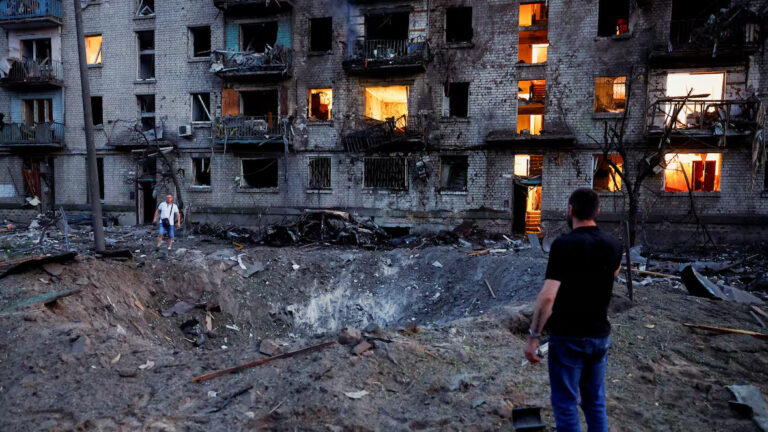
Peshawar, Pakistan —  At least 14 people were killed and 20 others injured in a suicide bombing near a police station close to the venue of a peace rally in Pakistan’s northwestern Swat district on Sunday, officials said.

According to Swat District Police Officer Muhammad Umar, the explosion occurred near the gate of a police station as a public peace gathering was concluding nearby. The victims included both civilians attending the rally and police personnel deployed to provide security.

READ MORE : Indonesia boat fire leaves five dead, 41 missing in Java Sea

Police said the suicide bomber attempted to enter the police station but was stopped by an officer at the main entrance. The attacker then detonated the explosives he was carrying, causing multiple casualties. At least five police officers were among those killed, according to local police officials.

Bilal Faizi, spokesperson for the Khyber Pakhtunkhwa provincial emergency service, said the attacker struck as dozens of participants were chanting anti-militant slogans and demanding peace.

Rescue teams and security personnel rushed to the scene, evacuating the injured to nearby hospitals, while police sealed off the area and launched a search operation. Forensic teams are collecting evidence as investigators work to determine the circumstances surrounding the attack.

No group immediately claimed responsibility for the bombing. However, suspicion is likely to fall on the Tehrik-e-Taliban Pakistan (TTP), a militant group separate from but allied with Afghanistan’s Taliban rulers. The TTP has carried out numerous attacks across Pakistan in recent years.

Pakistan’s Interior Minister Mohsin Naqvi condemned the bombing, expressing condolences to the families of those killed and wishing a speedy recovery to the injured.

The attack occurred in Swat Valley, a region that was once a stronghold of Islamist militants before a major Pakistani military operation in 2007 drove them out and restored government control. Despite improved security over the years, militant violence has resurged in parts of Khyber Pakhtunkhwa, with authorities frequently blaming TTP militants operating from across the Afghan border. Afghanistan’s Taliban government has repeatedly denied Pakistan’s allegations that it provides sanctuary to the group.


SOURCE : AGENCIES |  Follow Us: Facebook | Instagram | Twitter | Youtube
This story has been sourced from a third party syndicated feed, agencies. Diplomattimes accepts no responsibility or liability for its dependability, trustworthiness, reliability and data of the text. Diplomattimes management/diplomattimes.com reserves the sole right to alter, delete or remove (without notice) the content in its absolute discretion for any reason whatsoever.