Home Blog Page 4

Saudi Arabia says it reserves right to military action against Iran

Riyadh, Saudi Arabia — Faisal bin Farhan Al Saud said Saudi Arabia has not ruled out military action against Iran following repeated missile and drone attacks, including strikes targeting the capital while regional diplomats were meeting.

Speaking after hosting foreign ministers from Arab and Islamic nations, Prince Faisal said the targeting of Riyadh during high-level diplomatic talks was “the clearest signal” of Tehran’s stance on diplomacy.

“Iran tries to pressure its neighbors through attacks,” he said, warning that Saudi Arabia “will not succumb to pressure” and that escalation “will backfire.” He reiterated that the kingdom “reserves the right to take military action if deemed necessary.”

Saudi authorities reported fresh attacks on Wednesday, with multiple explosions heard across Riyadh. The defense ministry confirmed that ballistic missiles were intercepted over the city.

The foreign minister strongly condemned what he described as repeated targeting of civilian infrastructure across the Gulf, including oil facilities, airports, desalination plants, residential areas, and diplomatic sites. He dismissed Iran’s claims that such strikes were aimed at US interests as “weak.”

“Neither Saudi Arabia nor Gulf states will accept blackmail,” he said, adding that “escalation will be met with escalation.”

A joint statement issued after the Riyadh meeting condemned the “deliberate use of ballistic missiles and drones” against civilian targets and reaffirmed the right of states to defend themselves. The ministers also called on Iran to immediately halt its attacks and de-escalate tensions.

The remarks signal a sharp rise in regional tensions, as Gulf nations warn that continued attacks could trigger a broader military response.


SOURCE : AGENCIES |  Follow Us: Facebook | Instagram | Twitter | Youtube |

Iranian missile reportedly hits Haifa oil refinery — local media reports

Haifa, Israel — The country’s largest oil refinery came under attack on Thursday following a fresh missile strike reportedly launched from Iran, according to multiple local media outlets, including public broadcaster Kan.

Israeli authorities said the situation remains under control, with no casualties reported so far. The Israel Fire and Rescue Services confirmed that at least 15 firefighting and rescue teams were deployed to the site after intercepted missile fragments were detected in the area.

RELATED NEWS : 4 Palestinians killed in Israeli airstrike in central Gaza

Emergency service Magen David Adom stated that no injuries have been recorded as of now.

Local residents reported power outages across parts of northern Israel following the incident. Visuals aired on Israeli media showed a large plume of smoke rising from the refinery complex, raising initial concerns about potential infrastructure damage.

However, Energy Minister Eli Cohen said the strike did not cause significant damage to critical facilities. He added that teams from the Israel Electric Corporation are actively working to restore electricity in affected areas. The minister also confirmed he is heading to the site as investigations into the incident continue.

The Haifa refinery, operated by the Bazan Group, is considered a key strategic energy facility for Israel. In a filing to the Tel Aviv Stock Exchange, the refinery acknowledged additional damage caused overnight, primarily to external infrastructure owned by a third party that is essential for operations. The company noted that most production activities remain functional, with the rest expected to resume within days.

Iran has increasingly targeted energy infrastructure in Israel and across the Gulf since the start of the current conflict, signaling a broader escalation strategy focused on economic and critical assets.

A day earlier, Israel reportedly struck Iran’s massive offshore South Pars natural gas field in Bushehr Province in coordinated operations with the United States, marking a significant expansion of direct energy-sector targeting by both sides.

The Bazan facility in Haifa — identifiable by its large cooling tower overlooking the densely populated Haifa Bay — has long been viewed as a high-risk target by Israel’s adversaries, including Hezbollah, which has repeatedly threatened strikes from neighboring Lebanon.

The refinery has also been the subject of domestic controversy. Residents and environmental groups have for years pushed for its closure or relocation, citing severe pollution concerns and the risk of catastrophic damage in the event of a direct hit.

In 2022, the Israeli government approved a plan to relocate the facility by 2030. As part of that process, work to remove large oil storage tanks adjacent to the refinery was scheduled to begin this year.


SOURCE : AGENCIES |  Follow Us: Facebook | Instagram | Twitter | Youtube |

Costa Rica closes embassy in Cuba, Havana slams move as US ‘Pressure’

Havana, Cuba — Costa Rica announced on Wednesday the closure of its embassy in Cuba, citing “deep concern” over the deterioration of human rights on the island. Havana rejected the “unilateral decision,” claiming it was made under pressure from the United States.

​At a press conference, Costa Rican Foreign Minister Arnoldo André Tinoco stated that, in addition to closing the embassy, they requested that the Cuban Foreign Ministry withdraw its diplomatic personnel from the embassy in San José, except for consular officials.

RELATED NEWS : Cuba plunged into nationwide blackout amid deepening crisis and growing exhaustion

​President Rodrigo Chaves also stated that Costa Rica “does not recognize the legitimacy of the communist regime in Cuba, given the mistreatment, repression, and undignified conditions endured by the inhabitants of that beautiful island.”

​”We will not have a consulate there. We will serve them from Panama. Enough is enough. Since 1959, the regime has parasitized other countries to provide for its people. We must recognize that the communist model has failed in Cuba, as it has everywhere else it has been implemented,” Chaves added.

In response, the Cuban Ministry of Foreign Affairs (Minrex) criticized the decision, emphasizing that it was “unilateral” and taken “without offering any justification.”

​Minrex added that Costa Rica is limiting its relations with Cuba “under pressure from the United States” and criticized the Central American country for requesting that Cuba withdraw diplomatic personnel from its embassy in San José “without any justification whatsoever and invoking a supposed and unfounded reciprocity.”

According to Minrex, Costa Rica exhibits a history of subservience to US policy against Cuba and, with this latest step, joins Washington’s renewed attempts to isolate Cuba from the rest of the continent.

​”Just as it did 60 years ago, it will fail in this endeavor. Nothing can distance the people of Cuba and Costa Rica, who are united by indissoluble ties of a shared history nurtured by great Cuban independence heroes such as Martí and Maceo,” concluded the Foreign Ministry.

The Costa Rican embassy in Havana has been without diplomatic personnel since Feb 5. According to the Costa Rican government, the formal closure is a “firm sign of concern and an invitation for significant changes” in Cuba.

Wednesday’s is the second diplomatic break between Latin American countries and Cuba in just two weeks, following Ecuador’s Mar. 4 request for all Cuban diplomatic, consular, and administrative personnel to withdraw from Quito.

​President Daniel Noboa’s administration also ordered the return of the Ecuadorian ambassador to Havana, José María Borja.

​The Cuban government rejected the expulsion of its diplomats from Ecuador, attributing it to intense pressure from Washington. 


SOURCE : EFE. |  Follow Us: Facebook | Instagram | Twitter | Youtube |
Pakistan announces temporary truce in Afghanistan due to international pressure

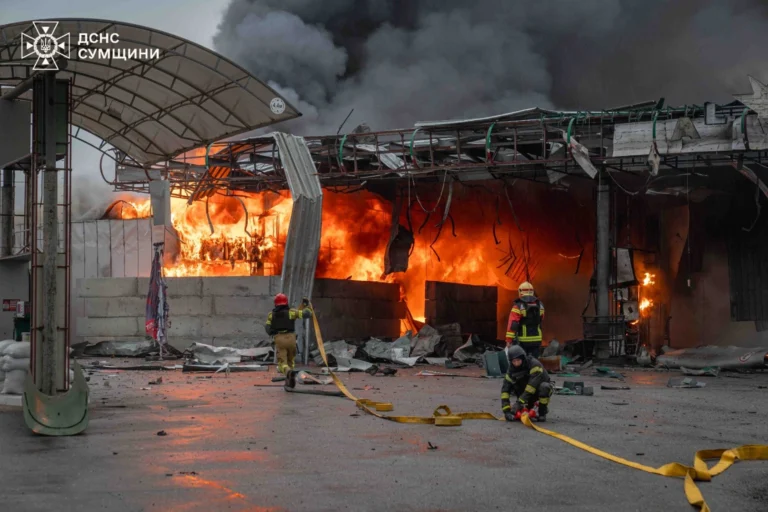
Islamabad, Pakistan — The government announced a five-day truce in its military offensive on Wednesday following mediation by Saudi Arabia, Qatar, and Turkey, just two days after a bombing in Kabul against a hospital that left hundreds of civilian casualties (at least 400), according to the Taliban.

“Given the proximity of the Eid-al-Fitr holiday, which marks the end of Ramadan, the Government of Pakistan has decided to announce a temporary pause in its operation against terrorists and their infrastructure in Afghanistan,” said Pakistani Information Minister Attaullah Tarar in a statement.

RELATED NEWS : Pakistan airstrikes in Afghanistan kill 4, injure 15 as tensions escalate

The statement added that “Operation Ghazab-lil-Haq” will resume with full force in the event of a new cross-border offensive or attack on Pakistani soil during the truce period, which ends on Mar. 24.

“Pakistan offers this gesture of good faith in accordance with Islamic norms; however, if there is a cross-border attack, a drone attack, or a terrorist incident within Pakistan, the operation will resume immediately with renewed intensity,” the statement added.

This temporary cessation of hostilities comes two days after de facto Afghan authorities denounced a massive attack on a drug rehabilitation center in Kabul that reportedly caused at least 408 deaths and 265 injuries.

According to the Taliban government, the bombing directly hit a medical area where at least 2,000 patients were sleeping.

Monday’s attack on the Afghan capital provoked a wave of condemnations from the United Nations, regional neighbors, the European Union, and other major powers. These entities, along with humanitarian organizations, have increased pressure on the Pakistani government.

However, the Pakistani army vehemently denied attacking civilian targets, insisting that its operations against Tehrik-e-Taliban Pakistan insurgent bases were “highly precise and focused,” which they accuse of attacking their territory with Afghan support.

This conflict, rooted in border instability along the Durand Line and a security crisis, has seen previous attempts at de-escalation. In Oct. 2025, Qatar and Turkey mediated an unsuccessful initial approach.

The truce comes at a critical time in the Middle East, marked by direct escalation between Iran, the United States, and Israel, which has prompted Arab powers to urgently intervene and curb a war that would further threaten the stability of millions of people in South Asia.


SOURCE : EFE.|  Follow Us: Facebook | Instagram | Twitter | Youtube |
Cuba plunged into nationwide blackout amid deepening crisis and growing exhaustion

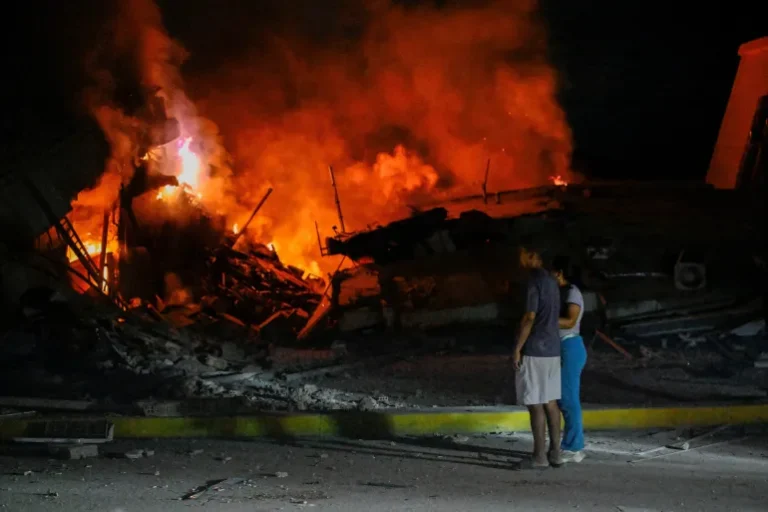
Havana, Cuba — Cuba plunged into a deepening national crisis as a nationwide blackout left much of the island without electricity, worsening economic hardship and triggering rare public protests.

In Havana, residents spent nearly 24 hours without power, sitting on sidewalks exhausted as daily life came to a standstill. The blackout marks the sixth nationwide outage in less than a year and a half. By midday, only about 45% of the capital had electricity restored, while many provinces faced outages lasting up to two days.

Economic Collapse Fuels Rare Protests and Public Defiance

The crisis has extended far beyond electricity. Shortages of food, fuel, and medicine are intensifying, with rising inflation making basic goods increasingly unaffordable. Many residents report that even small amounts of fuel are difficult to obtain and often require payment in U.S. dollars, which most Cubans do not have access to.

Essential services are being disrupted. Hospitals have suspended some operations, schools have closed, and water systems are failing due to the lack of power. Across the country, people are relying on candles while food spoils in refrigerators.

Public frustration is growing and has begun to spill into the streets. Protests have been reported in Havana and Morón, with at least five arrests following clashes with authorities. In one of the most serious incidents in recent years, protesters in Morón ransacked and set fire to a Communist Party office on March 14. Nighttime protests have also included residents banging pots and pans and burning trash in the streets.

Experts say the crisis is driven by a combination of long-term underinvestment in infrastructure, fuel shortages, U.S. sanctions, and reduced oil support from Venezuela and Mexico. Analysts warn that the situation represents one of the most serious challenges to the Cuban government since the end of the Cold War, as economic collapse and public discontent continue to deepen.


SOURCE : AGENCIES |  Follow Us: Facebook | Instagram | Twitter | Youtube |

US and China discuss trade in Paris to make way for Trump, Xi summit

Paris, France — Top officials from the United States and China met in Paris on Wednesday for a new round of talks before the expected summit in Beijing between presidents Donald Trump and Xi Jinping.

​At the end of the two-day negotiations, US Treasury Secretary Scott Bessent described the sixth round of talks as “very good.”

​For the Chinese Vice Minister of Commerce and representative in international trade negotiations, Li Chenggang, the talks in Paris yielded a “preliminary consensus on certain issues.”

​US Trade Representative Jamieson Greer outlined some of the issues to be addressed, including some that have caused friction, such as rare earth elements, whose refining is almost entirely controlled by China, and which are crucial for supplying the US arms industry.

​Another area of great interest to the United States is rebalancing its large trade deficit with China, which it hopes to correct by increasing purchases of agricultural products (such as chicken, beef, and soybeans), energy products, and industrial goods (including aircraft).

​According to the US trade official, the two delegations examined the possibility of establishing a mechanism to manage trade between the two countries, which would serve as a forum to identify products that China could sell to the United States and vice versa.

​The basis for these discussions, which took place at the headquarters of the Organization for Economic Cooperation and Development in the French capital, was part of the agreement that Trump and Xi reached in Busan, South Korea, in late October, marking the end of months of deteriorating relations between the world’s two largest economies.

​The trade war was initiated by the US president shortly after he took office in Jan 2025 for his second term, with the announcement of widespread tariffs on his main trading partners, arguing that they were taking advantage of the United States. However, Beijing did not back down.

China’s position of strength afforded by its size and the control it exerts over certain strategic sectors ensured a power struggle could potentially shatter many macroeconomic balances, and for which the Busan agreement provided a truce.

​Trump’s visit to Beijing is scheduled from Mar 31 to April 2, but it could be postponed.

​Bessent wanted to make it clear that the possible postponement of the US president’s trip has nothing to do with his demand that China participate in reopening the Strait of Hormuz, but rather with the need for Trump to continue directing military operations in the Middle East from the US.

​Another issue on the table at the Paris negotiations was the investigations launched by the United States to assess the economic harm it believes it suffers from the practices of some of its main trading partners. These investigations would replace the tariffs overturned by the Supreme Court.​

The Chinese expressed their displeasure with these investigations, believing they contribute to maintaining uncertainty and deteriorating the atmosphere.


SOURCE : EFE. |  Follow Us: Facebook | Instagram | Twitter | Youtube |

4 Palestinians killed in Israeli airstrike in central Gaza

Jerusalem — Four Palestinians were killed Sunday in an Israeli airstrike in central Gaza, including three members of the same family and a child, according to Al Aqsa Martyrs Hospital in Deir al Balah.

The strike hit the Sawarha area, which lies outside the zone under Israeli control under the current ceasefire agreement.

RELATED NEWS : 9 dead after Iranian missile hits Israeli town near Jerusalem

Hospital officials identified the victims from the Ayash family as Kamel Ayash, the father; Halima Ayash, the mother; and their son Ahmed. A fourth victim, a child, was identified as Ibrahim Hasanat.

The hospital said Halima was pregnant at the time of her death. According to the official Palestinian news agency WAFA, the Israeli aircraft struck an area with a high concentration of civilians in Sawarha, west of the Nuseirat refugee camp.

Although a ceasefire has been in place since October 2025, Israel has continued to carry out occasional airstrikes and drone attacks in western areas of the Gaza Strip outside the perimeter still controlled by Israeli troops and marked by the so-called “yellow line.”

The attacks have continued even after the start of the war between Israel and Iran.

About 660 Palestinians have been killed in Israeli shootings and airstrikes in Gaza during the ceasefire and more than 1,700 wounded, according to Palestinian officials.

More than 72,200 Palestinians in Gaza have been killed in Israeli attacks since Oct. 7, 2023, when Israel launched its military offensive in response to an attack by Palestinian militant groups on Israeli territory. More than 171,800 Gazans have also been wounded.


SOURCE : EFE. |  Follow Us: Facebook | Instagram | Twitter | Youtube |

Serbia becomes first European country with Chinese hypersonic missiles

0

Belgrade, Serbia Serbian President Aleksandar Vučić confirmed that Serbia has purchased Chinese CM-400AKG hypersonic missile systems, making it the first country in Europe to acquire the air-to-ground weapon.

“They are expensive and effective. We received a small discount,” Vučić said in an interview late Thursday with the state broadcaster Radio Television of Serbia.

RELATED NEWS : Pedro Sánchez revives ‘no to war’ slogan as Spain rejects Middle East escalation

During the interview, Vučić also claimed that Croatia, Albania, and Kosovo had formed an alliance that could attack Serbia “at some point in the future,” though he provided no evidence to support the claim.

The nationalist leader, who has dominated Serbian politics since 2012, linked the purchase of the missiles to what he described as potential threats from neighboring countries.

“They will wait for a major conflict between Europeans and Russians to erupt, and for the conflict in the Middle East to worsen even more,” he said.

Vučić added that Serbia has no plans to attack NATO members, such as Croatia and Albania, but suggested that his country’s neighbors might wait for a “favorable moment” of global instability to strike.

“Serbia is strong enough to preserve its sovereignty, its territorial integrity, and the freedom and security of its citizens,” he said, adding that the Serbian military is the strongest among the armed forces of the former Yugoslavia.

According to the president, the Serbian Armed Forces have already integrated the Chinese missiles into Russian-made Mikoyan MiG-29 fighter jets.

“We have a significant number of these missiles and we will have even more,” he said of the weapon, which has a reported range of about 400 kilometers.

Croatian Prime Minister Andrej Plenković responded to the purchase by warning that it could threaten regional stability and said he would raise the issue with NATO allies.

In response, Vučić said that “Zagreb will not decide what Serbia will have.”

Croatia, Albania, and Kosovo, once a Serbian province, signed a declaration of cooperation on defense and security in March 2025, a move Serbia considers a threat to its security.

Vučić also said Serbia, a candidate for membership in the European Union since 2008, will continue to strengthen military cooperation with China.

According to the Stockholm International Peace Research Institute, between 2020 and 2024 Serbia imported most of its weapons from China (57%), followed by Russia (20%) and France (7.4%).


SOURCE : EFE. |  Follow Us: Facebook | Instagram | Twitter | Youtube |

All 6 crew members dead in US aircraft tanker crash in Iraq

Miami, USA — The United States confirmed Friday that all six crew members aboard a Boeing KC-135 Stratotanker that crashed in western Iraq have died.

The United States Central Command (CENTCOM), headquartered in Tampa, Florida, said the “circumstances of the incident are under investigation,” while stressing that the loss of the aircraft “was not due to hostile fire or friendly fire.”

RELATED NEWS : 3 U.S. Troops Killed, 5 Wounded as Iran Conflict Escalates

“All six crew members aboard a U.S. KC-135 refueling aircraft that went down in western Iraq are now confirmed deceased. The aircraft was lost while flying over friendly airspace March 12 during Operation Epic Fury,” CENTCOM said in a statement.

The identities of the service members are being withheld until 24 hours after next of kin have been notified.

With the deaths of the six servicemen, the number of US troops killed since the start of the war against Iran on Feb. 28 has risen to 14.

According to US officials, seven soldiers died in Iranian attacks, one died in a medical emergency in Kuwait, and the remaining casualties occurred in the Iraq crash.

A pro-Iranian militia, the Islamic Resistance in Iraq, earlier claimed responsibility for downing the aircraft, saying it was struck by air-defense systems.

The group said it had also targeted a second US aircraft in western Iraq, which it claimed made an emergency landing at “one of the enemy’s airports,” with the crew unharmed.

CENTCOM has not confirmed those claims and said it has no reports of an attack on a second aircraft.

Iran also said the tanker plane was struck by a missile fired by Iraqi armed groups.

US officials say this is the second incident involving American forces since the war began.

Earlier this week, a fire aboard the USS Gerald R. Ford, the largest aircraft carrier in the US fleet, injured two Marines. CENTCOM said that incident was also not caused by enemy action.


SOURCE : CENTCOM/EFE. |  Follow Us: Facebook | Instagram | Twitter | Youtube |
Pakistan airstrikes in Afghanistan kill 4, injure 15 as tensions escalate

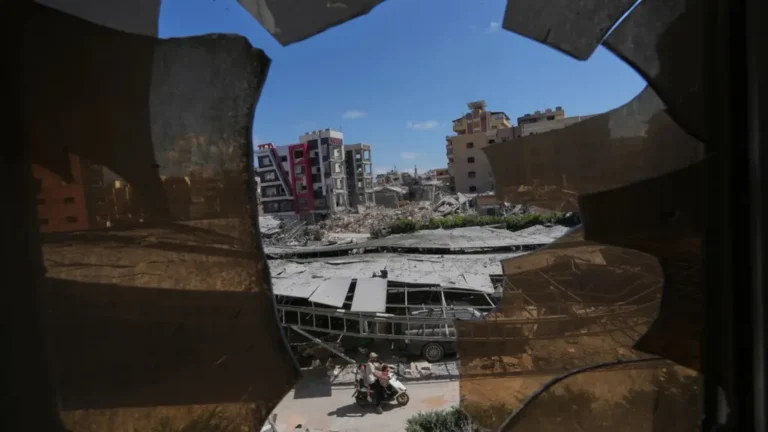
Kabul/Islamabad — Pakistani airstrikes on Afghanistan killed at least four people and injured 15 in Kabul and other areas on Friday, Afghan authorities said, as Islamabad confirmed targeting Taliban-linked facilities and alleged militant hideouts in a new cross-border offensive.

Kabul police spokesperson Khalid Zadran said in a post on X that the strikes hit a residential area of the Afghan capital, leaving at least four people dead and 15 injured, including women and children.

The Taliban government said Pakistan also bombed several locations across Afghanistan, including Kabul, Kandahar, Paktia and Paktika.

“The Pakistani army once again bombed Kabul, Kandahar, Paktia, Paktika and other areas. In some places it targeted civilian homes, resulting in the deaths of women and children,” Zabihullah Mujahid, spokesperson for the Taliban administration, wrote on X.

According to the Taliban, one of the strikes in southern Afghanistan hit a fuel depot belonging to the private airline Kam Air near Kandahar Airport.

The facility, which Kabul says supplies fuel to civilian airlines and United Nations aircraft, is located in the city where the Taliban’s supreme leader, Hibatullah Akhundzada, resides.

Pakistan confirmed the operation, saying its armed forces carried out airstrikes against Afghan Taliban military infrastructure and alleged terrorist hideouts.

Security sources in Islamabad said Pakistani forces targeted infrastructure of the Taliban’s 313 Corps in Kabul and destroyed the fuel depot at Kandahar airfield along with nearby logistical facilities.

The offensive also struck camps in Tarawo and Shirinaw, including in the eastern province of Paktia.

According to the same sources, the strikes were directed against positions linked to the Afghan Taliban and “Fitna al-Khawarij,” a term Islamabad uses to refer to the Tehreek-e-Taliban Pakistan (TTP), or Pakistani Taliban.

Pakistani officials said the cross-border campaign, dubbed “Operation Ghazab Lil Haq,” would continue “until the objectives are achieved.”

The Taliban government condemned the attacks and warned they would not go unanswered.

“The Islamic Emirate condemns this crime and this blatant aggression in the strongest terms, and, God willing, this injustice will not go unanswered,” Mujahid said.

The strikes come amid growing tensions between the two countries. Pakistan has repeatedly accused the Afghan Taliban of allowing the TTP to operate from Afghan territory and launch attacks inside Pakistan, an allegation Kabul has consistently denied.

The latest escalation follows Pakistani airstrikes carried out on Feb. 27, which marked the start of the current surge in cross-border hostilities that has already left dozens dead on both sides.

Earlier this week, Taliban Defense Minister Mohammad Yaqoob Mujahid warned that Kabul would retaliate if Pakistan bombed the Afghan capital again, adding that Afghan forces were prepared for a prolonged conflict.


SOURCE : EFE.|  Follow Us: Facebook | Instagram | Twitter | Youtube |