

Home Blog Page 61

India’s Strategic Clout Wanes in Bangladesh but Strengthens in Sri Lanka

New Delhi, India — India is witnessing a notable shift in its neighborhood diplomacy as it loses influence over Bangladesh, once its closest ally, while simultaneously rekindling and strengthening ties with Sri Lanka. The changing political landscape in South Asia reflects New Delhi’s evolving strategic posture amid emerging challenges and new opportunities.

RELATED NEWS : Nepal-India: Is a Longstanding Rift Giving Way to Closer Ties? Oli and Modi Meet at BIMSTEC

After the fall of Sheikh Hasina’s long-standing government in August 2024, India’s relationship with Bangladesh entered a turbulent phase. The new interim government in Dhaka, led by Chief Adviser and Nobel Laureate Muhammad Yunus, has adopted a noticeably colder stance toward New Delhi. Tensions between the two neighbors have been exacerbated by the contentious issue of Hasina’s extradition.

Sheikh Hasina, now in exile in India following a massive student-led movement that ousted her from power, remains a highly polarizing figure in Bangladeshi politics. Dhaka has accused her of committing crimes against humanity, genocide, corruption, and mass murder—allegations that the new administration insists she must answer in court. During a sideline meeting at the 6th BIMSTEC Summit in Bangkok earlier this month, Yunus formally requested Indian Prime Minister Narendra Modi to extradite Hasina. However, the talks ended without resolution.

According to Bangladesh’s Foreign Adviser Touhid Hossain, the extradition request was made but remained unsettled. Simultaneously, Prime Minister Modi raised concerns about the safety and status of the Hindu community in Bangladesh, signaling mutual distrust. The failed talks were further shadowed by Yunus’s recent diplomatic overtures to Beijing, including a high-profile visit to China prior to the BIMSTEC meeting, a move that clearly irked New Delhi.

In contrast, India appears to be enjoying a diplomatic resurgence in Colombo. After years of strained ties during the final phase of the Rajapaksa dynasty—largely due to Sri Lanka’s increasing closeness with China—relations have begun to warm under the leadership of President Anura Kumara Dissanayake, a 56-year-old leftist leader elected in September 2024.

Despite early speculation that his communist ideology would draw him closer to Beijing, Dissanayake has charted a pragmatic foreign policy path that includes strengthening relations with India. His administration has responded positively to New Delhi’s outreach, and the results are already visible.

Indian Prime Minister Narendra Modi receives a guard of honor presented to him by the Sri Lankan Army during an official welcome ceremony in Colombo, Sri Lanka, on Saturday, April 5, 2025. Photo : AP Photo/Eranga Jayawardena

Prime Minister Modi’s visit to Colombo from April 4–6, immediately after the BIMSTEC Summit, marked a significant moment in India-Sri Lanka ties. The visit, widely praised for its symbolism and substance, resulted in several bilateral agreements and reaffirmed Sri Lanka’s central role in India’s “Neighbourhood First” policy. President Dissanayake’s office emphasized that Modi’s visit underscored the strategic importance of Colombo in regional affairs.

Among the major outcomes of the visit was the signing of a five-year Memorandum of Understanding (MoU) on Defence Cooperation. The agreement includes high-level military exchanges, joint training exercises, capacity-building initiatives, humanitarian assistance and disaster relief (HADR) operations, naval port visits, and exploratory cooperation in the defense industry. Modi described the pact as “rooted in shared security interests and mutual trust,” reinforcing India’s long-standing concerns about Chinese influence in the Indian Ocean, particularly after the 99-year lease of Hambantota Port to China under the Rajapaksas.

India had previously supported Sri Lanka during its economic meltdown in 2022 with emergency credit lines and humanitarian aid, helping to stabilize the crisis-ridden island nation. That goodwill now appears to be paying off.

While India maintains historical and emotional ties with Bangladesh—having played a key role in its liberation in 1971—its relationship with Dhaka is now at a crossroads. The reversal of political fortunes in Bangladesh and Sri Lanka marks a striking reshaping of South Asia’s strategic map.

As India recalibrates its neighborhood strategy, the shift in dynamics—losing grip on Dhaka while regaining Colombo—is emblematic of the complex and often unpredictable nature of regional diplomacy. Whether this realignment proves sustainable or temporary will depend on how leaders in New Delhi, Dhaka, and Colombo navigate the turbulent waters ahead.


SOURCE : AP NEWS |  Follow Us: Facebook | Instagram | Twitter | Youtube |

Djibouti Forum Urges Optimism and Stronger Cooperation in Face of Global Policy Challenges

Djibouti City, Djibouti – As global economic headwinds and policy-driven turbulence took center stage at the second edition of the Djibouti Forum, leaders from across the world struck a hopeful tone, calling for deeper cooperation and bolder investment in Africa’s future.

Gathering over 150 global participants from 51 countries—including institutional investors managing a combined $2.6 trillion in assets—the Forum served as a platform to reimagine Africa’s economic trajectory through innovation, diversification, and strategic partnerships.

MORE NEWS : Nightclub Collapse in Dominican Republic Leaves 113 Dead, Over 150 Injured

Despite acknowledging the challenges, Djibouti’s Prime Minister Abdoulkader Kamil Mohamed expressed confidence in the country’s vision to expand beyond its world-class ports and logistics infrastructure.

“Renewable energy, the digital economy, tourism, and financial services are at the heart of Djibouti’s next chapter,” he declared, emphasizing the country’s commitment to economic and political stability. “Our currency has been pegged to the U.S. dollar since 1949, offering investors a rare degree of predictability.”

Attendees at the Opening Ceremony of the Djibouti Forum 2025 on April 7th, 2025, held in Djibouti City. Photo : ICP via Handout DT

A major theme throughout the forum was the call for greater domestic resource mobilization. Speakers emphasized empowering African pension funds and sovereign wealth funds to play a more active role in co-investing and absorbing risk in transformative projects.

Dr. Slim Feriani, CEO of the Sovereign Wealth Fund of Djibouti (FSD), highlighted the fund’s openness to international partnerships. “The FSD will invest alongside you. We’re putting skin in the game and plan to double our assets under management within five years. But we can’t do this alone,” he said.

With more than 50 high-profile speakers, discussions spanned key sectors including energy, connectivity, financial services, technology, tourism, and logistics. Key sessions also explored privatization opportunities and models for effective public-private partnerships.

Dr. Acha Leke, Senior Partner and Chairman of McKinsey & Company Africa, shared a message of long-term optimism. “Africa is home to 345 companies valued over $1 billion, with total revenues near $1 trillion. The opportunities are real.”

Lionel Zinsou, former Prime Minister of Benin, drew attention to the rise of philanthropic capital in Africa. “Philanthropy is now a vital player in blended finance, helping de-risk investments and reduce financing costs,” he noted.

Former World Bank Vice President Dr. Samuel Maimbo praised the FSD for pioneering a new model of sovereign collaboration. “The era of aid and debt must give way to one of hope and prosperity. This forum is a powerful start.”

Hosted by the FSD, the Djibouti Forum has quickly established itself as a leading platform for driving investment dialogue across the continent. Under the leadership of Dr. Feriani, a former Tunisian Minister with deep roots in international finance, Djibouti is positioning itself as a hub of opportunity, resilience, and forward-thinking economic strategy.

As the event concluded, one message rang clear: amidst uncertainty, optimism and unity remain Africa’s greatest competitive edge.


SOURCE : ICP |  Follow Us: Facebook | Instagram | Twitter | Youtube
Nightclub Collapse in Dominican Republic Leaves 113 Dead, Over 150 Injured

Santo Domingo, DR – In the wake of a tragic accident at the iconic Jet Set nightclub in Santo Domingo, the Dominican Republic has united in an extraordinary display of resilience and compassion. As the nation mourns the loss of 113 lives and supports more than 150 injured, efforts continue tirelessly to search for survivors and assist families affected by the collapse.

RELATED NEWS : Myanmar earthquake death toll exceeds 1,600 as Thailand rushes to rescue workers

The incident occurred in the early hours of Tuesday during a live performance by beloved merengue artist Rubby Pérez. Emergency response teams, coordinated by the Emergency Operations Center (COE), swiftly mobilized more than 400 rescuers, including specialized canine units, firefighters, defense forces, and medical professionals. As of Tuesday afternoon, 145 people had already been rescued from the rubble.

President Luis Abinader has declared three days of national mourning (April 8–10), with the Dominican flag flying at half-mast in tribute to those who lost their lives. Government officials, rescue workers, and citizens have come together in an outpouring of support. Blood donations, volunteer aid, and emotional solidarity have flooded the capital as families wait for updates and comfort one another.

People cry and hug each other near the Jet Set nightclub in Santo Domingo. Photo : Reuters

Rescue operations continue around the clock under powerful floodlights, with cranes and heavy equipment clearing debris and creating access points. The search will persist as long as there is hope of finding survivors, according to COE Director Juan Manuel Méndez.

International messages of sympathy and support have arrived from El Salvador, Panama, Cuba, and others, highlighting the region’s unity in difficult times. Among those lost are notable public figures, including former Major League Baseball players Octavio Dotel and Tony Blanco, as well as Montecristi Governor Nelsy Cruz, sister of MLB All-Star Nelson Cruz.

Despite the heavy toll, the Dominican Republic stands strong, with communities rallying around those affected. This shared grief has brought out the best in many—bravery, compassion, and an unwavering determination to help one another through the darkest moments.


SOURCE : AGENCIES |  Follow Us: Facebook | Instagram | Twitter | Youtube
White House Confirms 104% Tariffs on Chinese Imports Will Take Effect Wednesday

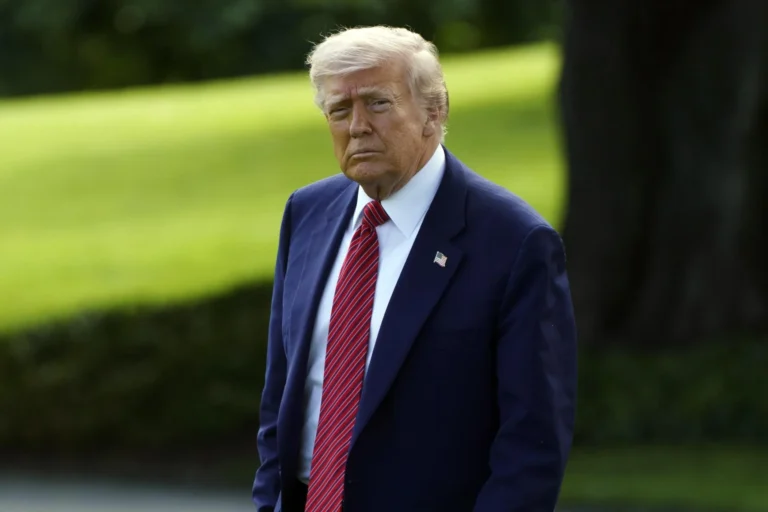
New York/Hong Kong — In a dramatic escalation of trade tensions, President Donald Trump will impose sweeping 104% tariffs on all Chinese imports beginning Wednesday, White House Press Secretary Karoline Leavitt announced Tuesday. The move builds on pre-existing tariffs and comes during heightened strain between Washington and Beijing.

Originally, China was bracing for a 34% tariff hike as part of Trump’s “reciprocal” tariffs policy. However, after Beijing reaffirmed its plans to impose matching 34% retaliatory tariffs on U.S. goods by noon Tuesday, Trump responded by slapping an additional 50% levy on Chinese imports—raising the total to a staggering 104%.

RELATED NEWS : Markets in Europe sink 6% following Asia’s collapse, sparking renewed global recession fears

China’s Commerce Ministry reacted strongly, condemning the additional duties as “a mistake upon a mistake,” and vowed to escalate its own retaliation against American exports.

The announcement rattled financial markets. U.S. stocks, which had opened higher on Tuesday, reversed course following Leavitt’s remarks. The Dow Jones Industrial Average closed down 320 points, or 0.84%. The S&P 500 dropped 1.57%, while the tech-heavy Nasdaq Composite tumbled 2.15%.

“Countries like China, who have chosen to retaliate and double down on their mistreatment of American workers, are making a mistake,” Leavitt told reporters. “President Trump has a spine of steel, and he will not break.”

Asian Markets Slide as Trump Triples Tariffs on Low-Cost Chinese Imports

Asian markets mirrored Wall Street’s sharp declines on Wednesday, as investors reacted to the latest escalation in U.S.-China trade tensions. Japan’s Nikkei 225 dropped roughly 3% at the open, while Hong Kong’s Hang Seng Index also sank 3%. South Korea’s KOSPI and Australia’s ASX 200 both slipped around 1%.

Adding to market jitters, President Donald Trump signed an executive order late Tuesday tripling tariffs on Chinese goods valued under $800—a major shift from the long-standing “de minimis” exemption that had previously allowed such shipments to enter the U.S. duty-free.

Originally set to face a 30% tariff starting May 2, those low-cost goods will now be hit with a 90% tariff under the revised order. The move is expected to significantly affect American consumers who shop on platforms like Shein, Temu, and AliExpress, potentially driving up prices on a wide range of products.

The latest measures build on Trump’s earlier actions. In February, he imposed a blanket 10% tariff on all Chinese imports, citing the country’s alleged role in facilitating illegal immigration and the flow of fentanyl into the United States. That rate was doubled last month—and now, with Tuesday’s announcement, the tariffs have reached unprecedented levels.

Last year, China was the U.S.’s second-largest source of imports, sending $439 billion worth of goods across the Pacific. The U.S. exported $144 billion in goods to China. As tit-for-tat tariffs continue to escalate, economists warn that both economies may suffer—particularly U.S. industries that rely on Chinese components, with potential job losses on the horizon.

At the end of Trump’s first term, the average U.S. tariff on Chinese goods stood at 19.3%, according to the Peterson Institute for International Economics. The Biden administration largely maintained those tariffs and added more, pushing the average to 20.8%. Trump’s latest actions push that average dramatically higher, signaling a new phase in the economic standoff.


SOURCE : CNN/REUTERS |  Follow Us: Facebook | Instagram | Twitter | Youtube |
American YouTuber Arrested in India After Leaving Diet Coke Can for Reclusive Island Tribe

0

Port Blair, IndiaIndian authorities have arrested a 24-year-old American YouTuber, Mykhailo Viktorovych Polyakov, for illegally venturing onto the highly restricted North Sentinel Island in the Bay of Bengal in an attempt to make contact with one of the world’s most isolated and uncontacted tribes.

Polyakov, who hails from Scottsdale, Arizona, was taken into custody on March 31, two days after setting foot on the protected island, which is home to the Sentinelese — a reclusive Indigenous group known for aggressively defending their isolation. The tribe is believed to have lived without outside contact for thousands of years and is protected under Indian law.

According to Indian police, Polyakov landed on North Sentinel Island at around 10 a.m. on March 29. Armed with a GoPro camera, binoculars, and a backpack containing a can of Diet Coke and a coconut, he reportedly attempted to document his encounter and offer gifts to the tribe. GoPro footage later reviewed by police showed Polyakov scanning the beach from his boat before stepping ashore, leaving the items as an offering, and collecting sand samples from the shoreline.

Fortunately for Polyakov, no tribe members were seen during his brief and unauthorized visit — a fact that may have spared him from the tribe’s historically hostile response to outsiders. The Sentinelese are known to attack anyone who approaches or lands on their island, often with spears and arrows.

FILE – Clouds hang over the North Sentinel Island, in India’s southeastern Andaman and Nicobar Islands, Nov. 14, 2005. File Photo : AP/Gautam Singh

India strictly prohibits any approach within 3 miles (5 kilometers) of North Sentinel Island to protect both the tribe and potential intruders from harm. The law is enforced under the Andaman and Nicobar Islands (Protection of Aboriginal Tribes) Regulation, and violations carry a maximum sentence of five years in prison and a monetary fine.

Authorities said Polyakov had previously attempted to reach the island twice before. In one earlier incident, he used an inflatable kayak in October last year but was stopped by hotel staff. This most recent trip, however, was allegedly more calculated, involving detailed research into sea conditions, tides, and points of access from nearby Khurmadera Beach.

His activities were discovered after local fishermen reported seeing him returning from the island. He was arrested in Port Blair, the capital of the Andaman and Nicobar Islands, a remote Indian territory located over 800 miles (1,200 kilometers) east of the mainland.

A local court has remanded Polyakov to 14 days in judicial custody. He is due to appear in court again on April 17. The U.S. Embassy has been informed of the case, Indian officials confirmed.

Experts warn that such contact attempts not only endanger visitors but also pose a serious health threat to the Sentinelese, who have no immunity to common infectious diseases.

The incident draws renewed attention to the challenges of enforcing protected zones and the growing trend of content creators pushing boundaries for online fame.

Police have reiterated that the laws protecting tribal communities are in place for a reason — and they will be strictly enforced.


SOURCE : AGENCIES |  Follow Us: Facebook | Instagram | Twitter | Youtube 

Scientists genetically modify wolves to have white fur and powerful jaws resembling those of the extinct dire wolf

In a breakthrough straight out of science fiction, three genetically engineered wolf pups—designed to resemble the long-extinct dire wolf—are alive and thriving in a secure, undisclosed location in the United States, according to Colossal Biosciences, the biotech company leading efforts to resurrect lost species.

The pups, aged between three and six months, already weigh around 80 pounds and are expected to reach a massive 140 pounds at maturity. With their long white fur and powerful jaws, the trio are strikingly reminiscent of dire wolves, a prehistoric predator that roamed North America over 10,000 years ago.

Dire wolves, once significantly larger and more robust than modern gray wolves, disappeared during the last Ice Age. But Colossal’s scientists have tapped into ancient DNA and cutting-edge genetic engineering to bring some of their traits back to life.

“This isn’t full de-extinction,” said Vincent Lynch, a biologist at the University at Buffalo unaffiliated with the project. “All you can do now is make something look superficially like something else.”

Using DNA extracted from a 13,000-year-old dire wolf tooth found in Ohio and a 72,000-year-old skull fragment from Idaho, researchers identified key genetic traits and inserted them into gray wolf cells using CRISPR technology. Those modified cells were then fused with egg cells from domestic dogs, and the embryos implanted into surrogate dogs.

The pups were born 62 days later.

Colossal’s lead geneticist, Beth Shapiro, said the process involved editing 20 specific genes to recreate dire wolf-like features, such as enhanced muscle mass and fur type.

This isn’t Colossal’s first foray into synthetic resurrection. The company has also launched projects to recreate traits of woolly mammoths, dodos, and other extinct species. However, the team acknowledges that their dire wolf-inspired animals won’t behave exactly like their ancient counterparts.

“What they will probably never learn is the finishing move of how to kill a giant elk or a big deer,” said Matt James, Colossal’s chief animal care expert. “They don’t have dire wolf parents to teach them.”

The company also announced Monday it had successfully cloned four red wolves, using blood drawn from critically endangered individuals in the southeastern U.S. The goal: to boost genetic diversity in the tiny population of captive red wolves being bred for conservation.

“This technology could revolutionize conservation biology,” said Christopher Preston, a wildlife ethicist at the University of Montana. “It’s less invasive than other cloning techniques, but it still relies on access to wild animals, which poses challenges.”

Colossal CEO Ben Lamm revealed that the company met with officials from the U.S. Department of the Interior in late March. On Monday, Interior Secretary Doug Burgum praised the project on social media, calling it a “thrilling new era of scientific wonder.”

Yet some scientists urge caution.

“Whatever ecological function the dire wolf performed before it went extinct, it can’t perform those functions on today’s landscapes,” said Lynch. “The world has changed.”

Still, for now, three ghostly white pups—part wolf, part past—are howling under the stars, embodying the tension between nostalgia, innovation, and the uncertain future of engineered evolution.


SOURCE : AGENCIES |  Follow Us: Facebook | Instagram | Twitter | Youtube 

Netanyahu Meets Trump at White House, Seeks Tariff Relief Amid Escalating Middle East Tensions

Washington, D.C.Israeli Prime Minister Benjamin Netanyahu met with U.S. President Donald Trump at the White House on Monday, becoming the first foreign leader to personally appeal for relief from sweeping new American tariffs that have roiled global markets.

The visit, arranged on short notice, comes just days after Trump imposed a 17% tariff on Israeli goods as part of his “Liberation Day” trade overhaul—a move that surprised many given Israel’s status as a top U.S. ally and the largest recipient of American military aid.

Netanyahu’s arrival marks his second meeting with Trump since the U.S. president returned to office. The two leaders, dressed nearly identically in dark suits, red ties, and white shirts, were seen exchanging greetings outside the West Wing before heading into the Oval Office for closed-door talks.

Tariffs, Gaza, and Iran on the Table

While the central topic of discussion is expected to be trade, the leaders are also grappling with the fallout from the collapsed ceasefire in Gaza and growing tension with Iran. A previously planned joint press conference was abruptly canceled without explanation—a sharp departure from their usual post-meeting format.

Before departing for Washington, Netanyahu said the trip would focus on “the hostages, victory in Gaza, and of course the tariff regime that has now been imposed on Israel.”

“I’m the first international leader to meet with President Trump on such a critical issue for Israel’s economy,” he said in a video statement. “There is a long line of world leaders waiting. This reflects the special relationship between our nations.”

High-Level Talks and Diplomatic Maneuvering

On Sunday night, shortly after arriving in Washington, Netanyahu met with U.S. Commerce Secretary Howard Lutnick and U.S. Trade Representative Jamieson Greer. On Monday, he also held talks with Trump’s special envoy to the Middle East, Steve Witkoff.

Trump told reporters that the meeting would address “trade, and the obvious subject,” alluding to broader Middle East instability. “There’s a lot going on right now that has to be silenced,” he added.

Meanwhile, French President Emmanuel Macron said he had arranged a call with Trump, Egyptian President Abdel Fattah el-Sisi, and Jordan’s King Abdullah to push for the immediate restoration of the Gaza ceasefire. The leaders also emphasized that the Palestinian Authority must govern the post-war Gaza Strip—rejecting Trump’s suggestion that the U.S. assume control.

Iran Looms Large

Iran remains a key point of contention. Trump has renewed calls for “direct talks” with Tehran on a new nuclear deal, but Iranian officials have rejected the proposal, instead offering what they describe as a “generous and responsible” plan for indirect negotiations.

Amid rising tensions, there is growing international speculation that Israel—possibly with U.S. support—could launch strikes on Iranian nuclear facilities if diplomacy fails.

Controversy at the ICC

Netanyahu arrived in Washington following a visit to Hungary, where Prime Minister Viktor Orbán announced Hungary’s withdrawal from the International Criminal Court. The move came in protest of the ICC’s recent arrest warrant for Netanyahu over alleged war crimes in Gaza—a charge Israel has strongly denied.

The Israeli premier’s visit underscores the complex web of diplomacy, trade, and conflict now converging in Washington, as both leaders navigate domestic pressures and global challenges.


SOURCE : AGENCIES |  Follow Us: Facebook | Instagram | Twitter | Youtube 

King Charles and Queen Camilla Arrive in Italy for Official State Visit

0

Rome, ItalyKing Charles III and Queen Camilla arrived in Italy on Monday for a four-day state visit, marking the British monarch’s first overseas trip of the year and a significant diplomatic moment as he continues treatment for cancer.

The royal couple’s visit—Charles’ 17th official trip to Italy—comes at a poignant time, coinciding with their 20th wedding anniversary. The King and Queen were married on April 9, 2005, in a ceremony that followed years of public attention and occurred just a day after Charles, then Prince of Wales, paid his respects at Pope John Paul II’s funeral in Vatican City.

Now, two decades later, they return to Rome not only as husband and wife but as sovereign and consort, blending statecraft with personal celebration.

Address to Parliament Highlights Diplomatic Agenda

A central highlight of the visit will be King Charles’ address to the Italian Parliament—a rare moment of royal oratory aimed at reaffirming the United Kingdom’s enduring ties with Italy. The King, who ascended the throne in November 2022, has scaled back many public duties due to his health challenges but remains steadfast in advancing diplomatic relations and cultural exchange.

The royal itinerary is expected to include meetings with Italian President Sergio Mattarella and Prime Minister Giorgia Meloni, as well as cultural engagements that underscore the shared history and contemporary partnership between the UK and Italy.

Symbolism Amid Global Instability

The royal visit arrives at a moment of heightened global tension, following a week of market volatility and mounting geopolitical friction. Against this backdrop, the presence of the British monarch in Italy offers a dose of continuity, ceremony, and tradition—a symbolic anchor in a rapidly shifting world.

Buckingham Palace has emphasized that the trip will be conducted at a measured pace, allowing for the King’s health needs while maintaining the formal significance of the engagement.

A Personal and Public Journey

As the King and Queen embark on this latest chapter of their international role, their arrival in Rome blends the personal with the political—a testament to resilience, diplomacy, and the enduring power of royal symbolism.


SOURCE : AGENCIES |  Follow Us: Facebook | Instagram | Twitter | Youtube 

Dimon Issues Trade War Warning After Wall Street Executives Meet with Commerce Chief Lutnick

New York, USA — JPMorgan Chase (JPM.N) CEO Jamie Dimon warned Monday that escalating trade wars could deliver lasting blows to the U.S. economy, stoking inflation, slowing growth, and jeopardizing America’s global alliances.

The stark caution, detailed in his annual shareholder letter, followed a brutal market rout last week that erased trillions from global stocks and came days after he and other banking titans pressed Commerce Secretary Howard Lutnick on the administration’s sweeping new tariffs.

RELATED NEWS : Markets in Europe sink 6% following Asia’s collapse, sparking renewed global recession fears

The tariffs—a 10% baseline on all imports, with sharper levies aimed at China and the EU—were unveiled last week by President Donald Trump, sparking immediate backlash. On Thursday, Dimon, Bank of America CEO Brian Moynihan, and other Wall Street leaders met Lutnick in Washington, hosted by the Financial Services Forum, to probe the policy’s fallout, a source familiar with the meeting said. Lutnick defended Trump’s plan to “bring wealth back to America,” but faced pointed questions as markets spiraled—Hong Kong’s Hang Seng crashed 13.22% Monday, and U.S. futures sank 4%.

“The quicker this resolves, the better—negative effects compound over time and become harder to unwind,” Dimon, 69, wrote in his letter, published amid growing economic unease. “The economy is facing considerable turbulence (including geopolitics). We are likely to see inflationary outcomes … Whether or not the menu of tariffs causes a recession remains in question, but it will slow down growth.” JPMorgan economists now peg the odds of a U.S. and global recession this year at 60%, up from 40%.

Wall Street Titans Sound Alarm

Dimon wasn’t alone in his concern. Billionaire fund manager Bill Ackman, a Trump backer during the 2024 campaign, warned on X that the tariffs could trigger an “economic nuclear winter” if imposed this week. “We are heading for a self-induced disaster,” Ackman wrote, urging Trump to pause and renegotiate trade deals. He argued the levies would choke business investment, consumer spending, and “severely damage” America’s reputation for years—a rare public break from a former ally.

Elsewhere on Wall Street, major bank CEOs, including Dimon and Moynihan, held an emergency call Sunday to grapple with the tariffs’ repercussions, sources told Reuters. Convened by the Bank Policy Institute, the discussion underscored mounting anxiety among financial leaders as markets braced for more volatility.

Tariffs Threaten Stability

In his letter, Dimon—a towering voice in corporate America—listed a cascade of risks: persistent inflation, high fiscal deficits, volatile asset prices, and shaken economic confidence. He warned of retaliatory measures from trading partners, disruptions to capital flows, and pressure on corporate profits and the dollar. “I am concerned about the United States’ long-term economic alliances,” he added, a nod to fraying geopolitical ties

The tariffs also cloud the outlook for interest rates, Dimon noted. While a weaker dollar has recently pushed rates down, slower growth and fading risk appetite could drive them higher, evoking the stagflation of the 1970s. “We enter this time of uncertainty with high equity and debt prices, even after the recent decline … Markets still seem to be pricing assets with the assumption of a fairly soft landing. I am not so sure,” he wrote, challenging expectations that the U.S. will dodge a recession.

A Chorus of Doubt

Ackman’s dire forecast amplified Dimon’s unease. “Business leaders are losing confidence in Trump,” he wrote, signaling a shift among the president’s one-time supporters. The warnings come as JPMorgan prepares to report first-quarter earnings Friday, following a record profit last year. Dimon, often tapped by policymakers in crises and briefly floated for roles like Treasury secretary in 2024, has stayed at the bank’s helm, wielding outsized influence

As global markets reel—Monday saw Europe’s Stoxx 600 shed 5.7% and Brent crude hit a four-year low of $63 a barrel—pressure mounts on Trump to rethink his trade gambit. With Dimon, Ackman, and Wall Street’s elite ringing alarm bells, the tariff fight risks not just economic turbulence, but a deeper erosion of trust in America’s financial future.


SOURCE : REUTERS |  Follow Us: Facebook | Instagram | Twitter | Youtube |

Over 50 Palestinians killed in Gaza by Israeli attacks in last 24 hours

0

Gaza City – Israeli attacks over the past day in different parts of the Gaza Strip caused the death of at least 53 Palestinians, the enclave’s Ministry of Health reported Monday.

In the north of the Strip, Israeli artillery hit the besieged area of Jabalia, killing four people in the Abed Rabbo neighborhood.

RELATED NEWS :  Authorities Suspect Militant Attack, No Casualties Reported

Israeli troops also conducted operations in the northern Gaza City, where an airstrike on a home killed a father and daughter in the Zeitun and Shujaiya neighborhoods. Ten others were killed in another attack.

In the centre of the Strip, the Health Ministry recorded at least ten deaths, five of them in an Israeli attack on a house near the Yafa Hospital in Deir Al Balah.

The southern part of the enclave recorded the most casualties, with about 25 deaths, all of them from Israeli attacks on the city of Khan Younis.

Among those killed in Khan Younis were at least two children that lost their lives in Israeli airstrikes targeting their homes, according to the Health Ministry.

Nearly 500 children have been killed since Israel broke the ceasefire on Mar.18, according to the latest figures updated by the Hamas-held government of the enclave.

Israel also went back to bombing tents housing displaced people in the humanitarian zone of Mawasi, west of Khan Younis, over the past day. 


SOURCE : EFE. |  Follow Us: Facebook | Instagram | Twitter | Youtube